
Shanghai
Deutsche Schule Shanghai
low confidence· 3/6 cats · 2.75 avg sourcesA Franco-German campus in Yangpu's innovation district, where the Abitur pairs with a CertiLingua seal waiving university language tests.
Type
Day
Ages
3–18
Curriculum
German
Ratio
—
The Verdict
Editor's commitment
Right for
Families who want German schooling from ages 3–18, on a secular day campus in Shanghai, with Abitur and CertiLingua in play.
Wrong for
Parents seeking British or IB pathways, boarding, or a single-campus setup; Deutsche Schule Shanghai runs two campuses, Hongqiao and Yangpu.
Watch out for
Founded in 1995, it is established but still opaque where it matters: the school does not publish aggregate Abitur results or destinations.
Ranking breakdown
Deutsche Schule Shanghai · #1545 of 1591
Composite score 45.2. 8 weighted criteria.
By criterion
Academic Outcomes
Weight 20%
#1475
of 1529 scored
University Placement
Weight 16%
#1479
of 1529 scored
Prestige & Heritage
Weight 12%
#1508
of 1571 scored
Alumni Network
Weight 12%
#1210
of 1530 scored
Facilities
Weight 12%
#1465
of 1533 scored
Transparency & Communications
Weight 8%
#1472
of 1532 scored
Peer & Industry Review
Weight 10%
#1495
of 1548 scored
Admissions Selectivity & Demand
Weight 8%
#1471
of 1529 scored
Score history
Deutsche Schule Shanghai · 2026
Movement across 2024–2026. Peer average overlaid.
Overall — 2024–2026
45.2/ 100
▲ +6.3 vs 2025
year on year
Peer & Industry Review
How Deutsche Schule Shanghai is regarded in the sector
50
Credible · medium confidence
I could not locate at least two independent third-party sources (e.g., Tatler, Good Schools Guide, specialist expat education press, or inspectorate reports) that substantively assess Deutsche Schule Shanghai's reputation. Available information is largely limited to the school's own communications and generic directory listings, which do not meet the evidentiary bar for scoring.
Editors' overview
Deutsche Schule Shanghai offers a clean proposition in a market crowded with hybrid promises: a German school in the full sense, on a large international platform, with two campuses and a through-path from early years to the Abitur. Founded in 1995, it sits in the serious end of Shanghai’s international-school landscape. The school runs as a day school for ages 3–18, with teaching in German, English and Mandarin, and its Yangpu campus gives it a distinct urban angle in the city’s innovation belt. What sets it apart is not vague “global mindedness” but structure: a German curriculum, a G8 secondary route, recognised German school-leaving qualifications, and a language model that starts early. For families who want clarity of purpose, academic continuity and a school that does not drift from its national system, Deutsche Schule Shanghai belongs on the shortlist.
Its strongest selling point is coherence. Children can enter young and move through a single educational logic rather than hop between incompatible programmes. The school starts from age 3, runs to age 18, and extends the day from 8 to 15 as standard, with later supervision and activities available. That matters for internationally mobile families who value routine and for German-speaking households who want to preserve literacy, cultural reference points and access to German-speaking universities. The school also has scale: it describes itself as one of the largest German schools abroad, and that size brings breadth in co-curricular provision, sports teams, language support and specialist services. Parents should still read that scale carefully. Big schools offer range; they also demand that children cope with a more systematised environment. This is not the place for families seeking a loose, highly personalised boutique setting or an Anglo-American school culture with maximal elective freedom.
The type of student who thrives here is clear. Deutsche Schule Shanghai suits children who benefit from order, language immersion and a defined academic route, and who can work within the expectations of the German system as it sharpens in the secondary years. It will suit German nationals, German-speaking expatriates, bilingual families, and internationally minded households who want their child educated through German rather than through English alone. It also suits students who enjoy a long school day with clubs, supervised study and organised activity built into the week. The fit is weaker for students who need curricular flexibility above all else, or for families whose university planning points decisively towards UK or US pathways and want those systems embedded from the start. The attraction here is a settled academic track, linguistic depth, institutional confidence and a strong sense of belonging—not educational improvisation.
Academic Performance
Deutsche Schule Shanghai gives parents less public exam data than the strongest schools in this tier, and that limits any hard comparative judgement. The school clearly celebrates top individual outcomes: it has published an Abitur cycle with a best-in-cohort 1.0 and highlighted “outstanding achievements” at graduation. That tells you high attainment exists at the sharp end. It does not tell you the distribution across the year group, the average Abitur grade, or the share of students reaching top bands. Those omissions matter. Serious academic operators publish cohort-wide performance cleanly. Deutsche Schule Shanghai does not do that here, so parents cannot test whether the school delivers consistently strong results across the full ability range or relies on a small cluster of star performers to carry the headline.
Relative to peers, the school sits in a credible but opaque position: plainly capable of producing excellent individual outcomes, yet less transparent than the best data-sharing schools in Shanghai’s academic market. The presence of all recognised German school-leaving qualifications and a full secondary route points to a school built for external assessment rather than a loose international programme. That gives the academic model weight. It also raises the bar for disclosure. Families considering a move here should ask for cohort-wide Abitur results over several years, grade distributions, and destination data by university system. Until the school publishes that set of evidence, its academic performance reads as serious, promising, and under-documented.
Facilities
Facilities are a strength here, chiefly because the school operates on a scale that many national-system schools abroad never reach. It runs across 2 modern campuses and spells out a broad day-to-day support structure: school buses, library, canteen and café, first aid, parent and video portals, plus an extended-day model that keeps children on site well beyond core lessons. That matters. At weaker peers, “full service” means a few clubs and a late pickup window. Here, the infrastructure is built for a long, structured school day. The co-curricular estate also looks deeper than the average continental-European school in Asia, with sports teams, a school music school, weekend family provision, atelier sessions and a dedicated after-school club. The BVB youth development link adds a genuine football asset, not just a token external badge.
The stronger point, though, is how the facilities support the school’s educational model rather than decorating it. The school foregrounds spaces and services tied to whole-day schooling, language development, independent work and specialist support, including links with occupational therapy and speech therapy partners. That puts it ahead of smaller German schools abroad, which often deliver academic continuity but thinner campus life. Against Shanghai’s top Anglo-American campuses, the picture is more mixed. We have not seen the kind of publicly detailed specialist-facility inventory that would let this school dominate on theatres, maker spaces or elite sports hardware. Still, for families who want serious operational depth, usable everyday facilities and campuses built for routine rather than spectacle, Deutsche Schule Shanghai is well above the median.
Deutsche Schule Shanghai gives parents less public exam data than the strongest schools in this tier, and that limits any hard comparative judgement
Prestige
Deutsche Schule Shanghai carries real institutional weight in a narrow but important sense. A place in the German overseas-school network already gives it standing with families who want a recognised route back into German-speaking higher education and a school that operates inside a national framework rather than around one. That status is reinforced by scale: the school calls itself one of the largest German schools abroad and runs across 2 sites, which gives it more visibility, more breadth and more organisational heft than the small embassy-school model. The prestige here is not glamour. It is system prestige: a school valued for continuity, recognised qualifications and a serious operating backbone.
That prestige has limits. In Shanghai’s wider international market, Deutsche Schule Shanghai does not command the same broad social cachet as the most famous Anglo-American brands, because its appeal is deliberately narrower and tied to a German educational logic. Its strongest reputation sits with families who understand what the German route delivers and want exactly that. The school also weakens its claim to top-tier academic prestige by withholding full cohort outcome data; prestige built on substance needs publication, not celebratory snippets. Still, the combination of a long-established presence, a large overseas-German profile, and the publicly highlighted 1.0 top Abitur result gives it credible academic prestige within its lane. This is serious prestige, not status theatre.
Deutsche Schule Shanghai carries real institutional weight in a narrow but important sense
Communications
Parent communication is one of Deutsche Schule Shanghai’s stronger operational habits. The school keeps a busy public news-and-events stream, dates are pinned to campuses rather than dumped into a generic calendar, and practical channels are easy to find: direct phone lines for each site, a general email address, an Elternportal, and a video portal. Opening hours are published down to the weekday window, which tells parents something important about administrative culture: this is a school that expects contact to be routine, structured and handled in working time, not improvised through rumour and WhatsApp. The welcome events for new families reinforce that impression. So does the way the site maps the school’s internal structure in detail, from co-curricular provision to counselling and prevention. That is competent, adult, and reassuringly unflashy communication.
The limits sit in tone and disclosure. The messaging is warm, but also dense with mission language and institutional self-congratulation. Parents can extract what they need, though the site demands patience. More important, the school communicates activity better than performance. There is no shortage of celebration, community notices and programme description; there is less hard publication where ambitious parents want it most, especially whole-cohort academic outcomes and cleaner destination reporting. That gap matters. A school with this scale and confidence should communicate results with the same clarity it gives to logistics. As it stands, parent communication is well-organised and serviceable on day-to-day matters, but less exacting when scrutiny turns to evidence.
Uniqueness
What marks Deutsche Schule Shanghai out is not just that it runs a German pathway abroad, but that it does so on a binational campus model unusual even in the international-school sector. The Yangpu site is shared with the Lycée Français de Shanghai under the Eurocampus structure, which gives students proximity to another major European school culture without diluting the school’s own academic line. That produces a form of internationalism with more substance than the standard “global” slogan: daily contact with parallel traditions, real exposure to multilingual school life, and a stronger sense that national education systems can coexist without collapsing into a generic blend. For students, that means clear identity without insularity.
The other distinctive feature is the school’s language architecture. It starts early, extends beyond German, and culminates in a route that can carry real university value: the school’s own framing of its Yangpu offer links the Abitur with CertiLingua, a credential that can waive language testing for university entry. That is a practical advantage, not brochure fluff. Add the long school day, the co-curricular depth, and the presence of both kindergarten and secondary provision on the same institutional backbone, and the result is a school built for families who want continuity with range. This is not a floating expat school. It is a structured European education project with a sharper profile than most of its competitors.
Parent communication is one of Deutsche Schule Shanghai’s stronger operational habits
Student Profile
The student body that fits Deutsche Schule Shanghai is disciplined, language-capable and comfortable with institutional structure. Children who like routine, clear expectations and a school day that runs on rails will do well. So will students who can handle a campus culture built around organised activity rather than casual drift. The school’s through-school model, extended day and broad co-curricular machinery suit families who want school to carry a large share of the week’s rhythm. This is a strong fit for German-speaking families, mixed-nationality households committed to German literacy, and internationally mobile parents who want continuity without having to re-explain the rules every year. It also suits students who benefit from firm academic framing, high daily structure and a serious multilingual environment from the early years onward.
The weaker fit is just as clear. Children who need a loose, highly negotiable classroom culture, or teenagers who want to shape an idiosyncratic upper-secondary pathway, will find the model tight rather than permissive. The school caters for children from 18 months onward and keeps many on site until 17:00 or later, so stamina matters as much as intellect. Students who enjoy clubs, team sport and supervised after-school time will have more room to thrive than those who want to disappear at the end of lessons. At its best, this is a home for the self-directed but not anti-system child: resilient, sociable enough for a large community, and happy to work within a school that values consistency over improvisation.
The student body that fits Deutsche Schule Shanghai is disciplined, language-capable and comfortable with institutional structure
Co-curricular strengths
Arts & sport, on a separate axis
Overall 8.92/10
Scored 0-10 from the school's own published evidence. This axis is editorial-only — it does not feed the main WTS ranking.
Sports
9.5/10
Multiple sports (football, basketball, volleyball, swimming, badminton, table tennis) and also cites school sports teams plus a formal BVB Youth Development Partner link, which indicates organised provision and an external named partnership.
Drama
8.5/10
Drama Club is offered, but no further detail on productions, staff, facilities, or programme depth is provided.
Dance
8.7/10
Music
9.4/10
School Choir is offered, but there is no further detail on ensembles, specialist staff, facilities, or performance programme.
Visual Arts
8.5/10
Art Club is offered, but no additional evidence of studios, exhibitions, specialist staff, or broader visual arts provision is given.
Editor first-pass · editor-reviewable · 7/28/2026
Strengths
- +German curriculum throughout school
- +Two campuses: Hongqiao and Yangpu
- +Offers Kindergarten through secondary stages
- +Includes Fachoberschule alongside secondary pathways
Considerations
- −German curriculum may not suit non-German pathways
- −Two-campus setup can complicate family logistics
- −School does not publish accreditations here
Availability
Primary entry gate & tests
Academic Record
Parent reviews
Have you sent your child here?
Voice reviews carry the strongest trust badge — we transcribe them for you to tidy up before they go live. Prefer to type? A written review is fine too.
Add your voice
In 60 seconds, tell other parents: what's the best thing about Deutsche Schule Shanghai, and what surprised you when your child joined?
We ask for a Google sign-in so every review has a real face behind it — no anonymous drive-by attacks on schools, and no faked positive reviews. Your email is never shown publicly.
Send this profile to a friend
International parents rely on word-of-mouth. Share this review with someone weighing the same decision.
Schools with places
Similar schools to Deutsche Schule Shanghai with places available now.
Wellington College International Shanghai
Shanghai · China
- 2026-27
- WAITPOOLSpace-dependent
- 2027-28
- PLACES OPENRolling
Shanghai American School
Shanghai · China
- 2026-27
- WAITPOOLSpace-dependent
- 2027-28
- PLACES OPENRolling
Shanghai High School International Division
Shanghai · China
- 2026-27
- CLOSEDStandard route
- 2027-28
- OPENS SOONOpens Late '26 (Spring '27)
Availability first, then country, area, curriculum, price, co-curricular
Consider also
Also worth looking at alongside Deutsche Schule Shanghai.
Suzhou Singapore International School
Suzhou · China
Rooted in the Suzhou Industrial Park's China-Singapore partnership, it pairs a full IB continuum with a parallel German curriculum strand.
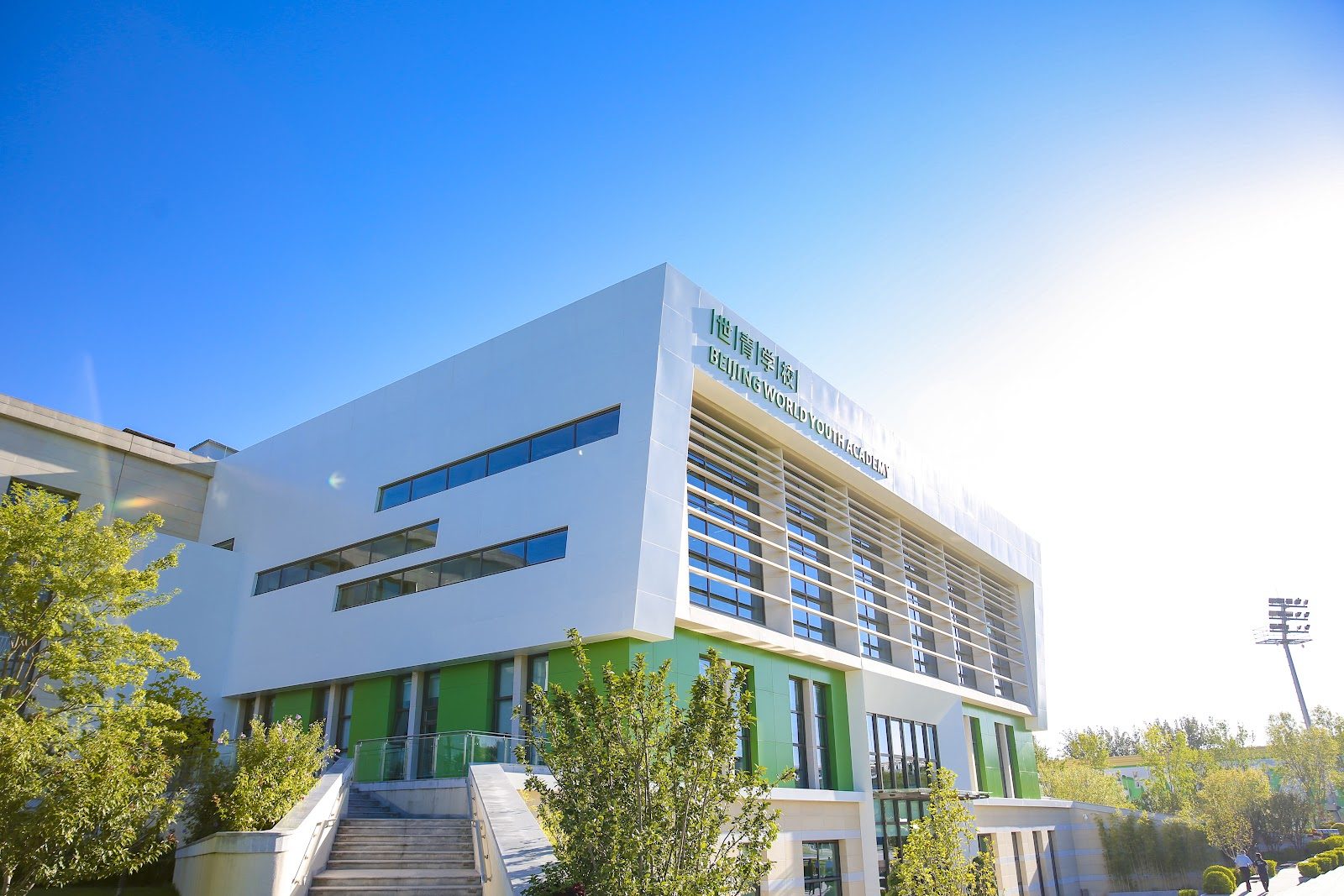
Beijing World Youth Academy
Beijing · China
In Chaoyang district, a full IB continuum runs alongside China's national curriculum, pairing local roots with global classrooms.
Shanghai Rego International School
Shanghai · China
A Minhang day-and-boarding campus delivering the English National Curriculum through GCSEs and A-Levels, with houses, an indoor pool and daily Mandarin study.
Wuhan Yangtze International School
Wuhan · China
In Hanyang on the Yangtze, this foreign-passport-only campus rallies students into four house teams: Viper, Tiger, Crane, Panda.
Same country and curriculum — closest matches within ±10 points either way