
Beijing
Beijing World Youth Academy
low confidence· 3/6 cats · 2.8 avg sourcesIn Chaoyang district, a full IB continuum runs alongside China's national curriculum, pairing local roots with global classrooms.
Type
Day
Ages
11–18
Curriculum
IB
Ratio
—
The Verdict
Editor's commitment
Right for
Families in Beijing wanting ages 11–18, a day school, and an IB track taught in English and Mandarin.
Wrong for
Anyone seeking boarding, a primary phase below age 11, or a single-language school; BWYA is day-only and bilingual.
Watch out for
The school site at bwya.com is defunct and listed for sale; for a 2001-founded school, that is a serious credibility problem.
Ranking breakdown
Beijing World Youth Academy · #1549 of 1591
Composite score 44.8. 8 weighted criteria.
By criterion
Academic Outcomes
Weight 20%
#1475
of 1529 scored
University Placement
Weight 16%
#1479
of 1529 scored
Prestige & Heritage
Weight 12%
#1517
of 1571 scored
Alumni Network
Weight 12%
#1219
of 1530 scored
Facilities
Weight 12%
#1498
of 1533 scored
Transparency & Communications
Weight 8%
#1472
of 1532 scored
Peer & Industry Review
Weight 10%
#1495
of 1548 scored
Admissions Selectivity & Demand
Weight 8%
#1471
of 1529 scored
Score history
Beijing World Youth Academy · 2026
Movement across 2024–2026. Peer average overlaid.
Overall — 2024–2026
44.8/ 100
▲ +7.7 vs 2025
year on year
Peer & Industry Review
How Beijing World Youth Academy is regarded in the sector
50
Credible · medium confidence
I could not locate at least two independent third-party sources (e.g., Tatler, Good Schools Guide, specialist education press, alumni-network coverage, or expat forums) that substantively assess Beijing World Youth Academy's reputation. Without independent verification beyond the school's own materials, a reliable score cannot be assigned.
Editors' overview
Beijing World Youth Academy occupies a distinctive niche in Beijing’s crowded international market. The school runs the full IB continuum and, unusually for this segment, does so alongside China’s national curriculum. That combination matters. It gives internationally minded families an English-medium route with Mandarin built into the school’s working life, while keeping a firmer connection to the host country than many expatriate-first schools manage. Founded in 2001, BWYA is also old enough to have institutional memory, but not so old that it trades on legacy alone. For parents who want global classrooms without cutting ties to local roots, that is the core draw.
The school’s market position is clear: a day school in Chaoyang for families who value cultural fluency as much as academic portability. Ages 11–18 place it squarely in the secondary years, where the IB has real weight and where bilingual confidence starts to matter in a practical sense, not as a slogan. English and Mandarin as languages of instruction will suit students who are comfortable moving between systems, expectations and peer groups. It will not suit families seeking a narrow, exam-drilled environment or a fully insulated expatriate bubble. BWYA’s appeal rests in intellectual range, cross-cultural ease and serious international intent.
There is, however, a blunt caveat. The school’s website listed in public sources is not functioning as a school site; the domain is for sale. That is a credibility problem. In a market where parents expect clear communication, current information and straightforward access to school leadership, a dead public-facing site is poor practice. We have also not seen published detail here on outcomes, university destinations, facilities or admissions selectivity. Parents doing due diligence will need to press for those facts directly.
Who thrives here? Students who are adaptable, outward-looking and happy in mixed classrooms rather than monocultural ones. The best fit is a young person who wants a wider lens, can handle the demands of the IB, and gains energy from living between languages rather than hiding inside one. BWYA belongs on a shortlist for families who want Beijing, not a detached enclave in Beijing; who want an international education with real local contact; and who judge schools by the substance of daily experience, not just brand gloss.
Academic Performance
Academic performance is hard to judge because BWYA does not publish the data parents need. We have not seen aggregate IB Diploma scores, pass rates, subject averages, score distributions, retake patterns or multi-year trends. We have also not seen university destination lists tied to a graduating cohort, which matters because headline placements without cohort context tell parents little. In a market where serious schools put at least a baseline results table into the public domain, that absence is a real weakness. It leaves BWYA outside the group of schools that can claim clear academic accountability.
Relative to peers, that places the school in an awkward middle ground. The academic model carries weight, and the age range points to public examinations with consequences, but published proof of execution is missing. Stronger competitors in Beijing use results reporting to show whether they deliver consistently at the top end, in the broad middle, or only for a narrow slice of pupils. BWYA does not. Parents therefore cannot benchmark it against the city’s results-driven leaders or even against solid mid-market operators with transparent outcomes. Until the school discloses cohort results and destinations, any claim about exam strength rests on trust rather than evidence. For an international school serving families making high-stakes decisions, that is not good enough.
Facilities
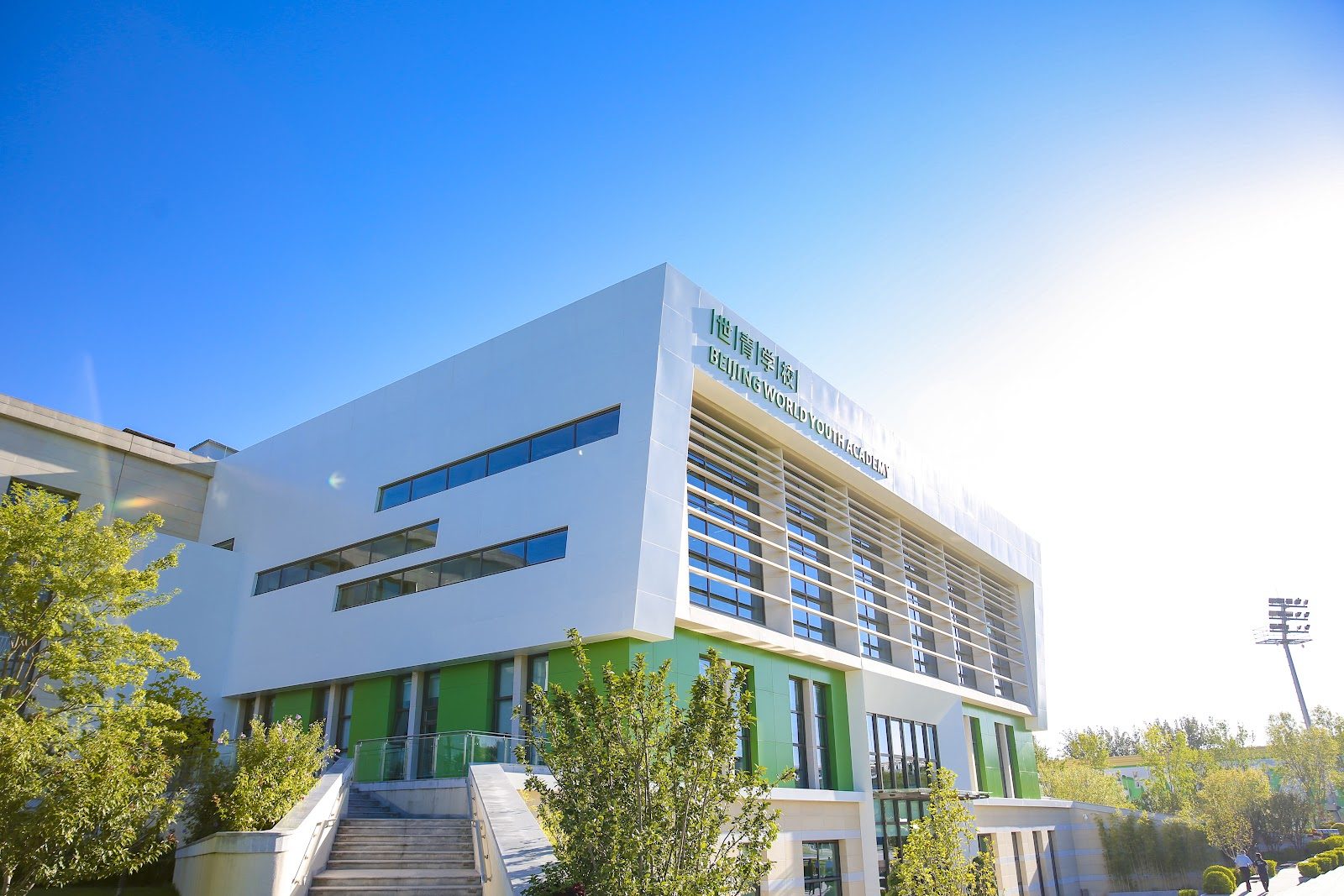
Facilities are the hardest part of BWYA to assess because the school does not publish them in any usable detail. We have not seen a campus map, specialist room list, theatre specification, sports inventory, library scale, laboratory provision, maker space, music suite, or images that let parents judge condition and breadth. That gap matters. For a school serving students through the senior years, parents need to know whether science is taught in serious laboratories or ordinary classrooms, whether the arts have dedicated space or borrowed corners, and whether sport extends beyond a basic court-and-field offer. On this front, BWYA is opaque.
Against Beijing peers, that puts the school behind on a simple but important test: public proof of what students can use every day. Strong competitors show their indoor sports halls, black-box theatres, design labs, libraries, sixth form spaces and outdoor provision because facilities shape the daily quality of school life as much as teaching does. BWYA does not. The only hard public locator we have is Laiguangying, which tells parents where the school sits, not what the campus delivers. Until BWYA publishes a proper facilities inventory and current photography, families cannot benchmark it with confidence against the city’s better-documented international schools. In practical terms, that means every serious enquiry needs a campus visit, a room-by-room tour, and direct questions about access, upkeep and specialist provision for the secondary years.
Beijing World Youth Academy occupies a distinctive niche in Beijing’s crowded international market
Prestige
BWYA carries mid-tier prestige, not top-tier cachet. In Beijing’s international-school market, prestige comes from three things: admissions selectivity, public examination outcomes and destination power. BWYA does not publish the data needed on any of the three. There are no aggregate diploma results in the public domain, no cohort-by-cohort university lists, and no clear public evidence of how hard it is to win a place. That does not make the school weak; it does make its reputation hard to verify. The school also suffers from a self-inflicted credibility problem: its public web address does not function as a school site at all, but as a domain sale page priced at $6,095 with a payment plan of $253.96 a month. For a school competing for internationally mobile families, that is careless.
Why rate it above the bottom rung? Because the underlying educational proposition still carries weight. A school that serves international families in mixed classrooms, rather than a narrow embassy enclave, can build a serious reputation with the right students and parents. That gives BWYA a distinctive identity and a more rooted character than purely expatriate operators. But prestige at the upper end depends on proof, not premise. Until BWYA restores basic public communications and publishes hard outcomes, its standing remains respectable rather than elite.
The school runs the full IB continuum and, unusually for this segment, does so alongside China’s national curriculum
Communications
Parent communication is BWYA’s weakest public-facing function. The school’s listed web address does not lead to a school site at all; it lands on a domain marketplace with an asking price of $6,095 and a monthly payment option of $253.96. That is not a minor technical lapse. It is a *serious failure of basic communication hygiene*. For any parent researching admissions, policies, leadership, term dates or daily school life, the first point of contact is effectively broken. In practical terms, that pushes families towards hearsay, private networks and direct enquiry long before trust has been earned. A school can run well behind the gate and still damage itself badly at the front door. BWYA does exactly that.
The deeper problem is not only access, but disclosure. We have not seen a functioning public channel that sets out core parent information with ordinary professional clarity: staff contacts, leadership visibility, campus guidance, handbooks, calendar detail, news flow, or clear academic reporting. That makes the school hard to read from the outside and leaves parents without the routine signals that a well-run institution sends automatically. Strong schools communicate before a family visits, during admissions, and after enrolment through consistent, current information. BWYA gives no public proof of that discipline. Until the school restores a working website and publishes the basics, parents should assume that communication will require persistence, follow-up and direct questioning.
Uniqueness
BWYA’s distinctiveness lies in combination, not glamour. Plenty of international schools offer global qualifications; far fewer tie that to a live relationship with the host country inside the same school. Here, the draw is not an expatriate cocoon but a model that asks students to operate across educational cultures, social codes and linguistic contexts as part of ordinary school life. That produces a more grounded internationalism than the standard airport-lounge version of global education. Students do not just prepare for mobility; they learn to read the country they are living in. For families who want Beijing itself to matter, that is a serious differentiator.
The age span also shapes the experience. A school focused on 11–18 avoids the all-through sprawl that can dilute identity across too many phases. The centre of gravity sits with adolescents, where academic pressure, personal formation and peer culture all intensify. In that setting, BWYA’s mixed local-and-international proposition can give students a wider social field than monocultural schools manage: more varied friendships, more day-to-day code-switching, and a stronger sense that international education is not the same thing as cultural detachment. The trade-off is clear. This is not the school for families who want a sealed bubble or a narrow, single-system route. Its value sits in complexity, and in the resilience that complexity can build.
That gives BWYA a distinctive identity and a more rooted character than purely expatriate operators
Student Profile
The best fit at BWYA is a student who is comfortable in mixed company and does not need a cultural bubble to feel secure. This is not a school for children who want a single social type, a narrow national identity, or a heavily insulated expatriate world. It suits teenagers who can move between peer groups, handle difference without fuss, and treat daily cross-cultural contact as normal rather than exotic. The age range, 11–18, also matters: this is a setting for adolescents who can manage growing independence, sharper academic demands and the social complexity that comes with older year groups. A child who needs constant hand-holding or a tightly managed, uniform environment will find the fit strained.
Students who thrive here will have intellectual flexibility, social confidence and a degree of resilience. They do not need to be extroverts, but they do need enough poise to function in classrooms where expectations, home backgrounds and future pathways are not all the same. Families who value local engagement alongside international outlook will find that attractive; families who want a straightforward conveyor belt to elite outcomes need harder proof before buying in. The school will suit young people who are curious, adaptable and willing to do some of the work of joining in. It is a better match for the open-minded and self-directed than for the rigid, status-anxious or fragile.
Founded in 2001, BWYA is also old enough to have institutional memory, but not so old that it trades on legacy alone
Co-curricular strengths
Arts & sport, on a separate axis
Overall 7.6/10
Scored 0-10 from the school's own published evidence. This axis is editorial-only — it does not feed the main WTS ranking.
Sports
8/10
Explicitly names Basketball Team, Football Team, and Volleyball Team.
Drama
7.5/10
Drama Productions, which goes beyond a bare mention of drama by indicating recurring staged activity.
Dance
6.5/10
Music
8/10
Explicitly names Choir Ensemble.
Visual Arts
8/10
Visual Arts is offered, but there is.
Editor first-pass · editor-reviewable · 7/27/2026
Strengths
- +Beijing location suits families needing China-based schooling.
- +School-declared IB curriculum offers international continuity.
- +International school context may suit mobile expatriate families.
- +Beijing base can provide access to the capital city.
Considerations
- −Primary website currently resolves to a domain sale page.
- −No verified fees provided in the supplied sources.
- −No published accreditations in the supplied sources.
Availability
Primary entry gate & tests
Academic Record
Parent reviews
Have you sent your child here?
Voice reviews carry the strongest trust badge — we transcribe them for you to tidy up before they go live. Prefer to type? A written review is fine too.
Add your voice
In 60 seconds, tell other parents: what's the best thing about Beijing World Youth Academy, and what surprised you when your child joined?
We ask for a Google sign-in so every review has a real face behind it — no anonymous drive-by attacks on schools, and no faked positive reviews. Your email is never shown publicly.
Send this profile to a friend
International parents rely on word-of-mouth. Share this review with someone weighing the same decision.
Schools with places
Similar schools to Beijing World Youth Academy with places available now.
Beijing City International School
Beijing · China
- 2026-27
- WAITPOOLSpace-dependent
- 2027-28
- PLACES OPENRolling
Canadian International School of Beijing
Beijing · China
- 2026-27
- WAITPOOLSpace-dependent
- 2027-28
- PLACES OPENRolling
Yew Chung International School of Beijing
Beijing · China
- 2026-27
- WAITPOOLSpace-dependent
- 2027-28
- PLACES OPENRolling
Beanstalk International Bilingual School
Beijing · China
- 2026-27
- WAITPOOLSpace-dependent
- 2027-28
- PLACES OPENRolling
Availability first, then country, area, curriculum, price, co-curricular
Consider also
Also worth looking at alongside Beijing World Youth Academy.
Suzhou Singapore International School
Suzhou · China
Rooted in the Suzhou Industrial Park's China-Singapore partnership, it pairs a full IB continuum with a parallel German curriculum strand.
Shanghai United International School
Shanghai · China
Chinese and Western teachers share the same classroom across an eight-campus Shanghai network built on IB and an East-meets-West bilingual ethos.
Yew Wah International Education School of Beijing
Beijing · China
Chinese-English co-teaching in every classroom, threading a through-train path from early years to the IB in Yizhuang's tech park
Shanghai Rego International School
Shanghai · China
A Minhang day-and-boarding campus delivering the English National Curriculum through GCSEs and A-Levels, with houses, an indoor pool and daily Mandarin study.
Same country and curriculum — closest matches within ±10 points either way