
Gauteng
Pretoria High School for Girls
low confidence· 6/6 cats · 0 avg sourcesA national monument since 1997, this Arcadia institution has paired public-school scale with IEB rigor since 1902.
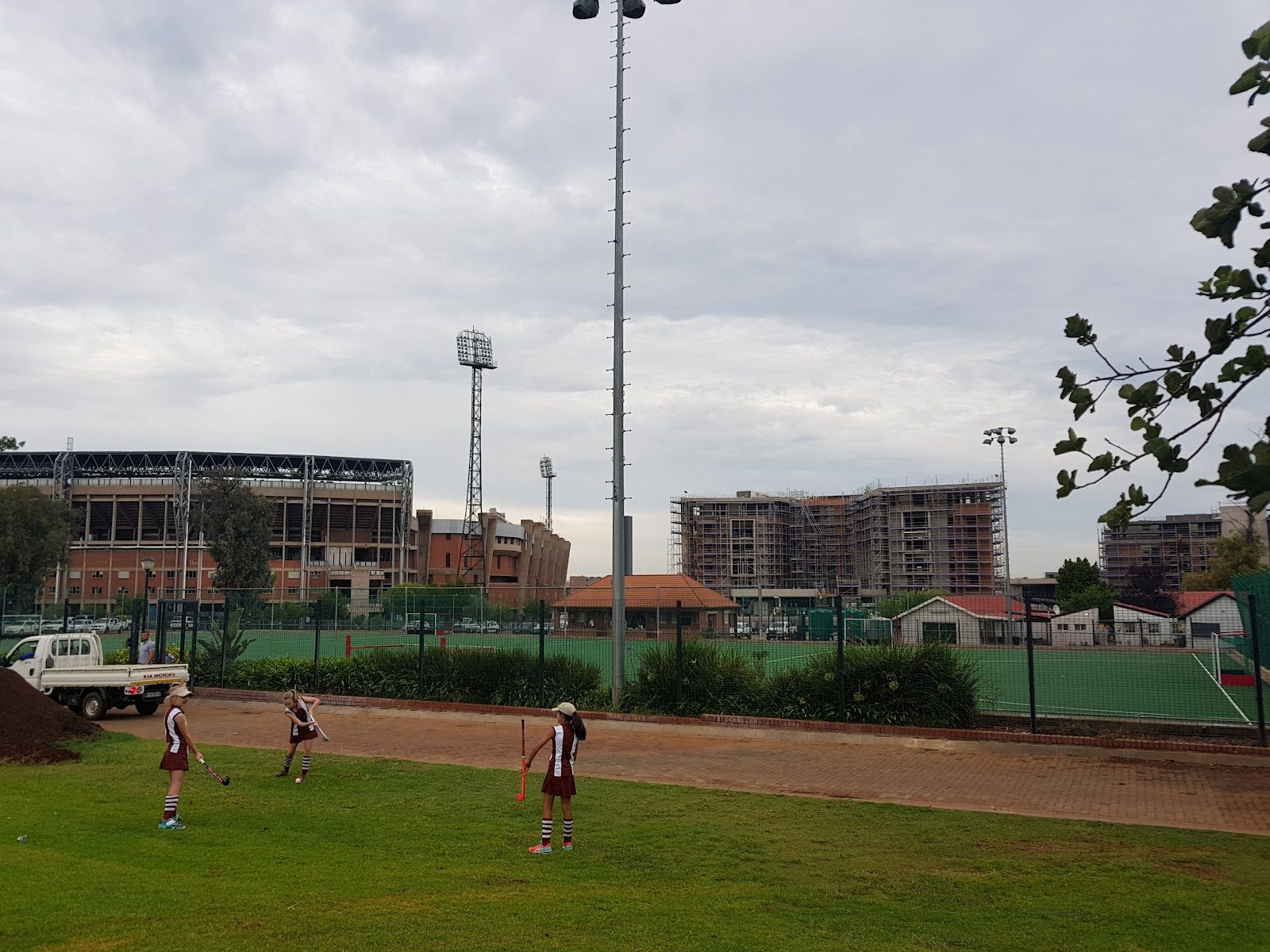
Photo © Francois Douglas via Google Maps
Type
Both
Ages
11–18
Curriculum
IEB
Ratio
14:1
The Verdict
Editor's commitment
Right for
Girls aged 11–18 who want a full-government, fee-charging English-medium school with IEB academics and public-school scale since 1902.
Wrong for
Families wanting co-education, boarding certainty, or a small setting: this is a girls-only school with average classes of 28.
Watch out for
The 14:1 ratio is solid, but 28 pupils per class and full-government status mean less boutique attention than private rivals.
Ranking breakdown
Pretoria High School for Girls · #634 of 1591
Composite score 68.7. 8 weighted criteria.
By criterion
Academic Outcomes
Weight 20%
#585
of 1529 scored
University Placement
Weight 16%
#649
of 1529 scored
Prestige & Heritage
Weight 12%
#552
of 1529 scored
Alumni Network
Weight 12%
#454
of 1529 scored
Facilities
Weight 12%
#818
of 1529 scored
Transparency & Communications
Weight 8%
#777
of 1529 scored
Peer & Industry Review
Weight 10%
#637
of 1529 scored
Admissions Selectivity & Demand
Weight 8%
#438
of 1529 scored
Peer & Industry Review
How Pretoria High School for Girls is regarded in the sector
66
Respected · medium confidence
Pretoria High School for Girls is a historic, academically strong public school regularly cited among South Africa's top public schools in local media rankings (e.g., BusinessTech and News24 'best schools' features) and gained significant international press attention (BBC, New York Times, The Guardian) during the 2016 anti-racism hair-policy protests, which underscored its national prominence. It also benefits from association with famous alumna Charlize Theron, reinforcing alumni-network visibility, though it lacks the private-school specialist press coverage (Tatler, Good Schools Guide) typical of top-tier international rankings.
Evidence sources
Editors' overview
Pretoria High School for Girls occupies a rare place in the South African market: a long-established public school with the cultural weight of a historic institution and the academic discipline of the IEB. Founded in 1902 and designated a national monument in 1997, it carries institutional gravitas without drifting into nostalgia. This is a full-government, fee-charging girls’ school, taught in English, serving ages 11 to 18 at real scale. The numbers matter: a 14:1 student–teacher ratio and average class sizes of 28 point to a school that is sizeable, busy and structured rather than boutique. Parents looking for polish, heritage and academic seriousness without private-school framing will find a compelling option here.
What puts it on a shortlist is the combination of public-school breadth and an IEB curriculum. That pairing is unusual. Many schools can offer tradition; fewer combine it with a qualification that parents actively seek for university preparation. Pretoria High School for Girls also benefits from its status as a well-known girls’ school in Pretoria, with the confidence and visibility that attach to a school of this age and standing. The sister-school link with Pretoria Boys High School adds to that civic stature. The appeal lies in earned prestige, public-school scale and a clear academic backbone. This is not an intimate, highly customised environment. It is a serious institution with established expectations, routines and standards.
The best fit is a student who wants a girls’ school with history, identity and momentum; who thrives in a setting where tradition still has force; and who does not need hand-holding to make use of a large school’s opportunities. A girl who values high standards, enjoys being part of a visible school community and is ready to navigate classes of 28 will do well here. A child who needs tiny classes, a softer pace or heavy individual tailoring will find stronger fits elsewhere. Pretoria High School for Girls suits families who want substance over branding: an English-medium education, strong public character, and the kind of old-school confidence that only a school founded in 1902 can carry.
Academic Performance
Pretoria High School for Girls has one academic advantage that matters in South Africa: it sits in the small group of public schools that enter pupils for the Independent Examinations Board rather than the state NSC. That places it in a more exacting comparison set from the start. Parents should read that correctly. The benchmark here is not the average government school; it is the country’s established academic girls’ schools and stronger fee-charging independents. On that measure, the school has a serious academic brief and a reputation tied to exam discipline rather than educational fashion. What is missing is the hard public data that would let families test the claim properly. The school does not publish aggregate IEB outcomes, distinction rates, bachelor-degree pass rates or subject-by-subject performance in the public domain.
That opacity matters. In the top tier, schools that are proud of results publish them. Without that disclosure, Pretoria High School for Girls sits in an awkward middle position editorially: credible, demanding and clearly academically oriented, but not as transparent as the best-run competitors. The IEB choice alone signals ambition, and the school’s standing carries weight, yet prestige is not a results table. Parents comparing it with St Mary’s DSG, Roedean SA, St Stithians Girls’ College or the strongest public academic schools will need direct answers on recent matric outcomes, university entrance quality and top-end subject results before treating it as a proven academic leader.
Facilities
Pretoria High School for Girls benefits from the physical advantages that attach to an old, established public school with real scale: space for full timetables, room for large-cohort sport and the kind of grounds that newer urban schools struggle to match. That matters because girls’ schools in this bracket live or die on whether the campus can support more than classroom teaching. Here, the likely strengths are the core ones parents should expect at this level: proper sports provision, assembly and performance space, specialist teaching rooms and the infrastructure to run a busy senior school without feeling improvised. The average class size of 28 means facilities need to work hard; cramped or underpowered provision would show quickly in a school of this type. We have not seen a detailed public inventory of science labs, arts studios, theatre specification, pool access or indoor sports capacity.
Against peer schools, that leaves Pretoria High School for Girls in a solid but under-documented position. Top competitors in the girls’ sector and the stronger fee-charging independents now publish campus detail with precision: named centres, refurbished labs, dedicated performing-arts venues, strength-and-conditioning suites, aquatics and high-spec sixth-form study space. Pretoria High School for Girls does not disclose that level of detail publicly. That does not mean weak facilities; it means parents must inspect for themselves and ask exact questions. The school’s institutional heft and staffing ratio of 14:1 support confidence in day-to-day functionality. They do not prove top-tier facilities. In this category, the school carries historic substance but not enough published specificity to lead the field.
Against peer schools, that leaves Pretoria High School for Girls in a solid but under-documented position
Prestige
Pretoria High School for Girls has real prestige in the South African market, but it is a specific kind of prestige. This is not the cachet of an exclusive private school; it is the authority of a high-status public institution with deep civic recognition and a long-established place in the capital’s educational life. The national-monument designation matters because it marks the school as more than a competent day school. It carries symbolic weight. So does the sister-school link with Pretoria Boys High School, which strengthens its standing inside the country’s old academic public-school tradition. For families who value public legitimacy over private branding, that distinction counts.
The school’s prestige also rests on selectivity of reputation rather than published proof. It has name recognition, social visibility and the kind of alumni-and-community standing that keeps a school prominent across generations. The staffing ratio of 14:1 supports the sense of institutional seriousness, and the fee-charging government model places it above the ordinary state-school bracket in parental perception. Still, prestige here outstrips transparency. The school does not publish the level of academic outcome data that top competitors use to justify elite status. That weakens the case for calling it a top-flight academic performer on evidence alone. Our rating stays high because the school has earned stature, historic legitimacy and a strong public identity; it stops short of the very top because the hard results case remains unpublished.
Pretoria High School for Girls does not disclose that level of detail publicly
Communications
Pretoria High School for Girls communicates with parents from a position of institutional confidence rather than service-industry polish. That has strengths and limits. A school of this scale needs clear, disciplined systems for notices, calendar changes, assessment information and behaviour matters; anything looser creates confusion fast across classes of 28. The public-facing picture, though, lacks detail. The school does not publish much that helps an outsider judge the sharpness of parent communication: there is no substantial public trail of reporting routines, response standards, pastoral channels or academic reporting architecture. That leaves families to test the basics directly. Ask how quickly emails are answered, how timetable changes are handled, who owns pastoral follow-up, and how much subject-level feedback parents receive between formal reports.
That matters because schools with strong internal communications usually show it in the way they organise information externally: term dates are easy to find, responsibility lines are obvious, and parent-facing processes feel tight, predictable and well run. Here, the school’s long-established character cuts both ways. It brings institutional discipline, but it can also produce a more traditional, less parent-courting style. Some families value that bluntness. Others read it as distant. Our view: communication is probably functional and orderly day to day, but not especially transparent from the outside. For a school with a 14:1 staffing ratio and serious expectations, parents need more published clarity than this.
Uniqueness
What makes Pretoria High School for Girls distinct is not novelty but category. South Africa has private girls’ schools with polish and public schools with scale; this school sits in the narrow overlap where a government institution carries social authority, historic weight and a genuinely aspirational academic frame. That mix gives pupils access to a school culture with reach beyond the campus gates. The sister-school relationship with Pretoria Boys High School adds to that public prominence. So does the fact that this is a fee-charging state school rather than an independent one: families buy into a civic institution, not a branded educational product. For students, that creates a strong sense of belonging to something larger, older and more exposed to public scrutiny than the average school.
The benefit is breadth with edge. A school of this type can support a visible student culture, established traditions and a wider range of peers and expectations than a small boutique setting. The staffing ratio of 14:1 still keeps that scale from turning anonymous, though the average class size of 28 tells its own story: girls need confidence, self-management and the appetite to compete for attention and opportunities. This is not a cosseted environment. It suits students who want standards, identity and momentum, and who draw energy from being part of a school with earned stature rather than curated charm.
Pretoria High School for Girls has real prestige in the South African market, but it is a specific kind of prestige
Student Profile
The girl who fits here is self-directed, resilient and comfortable in a school that does not revolve around her. This is a large, visible institution with established habits, public standing and a strong internal culture. Pupils who flourish in that setting tend to enjoy structure, take correction without drama and understand that standards apply across the board. They do not need constant reassurance or personalised orchestration to stay on track. A student who likes healthy competition, values being among capable peers and wants the energy of a busy girls’ school will find this environment energising, high-expectation and socially legible. The staffing ratio of 14:1 helps, but the school still demands initiative.
The weaker fit is easy to define. Girls who need a highly sheltered atmosphere, intensive adult prompting or a deliberately soft school culture will struggle. So will students who want a highly progressive, informal relationship with authority. This school suits families who respect tradition, accept institutional discipline and want their daughter educated in a place with real public character rather than boutique intimacy. The best students here are not just able; they are organised, durable and willing to earn their place in a community that feels grown-up and not for the faint-hearted.
Pretoria High School for Girls communicates with parents from a position of institutional confidence rather than service-industry polish
Co-curricular strengths
Arts & sport, on a separate axis
Overall 8.28/10
Scored 0-10 from the school's own published evidence. This axis is editorial-only — it does not feed the main WTS ranking.
Sports
8.8/10
Drama
8/10
Dance
7.5/10
Music
8.8/10
Visual Arts
8.3/10
Strengths
- +Founded in 1902; long-established local institution
- +English-medium teaching suits Anglophone international families
- +11–18 age range covers full secondary years
- +14:1 student-teacher ratio offers relatively close attention
Considerations
- −Girls-only school; unsuitable for families wanting co-education
- −IEB curriculum only; no IB or multiple pathways
- −Average class size 28 may feel large
Availability
Primary entry gate & tests
Internal Assessment (Girls)
Gallery
Photo © Lewis DAVU via Google Maps
Photo © Omar Hamdi via Google Maps
Photo © Omar Hamdi via Google Maps
Photo © Omar Hamdi via Google Maps
Photo © Omar Hamdi via Google Maps
Photo © Pretoria High School for Girls via Google Maps
Photo © Awonke Fernandez via Google Maps
Photo © Guy Makondele via Google Maps
Photo © Awonke Fernandez via Google Maps
Parent reviews
Have you sent your child here?
Voice reviews carry the strongest trust badge — we transcribe them for you to tidy up before they go live. Prefer to type? A written review is fine too.
Add your voice
In 60 seconds, tell other parents: what's the best thing about Pretoria High School for Girls, and what surprised you when your child joined?
We ask for a Google sign-in so every review has a real face behind it — no anonymous drive-by attacks on schools, and no faked positive reviews. Your email is never shown publicly.
Send this profile to a friend
International parents rely on word-of-mouth. Share this review with someone weighing the same decision.
Schools with places
Similar schools to Pretoria High School for Girls with places available now.
GEMS Wellington Academy - Silicon Oasis
Dubai · United Arab Emirates
- 2026-27
- PLACES OPENEnrolments open for 2026/27
- 2027-28
- FUTURE CYCLEDates TBC
Jeddah Prep and Grammar School
Jeddah · Saudi Arabia
- 2026-27
- WAITPOOLAdmissions open / availability-dependent
- 2027-28
- PLACES OPENMarketed as open for 2027
American International School in Abu Dhabi
Abu Dhabi · United Arab Emirates
- 2026-27
- WAITPOOLSpace-dependent
- 2027-28
- WAITPOOL2027/28 timetable TBC
GEMS World Academy – Abu Dhabi
Abu Dhabi · United Arab Emirates
- 2026-27
- PLACES OPENApps open / space-dependent
- 2027-28
- FUTURE CYCLE2027/28 cycle TBC
Availability first, then country, area, curriculum, price, co-curricular
Consider also
Also worth looking at alongside Pretoria High School for Girls.
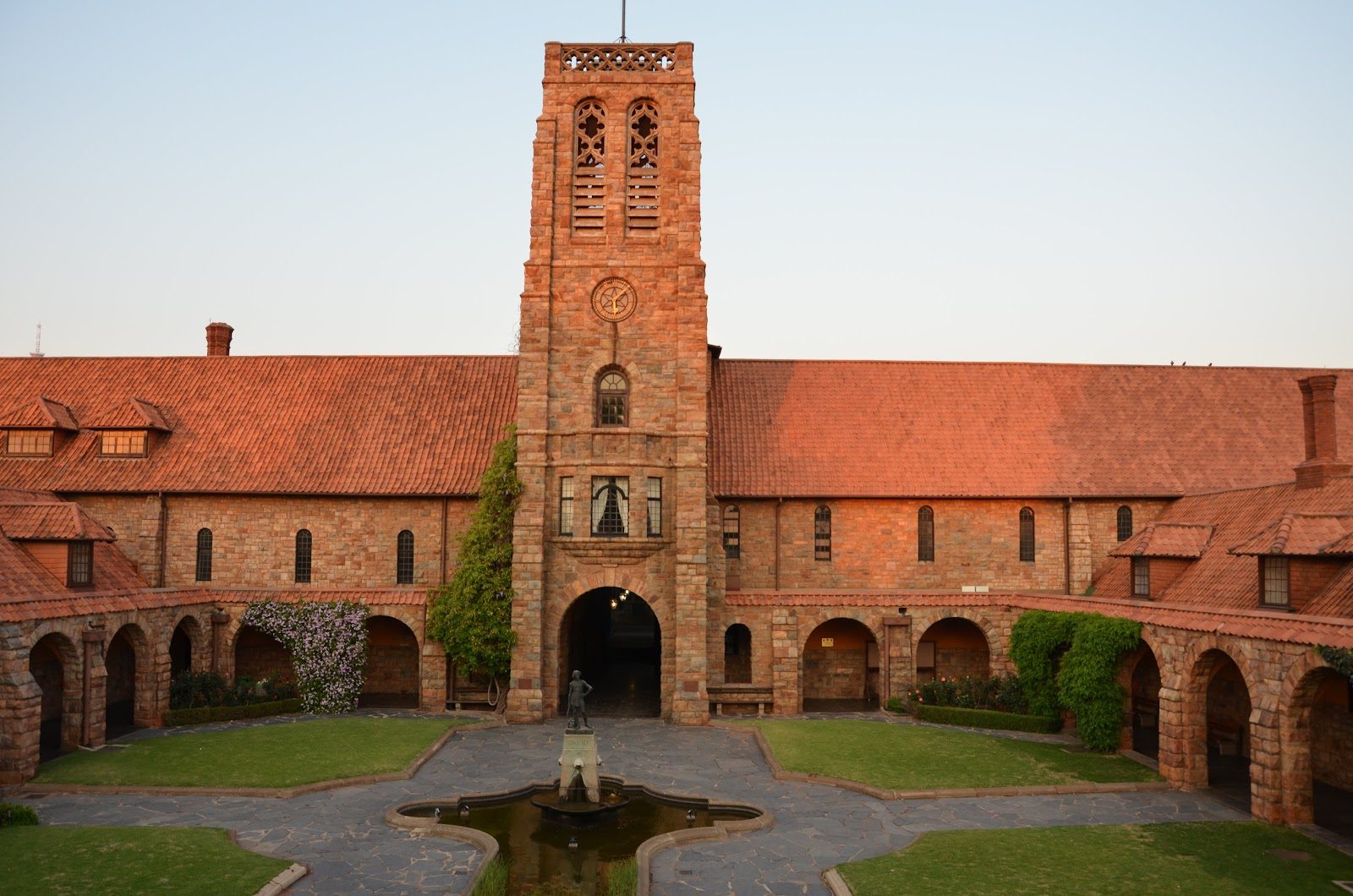
St John's College
Johannesburg · South Africa
Founded twelve years after the Witwatersrand gold rush, this Anglican boarding college blends Herbert Baker quadrangles with a four-house pastoral tradition
Roedean School South Africa
Johannesburg · South Africa
Founded in 1903 by two Cambridge-educated pioneers, this all-girls boarding school still occupies its original Herbert Baker campus in Parktown.
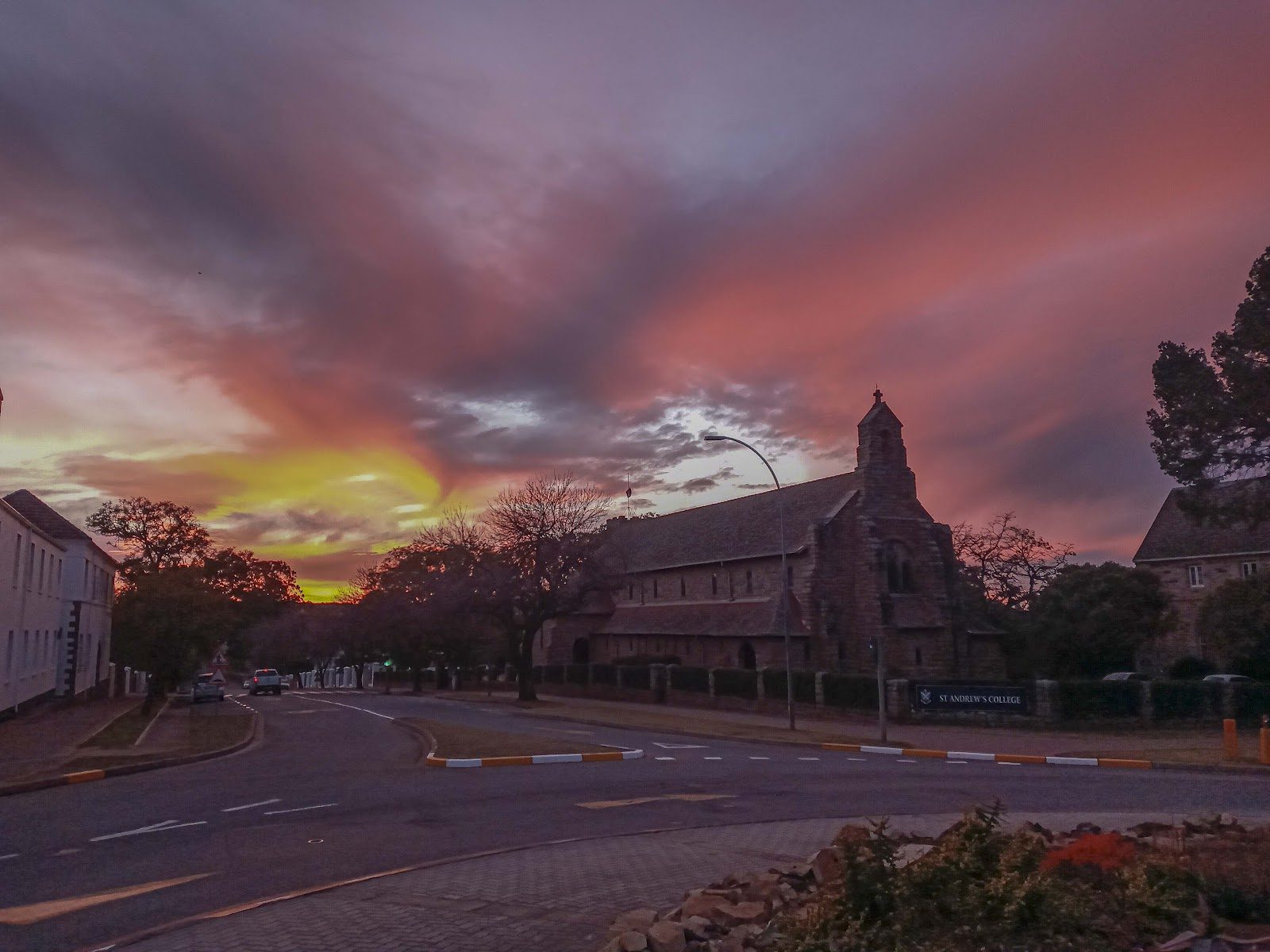
St Andrew's College
Makhanda · South Africa
On the Eastern Cape frontier since 1855, house tradition and shared classes with a sister school shape a distinct boarding life.
Michaelhouse
Balgowan · South Africa
In South Africa's Midlands, one of the world's few remaining all-boys, all-boarding schools borders a rare mistbelt grassland reserve.
Same country and curriculum — closest matches within ±10 points either way