
Lisbon
PaRK International School
Bilingual immersion to Grade 4 gives way to Cambridge IGCSE and the IB Diploma, inside Lisbon's global Inspired Education network.
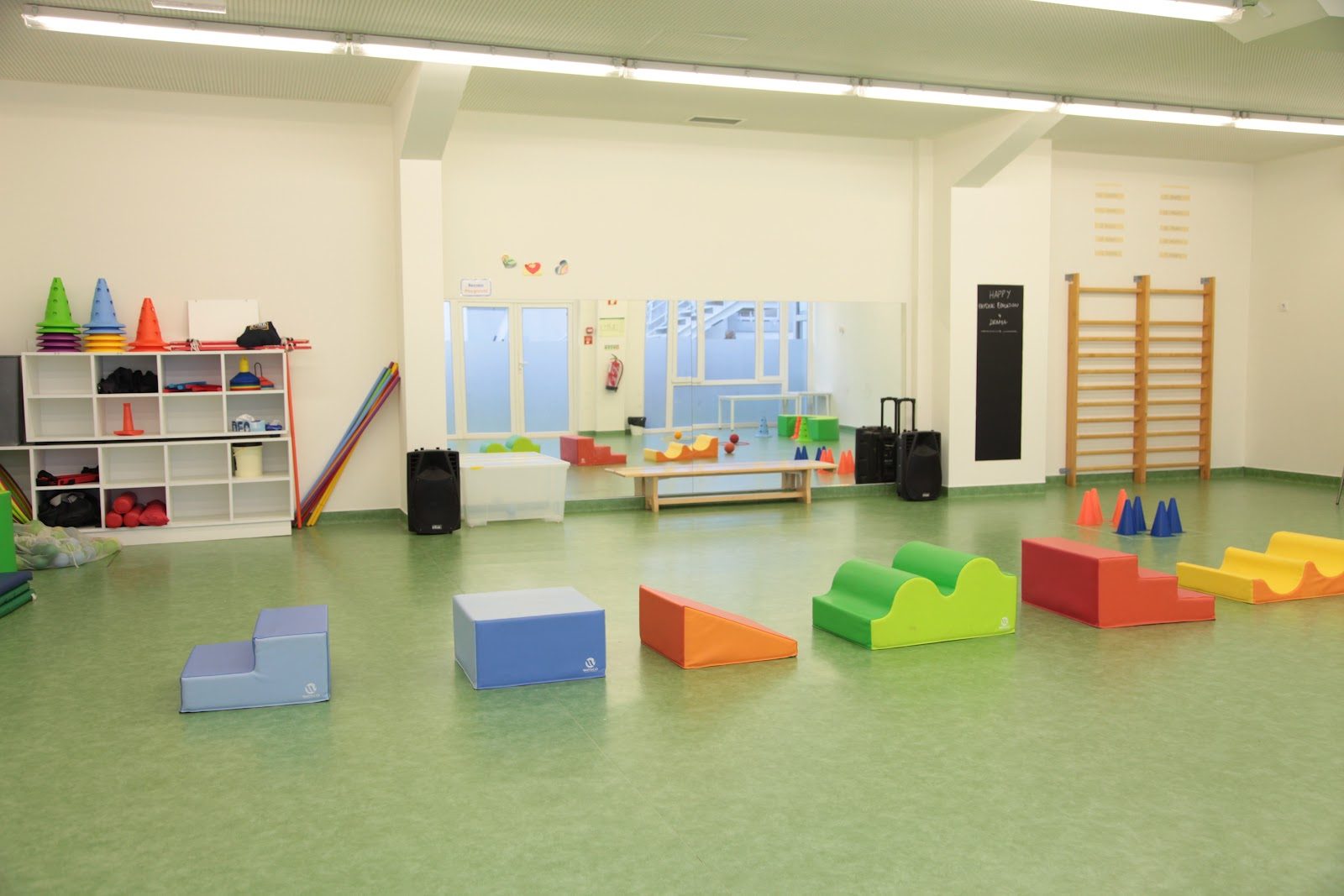
Photo © PaRK International School | Praça de Espanha via Google Maps
Type
Day
Ages
3–18
Curriculum
British
Qualifications
IGCSE · A-Level
Ratio
—
The Verdict
Editor's commitment
Right for
Lisbon families who want English-medium schooling from ages 3–18, with Cambridge International and an IB Diploma route under one roof.
Wrong for
Parents wanting boarding, a faith setting, or a single-curriculum school; PaRK is day-only, secular, and shifts from bilingual immersion to Cambridge and IB.
Watch out for
Bilingual immersion ends at Grade 4; after that, the academic track hardens into Cambridge IGCSE and the IB Diploma, which narrows flexibility.
Ranking breakdown
PaRK International School · #1557 of 1591
Composite score 42.8. 8 weighted criteria.
By criterion
Academic Outcomes
Weight 20%
#1427
of 1529 scored
University Placement
Weight 16%
#1462
of 1529 scored
Prestige & Heritage
Weight 12%
#1551
of 1571 scored
Alumni Network
Weight 12%
#1288
of 1530 scored
Facilities
Weight 12%
#1333
of 1533 scored
Transparency & Communications
Weight 8%
#1243
of 1532 scored
Peer & Industry Review
Weight 10%
#1529
of 1548 scored
Admissions Selectivity & Demand
Weight 8%
#1506
of 1529 scored
Peer & Industry Review
How PaRK International School is regarded in the sector
40
Regional · medium confidence
PaRK International School remains a relatively young entrant in Lisbon's crowded international-school market, and its industry standing reflects that: it has not yet accumulated the kind of independent scrutiny given to longer-established peers such as St. Julian's, Carlucci American International School, or St. Dominic's. Coverage is largely descriptive rather than evaluative, appearing in expat-relocation guides and ISC Research-style directories rather than critical outlets like WhichSchoolAdvisor or the Good Schools Guide, neither of which has published a substantive independent review. No verifiable quotes from rival heads or university admissions officers regarding its graduates are publicly available, and it does not yet feature in Portuguese national newspaper league tables, which tend to prioritize larger, longer-tenured institutions. Its main external validation comes through IB affiliation status rather than press commentary. Within Lisbon's international-school circuit it is generally regarded as an emerging, bilingual-curriculum option gaining word-of-mouth traction among relocating families, but it has not yet achieved the conference visibility or cross-institutional citation common to Portugal's more established international schools.
Editors' overview
PaRK International School occupies a clear niche in Lisbon: an English-medium day school that starts with bilingual immersion in the early years, then moves onto Cambridge IGCSE and the IB Diploma. Founded in 2007, it is young by European standards, but its proposition is coherent. The draw is not heritage; it is structure. Children start in a setting that gives Portuguese real weight up to Grade 4, then transition into an academic route that international families recognise and universities understand. For parents who want Lisbon, but do not want a local curriculum or a full linguistic leap into Portuguese schooling, that is a persuasive middle path.
What sets PaRK apart is the combination of local rootedness and international portability. Many international schools in capital cities promise “global mindedness”; PaRK offers something more concrete. Young children get early bilingual immersion, while older pupils work through Cambridge International and then the IB Diploma, a sequence with strong transfer value for mobile families. The school also sits inside Inspired Education’s network, which brings brand recognition, operational scale and access to a wider system. That cuts two ways. It gives the school institutional heft and a degree of consistency that stand-alone schools struggle to match. It also places PaRK in the premium, corporate end of the market, where polish is expected and intimacy can be harder to preserve.
Parents should shortlist PaRK if they want an academically serious, internationally legible education in Lisbon without sacrificing connection to Portugal in the early years. This is not the city’s idiosyncratic boutique option, nor its old-establishment grande dame. It is a modern, fee-paying international school with a defined pipeline from ages 3–18 and a secular outlook. The best fit is a child who will thrive in a structured, ambitious environment: internationally mobile families, bilingual or bicultural households, and students aiming for university options across multiple countries. It suits pupils who benefit from *clarity, momentum and external benchmarks*. It suits them less well if a family wants a tiny school, deep tradition, or a deliberately alternative educational philosophy. PaRK’s appeal lies in fluency across systems and a sharp sense of direction.
Academic Performance
PaRK does not publish enough hard outcome data to earn top marks for transparency. We have not seen aggregate IGCSE grade distributions, average point scores for the IB Diploma, cohort pass rates, subject-by-subject breakdowns, or multi-year university destination data. That matters. In a market where premium international schools ask families to buy into academic credibility and global portability, the absence of public headline results leaves parents relying on brand, curriculum pathway and anecdote rather than evidence. The school sits inside a large private group, which raises expectations for clean, comparable reporting. On this front, PaRK is opaque.
That does not place it in weak academic territory; it places it in an unproven one. Cambridge and the IB impose external benchmarks, so pupils are not insulated by internal grading. That alone gives PaRK more academic ballast than schools built around looser in-house claims. Still, relative to peers in the premium international segment, PaRK trails the stronger operators on disclosure. The schools that lead this part of the market publish IB averages, pass rates and destination lists with enough detail for parents to judge whether results are consistently strong or merely respectable. PaRK does not. Until it does, the fairest verdict is credible but not evidenced, with external exam structures doing more of the reputational work than published results.
Facilities
PaRK’s facilities read as well-funded urban premium rather than sprawling showpiece. The school operates across more than one campus, with the Praça de Espanha senior site carrying the weight of the older years and younger pupils housed separately. For parents, that matters more than brochure language about “state of the art”: specialist spaces for science, art and technology belong in any school charging these fees, and PaRK has them. There is also a library, dedicated music provision and indoor sports capacity, which gives the school a functional all-round offer. The standout physical asset is the Estoril sports campus, a 20,000 sqm site with pitches, courts and a swimming pool. That lifts PaRK above city schools forced to make do with a gym hall and rented facilities.
Against Lisbon peers, the picture is mixed in a useful way. PaRK beats compact inner-city schools on serious sports provision and breadth of specialist space. It does not match the grand, self-contained campuses that define the top end of the market in greener, less central settings. Families choosing PaRK are buying capability over spectacle: enough room and infrastructure to support the programme properly, without the acreage, drama or architectural cachet that some rivals use to justify their prices. That is a defensible middle position. The facilities are strong where they need to be, with sport the clearest differentiator, but they do not place PaRK in the first rank of European international-school estates.
PaRK does not publish enough hard outcome data to earn top marks for transparency
Prestige
PaRK’s prestige sits in the upper tier of Lisbon’s international market, but not at the level where the school’s name alone settles the argument. Its status comes from three sources: selective price positioning, membership of the Inspired group, and an academic route that parents across borders recognise without explanation. That combination gives it market weight. In practical terms, a PaRK education signals a family that is buying into a premium international track rather than a local private school with added English. The Inspired connection also carries a certain corporate cachet: polished operations, strong branding, and a network effect that reassures mobile professional families. Fees of €14,895 in the early years rising to €22,440 in the senior school place it firmly in expensive territory, which reinforces that perception whether one likes it or not.
Still, prestige here is contemporary, not inherited. PaRK does not trade on old institutional gravitas, a famous alumni roll, or published academic results strong enough to dominate the conversation. That limits its standing. Among well-informed parents, prestige without proof has a ceiling. The school has social credibility and international recognisability; it does not yet have the kind of public outcomes that convert brand strength into serious academic clout. Our rating therefore lands in the zone of high-status but not formidable: a school with clear desirability, strong peer visibility, and affluent demand, but not one that commands automatic deference.
It does not match the grand, self-contained campuses that define the top end of the market in greener, less central settings
Communications
PaRK communicates with the polish of a premium school group: clean website architecture, clear fee presentation, straightforward admissions steps, and a visible rhythm of news, events and school life. Parents can grasp the basic offer quickly, which is not a trivial strength in an international market full of vague promises and cluttered websites. The school also benefits from the operational discipline that comes with a larger network, and that shows in the consistency of tone and layout. Where communication falls short is in substance. The public-facing message is slick, orderly and reassuring; it is not fully candid. Families get a strong sense of ethos, activities and day-to-day atmosphere, but less of the hard academic reporting that serious parents need before committing annual fees of €22,440.
That imbalance limits trust. Good school communication does more than market the experience; it publishes the evidence that lets parents test the claims. On that standard, PaRK underdelivers. We have not seen the kind of outcome reporting that would turn polished messaging into serious institutional credibility. Nor does the school publish enough comparative performance data to let parents distinguish between confident presentation and proven delivery. The result is effective front-end communication paired with thin accountability. Existing families may still find direct operational communication perfectly efficient day to day. For prospective parents, the school explains itself well, but it does not disclose enough.
Uniqueness
PaRK’s distinctiveness lies in its educational sequencing. Few international schools give Portuguese genuine force in the early years, then shift cleanly into globally recognised external programmes without asking families to change schools. That matters for a specific kind of household: parents who want children rooted in the host country, but not locked into one national system. For students, the gain is practical as much as cultural. Early immersion builds confidence across two linguistic worlds; the later academic structure sharpens transferability for moves between countries and for university applications beyond Portugal. It is a clear-sighted, strategic model, and it serves internationally mobile families well.
The other point of difference is the combination of local schooling with a large premium-schools network behind it. PaRK is not an isolated founder-led project; it sits inside a system with shared standards, wider reach and cross-school opportunities. That brings advantages in staffing, operations and parent confidence, even if it also gives the school a more corporate feel than smaller independents. Add the age range from 3–18, and PaRK offers something many families prize: one institution that can carry a child from nursery to university entry without a structural break. That continuity is reassuring for some children and constraining for others. Families who value consistency, momentum and an internationally legible pathway will find the model hard to ignore.
PaRK International School occupies a clear niche in Lisbon: an English-medium day school that starts with bilingual immersion in the early years, then moves onto Cambridge IGCSE and the IB Diploma
Student Profile
PaRK suits children who are comfortable in a structured, ambitious school culture and parents who want a clear route from the first school years to university entry. The best fit is the internationally minded family that values order, external benchmarks and a peer group drawn from professional, globally mobile households. This is a strong option for bicultural families and for children who can move between home cultures without drama. It also works well for students who benefit from firm academic framing rather than a loose, progressive model. The age span from 3–18 matters here: families looking for continuity, routine and one institutional home across childhood will find that attractive.
It suits some personalities far better than others. Children who thrive on clarity, pace and adult expectation will settle well. Pupils who need a highly individualistic, unconventional environment will not get their best education here. Nor is this the natural home for families chasing a bohemian school atmosphere or deep old-school tradition. The social mix sits at the premium end of the market, so parents need to be comfortable with that world: polished, achievement-conscious and affluent. For the right child, that produces a confident, internationally fluent peer environment. For the wrong one, it can feel too managed and socially narrow.
Founded in 2007, it is young by European standards, but its proposition is coherent
Co-curricular strengths
Arts & sport, on a separate axis
Overall 8.44/10
Scored 0-10 from the school's own published evidence. This axis is editorial-only — it does not feed the main WTS ranking.
Sports
8.8/10
Drama
8.2/10
Dance
8.2/10
Music
8.8/10
Visual Arts
8.2/10
Strengths
- +Follows the English National Curriculum through to IGCSE and A-Level, giving families a recognisable academic pathway for later transfer to UK or international universities.
- +Located in Lisbon, offering access to an English-medium option in a city with a growing expatriate and relocation population.
- +Operates as a day school, avoiding the cost and logistics associated with boarding provision.
- +Smaller, newer school structure allows for closer staff-student ratios typical of early-stage international schools rather than large established institutions.
- +British curriculum framework provides continuity for families who have already moved through UK-style schooling in other countries.
Considerations
- −As a comparatively young school (rising-star tier), it lacks the long track record of exam results, university placement data, or inspection history that older Lisbon international schools can show.
- −Public information on fees, class sizes, and facilities is limited compared with more established competitors, making due diligence harder for relocating families.
- −Being a single-campus day school, it does not offer boarding, which limits options for families based outside commuting range of Lisbon.
- −Editorial ranking (721) indicates it sits well outside the top tier of internationally recognised schools, reflecting its early stage of development rather than proven outcomes.
Availability
Primary entry gate & tests
Academic Record
Gallery
Parent reviews
Have you sent your child here?
Voice reviews carry the strongest trust badge — we transcribe them for you to tidy up before they go live. Prefer to type? A written review is fine too.
Add your voice
In 60 seconds, tell other parents: what's the best thing about PaRK International School, and what surprised you when your child joined?
We ask for a Google sign-in so every review has a real face behind it — no anonymous drive-by attacks on schools, and no faked positive reviews. Your email is never shown publicly.
Send this profile to a friend
International parents rely on word-of-mouth. Share this review with someone weighing the same decision.
Schools with places
Similar schools to PaRK International School with places available now.
Availability first, then country, area, curriculum, price, co-curricular
Consider also
Also worth looking at alongside PaRK International School.

King's College School Cascais
Cascais · Portugal
A EUR75 million coastal campus outside Lisbon pairs Cambridge rigor through Year 11 with a choice of IB or A-Levels beyond.

CLIP – Oporto International School
Porto · Portugal
Where Cambridge IGCSE and the IB run in parallel, and OPOMUN each spring turns Porto into a model United Nations chamber.

United Lisbon International School
Lisbon · Portugal
Blending American rigor with the IB Diploma on Lisbon's Parque das Nacoes waterfront, backed by Microsoft Showcase School status.
Oeiras International School
Oeiras · Portugal
A 17th-century palace estate near Lisbon runs the full IB continuum on a deliberately non-selective, community-rooted admissions model.
Same country and curriculum — closest matches within ±10 points either way