
South Holland
Gymnasium Haganum
Tracing its roots to 1327, this Hague gymnasium still drills Latin and Greek behind a 1907 neo-renaissance facade.
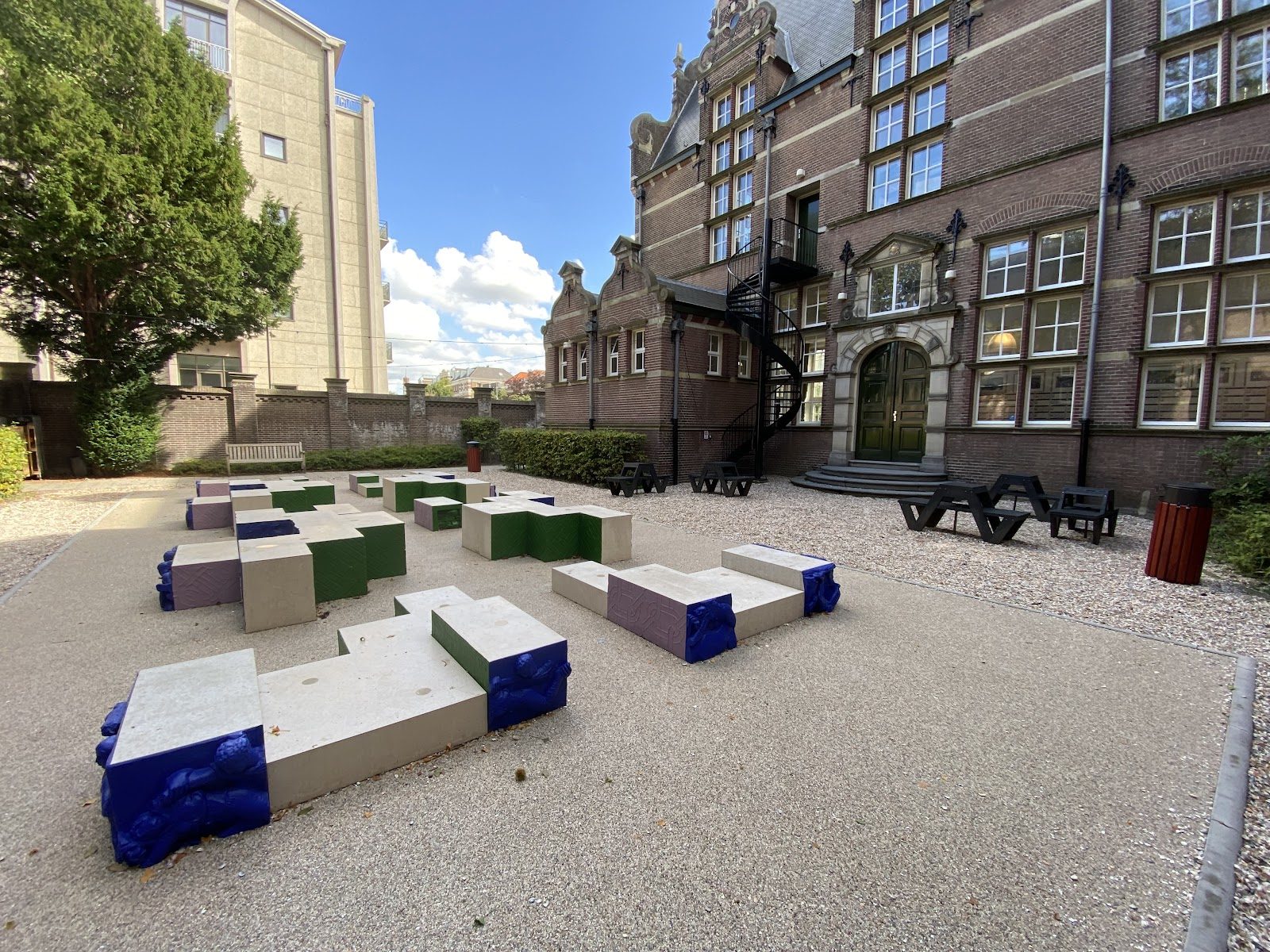
Photo © Walter Montenarie via Google Maps
Type
Day
Ages
11–18
Curriculum
Dutch
Qualifications
VWO Gymnasium
Ratio
—
The Verdict
Editor's commitment
Right for
Children aged 11–18 who want a Dutch gymnasium with Latin and Greek, in The Hague, at a public school first mentioned in 1327.
Wrong for
Families needing boarding, an English-medium education, or a broad international curriculum; Gymnasium Haganum is a Dutch day school in The Hague.
Watch out for
The 1907 Renaissance Revival building carries prestige, but the school publishes no aggregate exam outcomes; around 840 students still make it substantial.
Ranking breakdown
Gymnasium Haganum · #1236 of 1591
Composite score 57.1. 8 weighted criteria.
By criterion
Academic Outcomes
Weight 20%
#902
of 1529 scored
University Placement
Weight 16%
#1259
of 1529 scored
Prestige & Heritage
Weight 12%
#1150
of 1571 scored
Alumni Network
Weight 12%
#1224
of 1530 scored
Facilities
Weight 12%
#1465
of 1533 scored
Transparency & Communications
Weight 8%
#865
of 1532 scored
Peer & Industry Review
Weight 10%
#1433
of 1548 scored
Admissions Selectivity & Demand
Weight 8%
#400
of 1529 scored
Peer & Industry Review
How Gymnasium Haganum is regarded in the sector
57
Credible · medium confidence
Within the Dutch categorial gymnasium sector, Haganum is generally grouped with long-established peers such as Barlaeus Gymnasium (Amsterdam) and the various Stedelijk Gymnasia, valued for maintaining full Latin/Greek tracks rather than diluting them into mixed VWO streams. It competes locally and reputationally with The Hague's other selective gymnasium, Sorghvliet, and is regularly included in the annual Dutch school-quality surveys published by Elsevier and Trouw, which Dutch parents use as de facto league tables rather than an international press ranking. Because it channels students into the Dutch VWO/gymnasium diploma, its graduates receive standard entry recognition at Leiden, Utrecht, and the University of Amsterdam, with Leiden's proximity making it a common regional feeder; this is a structural, system-wide credential rather than a bespoke admissions relationship unique to Haganum. It does not feature prominently in Anglophone independent-school commentary (WhichSchoolAdvisor, Good Schools Guide), reflecting its identity as a Dutch state-affiliated gymnasium rather than an internationally marketed private school, so its reputation is best understood as strong within the national gymnasium tier rather than benchmarked against UK/international private-school peer networks.
Editors' overview
Gymnasium Haganum occupies a narrow but distinguished place in Dutch secondary education: a secular, public day school in The Hague with roots reaching back to 1338 and a first recorded mention in 1327. It serves around 840 students aged 11 to 18 in a 1907 Renaissance Revival building that gives the school real civic presence rather than campus sprawl. The distinguishing feature is plain: this is a Dutch gymnasium in the old sense, built around an academic route that still takes classical languages seriously. For families who want a school with intellectual seriousness, institutional memory and a culture that values scholarship over display, Haganum merits a place on the shortlist.
What sets it apart is not novelty but continuity. A school like this offers a rigorous Dutch education with Latin and Greek at its core, and that alone makes it a specialist choice. The attraction lies in the combination of old-school academic discipline and a public-school setting in the Dutch sense: not private, not confessional, and not designed to flatter every child. The school’s national reputation is strong; Wikipedia notes its placement among the country’s top schools in a yearly Elsevier survey. That matters, but the sharper point is this: Haganum’s appeal rests less on marketing metrics than on the durable value of a demanding academic culture housed in a building with scholarly gravitas.
This will suit a specific student. The right pupil is academically confident, comfortable with abstraction, and willing to work inside a tradition that prizes language, structure and sustained study. A child who enjoys etymology, history, literature and intellectual competition will find a serious scholarly atmosphere here. A child who wants broad vocational choice, a progressive pastoral pitch, or a school organised around sport, lifestyle and constant hand-holding will not. Haganum is for families who see education as a demanding inheritance rather than a consumer experience. That clarity is its strength.
Academic Performance
Publicly available performance data are thin. The school has a strong national academic reputation, and Wikipedia records its inclusion among the country’s top schools in Elsevier’s annual survey, but that is not the same as transparent exam reporting. We have not seen published aggregate leaving-exam results, subject-by-subject pass rates, grade distributions, value-added data or university destination lists. That opacity matters. For an institution with serious academic ambitions and a high-status intellectual identity, parents deserve harder evidence than reputation alone.
That said, the school’s place among peers is still clear in broad outline. Within the Dutch academically selective tradition, Haganum sits in the elite grammar-school tier: demanding, classical, and geared to students who can sustain a high-pressure scholarly pace. Its standing rests on selectivity of route, institutional reputation and external recognition rather than on glossy claims. The published roll of around 840 students also points to a school large enough to sustain depth without losing academic focus. The critical caveat remains unchanged: this is a school with real prestige and insufficient public performance detail. For data-driven families, that is a weakness. For families who trust the Dutch gymnasium model and want a hard-edged academic culture, it will not be a deterrent.
Facilities
Facilities here centre on the building itself. The school occupies a monumental early-20th-century premises rather than a landscaped multi-block campus, and that shapes the offer. Parents should expect architectural presence and a strong sense of scholarly continuity, not the sprawling specialist infrastructure that newer fee-charging schools use to sell themselves. A student body of around 840 gives the place enough scale to support core teaching spaces without turning it into an anonymous institution. For this type of school, the critical facility advantage is the environment: a serious academic building that reinforces routine, subject focus and institutional identity. That matters in a classical grammar school more than glossy atriums or resort-style sports provision.
Against peer schools, Haganum’s facilities read as distinguished but not expansive. The monumental facade carries status, but the public domain does not show a broad catalogue of standout assets such as major theatre complexes, elite sports centres, maker spaces or university-grade science suites. Families comparing it with top international schools in the Netherlands will find less emphasis on showpiece amenities and more on functional academic space. Against other academically selective public schools, that is no defect; many parents will prefer substance over spectacle. The limitation is clear: the school does not publish enough detail on laboratories, arts rooms, library provision or sports infrastructure to let outsiders judge depth with precision.
Families comparing it with top international schools in the Netherlands will find less emphasis on showpiece amenities and more on functional academic space
Prestige
Gymnasium Haganum carries serious domestic prestige. In the Dutch system, the word “gymnasium” already marks a demanding academic route; Haganum adds the weight of public stature, long institutional continuity and a name that travels well among Dutch educated families. This is not prestige manufactured through branding or international franchising. It is the older kind: reputation accumulated through generations, reinforced by selectivity of academic culture and by the fact that the school remains tied to a classical intellectual ideal. The monumental building strengthens that status. It gives the school a civic authority that many modern schools lack, and it signals permanence rather than reinvention. A roll of around 840 students also matters here: large enough to be established, small enough to preserve a distinct identity.
The rating stops short of the very top only because the public evidence base is thinner than the reputation. Prestige built on external recognition still counts, and inclusion in Elsevier’s annual survey of leading Dutch schools places Haganum in rare company. That carries real weight. But prestige and proof are not identical. The school does not publish the kind of hard outcome data that would let parents test reputation against results in detail. So the judgement is clear: Haganum offers high-status academic prestige within the Netherlands, strongest among families who value scholarship, tradition and institutional memory, and less powerful for those who want globally legible branding or exhaustive performance disclosure.
The rating stops short of the very top only because the public evidence base is thinner than the reputation
Communications
Parent communication is hard to judge because the school does not publish much in the public domain beyond the bare institutional outline. That itself tells parents something. Haganum does not sell itself through a heavy stream of news, outcome dashboards or polished family-facing explanation. The tone is spare, old-school and institution-first. For existing families, that can work perfectly well if the internal systems are disciplined and expectations are already understood. For prospective families, it is a weaker showing. A demanding academic school needs clear, regular communication on workload, assessment, student support, timetables and day-to-day practicalities. We have not seen enough public evidence to call Haganum exemplary on that front.
The school’s character points to a communication style built on clarity rather than warmth. Parents drawn to this kind of institution will not expect a hand-holding relationship or a stream of upbeat pastoral messaging; they will expect accuracy, efficiency and a culture in which students carry more of the responsibility themselves. That suits independent, academically confident families. It suits new or internationally mobile parents less well, especially those trying to decode the Dutch secondary system without insider knowledge. So the verdict is mixed: Haganum’s communications are functional rather than welcoming, serious rather than expansive, and effective for families already fluent in its culture. For everyone else, the school leaves too much unsaid.
Uniqueness
What makes Haganum distinctive is the narrowness of its proposition. This is not a school trying to satisfy every taste in modern secondary education. It keeps faith with the old Dutch gymnasium idea: a public, secular academic school where classical study still sits near the centre of the enterprise, and where intellectual hierarchy is neither disguised nor apologised for. That gives it a character many schools have lost. The building, the institutional age and the grammar-school identity combine into something tradition-bound, scholarly and unfashionably serious. In a market crowded with schools selling flexibility, wellbeing language and polished facilities, Haganum’s refusal to dilute its core is its sharpest point of difference.
For students, that translates into a very specific benefit. They enter a culture where sustained reading, linguistic precision, historical perspective and academic stamina carry real status. The gain is not comfort; it is formation. A pupil who thrives here leaves with habits of mind that many broader schools struggle to instil: concentration, tolerance for difficulty, and respect for disciplined argument. The student body of around 840 also helps: large enough to avoid insularity, contained enough to preserve a coherent intellectual culture. For the right child, that is deeply shaping. For the wrong one, it is claustrophobic and exacting. That clarity is part of the school’s value.
Prestige built on external recognition still counts, and inclusion in Elsevier’s annual survey of leading Dutch schools places Haganum in rare company
Student Profile
The students who fit best here are bright, self-propelled and unbothered by academic hierarchy. This is a school for children who enjoy learning for its own sake, tolerate correction without drama, and can sit still with difficult material until they master it. The right pupil likes structure, precision and intellectual competition; the wrong one wants constant affirmation, broad flexibility or a school organised around personal comfort. Because the school is public and established rather than boutique, it also suits families who value substance over pampering. A child who needs every lesson made entertaining, every setback softened, or every expectation negotiated will grind against the culture. A child who takes pride in being stretched will thrive.
Socially, the fit is just as specific. With around 840 students, Haganum is large enough to offer a real peer group but tight enough for reputation to matter. That tends to reward students who are internally disciplined, academically ambitious and comfortable in a serious scholarly crowd. Curiosity counts here, but so does stamina. The best fit is not merely clever; it is resilient, orderly and willing to work inside a demanding tradition that does not bend itself around adolescent preferences. For Dutch families who want a hard-edged academic environment, that is the attraction. For families seeking a softer pastoral atmosphere or a more expansive definition of success, it is a poor match.
What makes Haganum distinctive is the narrowness of its proposition
Co-curricular strengths
Arts & sport, on a separate axis
Overall 7.4/10
Scored 0-10 from the school's own published evidence. This axis is editorial-only — it does not feed the main WTS ranking.
Sports
6.5/10
Drama
8/10
Dance
6/10
Music
9/10
Visual Arts
7.5/10
Strengths
- +One of the oldest public schools in the Netherlands, first mentioned in 1327 and housed in a monumental Renaissance Revival building built in 1907.
- +A categoraal gymnasium in which every pupil follows the same VWO-plus curriculum with classical languages as a core component, going beyond the minimum diploma requirements.
- +According to Elsevier's annual education survey, the school has ranked among the five best schools in the province of Zuid-Holland and among the top VWO schools nationally.
- +Alumni include two Dutch Prime Ministers, Charles Ruijs de Beerenbrouck and Pieter Cort van der Linden, alongside writers and scholars associated with the school.
- +Students founded their own Model United Nations conference, HagaMUN, in 2010, which in its first year attracted nearly 250 participants and has continued to grow.
Considerations
- −Instruction is delivered entirely in Dutch with no IB or English-medium pathway, so relocating families need a child who is already fluent or willing to immerse quickly.
- −As a categoraal gymnasium, all pupils follow a single academic VWO track, meaning there is no in-house HAVO or VMBO fallback if a child's level changes.
- −Entry depends on a VWO recommendation from the pupil's primary school, and places can be allocated by lottery when applications exceed the roughly 165 available spots.
- −As a Dutch public day school it offers no boarding option and only a modest voluntary parent contribution rather than a fully resourced international pastoral or fee-funded support structure.
Availability
Primary entry gate & tests
CITO Score / Central Match
Gallery
Photo © Walter Montenarie via Google Maps
Photo © Walter Montenarie via Google Maps
Photo © Cassien Smit via Google Maps
Photo © Cassien Smit via Google Maps
Photo © Cassien Smit via Google Maps
Photo © Cassien Smit via Google Maps
Photo © Rutger via Google Maps
Parent reviews
Have you sent your child here?
Voice reviews carry the strongest trust badge — we transcribe them for you to tidy up before they go live. Prefer to type? A written review is fine too.
Add your voice
In 60 seconds, tell other parents: what's the best thing about Gymnasium Haganum, and what surprised you when your child joined?
We ask for a Google sign-in so every review has a real face behind it — no anonymous drive-by attacks on schools, and no faked positive reviews. Your email is never shown publicly.
Send this profile to a friend
International parents rely on word-of-mouth. Share this review with someone weighing the same decision.
Schools with places
Similar schools to Gymnasium Haganum with places available now.
Nord Anglia International School Rotterdam
Rotterdam · Netherlands
- 2026-27
- WAITPOOLSpace-dependent
- 2027-28
- PLACES OPENRolling
The International School of The Hague
The Hague · Netherlands
- 2026-27
- WAITPOOLSpace-dependent
- 2027-28
- PLACES OPENRolling
The British School in The Netherlands
Voorschoten · Netherlands
- 2026-27
- WAITPOOLSpace-dependent
- 2027-28
- PLACES OPENRolling
Availability first, then country, area, curriculum, price, co-curricular
Consider also
Also worth looking at alongside Gymnasium Haganum.
Rijnlands Lyceum Oegstgeest
Oegstgeest · Netherlands
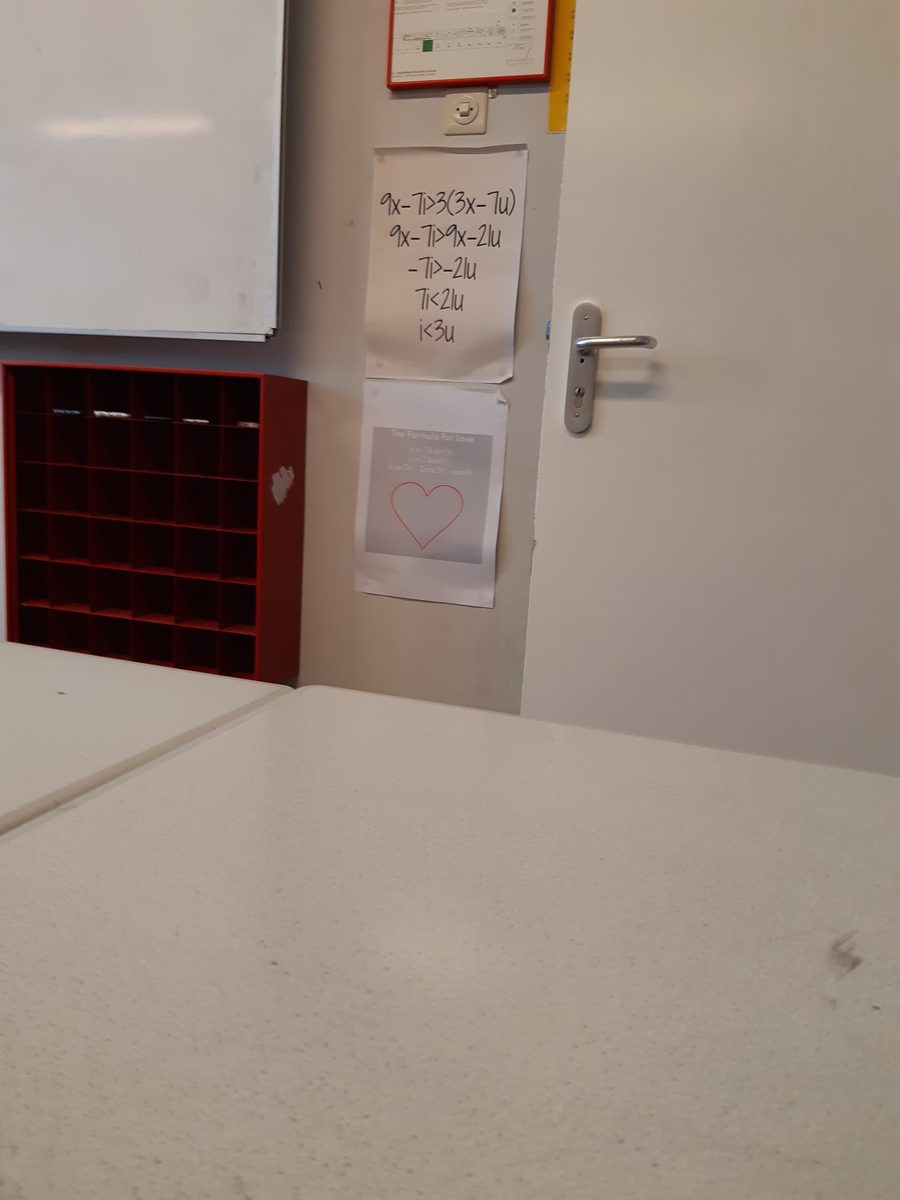
One of five schools worldwide that piloted the IB Middle Years Programme, pairing Dutch rigor with a bilingual, Leiden-rooted campus.
International School Eerde
Ommen · Netherlands
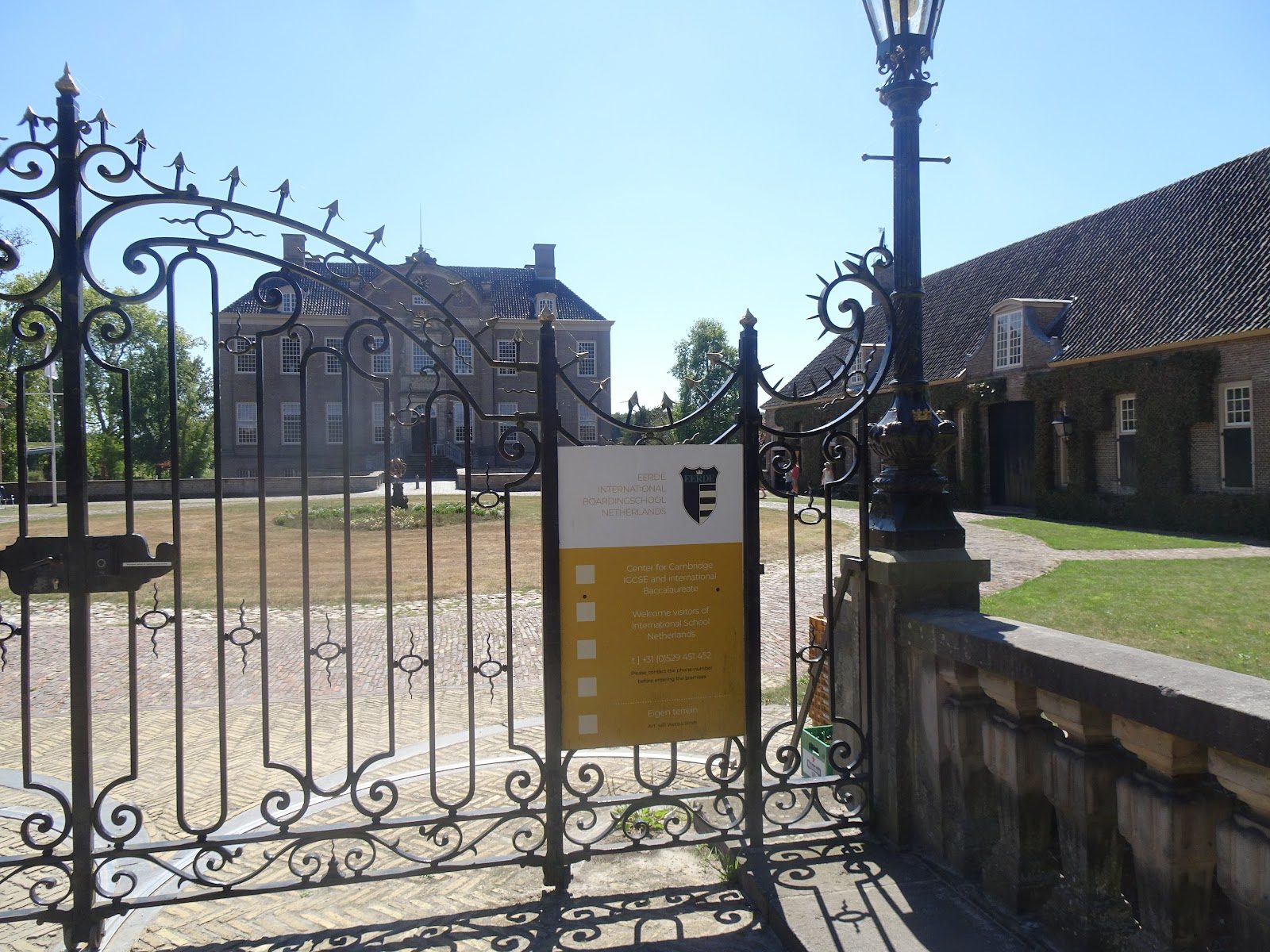
A moated 1715 castle that once sheltered Jewish refugee children now anchors an IB boarding community of 25-plus nationalities.
International School Almere
Almere · Netherlands
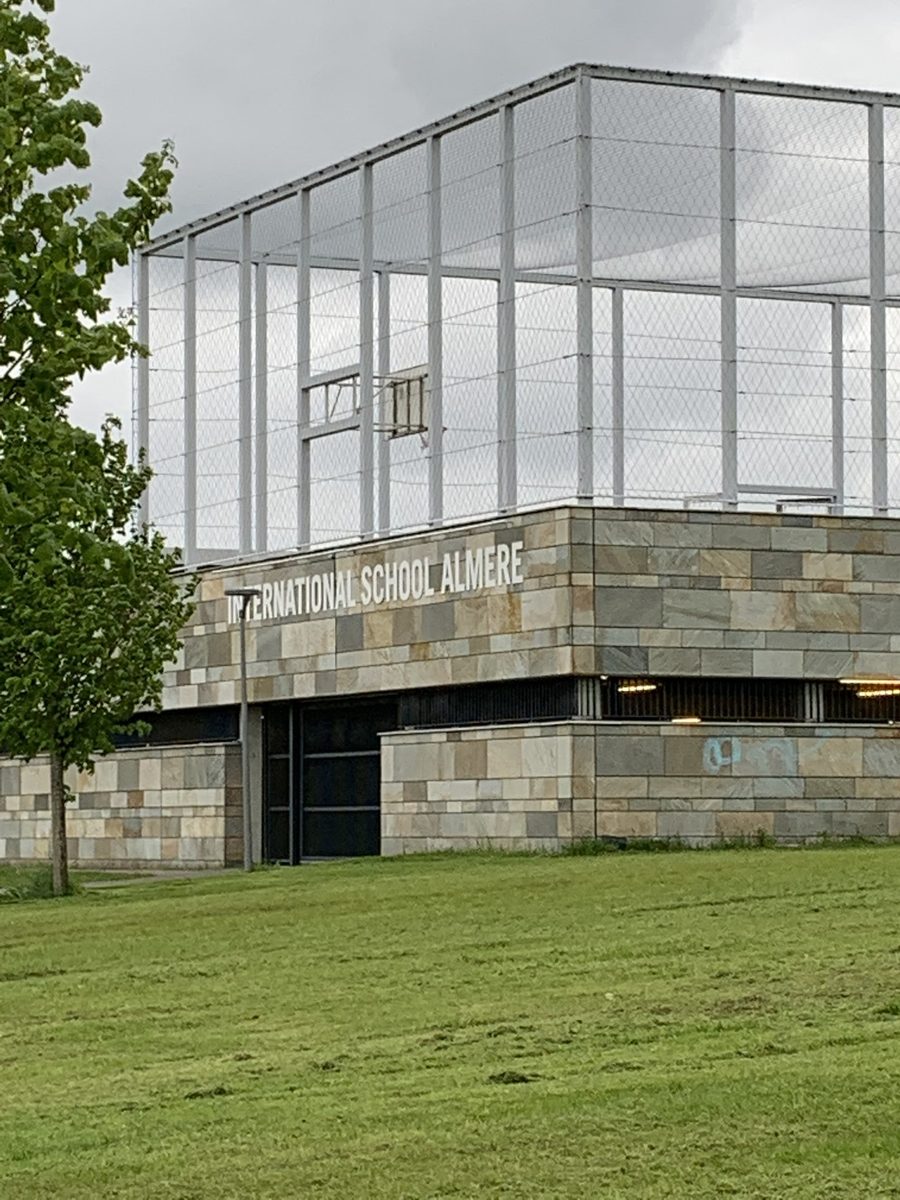
A full IB continuum, ages two to eighteen, on one shared campus in the Netherlands' fastest-growing city
Amsterdam International Community School
Amsterdam · Netherlands
A public alternative to Amsterdam's private international schools, running the full IB continuum from a climate-neutral campus.
Same country and curriculum — closest matches within ±10 points either way