
Victoria
Site of the first recorded Australian Rules football match in 1858, its bluestone St Kilda Road campus still borders the Royal Botanic Gardens.
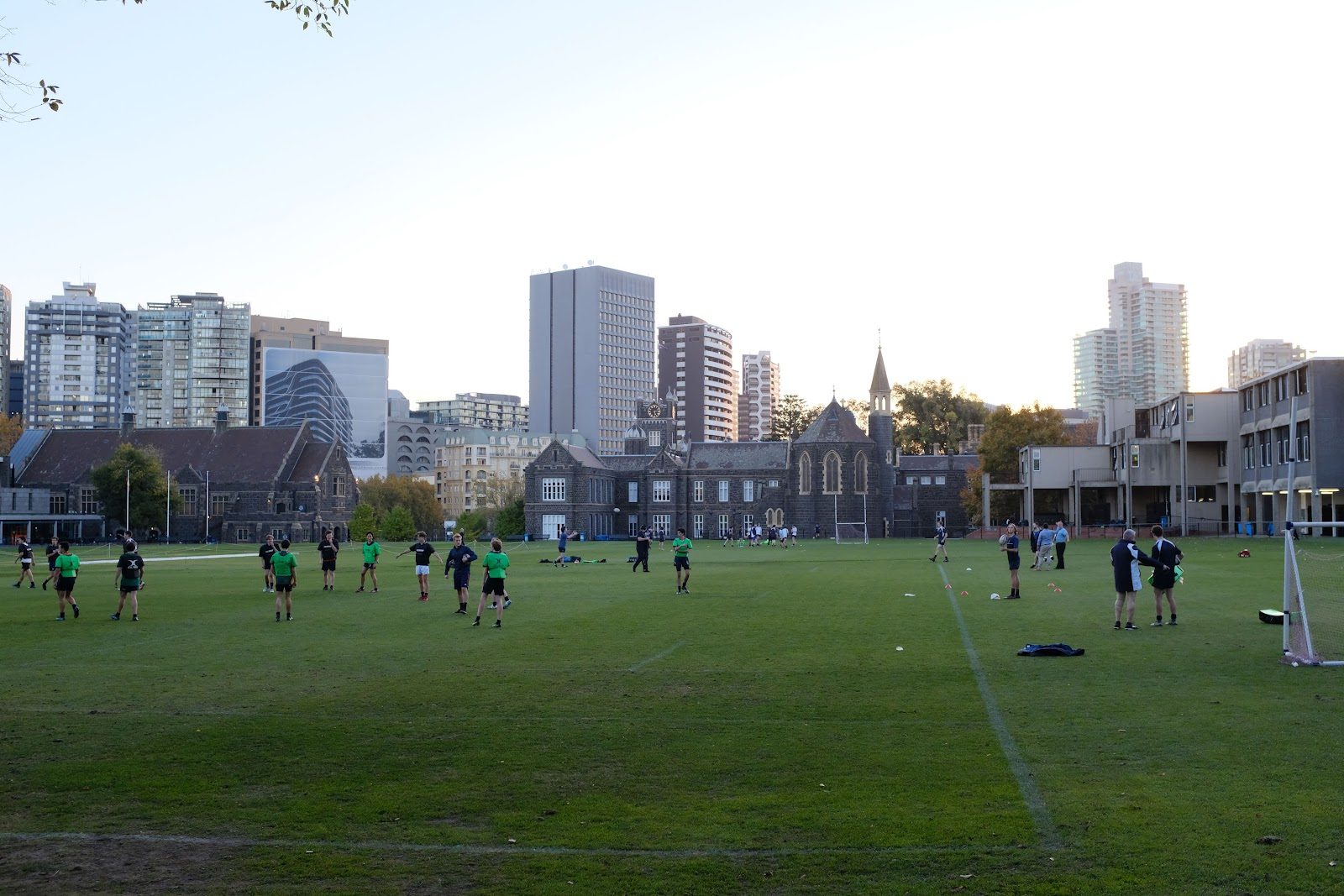
Photo © gilart via Google Maps
Type
Both
Ages
3–18
Curriculum
IB · VCE · Australian
Qualifications
HSC · IB Diploma
Ratio
—
The Verdict
Editor's commitment
Right for
Families wanting Anglican structure, boarding from Years 7–12, and academic heft: ICSEA 1200 with Y9 Reading 630 and Numeracy 628.
Wrong for
Parents set on coeducation through to 18 or a single curriculum: boys-only from Year 7, with IB, VCE and Australian pathways.
Watch out for
This prestige carries a price: average annual day fees are AUD 41,904 and boarding averages AUD 82,453 across the full ladder.
Ranking breakdown
Melbourne Grammar School · #76 of 1591
Composite score 78.9. 8 weighted criteria.
By criterion
Academic Outcomes
Weight 20%
#182
of 1529 scored
University Placement
Weight 16%
#187
of 1529 scored
Prestige & Heritage
Weight 12%
#50
of 1529 scored
Alumni Network
Weight 12%
#23
of 1529 scored
Facilities
Weight 12%
#73
of 1529 scored
Transparency & Communications
Weight 8%
#153
of 1529 scored
Peer & Industry Review
Weight 10%
#100
of 1529 scored
Admissions Selectivity & Demand
Weight 8%
#438
of 1529 scored
Score history
Melbourne Grammar School · 2026
Movement across 2024–2026. Peer average overlaid.
Overall — 2024–2026
78.9/ 100
▲ +16.6 vs 2025
year on year
Peer & Industry Review
How Melbourne Grammar School is regarded in the sector
90
Top-tier · high confidence
Melbourne Grammar School is consistently ranked among Australia's elite GPS (Great Public Schools) institutions in Victoria, regularly referenced alongside Scotch College, Geelong Grammar and Xavier College in independent education press coverage of top Australian private schools. Its extensive alumni network includes prominent figures in Australian business, politics, and culture, frequently noted in Australian Financial Review and The Age school rankings coverage, and it is a benchmark peer institution consistently cited in comparative analyses of elite Melbourne schooling.
Evidence sources
Editors' overview
The detail that still matters is not the bluestone or the address opposite the Royal Botanic Gardens, but the structure: co-educational at Grimwade House from Prep to Year 6, then boys-only from Year 7 at Wadhurst and the Senior School in South Yarra, with boarding offered from Year 7 to 12. That split model gives Melbourne Grammar a distinctive place in the Melbourne market. It offers an early co-ed start, then a traditional boys’ secondary education under an Anglican banner, founded in 1858 by Charles Perry, the first Bishop of Melbourne. For families who want one school from age 3 to 18 but do not want a co-ed secondary setting, that is a clear strategic draw.
This is an expensive school even by Australian independent standards: the average annual day fee across the full ladder is AUD 41,904, and boarding averages AUD 82,453. Parents are paying for history, location, facilities and a school with a long-established social and alumni network, not a cut-price academic factory. The academic baseline is strong. On MySchool’s 2023 data, Melbourne Grammar posts an ICSEA of 1200, with Year 9 Reading at 630 and Year 9 Numeracy at 628. Those are the numbers of a high-attaining, highly advantaged intake. The curriculum mix also broadens its appeal: the school declares IB, VCE and Australian pathways, and it holds IBO accreditation. That gives it more exit flexibility than a single-pathway school.
What puts Melbourne Grammar on a shortlist is not novelty but institutional weight. The school has deep roots in Melbourne’s establishment, a verified minimum of 171 notable alumni catalogued on Wikidata, and a boarding offer that keeps it in contention for regional, interstate and overseas families as well as locals. The pastoral pitch is explicit, and the school says every student’s learning is supported by dedicated pastoral care programmes, but this is not a soft-edged environment. It is a high-expectation, tradition-conscious school with a strong sense of continuity and identity.
The best fit is a boy who will thrive in a structured, well-resourced, socially confident secondary setting with strong sport, visible tradition and an academically able peer group; or a family that values co-ed primary years before a boys’ senior education. It also suits boarders who want an established city school rather than an isolated rural one. It suits families comfortable with Anglican culture without requiring doctrinal exclusivity. It is less persuasive for parents who want a fully co-educational journey to 18, a less formal culture, or a school that publishes more direct evidence of outcomes beyond NAPLAN and institutional reputation.
Academic Performance
Melbourne Grammar sits in the top-flight of Melbourne independent schools for raw academic environment, but the public results picture is less complete than many parents will want. The school’s MySchool profile places it among a high-attaining, high-advantage cohort, with an ICSEA of 1200 and Year 9 NAPLAN scores of 630 in reading and 628 in numeracy. Those are strong numbers, but they measure cohort strength in the middle years, not senior exit performance. For a school with this level of selectivity, resource and social capital, parents should expect hard evidence at the back end: IB averages, VCE study scores, top-band percentages, median ATARs, university destinations. Melbourne Grammar does not publish a clear, consolidated set of those figures in the sources reviewed here.
That matters, because among Melbourne peers the schools that dominate academic conversations tend to publish sharper exam data and make comparison easier. Melbourne Grammar still reads as academically serious rather than results-obsessed. The school’s structure, pastoral language and broad co-curricular identity point to a rounded education, not a narrow exam factory. For some families that is a strength. For others, the opacity is a weakness. The verdict is straightforward: this is a school with a strong academic baseline and an able student body, but without publicly disclosed external-results detail, it does not make the full forensic case against the city’s most transparently academic competitors.
Facilities
The campus proposition here is anchored by geography and permanence. The South Yarra site opposite the Royal Botanic Gardens gives the secondary years a grand, old-city setting that few Australian schools can match, and the bluestone architecture carries real symbolic weight. More important for parents, the school operates across 3 distinct campuses rather than a single all-through site, with separate provision for the junior, middle and senior years. That structure allows age-specific spaces and a cleaner division between younger children and older boys, which many peer schools claim in theory but execute less convincingly in practice. The school also states that every student’s learning is supported by dedicated pastoral care programmes alongside exceptional learning facilities. What it does not do, at least publicly in the sources reviewed, is itemise those facilities in enough detail to let families judge the depth of provision in science, performing arts, design, sport or boarding against direct competitors.
That gap matters because at this fee level, top Melbourne rivals tend to show their hand more clearly: specialist centres, theatres, labs, elite indoor sports provision, aquatic complexes, maker spaces and boarding houses with substance rather than romance. Melbourne Grammar’s physical inheritance and campus setting are undeniably powerful, and the separate-school model gives it a well-structured operational advantage. But parents looking for a forensic facilities comparison will hit a limit. The school communicates atmosphere, tradition and organisation better than it documents hardware. Against peers, that leaves Melbourne Grammar with a strong but under-evidenced facilities case rather than a fully itemised one.
That split model gives Melbourne Grammar a distinctive place in the Melbourne market
Prestige
Melbourne Grammar carries old-guard prestige in the Australian market, and not the flimsy kind built on branding alone. Its authority rests on three durable assets: social history, a prime urban footprint, and an alumni network with real reach. A verified minimum of 171 notable alumni in Wikidata, including heavy representation in politics, business, scholarship and elite sport, puts hard substance behind the school’s standing. That matters because prestige is not just about who attends at 13; it is about the networks, expectations and institutional memory that surround a pupil all the way through. Melbourne Grammar offers exactly that: establishment clout, deep social capital and a sense that the school sits inside Melbourne’s professional and civic bloodstream.
This prestige is reinforced by scarcity and price. An average annual day fee of AUD 41,904 and boarding at AUD 82,453 place it firmly in the upper tier of independent schooling, where families buy not only teaching and facilities but access to a long-entrenched community. The school’s Anglican identity and traditional secondary structure sharpen that signal rather than soften it. This is not a democratic everyman institution; it is a status school with cultural weight, strong name recognition and a constituency that extends well beyond current parents. The caveat is clear: prestige here outstrips public disclosure on senior academic outcomes. The name still opens doors, but discerning families will separate social prestige from measurable academic transparency.
The school also states that every student’s learning is supported by dedicated pastoral care programmes alongside exceptional learning facilities
Communications
Melbourne Grammar’s parent-facing communication looks disciplined and practical rather than glossy. The public site surfaces the things families actually need to find fast: admissions, scholarships, term dates, uniform, contacts, parent login, fixtures, events and fees. That menu architecture matters. Schools with sprawling traditions and multiple sub-schools can bury basic information under rhetoric; Melbourne Grammar does not. The split between public information and logged-in parent functions also signals a school that runs on clear internal systems rather than ad hoc updates. Parents get obvious routes into the mechanics of school life, and that reduces friction. For a school operating across distinct sections and serving both day families and boarders, that level of organisation is not optional; it is operationally essential.
The limitation is tone. The language leans heavily on values, heritage and community, with phrases about holistic development, culture and recognition of effort. That tells you what the school wants to project, but it does less to answer harder parental questions about outcomes, comparative strengths and the lived detail of provision. The communications style is orderly and institutionally polished, but also carefully managed. It builds confidence in administration more than intimacy or candour. Parents who prize structure, dependable signposting and a strong sense of school identity will rate that highly. Parents who want a more forensic level of disclosure, especially in senior outcomes and facilities detail, will find the school’s communication competent but incomplete.
Uniqueness
What marks Melbourne Grammar out is the way it combines two school models that many families want but few schools deliver in one institution: an early co-educational start, then a boys-only secondary education, all under one banner. That is not a cosmetic distinction. It changes the social texture of the pupil journey. Children begin in a mixed environment, then move into a more traditional, male-focused setting for the years when adolescent culture, confidence and competition can shape a school most sharply. For the right family, that structure offers a rare compromise between co-ed breadth and the old-school intensity of a boys’ secondary education. Add boarding from the secondary years and the school widens its catchment well beyond local day families.
The other point of difference is institutional density. Melbourne Grammar carries a thick sense of inheritance: Anglican foundations, a long-entrenched place in Melbourne’s civic life, and an alumni bench that is not anecdotal but deep enough to register in hard numbers, with 171 notable former pupils catalogued on Wikidata. For students, that brings more than bragging rights. It means entry into a high-expectation social world with established codes, strong intergenerational ties and a network that extends into public life, business, scholarship and sport. Some pupils will find that energising and formative. Others will find it constraining. That tension is part of what makes the school distinctive: it offers belonging, continuity and status, but it also asks a boy to be comfortable inside a strong pre-existing culture.
For families who want one school from age 3 to 18 but do not want a co-ed secondary setting, that is a clear strategic draw
Student Profile
The pupil who fits best here is comfortable with structure, expectation and a school culture that does not apologise for itself. In the early years, families get a mixed environment; from the secondary phase onward, boys step into a more traditional setting with a clear code of conduct, visible ritual and a strong peer hierarchy. That suits boys who are socially assured, competitive enough to enjoy a defined culture, and resilient enough not to need constant hand-holding. The school’s public language around effort, achievement and pastoral care points to a place that values character formation as much as classroom performance. With fees at AUD 41,904 for day pupils and AUD 82,453 for boarders on average across the ladder, the intake will also include families who are paying for continuity, network and long-term social capital, not only lessons.
This is a strong match for boys who want busy school lives: sport, house identity, alumni consciousness, organised routines and a community with institutional confidence. It also works for families who want co-educational primary years without giving up a boys’ education later on. Boarders who can handle independence and slot into an established culture will do well. The less comfortable fit is the child who wants a loose, progressive or low-pressure atmosphere, or a teenager who dislikes tradition-heavy environments and strong group norms. Melbourne Grammar rewards boys who are robust, self-possessed and ready to join a school with a firm centre of gravity.
Parents are paying for history, location, facilities and a school with a long-established social and alumni network, not a cut-price academic factory
Co-curricular strengths
Arts & sport, on a separate axis
Overall 7.94/10
Scored 0-10 from the school's own published evidence. This axis is editorial-only — it does not feed the main WTS ranking.
Sports
9.3/10
Deeply institutionalized sports culture within the APS league, utilizing world-class facilities like the Todd Family Track and Edwin Flack Park.
Drama
8.4/10
The spectacular drama studios and school plays operate at an exceptionally high standard, cultivating creative and performance tech tracks.
Dance
4/10
Kept primarily as an ensemble component to support physical performance blocks inside their large-scale theater tracks.
Music
9.2/10
Stellar orchestral breadth; supports highly active big bands, symphonies, and chapel choirs that headline major civic showcases.
Visual Arts
8.8/10
Outstanding art school infrastructure running top-tier advanced studios for architecture, fine oil painting, and digital media.
Editor-verified · 8/6/2026
Notable alumni · Wikidata
171notable alumni
119 historic (born pre-1930) · 20 modern (born post-1970)wikidata:2026-07-28 How we source this
MySchool · ACARA
Australian benchmarks
Editorial estimateReporting year
2023
ICSEA index
1200
+200 vs national average (1000)
Student cohort by national ICSEA quarter
Year 9 NAPLAN — mean scale score
Dashed line = national average
Attendance
94.0%
Enrolments
1900
Sector
Independent
Year range
P–12
Boys' day + boarding on St Kilda Rd; historic Melbourne 'associated schools' member.
MySchool.edu.au source pageEditor-approximated from MySchool.edu.au. Awaiting school-attested figures.

WTS 300 badge
2025/26 editionMelbourne Grammar School is one of the World's Top 300 Schools for 2025/26. Claim your listing to add it to your site →
Strengths
- +Founded on 7 April 1858 as the Melbourne Church of England Grammar School, the school caters for approximately 1,900 students from Prep to Year 12, including boarders from Years 7 to 12, giving it one of the longest continuous histories among Australian independent schools.
- +The school operates three campuses: Grimwade House (Prep to Year 6) in Caulfield, and Wadhurst (Years 7-8) and Senior School (Years 9-12), both in South Yarra, allowing age-specific facilities and pastoral care at each developmental stage.
- +The median ATAR for the 2025 cohort was 92.55, and 61% of students achieved an ATAR of 90 or above, placing them in the state's top 10%.
- +The school offers both day and boarding places for boys from Years 7 to 12, with a boarding community drawn from regional Victoria, across Australia and overseas, giving relocating and rural families a genuine residential option.
- +Sport is integral to school life, with students competing in the APS competition and working with specialist coaches and strength-and-conditioning programs, backed by structured evening study time and specialist tutoring for boarders.
Considerations
- −The school is single-sex beyond primary level: it enrols a mix of boys and girls into Prep to Year 6 at Grimwade House, but at the end of Year 6 boys move on to Wadhurst and Senior School while girls must continue secondary education at a different school, so it cannot serve as a single continuous school for daughters.
- −Admissions are genuinely competitive: an application is a prerequisite for admission but not a guarantee, and waiting lists apply at all year levels, with students entering Years 7-12 normally required to sit an entrance or assessment test before an offer is made.
- −Fees are layered rather than all-inclusive: a separate Consolidated Charge, specific to each year level, covers compulsory resources such as Grimwade book lists, Wadhurst camps and Senior School outdoor education programs, on top of core tuition.
- −The Wadhurst and Senior School campuses sit on the original South Yarra site, a location historically noted for tight grounds: by the 1950s it was clear the school was seriously lacking adequate space, with expansions crammed into the original 15-acre (6.1 ha) site, a structural constraint compared with schools on larger regional or greenfield campuses.
Availability
Primary entry gate & tests
Edutest / Internal Exam (Boys)
Gallery
Photo © Istvan Maar via Google Maps
Photo © Neville Fischer via Google Maps
Photo © Maria Ngo via Google Maps
Photo © Maria Ngo via Google Maps
Photo © Maria Ngo via Google Maps
Photo © Maria Ngo via Google Maps
Photo © Maria Ngo via Google Maps
Photo © Louvreclad Pty Ltd via Google Maps
Photo © vrij chanani via Google Maps
Parent reviews
Have you sent your child here?
Voice reviews carry the strongest trust badge — we transcribe them for you to tidy up before they go live. Prefer to type? A written review is fine too.
Add your voice
In 60 seconds, tell other parents: what's the best thing about Melbourne Grammar School, and what surprised you when your child joined?
We ask for a Google sign-in so every review has a real face behind it — no anonymous drive-by attacks on schools, and no faked positive reviews. Your email is never shown publicly.
Send this profile to a friend
International parents rely on word-of-mouth. Share this review with someone weighing the same decision.
Schools with places
Similar schools to Melbourne Grammar School with places available now.
Scotch College
Melbourne · Australia
- 2026-27
- WAITPOOLVacancy-dependent
- 2027-28
- PLACES OPEN
Geelong Grammar School
Corio, Victoria · Australia
- 2026-27
- WAITPOOLSpace-dependent
- 2027-28
- PLACES OPEN
Methodist Ladies' College
Melbourne · Australia
- 2026-27
- WAITPOOLVacancy-dependent
- 2027-28
- PLACES OPEN
Wesley College
Melbourne · Australia
- 2026-27
- WAITPOOLVacancy-dependent
- 2027-28
- PLACES OPEN
Availability first, then country, area, curriculum, price, co-curricular
Consider also
Also worth looking at alongside Melbourne Grammar School.
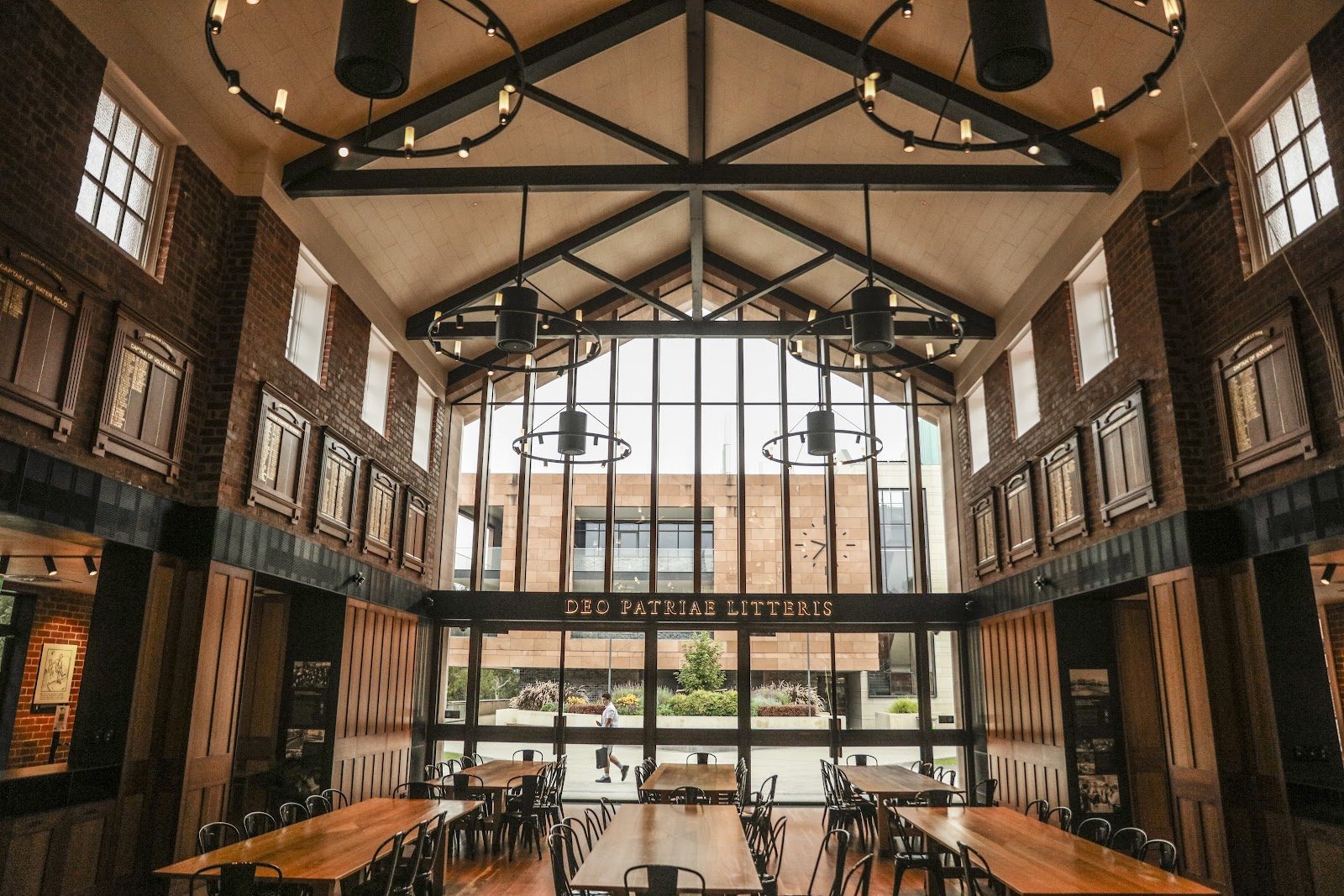
Scotch College
Melbourne · Australia
Founded in 1851 on the Yarra, Victoria's oldest secondary school blends IB and VCE with non-selective results that rival the selective few.
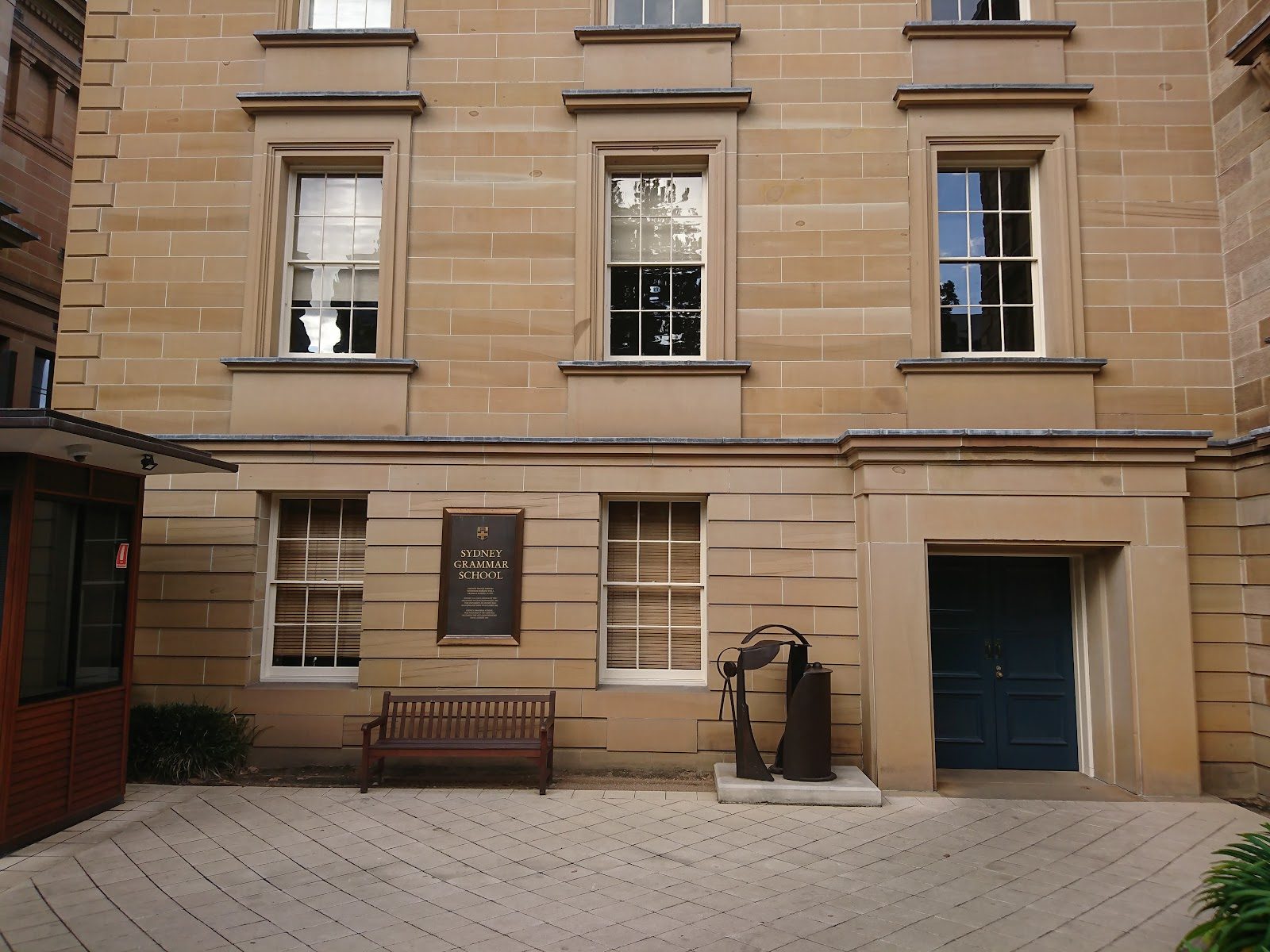
Sydney Grammar School
Sydney · Australia
A College Street institution since 1857, pairing classical Latin and Greek study with the state's highest-placed independent-school HSC results.
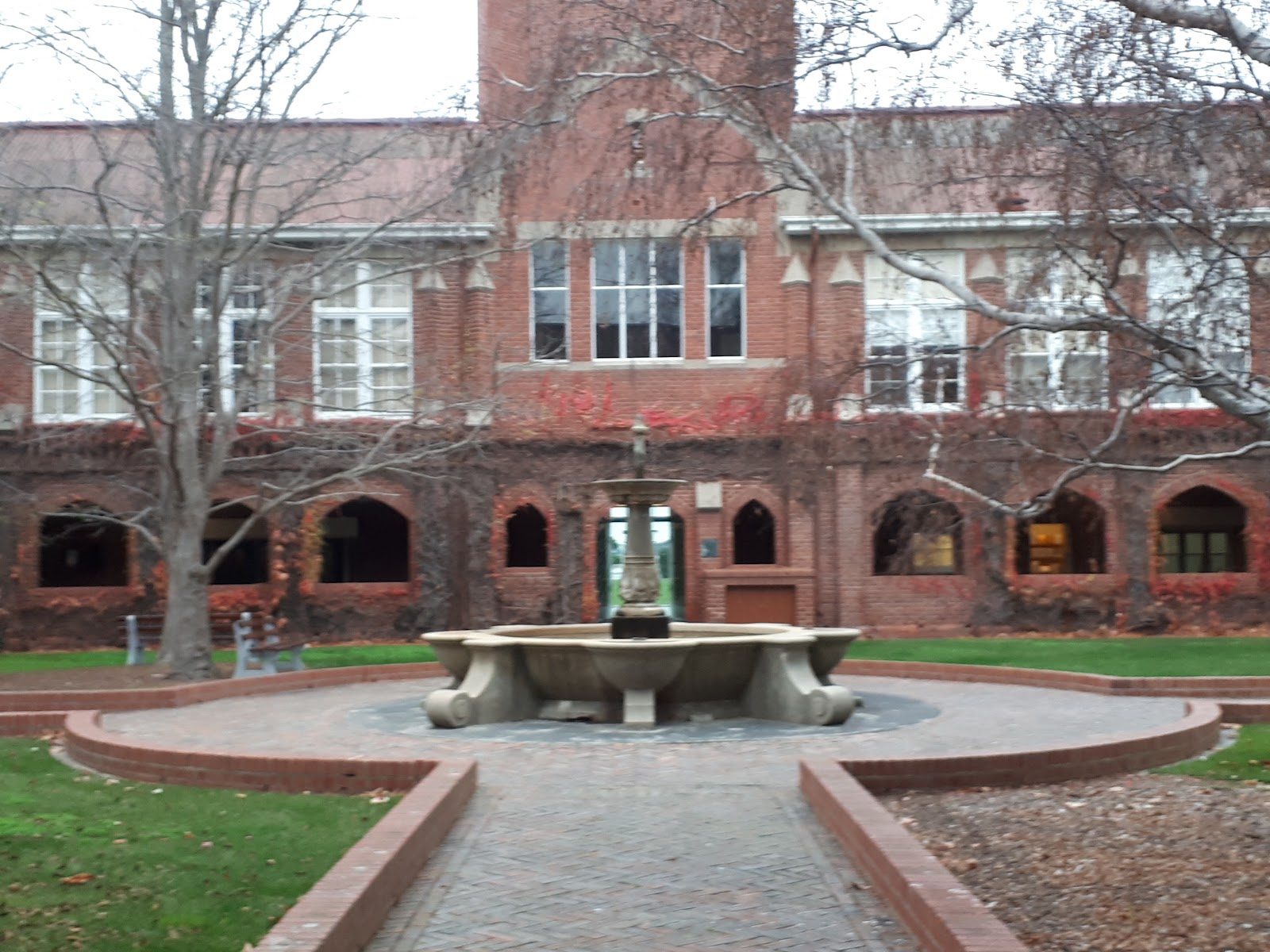
Geelong Grammar School
Corio, Victoria · Australia
Sends every Year 9 to a remote alpine campus, then blends IB and VCE with the wellbeing model it pioneered.
Christ Church Grammar School
Perth · Australia
Freshwater Bay frontage anchors an Anglican boys' school where rowing tradition and strong ATAR results define the culture
Same country and curriculum — closest matches within ±10 points either way