
Gyeonggi Province
Seoul International School
medium confidence· 4/6 cats · 1.71 avg sourcesKorea's first fully recognized foreign school since 1973, pairing 24 AP courses with Suzuki violin from junior kindergarten
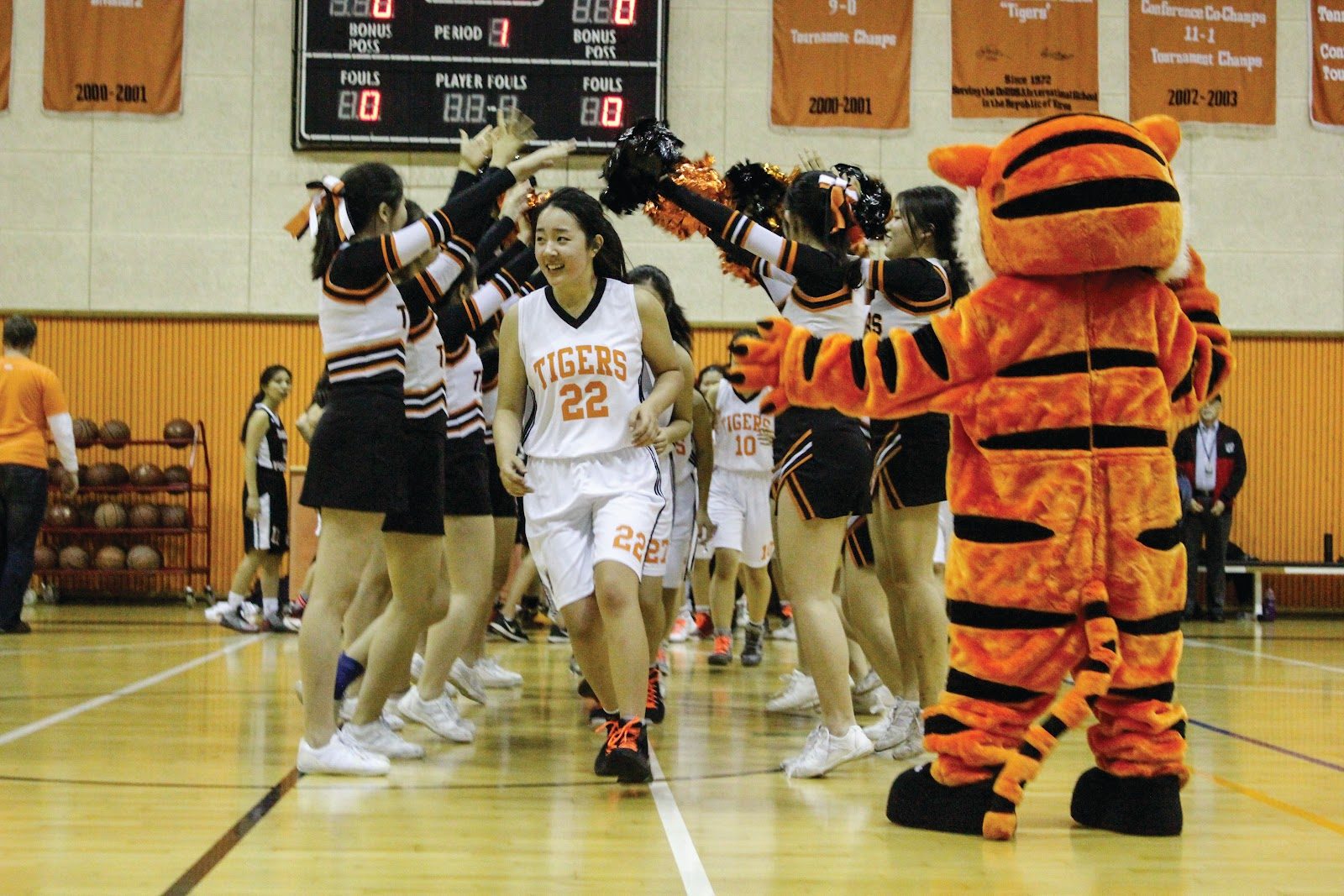
Photo © 서울국제학교 via Google Maps
Type
Day
Ages
4–18
Curriculum
American
Qualifications
AP · US High School Diploma
Ratio
—
The Verdict
Editor's commitment
Right for
Families wanting an American curriculum in English from ages 4–18, with 24 AP courses and WASC, ACSI, EARCOS accreditation.
Wrong for
Parents wanting boarding, a non-Christian ethos, or a Seoul-centre campus; SIS is day-only in Seongnam and founded in 1973.
Watch out for
At an average annual fee of $29,930, this is expensive, and the school does not publish aggregate AP scores or university destinations.
Ranking breakdown
Seoul International School · #417 of 1591
Composite score 71.5. 8 weighted criteria.
By criterion
Academic Outcomes
Weight 20%
#385
of 1529 scored
University Placement
Weight 16%
#398
of 1529 scored
Prestige & Heritage
Weight 12%
#550
of 1571 scored
Alumni Network
Weight 12%
#352
of 1530 scored
Facilities
Weight 12%
#416
of 1533 scored
Transparency & Communications
Weight 8%
#518
of 1532 scored
Peer & Industry Review
Weight 10%
#605
of 1548 scored
Admissions Selectivity & Demand
Weight 8%
#308
of 1529 scored
Peer & Industry Review
How Seoul International School is regarded in the sector
62
Respected · medium confidence
Seoul International School (Seongnam) is consistently named alongside Seoul Foreign School and Korea International School as one of the long-established, respected international schools serving Seoul's expat and Korean-American community, with references in ISC Research directory listings and repeated mentions in expat parent forums (e.g., Facebook Seoul expat groups, InterNations) discussing school choice in the capital region. It lacks coverage in higher-tier specialist press like Tatler or Good Schools Guide, and its alumni network, while active, is not widely referenced outside Korea-specific expat circles, suggesting solid regional standing rather than top-tier international acclaim.
Evidence sources
Editors' overview
Seoul International School earns shortlist status on three fronts: longevity, academic range and institutional clarity. It has operated since 1973, making it Korea’s first fully recognised foreign school, and it still runs on a plain proposition: an American curriculum in English for ages 4 to 18 on a day-school basis in Seongnam. The school is Christian, yet its own history page also calls it South Korea’s oldest secular private school; that tension deserves note, but the practical point for parents is that SIS has a long-established identity rather than a freshly assembled international-school pitch. WASC, ACSI and EARCOS accreditation give it external credibility, and the average annual day fee of $29,930 places it in the premium bracket without tipping into the extreme pricing seen in some capital-city expatriate markets.
What marks SIS out is breadth at both ends of the age range. The headline academic hook is 24 AP courses, which gives older students a serious university-preparation menu inside a US system. At the other end, the school’s reputation rests in part on details such as Suzuki violin from junior kindergarten: not a cosmetic enrichment add-on, but a sign that SIS builds structured arts provision into the week early. The stated educational philosophy is firmly academic but not narrow; the school names the arts, humanities and sciences together, and it stresses co-curricular life as well as a safe, orderly environment. Parents who want high-gloss branding and endless lifestyle theatre will find better examples elsewhere. Parents who want a school that states its purpose directly, offers a broad education and has had decades to refine it will take SIS seriously.
The best fit is the student who thrives in a settled, demanding school rather than a performative one. Ambitious pupils who want an American curriculum, strong English-medium teaching and a substantial AP portfolio have a clear case for SIS. So do families who value continuity from early years through to graduation, and who want a school with enough institutional age to avoid the churn and improvisation common in newer international campuses. This is not for families chasing novelty. It is for students who do well with structure, breadth and high expectations, and for parents who prize a school with a clear educational spine over one with louder salesmanship.
Academic Performance
Seoul International School’s exam profile rests on breadth and selectivity rather than public score disclosure. The school offers 24 AP courses, which places it in the top tier of AP provision in Korea and gives sixth-form students a deeper menu than many American international schools in the region. That matters because range in AP is not cosmetic: schools with a thin list force timetable compromises and narrow subject choices; schools with a broad list can support serious academic ambition across sciences, humanities and the arts. SIS describes itself as college preparatory, and the structure visible here supports that claim. What it does not publish is the harder proof parents should want: no aggregate AP score profile, no pass-rate table, and no university destinations data in the public domain.
That opacity limits any verdict on raw outcomes. Relative to peers, SIS sits in the group of academically credible, long-established American schools whose offer is plainly built for competitive university entry, but it does not give the market the results detail that would move it into the fully evidenced top bracket. Parents can take confidence from the scale of the AP programme and the school’s longstanding academic focus. They cannot verify, from published data, whether SIS converts that provision into standout scores year after year. For a school with this level of institutional maturity, that gap is a real weakness.
Facilities
The campus matters here because SIS offers a full through-school experience rather than a stripped-back academic block. The school itself points to a large site with both modern and traditional elements, and that scale counts in a market where some international schools operate from tighter urban footprints. For parents, the practical read-across is breadth: room for specialist teaching, room for co-curricular life and room for students of very different ages to coexist without the place feeling cramped. The strongest facilities signal in the public domain is the early structured music offer, with Suzuki violin starting in the junior years. That is not decorative enrichment; it points to dedicated music provision and a school willing to invest in the arts from the outset rather than treating them as an afterthought.
Against peer schools, the picture is credible but not fully evidenced. SIS states a commitment to the arts, humanities and sciences, and it describes the campus as modern, safe and orderly, but it does not publish the kind of detailed facilities inventory that top competitors now put front and centre: named performance venues, lab suites, aquatic centres, design spaces or sport specifications. That does not mean the campus is weak. It means the case rests on institutional confidence rather than showroom detail. In editorial terms, this reads as a serious, functional campus with enough substance to support a broad school life, but without the arms-race transparency that lets parents benchmark every square metre against rivals.
Seoul International School earns shortlist status on three fronts: longevity, academic range and institutional clarity
Prestige
Seoul International School carries real market weight in Korea’s international-school landscape because it combines longevity with institutional seriousness and a broad sixth-form academic menu. Prestige here does not rest on social glitter or branding theatre. It rests on the fact that families know what SIS is, what it has been built to do, and the kind of student it tends to serve well. The school’s fee level — an average of $29,930 a year — places it firmly in the premium tier, which shapes perception in its own right, but price alone does not create status. The stronger driver is confidence: a school with this kind of staying power, a clear college-preparatory identity and 24 AP courses commands attention from internationally mobile families who want a serious academic route rather than a fashionable name.
That said, SIS’s prestige is solid rather than glamorous. It has the authority of an established institution, not the aura of an ultra-exclusive finishing school. For some parents, that is a strength. The school’s emphasis on order, challenge and breadth gives it a grown-up reputation; the inclusion of structured arts provision from the earliest years adds depth rather than decoration. The limiting factor is public proof. SIS does not publish the exam and destinations data that turn reputation into unanswerable prestige. So the rating here is high, but not maximal: respected, trusted and well known, yet still short of the fully evidenced elite.
Seoul International School’s exam profile rests on breadth and selectivity rather than public score disclosure
Communications
SIS communicates with the confidence of an established institution that does not feel any need to oversell itself. The public-facing site is clean, plainly structured and easy to navigate: leadership, governance, staff directory, admissions, publications and accreditation all sit where parents expect them. That matters. Schools that organise information clearly tend to run cleaner parent communication off-screen too, because the same habits drive both. The inclusion of year-end reports adds substance beyond day-to-day notices; it gives families a read on the school’s priorities and internal life rather than forcing them to piece the picture together from scattered announcements. A visible governing body also counts in its favour. For parents paying an average of $29,930 a year, institutional clarity is not a luxury.
The weakness is depth. SIS publishes enough to project order, but not enough to satisfy a parent who wants hard-edged transparency. We have not seen the richer communications layer that stronger international schools now provide publicly: detailed academic outcome reporting, fuller facilities breakdowns, or a more granular account of how strategy translates into student experience. The tone is measured and adult, which suits the school, but it can also read as guarded. In practice, this looks like communication that is effective for routine trust-building and community reassurance, less effective for families who interrogate schools closely before committing. The result is competent rather than exemplary: clear, orderly and credible, but not expansive.
Uniqueness
What makes SIS distinctive is not novelty but institutional consistency. Plenty of international schools promise breadth; fewer have held the same educational line for decades and built it into daily school life from the earliest years upward. The sharpest expression of that is the pairing of a full college-preparatory senior offer with structured arts provision that starts in junior kindergarten. 24 AP courses matter on their own. Set against Suzuki violin at the opposite end of the school, they matter more. This is a school that does not treat music, humanities and academic ambition as rival camps. It builds a joined-up education in which discipline, performance, scholarship and routine sit together. For students, that brings coherence: the arts are not a side corridor, and senior academic challenge is not bolted on late.
There is also a rarer point of difference in the school’s self-definition. SIS is Christian, yet its own history language stresses a secular private-school identity. That tension will divide opinion, but it also tells parents something useful: this is not a school trading on a single fashionable label. It has a settled core, a clear educational spine and enough confidence to live with complexity rather than polishing it away. Students benefit from that steadiness. In practice, they get a school with serious expectations, a broad co-curricular frame and an environment built less around display than around sustained work. For the right child, that brings depth, not noise.
What makes SIS distinctive is not novelty but institutional consistency
Student Profile
The students who fit best here are the ones who value structure, pace and purpose over display. This is a school for children who can live comfortably inside a clear behavioural frame: lessons that ask for concentration, teachers who expect follow-through, and a community that prizes steady effort more than charisma. The broad senior course menu — 24 AP options — tells you a lot about the older student body. It suits teenagers with defined interests, good work habits and the appetite to juggle challenge across several subjects without needing constant coaxing. Younger pupils also need to be receptive to routine and repetition; a school that starts formal music training early is signalling disciplined practice, not casual dabbling.
Socially, SIS will suit families who want a settled, serious peer group rather than a conspicuously fashionable one. Children who like clear rules, organised days and adults who keep the place orderly will do well. So will students who want strong academics without giving up the arts. The less natural fit is the child who needs a loose, experimental atmosphere, heavy pastoral hand-holding or a great deal of performative buzz to stay engaged. There is warmth in a school with this kind of coherence, but the dominant note is high expectation. For the right student, that feels grounding and ambitious rather than restrictive.
The headline academic hook is 24 AP courses, which gives older students a serious university-preparation menu inside a US system
Co-curricular strengths
Arts & sport, on a separate axis
Overall 8.46/10
Scored 0-10 from the school's own published evidence. This axis is editorial-only — it does not feed the main WTS ranking.
Sports
9/10
Drama
9/10
Dance
6.5/10
Music
9/10
Visual Arts
8.8/10
Editor first-pass · editor-reviewable · 7/30/2026
Strengths
- +Continuously accredited by the Western Association of Schools and Colleges (WASC) since 1979, one of the longest unbroken accreditation records among Korea's international schools.
- +Established in 1973, making SIS one of the oldest foreign schools in South Korea with over five decades of operating history.
- +Class sizes are capped at 20 students in Pre-K through Senior Kindergarten and up to 23 in grades 1-8, keeping ratios relatively low for a large day school.
- +The school publicly lists recent graduate admissions to Harvard, Yale, Princeton, Carnegie Mellon, Columbia and Cornell, indicating an active US-focused college counselling pipeline.
- +Located in Seongnam close to the Bundang area, a major residential hub for Seoul's expatriate and returnee community, making daily commuting practical for families based there.
Considerations
- −In 2018 the school's headmaster was investigated over allegations of embezzling billions of won while illegally managing the institution, a governance episode families researching the school will find on record.
- −The student body is reported as roughly 98% ethnic Korean, mostly raised in English-speaking environments, which may not suit families seeking a broadly international, multi-nationality peer group.
- −Admission is restricted: a student generally needs a foreign passport, or Korean citizenship combined with at least 1,095 days of overseas residence or three years of overseas schooling, which excludes many locally-raised Korean families.
- −Annual fees run in the region of KRW 33-40 million (roughly USD 24,000-30,000), a significant recurring cost before registration and enrollment fees, and the school is a day school only with no boarding option for families outside commuting range.
Availability
Primary entry gate & tests
Academic Record + Priority Lanes
Gallery
Photo © SH Ahn via Google Maps
Photo © SH Ahn via Google Maps
Photo © SH Ahn via Google Maps
Photo © Yeon Woo Kim via Google Maps
Photo © Yeon Woo Kim via Google Maps
Parent reviews
Have you sent your child here?
Voice reviews carry the strongest trust badge — we transcribe them for you to tidy up before they go live. Prefer to type? A written review is fine too.
Add your voice
In 60 seconds, tell other parents: what's the best thing about Seoul International School, and what surprised you when your child joined?
We ask for a Google sign-in so every review has a real face behind it — no anonymous drive-by attacks on schools, and no faked positive reviews. Your email is never shown publicly.
Send this profile to a friend
International parents rely on word-of-mouth. Share this review with someone weighing the same decision.
Schools with places
Similar schools to Seoul International School with places available now.
Availability first, then country, area, curriculum, price, co-curricular
Consider also
Also worth looking at alongside Seoul International School.
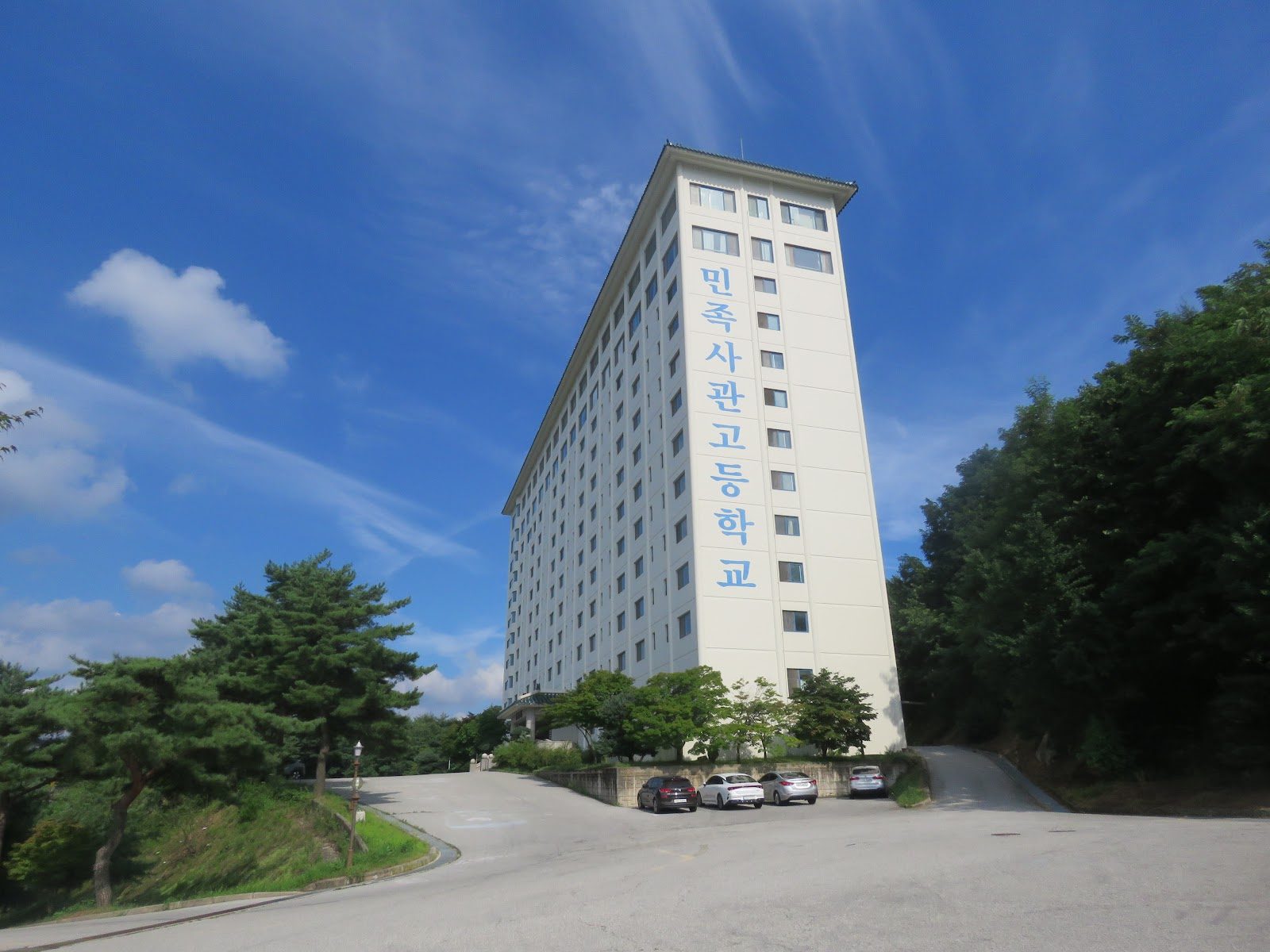
Korean Minjok Leadership Academy
Hoengseong · South Korea
On a Gangwon mountainside, hanbok-uniformed students hold English-only seminars, chasing an IB curriculum built to rival Eton.
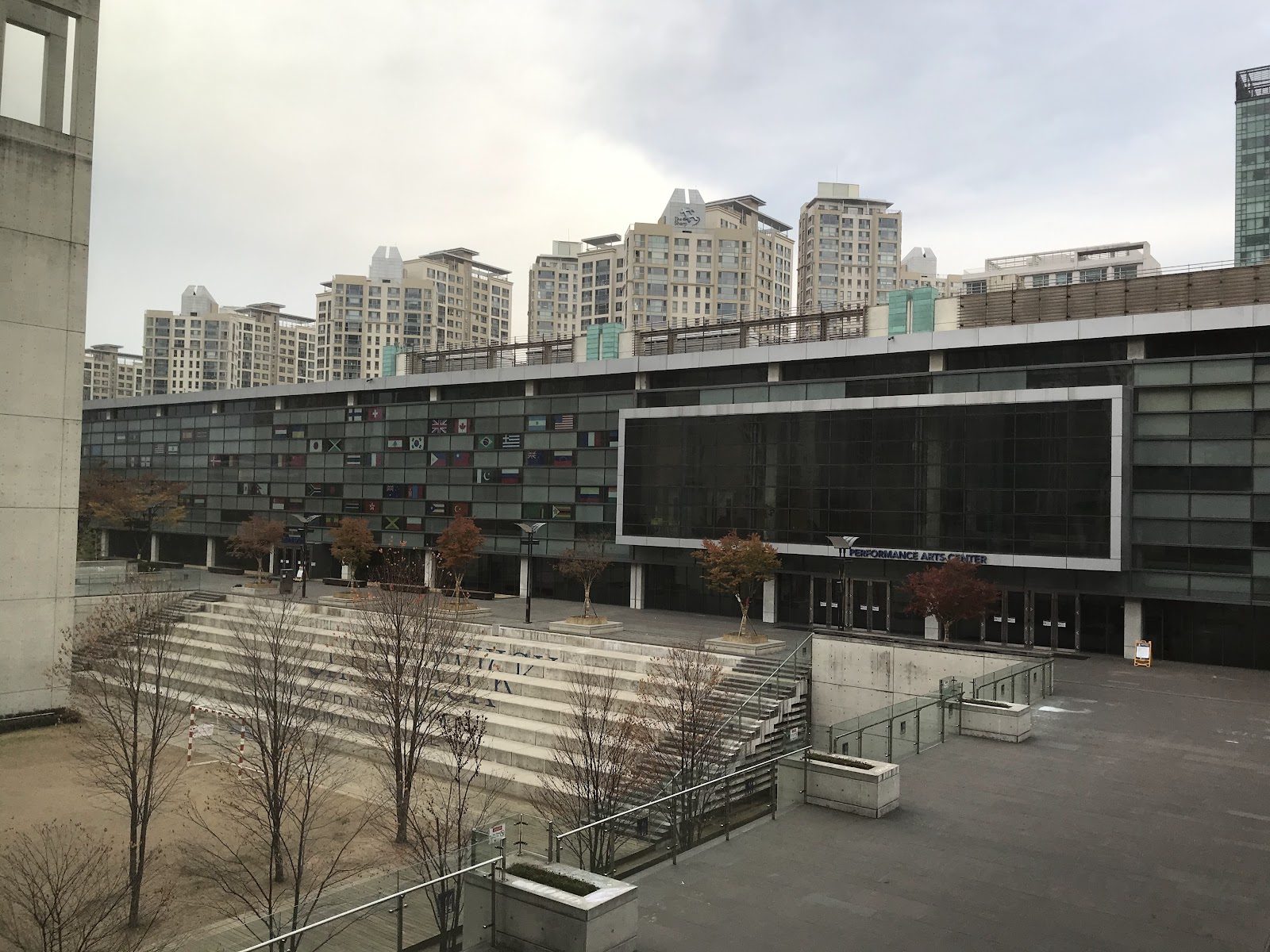
Chadwick International
Incheon · South Korea
One school, two continents: this Songdo campus mirrors a 1935 California founder, pairing IB rigor with mandatory outdoor-education expeditions.
Korea International School
Seongnam · South Korea
In Seongnam's Pangyo tech corridor, a dual IB-American track anchors a curriculum built around 24 Advanced Placement courses.
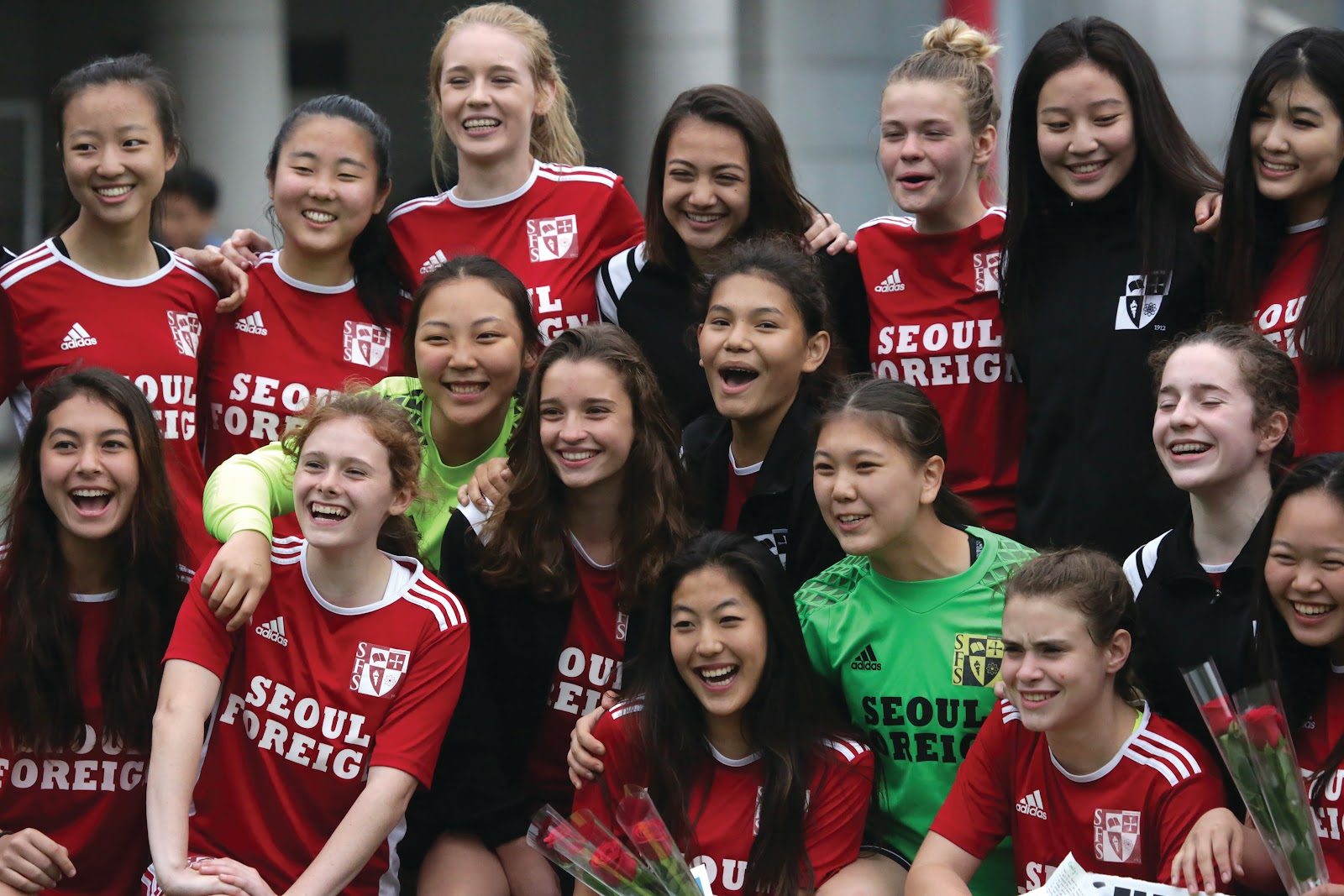
Seoul Foreign School
Seoul · South Korea
Founded in 1912 beside Yonsei University, first in Korea to adopt the IB, blending British, American and Clan-house traditions.
Same country and curriculum — closest matches within ±10 points either way