
Massachusetts
St. Mark's School
One of the first British-style boarding schools in America, its historic 'school under one roof' campus sits 25 miles from Boston.
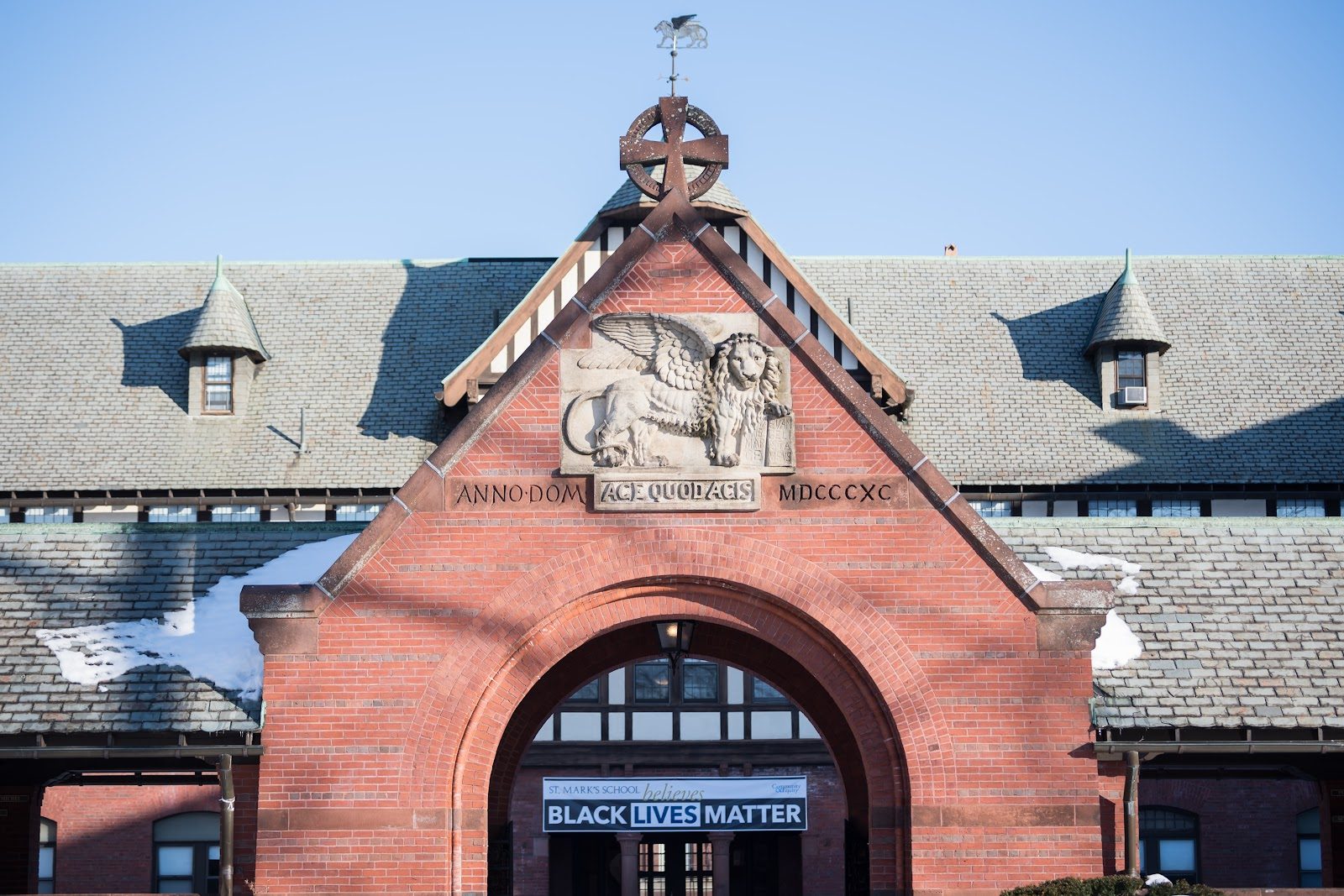
Photo © St. Mark's School of Southborough via Google Maps
Type
Boarding & Day
Ages
13–18
Curriculum
American
Qualifications
AP
Ratio
6:1
The Verdict
Editor's commitment
Right for
Boarders wanting a small, serious Episcopal school: 372 students, 6:1 student-teacher ratio, 11 per class, 210 acres 25 miles from Boston.
Wrong for
Families after urban buzz, scale or curricular breadth beyond an American programme: St. Mark's serves ages 13–18 and keeps 75% boarding.
Watch out for
This is expensive at US$82,300 boarding and US$66,700 day; intimacy has limits, and a school of 372 offers fewer niches than larger rivals.
Ranking breakdown
St. Mark's School · #824 of 1591
Composite score 64.8. 8 weighted criteria.
By criterion
Academic Outcomes
Weight 20%
#386
of 1529 scored
University Placement
Weight 16%
#263
of 1529 scored
Prestige & Heritage
Weight 12%
#377
of 1571 scored
Alumni Network
Weight 12%
#1336
of 1530 scored
Facilities
Weight 12%
#279
of 1533 scored
Transparency & Communications
Weight 8%
#1019
of 1532 scored
Peer & Industry Review
Weight 10%
#424
of 1548 scored
Admissions Selectivity & Demand
Weight 8%
#400
of 1529 scored
Peer & Industry Review
How St. Mark's School is regarded in the sector
72
Respected · medium confidence
St. Mark's is consistently placed within the second tier of New England boarding schools, below the 'Big Three' (Andover, Exeter, Groton) but firmly inside the respected Ten Schools Admission Organization, alongside Deerfield, Hotchkiss, Taft, and Middlesex, a grouping that itself signals peer-recognized parity in academics and athletics through shared admissions standards and NEPSAC competition. Independent guides such as Niche and Boarding School Review rate it highly for college preparation and campus community, though it rarely appears in the top-tier UK-style league tables that dominate coverage of Andover or Exeter. University admissions offices and college counselors familiar with New England prep pipelines regard St. Mark's as a reliable, well-vetted feeder rather than a headline name, with matriculation patterns to Ivy League and other selective colleges cited in its own published profile rather than independent press investigation. Trade coverage is modest: it surfaces in NEPSAC and Ten Schools press releases, alumni magazines, and occasional regional newspaper features on Southborough, but lacks the sustained scrutiny or head-to-head commentary from rival heads of school that characterizes the very top-ranked institutions. Overall reputation: solidly respected, consistently accredited (NEASC), but positioned as a strong regional player rather than a nationally dominant brand in independent education journalism.
- William Weld — Governor of Massachusetts, Politics
- Cyrus Vance — U.S. Secretary of State, Politics/Diplomacy
- Francis Biddle — U.S. Attorney General, Law/Politics
Editors' overview
The first thing that matters at St. Mark’s is scale. This is a boarding school of 372 students on 210 acres, with a 6:1 student-to-faculty ratio and average classes of 11. That combination is rare: a physically expansive campus paired with an intentionally small academic community. The result is a school where pupils are hard to hide and easy to know. Parents looking for the anonymous sprawl of a large American prep school will not find it here; families who want close adult oversight, regular contact with teachers and a campus that still feels self-contained will. Its Episcopal foundation and 1865 date add weight, but the sharper point is structural: St. Mark’s still runs on a tight-knit, high-supervision model that many older boarding schools advertise and fewer actually deliver.
What puts it on a shortlist is that it occupies a precise niche in the US market. St. Mark’s offers an American curriculum in a historic New England boarding setting, 25 miles from Boston, with 75% boarders and 25% day pupils. That gives it the atmosphere of a real residential school rather than a day school with dorms attached. It is also expensive, at an average annual fee of US$82,300 for boarders and US$66,700 for day pupils, so parents are buying intensity, access and immersion, not scale or flashy programme sprawl. The school is accredited by NEASC and belongs to NAIS; those markers matter, but they do not substitute for missing public outcome data. St. Mark’s does not publish aggregate exam results or university placement figures in the information we have seen. That makes the case for the school rest more on educational design than on scoreboard boasting.
The student who will want St. Mark’s is one who thrives in a contained, serious environment where relationships with faculty shape daily life. This suits pupils who want boarding in the full sense of the word: community, routine, accountability and a campus that keeps most of school life under one roof. It will also appeal to students who want breadth across arts, athletics and advanced-level academic work without the social and institutional scale of a much larger boarding school. It is less convincing for teenagers who want a huge course catalogue, a more independent urban existence, or the looser feel of a large day school. St. Mark’s is for families who value deliberate smallness and who are prepared to pay for it.
Academic Performance
St. Mark’s does not publish aggregate AP scores, SAT or ACT averages, IB results, or a consolidated university destinations list in the public domain. That is a real weakness in any assessment of academic performance. For a school charging top-tier boarding fees, parents should expect harder outcome data than “honours and advanced-level courses across every department”. Without published score distributions or matriculation patterns, St. Mark’s sits in the category of *academically serious but externally opaque*. That is not unusual among older American boarding schools, but it still leaves families judging academic strength through structure rather than scoreboard evidence: small classes, close faculty oversight, and a programme with advanced courses across subjects.
Relative to peers, that places St. Mark’s below the most results-transparent independent schools, which release at least some standardised testing data, AP summaries, or detailed college placement lists. It remains competitive on the inputs that matter for strong performance: a high-attention teaching model, a fully residential culture, and the capacity to know pupils well enough to push them hard. The school therefore reads as a high-expectation, selective environment, but not one that trades on public exam statistics. Parents who need measurable comparative proof will find the picture incomplete. Parents who trust elite US boarding schools to deliver through teaching quality, supervision and institutional culture will find enough here to take St. Mark’s seriously, though not enough to rank it confidently against the most data-rich rivals.
Facilities
Facilities at St. Mark’s are defined less by spectacle than by the logic of the campus. The important asset is the old boarding-school layout itself: a self-contained estate where teaching, houses, sport and co-curricular life sit within one coherent frame rather than being scattered across a suburban day-school footprint. On 210 acres, that matters. It gives the school room for proper outdoor sport, daily movement and the kind of residential rhythm that keeps pupils on site and in contact with adults. For boarders, that is more valuable than a glossy student centre. For day pupils, it creates a campus experience with real separation from the outside world. Against peer boarding schools, that places St. Mark’s in the serious traditionalist camp: less showy than newer US independents that advertise signature buildings, but stronger in atmosphere and continuity.
What is missing is just as important. The school publicises scale, staffing and community life, but it does not make a great display of standout specialist facilities in the way many competitors do. We have not seen much public detail on laboratories, performing arts venues, design spaces, rowing, aquatics or elite-level sports infrastructure. That absence does not mean the provision is weak; it does mean the facilities story is underpowered and curiously unspecific for a school at this fee level. In peer terms, St. Mark’s wins on contained boarding character and campus coherence, not on publicly documented bricks-and-mortar bragging rights.
For a school charging top-tier boarding fees, parents should expect harder outcome data than “honours and advanced-level courses across every department
Prestige
St. Mark’s carries real old-school prestige within the American boarding market, but it is a specific kind of prestige. This is not the brand-heavy, globally legible dominance of the handful of boarding schools whose names travel instantly in every admissions office and expatriate circle. Its status rests instead on institutional seriousness, scarcity of places and the social weight that attaches to a long-established New England boarding school run at intimate scale. A pupil body of 372 makes admission feel selective in practical terms, and the school’s place in the Independent School League adds another layer of peer recognition inside the US independent-school world. Among families who know American prep schools well, St. Mark’s has proper insider standing.
I rate the prestige as high, but not absolute top-tier, because the school combines strong structural signals with weaker public proof. The low staffing ratio, small classes and substantial financial-aid budget all support the sense of a well-resourced, high-trust institution that invests in personal formation as much as academics. The campus model and residential culture reinforce that too: this is the kind of school where community identity matters and where membership carries social cachet. But prestige at the highest level also depends on hard public outcomes and broad international name recognition. St. Mark’s does not publish enough of the first, and it does not command enough of the second. That leaves it in the bracket of genuinely respected American boarding schools rather than the untouchable few.
I rate the prestige as high, but not absolute top-tier, because the school combines strong structural signals with weaker public proof
Communications
St. Mark’s communicates in the manner of an old independent school that expects parents to value clarity over performance. The public-facing messaging is concise, ordered and easy to navigate: key facts, leadership, scale, community profile and financial-aid commitment are all easy to find. That matters. A school with only 372 pupils and a strongly residential rhythm needs parents to understand the institution quickly, and St. Mark’s does the essentials well. The tone is measured, institutionally confident and free of the breathless self-congratulation that clutters so many American school websites. Parents get a coherent sense of what the school cares about: close faculty contact, community life, and a serious co-curricular programme. The mention of $7M in annual financial aid also signals a school willing to put one concrete figure behind its values.
Where communication weakens is in depth. St. Mark’s tells parents what the school is; it tells them less convincingly how well the school performs. There is little public hard data on academic outcomes, university destinations, or the finer grain of departmental strength. Facilities communication is also thin for a school at this fee level. That leaves the parent experience strong on identity and thin on proof. For some families, that will feel refreshingly unshowy. For others, it will feel guarded and insufficiently transparent. My verdict: effective on ethos, weaker on evidence.
Uniqueness
What makes St. Mark’s distinct is not a single flagship programme but a rare institutional shape: an American secondary school built on an old boarding-school idea of total community. Many US independents have dorms; fewer organise daily life so firmly around shared routines, adult oversight and a campus culture where school does not switch off at the final bell. With 75% of pupils boarding and only 372 students in total, St. Mark’s has the density and intimacy of a real residential school, not a large day school with a boarding option bolted on. Its Episcopal identity adds another layer of seriousness. Not doctrinal flash, but a moral framework that fits a school interested in conduct, obligation and community life as much as grades.
For students, that brings clear gains and clear trade-offs. The gain is constant educational contact: teachers know pupils in class, on house corridors, on playing fields and in the ordinary drift of the day. That can sharpen pastoral care, raise expectations and make it harder for a teenager to disappear socially or academically. The trade-off is just as plain. This is a contained, high-accountability environment with limited anonymity and limited room for reinvention through sheer scale. Students who thrive on structure, recognition and being pulled into the life of the place will get a lot from it. Students who want looseness, urban energy or institutional sprawl will find it constraining rather than liberating.
That leaves it in the bracket of genuinely respected American boarding schools rather than the untouchable few
Student Profile
The student body is small enough to be socially legible and residential enough to shape behaviour. With pupils drawn from 17 countries and a quarter attending as day students, St. Mark’s suits teenagers who can live comfortably in a community where differences in background sit inside a shared set of expectations. The right pupil is not just academically able, but willing to participate, be known and be answerable. This is a school for students who can handle constant proximity to peers and adults without chafing at it. Extroverts will find plenty of community life; quieter pupils can also do well, provided they do not rely on anonymity as a coping strategy. The weak fit is the teenager who wants to drift, perform indifference, or keep school at arm’s length.
Socially, St. Mark’s will work best for pupils who value structure with intimacy. The school’s own language points to “community life” and “lives of consequence”, and that carries a clear cultural message: contribution matters here. Students who enjoy balancing classroom demands with arts, athletics and the ordinary obligations of shared residential life will fit. So will pupils who respond well to high adult visibility and close mentorship. Those looking for a huge social marketplace, looser boundaries or a more transactional day-school culture will find the environment tight, watchful and demanding. This is a strong match for adolescents who want belonging with expectations attached.
This is a boarding school of 372 students on 210 acres, with a 6:1 student-to-faculty ratio and average classes of 11
Co-curricular strengths
Arts & sport, on a separate axis
Overall 8.3/10
Scored 0-10 from the school's own published evidence. This axis is editorial-only — it does not feed the main WTS ranking.
Sports
8.5/10
Drama
8.6/10
Dance
7.2/10
Music
8.5/10
Visual Arts
8.7/10
Strengths
- +Very low student-faculty ratio of 6:1 with average class sizes of 10-12 students, enabling close academic attention.
- +One of the oldest boarding schools in New England, founded in 1865 as one of the first British-style boarding schools in the United States.
- +Curriculum includes more than 20 advanced and honors-level courses across departments, plus signature programs such as STEM and History Fellowships.
- +Roughly 30-32% of students receive financial aid, indicating a meaningful commitment to need-based support.
- +Notable alumni span journalism, politics, and science, including Washington Post editor Ben Bradlee, former New Jersey Governor Thomas Kean, poet Robert Lowell, and astronaut Story Musgrave.
Considerations
- −Boarding tuition runs into the mid-to-high $70,000s (with some estimates near $80,000 including fees), placing it among the costlier New England boarding schools.
- −Admission is highly selective, with a reported acceptance rate around 29-34%, well below many boarding school averages.
- −A small total enrollment of roughly 375-380 students means a narrower range of course sections, clubs, and social options than larger prep schools.
- −Suburban Massachusetts location, about 25 miles from Boston, requires reliance on school transport or car travel rather than easy public transit access for international families.
Availability
Primary entry gate & tests
SSAT/ISEE + interview
Gallery
Photo © St. Mark's School of Southborough via Google Maps
Photo © St. Mark's School of Southborough via Google Maps
Photo © St. Mark's School of Southborough via Google Maps
Photo © St. Mark's School of Southborough via Google Maps
Photo © St. Mark's School of Southborough via Google Maps
Photo © St. Mark's School of Southborough via Google Maps
Photo © St. Mark's School of Southborough via Google Maps
Parent reviews
Have you sent your child here?
Voice reviews carry the strongest trust badge — we transcribe them for you to tidy up before they go live. Prefer to type? A written review is fine too.
Add your voice
In 60 seconds, tell other parents: what's the best thing about St. Mark's School, and what surprised you when your child joined?
We ask for a Google sign-in so every review has a real face behind it — no anonymous drive-by attacks on schools, and no faked positive reviews. Your email is never shown publicly.
Send this profile to a friend
International parents rely on word-of-mouth. Share this review with someone weighing the same decision.
Schools with places
Similar schools to St. Mark's School with places available now.
Boston University Academy
Boston · United States
- 2026-27
- CLOSEDRegular cycle closed
- 2027-28
- OPENS SOONOpens Sept '26
Belmont Hill School
Belmont · United States
- 2026-27
- CLOSEDRegular cycle
- 2027-28
- PLACES OPENApplication route live
Noble and Greenough School
Dedham · United States
- 2026-27
- CLOSEDRegular cycle
- 2027-28
- PLACES OPENJan 15 '27 Deadline
Middlesex School
Concord · United States
- 2026-27
- CLOSEDRegular cycle
- 2027-28
- OPENS SOONOpens 1 Sept '26
Availability first, then country, area, curriculum, price, co-curricular
Consider also
Also worth looking at alongside St. Mark's School.
The Buckley School
New York City · United States
On Manhattan's Upper East Side since 1913, a K-9 boys' school pairing classical rigor with mandatory public-speaking training for every student.
Head-Royce School
Oakland · United States
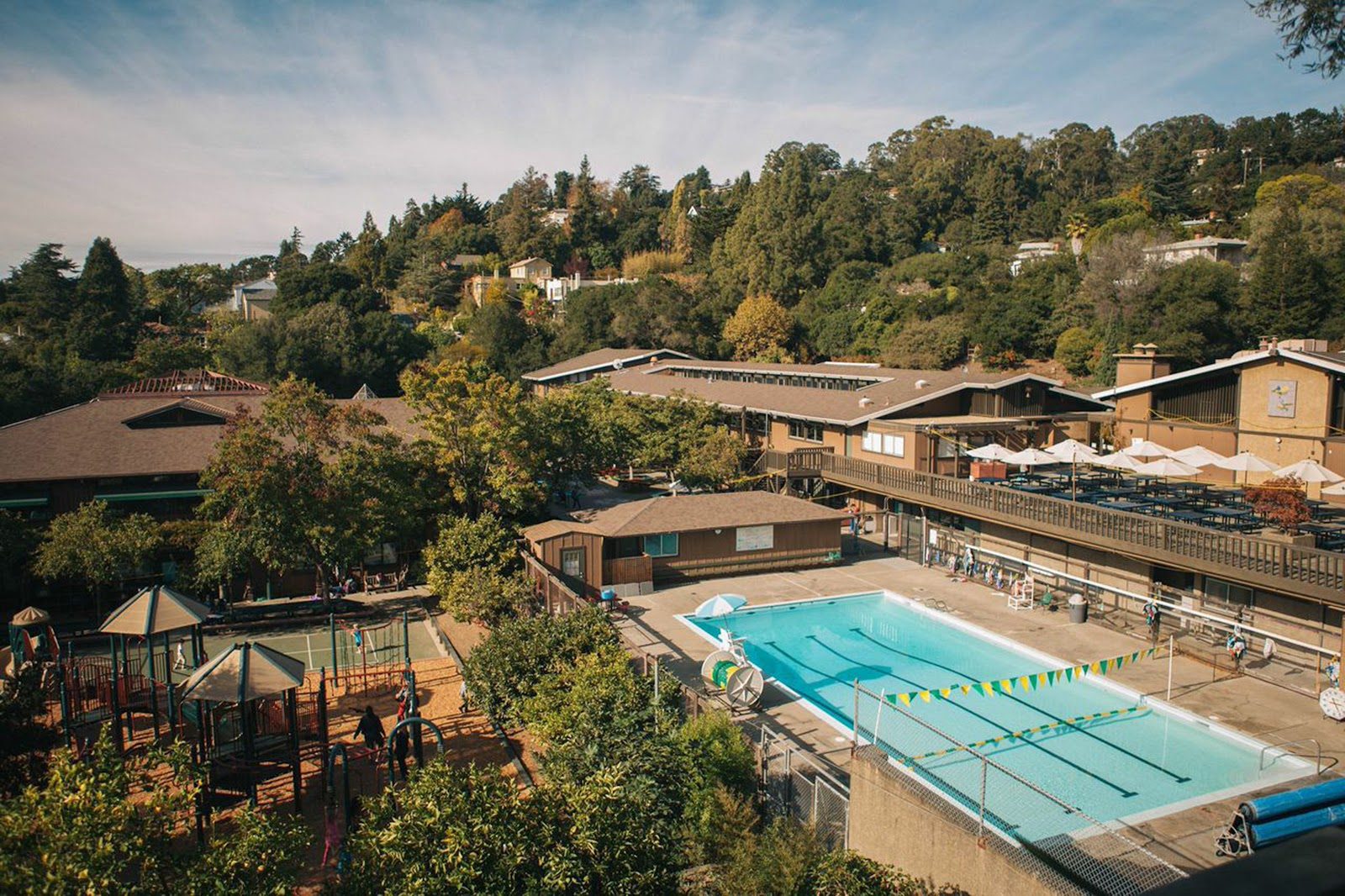
Since 1887 on a wooded Oakland hills campus, pairing rigorous scholarship with a decades-old public-school partnership that opens college doors for first-generation students

Princeton Day School
Princeton · United States
Formed by a 1965 merger of two century-old Princeton schools, pairing STEAM rigor with a rare four-year architecture program across 106 acres.
Friends Seminary
New York City · United States
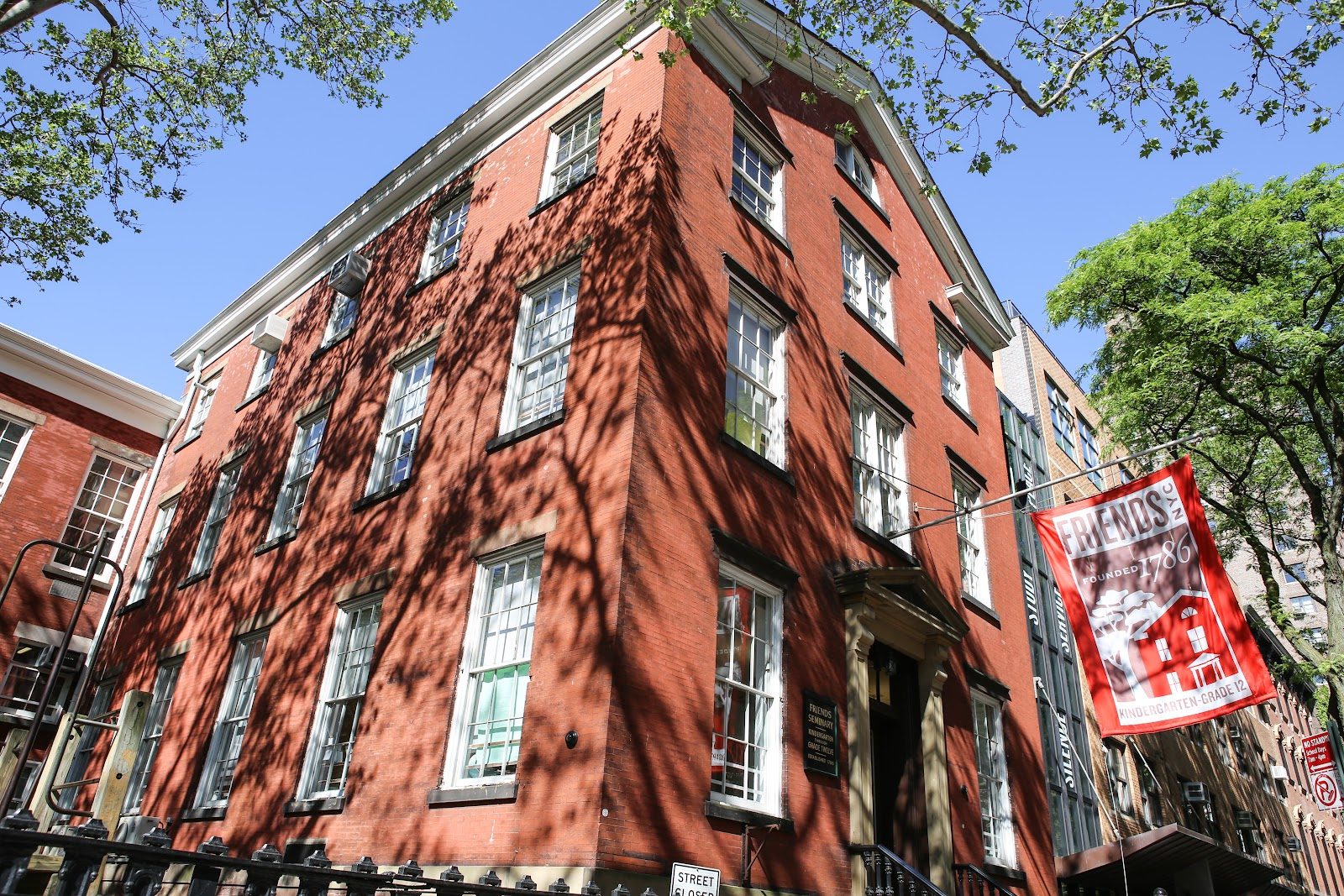
Founded in 1786, the oldest coeducational school in New York City still teaches Quaker simplicity and peace amid Manhattan's bustle
Same country and curriculum — closest matches within ±10 points either way