
Groningen
Praedinius Gymnasium
A 14th-century Latin school in Groningen, renamed for Renaissance reformer Praedinius, still pairs Greek and philosophy with a technasium track
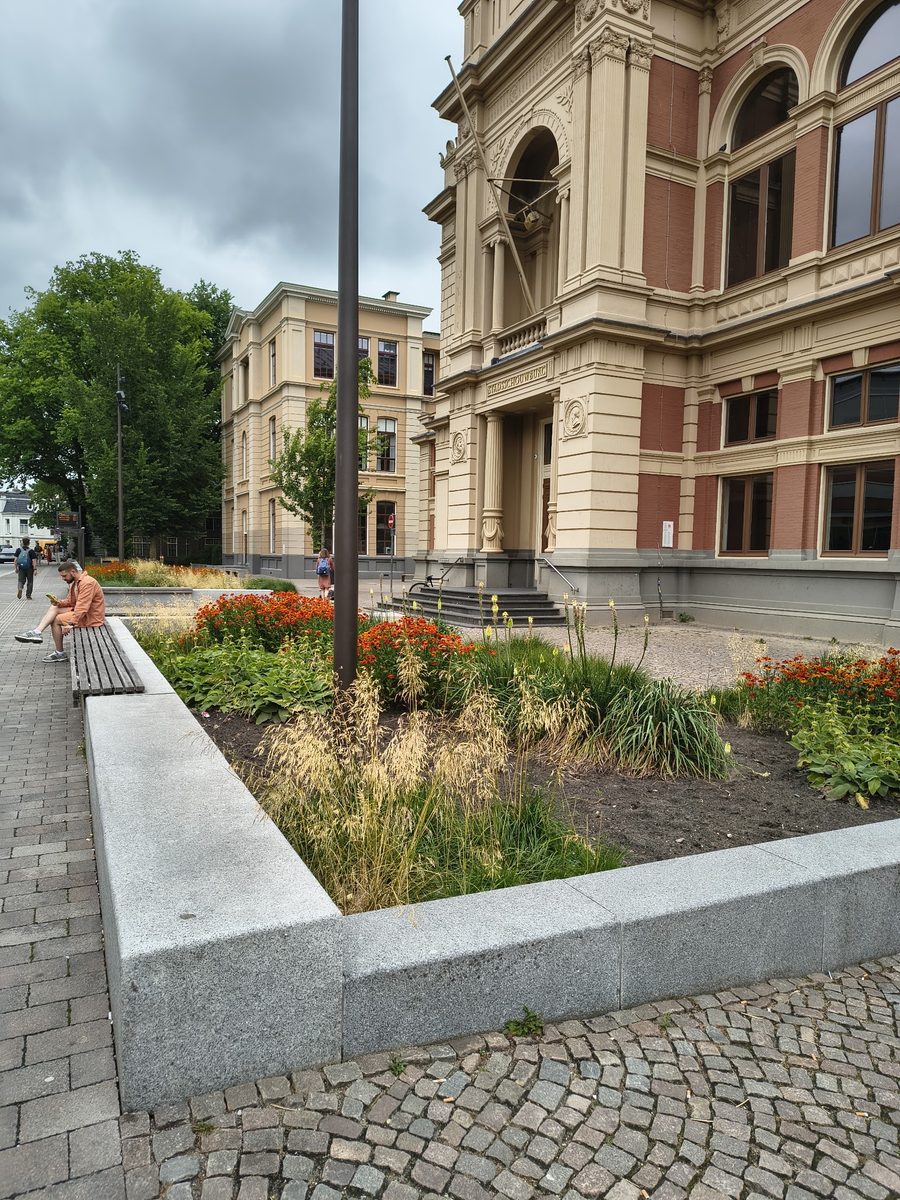
Photo © Pauline Gombert via Google Maps
Type
Day
Ages
11–18
Curriculum
Dutch
Qualifications
VWO Gymnasium
Ratio
—
The Verdict
Editor's commitment
Right for
Families in Groningen who want a Dutch day school for ages 11–18 with Greek, philosophy and a technasium track under one roof.
Wrong for
Parents wanting boarding, a non-Dutch curriculum or a school outside Groningen; Praedinius is a secular Dutch day school, ages 11–18.
Watch out for
Founded in 1594 and dating back to the fourteenth century, it trades on history; the school does not publish headline outcomes here.
Ranking breakdown
Praedinius Gymnasium · #1187 of 1591
Composite score 58.6. 8 weighted criteria.
By criterion
Academic Outcomes
Weight 20%
#902
of 1529 scored
University Placement
Weight 16%
#911
of 1529 scored
Prestige & Heritage
Weight 12%
#1009
of 1571 scored
Alumni Network
Weight 12%
#1224
of 1530 scored
Facilities
Weight 12%
#1333
of 1533 scored
Transparency & Communications
Weight 8%
#865
of 1532 scored
Peer & Industry Review
Weight 10%
#1463
of 1548 scored
Admissions Selectivity & Demand
Weight 8%
#760
of 1529 scored
Peer & Industry Review
How Praedinius Gymnasium is regarded in the sector
54
Credible · medium confidence
Praedinius Gymnasium is judged mainly through the Dutch state-school lens rather than the private/independent-school peer circuit that produces WhichSchoolAdvisor or Good Schools Guide reviews, so its reputation rests on national rather than international benchmarks. Dutch education press, notably Elsevier's annual 'Beste Scholen' survey and Trouw's school guide, periodically places it among the stronger VWO/gymnasium performers in Groningen province, citing solid central-exam pass rates typical of classical gymnasia. Among the small, tightly networked group of roughly 35-40 Dutch gymnasia, Praedinius is recognized as one of the oldest, tracing continuous roots to a medieval Latin school, which gives it historical standing within that peer set. Its Groningen location feeds a steady pipeline into the University of Groningen, a globally ranked research university, where admissions staff generally treat gymnasium diplomas -- with mandatory Latin and Greek -- as reliable markers of academic preparedness. Independent international press coverage is minimal, consistent with its status as a public institution not marketed to overseas families, so external validation is largely domestic and exam-results driven rather than editorial.
Editors' overview
Praedinius Gymnasium occupies a narrow, distinctive place in Dutch secondary education: a selective, non-comprehensive gymnasium with roots in the 14th century and a formal founding date of 1594. In Groningen it sits in a small niche, as one of only 2 non-comprehensive gymnasia in the city and the larger of the pair. That matters. This is not a broad church comprehensive with a classical garnish; it is a school built around the Dutch gymnasium tradition, where academic pace, intellectual range and university preparation sit at the centre. The editorial hook is clear: serious scholarship, institutional memory and an identity that still gives Greek, Latin and philosophy real weight.
What puts Praedinius on a shortlist is the combination of old-world academic shape and a modern Dutch edge. The school’s own identity, as given here, pairs the classical core with a technasium track. That is a strong mix. It gives academically ambitious students access to the canonical gymnasium diet while avoiding the museum-piece problem that afflicts some classical schools. A pupil can move between ancient languages and contemporary project-based technical work without leaving the same institution. For families who want a school that values both abstraction and application, that blend is unusually compelling. For families who want a softer, more pastoral, less demanding environment, this is a harder sell.
The right student for Praedinius is intellectually hungry, self-propelling and comfortable in a culture where academic seriousness is normal. This suits children who enjoy structure, cope well with selective peer groups and do not need constant hand-holding to keep up. It will also suit students drawn to languages, humanities and formal thinking, but who still want a route into science or engineering-flavoured work through the technasium strand. The language of instruction is Dutch, with English also in use, so this is not a casual landing spot for international families without strong Dutch. In market terms, Praedinius offers high academic density, classical backbone and a clearer scholarly identity than many all-through international options. Parents should shortlist it for a child who wants depth, tradition and intellectual pressure — and who will find that pressure energising rather than bruising.
Academic Performance
Public exam performance is the obvious question at a selective Dutch gymnasium, and here the picture is less transparent than it should be. We have not seen publicly published aggregate figures for final examination pass rates, average grades, value-added, or subject-by-subject outcomes. That leaves parents without the clean benchmarking data that stronger academic operators publish as a matter of course. In a school built for an academically able intake, that gap matters. Selective entry and a scholarly profile create a clear expectation of strong external results; without disclosed headline measures, outsiders cannot test how far the school converts that intake into examination outcomes against other Dutch gymnasia.
What can be said with confidence is narrower. The school sits in a high-attainment segment of the Dutch system: a standalone gymnasium, academically filtered, and operating in a city with only 2 schools of this type. That puts Praedinius in a peer group where families should expect secure progression to university-preparatory endpoints and solid performance across demanding academic subjects. It does not put the school above scrutiny. Among competitors, the best institutions pair intellectual prestige with hard data. Praedinius has the first part in place; the second is publicly opaque. For parents comparing selective Dutch schools, that means asking directly for recent exam outcomes, distribution of top grades, resit rates, and destination patterns before treating reputation as proof.
Facilities
Publicly available detail on facilities is thin, and that in itself matters. Praedinius does not make a strong public case through campus inventory, specialist suite lists or glossy estate claims. Parents therefore need to inspect in person rather than infer quality from tradition. What the school’s profile does establish is a demanding academic shape that requires certain basics to be in place: serious teaching rooms for classical subjects and philosophy, competent science provision, and workable spaces for project-based technical work. At a selective gymnasium, those are not optional extras; they are the floor. The absence of a published facilities story leaves the school looking institutionally confident but also needlessly opaque.
Against peer schools, that cuts two ways. Standalone academic schools in this bracket do not need swimming pools, theatres or sprawling sports parks to justify themselves; parents choose them for intellectual climate first. On that measure, a compact, functional site is no handicap. But competitors still publish enough to show whether laboratories are current, libraries are substantial, arts spaces are active and technical workshops are more than token. Praedinius does not. The practical conclusion is blunt: treat the estate as serviceable until proven stronger. Ask to see the library, science labs, technasium workspaces, music and art rooms, sports provision, and the condition of communal areas. In this segment, serious schools do not need spectacle. They do need evidence.
Praedinius Gymnasium occupies a narrow, distinctive place in Dutch secondary education: a selective, non-comprehensive gymnasium with roots in the 14th century and a formal founding date of 1594
Prestige
Praedinius carries real prestige within its corner of Dutch education because it belongs to a narrow, selective school type and occupies a long-established place within it. That matters more than glossy branding. In Groningen there are only 2 standalone gymnasia, and Praedinius is the larger of them. That gives it local name recognition, a defined academic constituency and a status that rests on institutional role rather than marketing noise. The association with the old gymnasium tradition also carries weight: this is the part of the Dutch system tied to serious intellectual sorting, classical discipline and a more exacting academic culture than parents will find in broad-entry secondaries.
That said, prestige here is earned by category and history more than proven through public performance data. The school benefits from the cachet of selectivity and from the social signal attached to a non-comprehensive gymnasium education. For many Dutch families, that signal is still socially legible and academically useful. But prestige has layers. The strongest schools convert status into transparent outcomes, visible university progression and a public record of academic excellence. Praedinius does not publish enough hard outcome data for an outsider to rank it with full confidence among the country’s top academic operators. So the verdict is clear: high local prestige, credible intellectual standing, and real gravitas — but not the fully evidenced national elite profile that the best selective schools document in detail.
For families who want a school that values both abstraction and application, that blend is unusually compelling
Communications
Praedinius does not communicate with parents through a rich public information layer. The website footprint is thin, and that limits confidence before a family ever speaks to the school. We do not see a strong pattern of published performance data, detailed facilities information or the kind of routine institutional reporting that answers practical parental questions in advance. That matters because communication is not only about warmth or tone; it is about whether a school saves parents time by disclosing the essentials clearly. Here, the public face feels spare and old-school: enough to establish identity, not enough to demonstrate operational transparency. For a school in a selective niche, that restraint can read as confidence. It also reads as opacity.
For existing parents, the internal picture may be stronger, but the school does not give outsiders much evidence of how consistently it handles day-to-day communication, pastoral updates, timetable changes or academic reporting. That absence forces parents to test the basics directly: response times, clarity of reporting, escalation routes and whether staff communicate with precision rather than institutional vagueness. The benchmark is simple. A serious academic school needs communication that is disciplined, prompt and exact, because the demands on pupils and families are high. Praedinius has not built a public case that it meets that standard. Until a visit proves otherwise, treat parent communication as functional rather than exceptional, and ask current families how the system works in practice.
Uniqueness
Praedinius is unusual because its identity is not diluted. Many academically strong secondaries offer a classical strand inside a broader school. Here, the classical inheritance still sits near the centre of the institution’s self-conception, and it does so inside a school type that remains rare even within its own city. Being one of only 2 standalone gymnasia locally, and the larger of the pair, gives it a distinct role: this is a place for students who want an education shaped by intellectual seriousness, selective peer culture and subjects that demand patience, precision and argument. The attached technasium element sharpens that difference. It stops the school from becoming a tradition-bound enclave and gives able pupils a route from abstract thought to design, making and applied problem-solving.
What that brings to students is a form of breadth that does not rely on softness or sprawl. A child can inhabit ancient languages, philosophy and technical project work within one coherent school culture, rather than stitching those interests together across separate programmes. That combination suits students who enjoy ideas for their own sake but also want to test them against practical constraints. The gain is mental range: disciplined reading, analytical writing, formal reasoning and collaborative production, all inside a school with deep institutional memory. For the right pupil, that creates a rare academic texture. For the wrong one, it feels narrow, exacting and unforgiving.
Praedinius does not publish enough hard outcome data for an outsider to rank it with full confidence among the country’s top academic operators
Student Profile
The pupil who fits here is bright, disciplined and happy in a school where intellectual effort carries social value. This suits children who read willingly, argue their case, tolerate correction and do not need constant reassurance when work turns difficult. It also suits students who can handle a peer group filtered for academic capacity without mistaking that environment for a pastoral cocoon. The school’s niche status in a city with only 2 institutions of this type tells you something important about the intake: families choose it for a distinct educational culture, not for convenience or broad mainstream provision. That draws students with clear academic intent, a tolerance for serious pressure and a taste for subjects that reward memory, structure and close thinking.
The less suitable pupil is easy to identify. A child who wants a loose, highly flexible school culture, heavy pastoral cushioning or a broad church social mix will find this environment constrained and demanding. Equally, students who dislike formal academic habits, resist sustained written work or need external prodding to stay organised will struggle. The better fit is the adolescent who likes standards, respects expertise and gets energy from being surrounded by able classmates. For that student, Praedinius offers a high-expectation tribe rather than a gentle landing. It is not for the faint-hearted, but it can be deeply rewarding for a young person who wants intellectual challenge to shape daily school life.
Until a visit proves otherwise, treat parent communication as functional rather than exceptional, and ask current families how the system works in practice
Co-curricular strengths
Arts & sport, on a separate axis
Overall 6.7/10
Scored 0-10 from the school's own published evidence. This axis is editorial-only — it does not feed the main WTS ranking.
Sports
6.5/10
Drama
8/10
Dance
4.5/10
Music
8/10
Visual Arts
6.5/10
Strengths
- +Traces its lineage to a fourteenth-century predecessor school, the Schole tho Sunte Meerten, later renamed the Latijnse school, giving it one of the longest institutional histories of any Dutch secondary school.
- +Operates as a categoraal openbaar (public, single-track) gymnasium in central Groningen and is designated a Begaafdheidsprofielschool with a Technasium programme, signalling a formally recognised gifted-and-talented academic track.
- +Teaches specialized courses in Latin, Greek, philosophy, and advanced mathematics, giving pupils a classical humanities grounding alongside STEM subjects.
- +Housed in a purpose-built neoclassical school building from 1880-1882 designed by municipal architect J.G. van Beusekom, which is a listed national heritage building (rijksmonument).
- +Is the larger of two non-comprehensive gymnasia in Groningen, the other being Willem Lodewijk Gymnasium, meaning it holds a substantial share of the city's selective academic-track pupils.
Considerations
- −Instruction follows the standard Dutch curriculum in Dutch only, with no IB or English-medium stream identified in public sources, which is a real barrier for non-Dutch-speaking relocating families.
- −As a categoraal gymnasium, entry depends on a top-tier primary-school recommendation, so the school is structurally closed to pupils without an academic (gymnasium-level) track advice.
- −The historic building was already considered too small by 1886, prompting extra classrooms, and has been extended in stages since, meaning campus space has long been a constraint rather than a modern purpose-built design.
- −The school sits at editorial rank 431 in the challenger_300 tier, indicating limited international name-recognition compared with globally ranked schools, despite its strong local reputation.
Availability
Primary entry gate & tests
CITO Score / Central Match
Gallery
Photo © Pauline Gombert via Google Maps
Photo © NatieTomatie via Google Maps
Photo © Ralf-G. Schneider via Google Maps
Photo © Marius via Google Maps
Photo © Bert Lanting via Google Maps
Photo © Willem Nabuurs via Google Maps
Photo © Willem Nabuurs via Google Maps
Parent reviews
Have you sent your child here?
Voice reviews carry the strongest trust badge — we transcribe them for you to tidy up before they go live. Prefer to type? A written review is fine too.
Add your voice
In 60 seconds, tell other parents: what's the best thing about Praedinius Gymnasium, and what surprised you when your child joined?
We ask for a Google sign-in so every review has a real face behind it — no anonymous drive-by attacks on schools, and no faked positive reviews. Your email is never shown publicly.
Send this profile to a friend
International parents rely on word-of-mouth. Share this review with someone weighing the same decision.
Schools with places
Similar schools to Praedinius Gymnasium with places available now.
Nord Anglia International School Rotterdam
Rotterdam · Netherlands
- 2026-27
- WAITPOOLSpace-dependent
- 2027-28
- PLACES OPENRolling
The International School of The Hague
The Hague · Netherlands
- 2026-27
- WAITPOOLSpace-dependent
- 2027-28
- PLACES OPENRolling
International School of Amsterdam
Amstelveen · Netherlands
- 2026-27
- WAITPOOLSpace-dependent
- 2027-28
- PLACES OPENRolling
The British School in The Netherlands
Voorschoten · Netherlands
- 2026-27
- WAITPOOLSpace-dependent
- 2027-28
- PLACES OPENRolling
Availability first, then country, area, curriculum, price, co-curricular
Consider also
Also worth looking at alongside Praedinius Gymnasium.
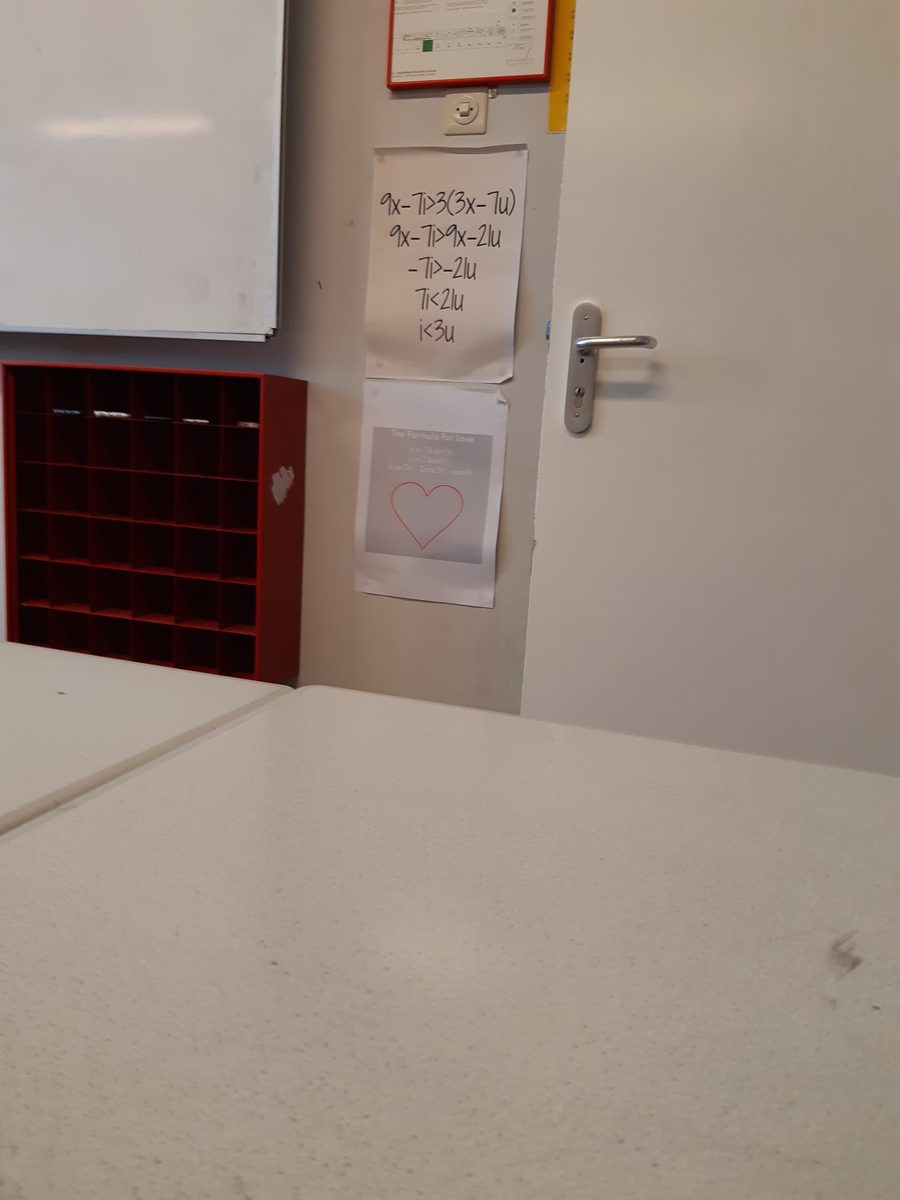
Rijnlands Lyceum Oegstgeest
Oegstgeest · Netherlands
One of five schools worldwide that piloted the IB Middle Years Programme, pairing Dutch rigor with a bilingual, Leiden-rooted campus.
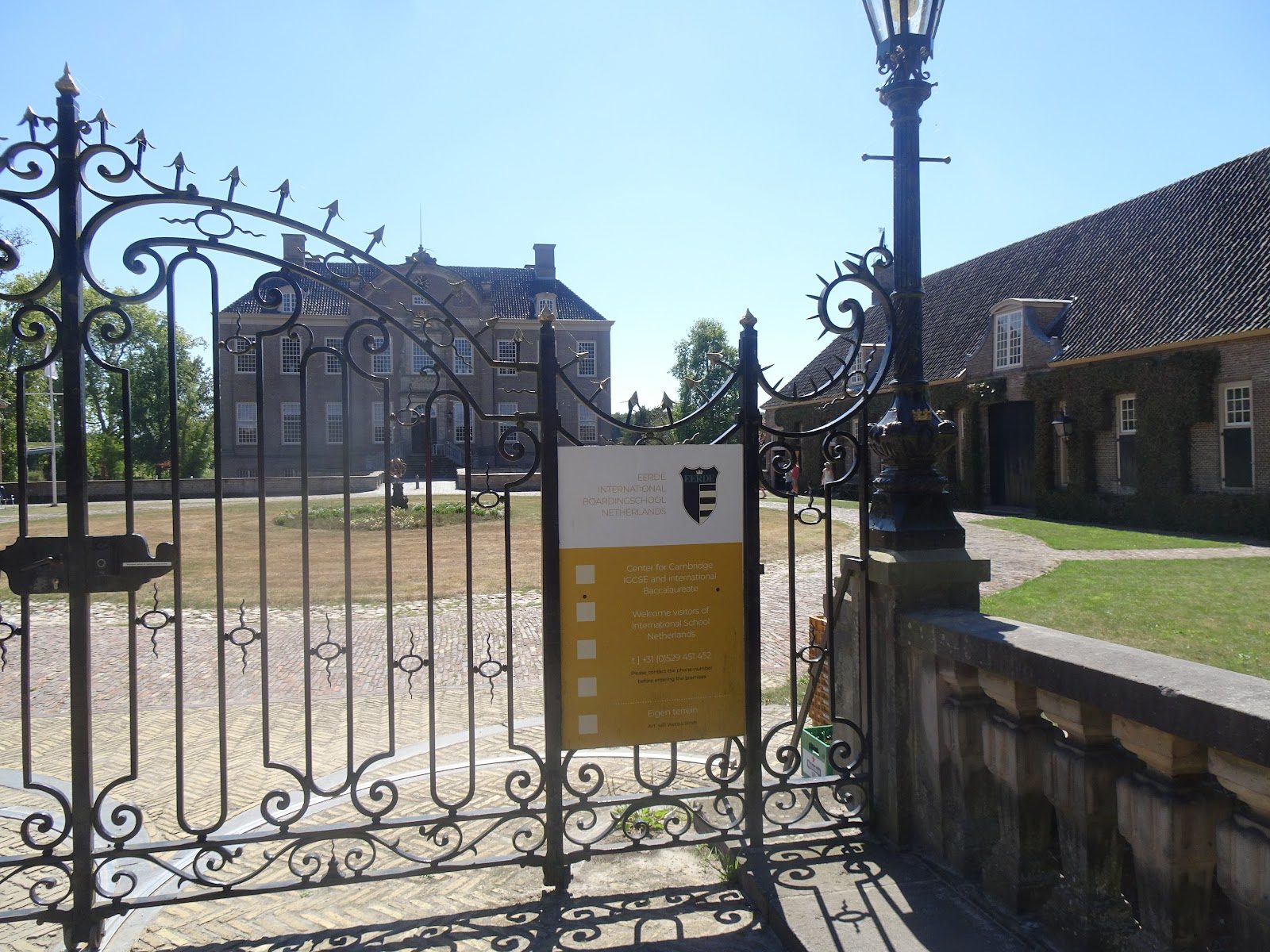
International School Eerde
Ommen · Netherlands
A moated 1715 castle that once sheltered Jewish refugee children now anchors an IB boarding community of 25-plus nationalities.
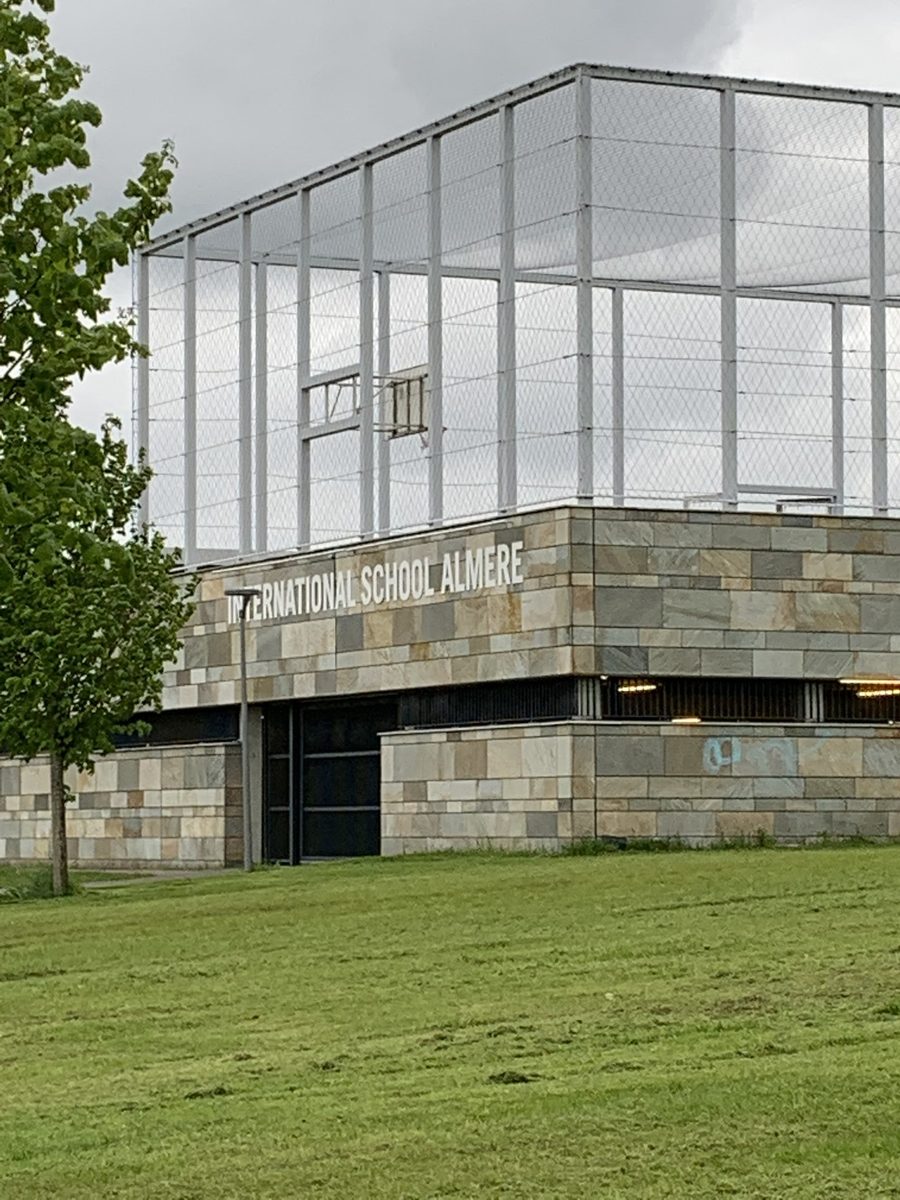
International School Almere
Almere · Netherlands
A full IB continuum, ages two to eighteen, on one shared campus in the Netherlands' fastest-growing city
Amsterdam International Community School
Amsterdam · Netherlands
A public alternative to Amsterdam's private international schools, running the full IB continuum from a climate-neutral campus.
Same country and curriculum — closest matches within ±10 points either way