Gyeonggi Province
Gyeonggi Science High School for the Gifted
South Korea's first science high school, now a gifted academy where research credits outweigh lectures and early admits vault to KAIST.
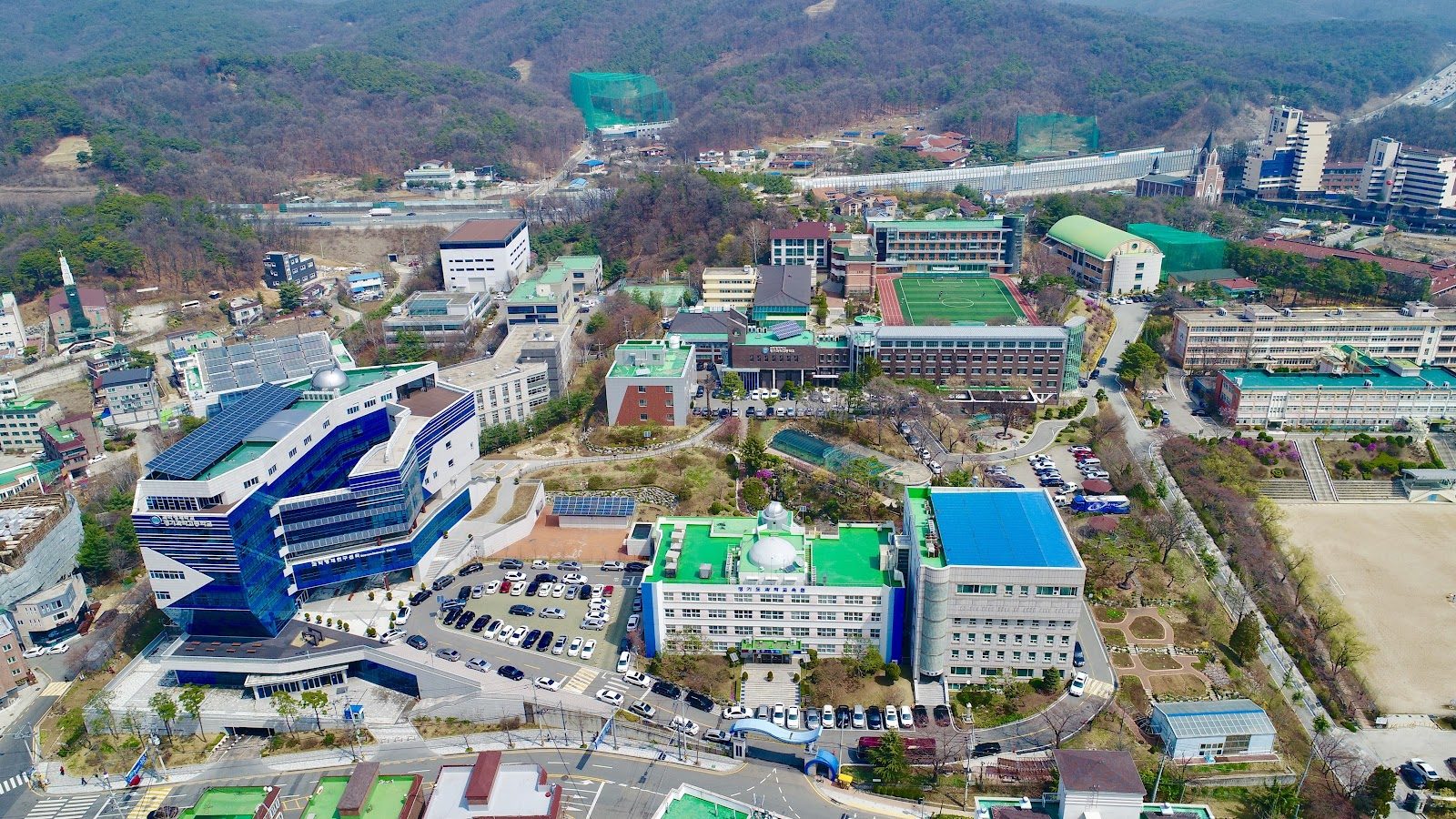
Photo © 이제식 LEE ART FILME. je sik Lee via Google Maps
Type
Boarding
Ages
15–18
Curriculum
Korean
Qualifications
Korean national gifted-track curriculum
Ratio
—
The Verdict
Editor's commitment
Right for
Scientifically gifted 15–18-year-olds who can handle boarding in Suwon, 20-student classes, and a Korean curriculum taught in Korean and English.
Wrong for
Families wanting a broad all-round school will chafe here: founded in 1983, this secular boarding school exists to train specialists, not generalists.
Watch out for
South Korea's first science high school now runs as a gifted academy; the pace is fast, the peer group fierce, and Korean matters.
Ranking breakdown
Gyeonggi Science High School for the Gifted · #405 of 1591
Composite score 71.6. 8 weighted criteria.
By criterion
Academic Outcomes
Weight 20%
#208
of 1529 scored
University Placement
Weight 16%
#136
of 1529 scored
Prestige & Heritage
Weight 12%
#203
of 1571 scored
Alumni Network
Weight 12%
#1082
of 1530 scored
Facilities
Weight 12%
#744
of 1533 scored
Transparency & Communications
Weight 8%
#1100
of 1532 scored
Peer & Industry Review
Weight 10%
#647
of 1548 scored
Admissions Selectivity & Demand
Weight 8%
#21
of 1529 scored
Peer & Industry Review
How Gyeonggi Science High School for the Gifted is regarded in the sector
68
Respected · medium confidence
Gyeonggi Science High School for the Gifted is consistently ranked among Korea's top two or three science academies alongside Korea Science Academy of KAIST and Seoul Science High School, with Korean press (Chosun Ilbo, JoongAng Ilbo, Edaily education rankings) citing its Seoul National University, KAIST, and POSTECH matriculation figures as benchmarks other gifted-education schools are measured against. University admissions offices at KAIST and SNU informally treat its R&E (Research and Education) program graduates as strong early-entrance candidates, reflecting its role as a feeder school for Korea's premier science and engineering programs. It participates regularly in national science-gifted education conferences run by the Ministry of Education and KOFAC, and its teachers contribute to curriculum-development panels for the broader science-high-school network. International recognition is thinner: it lacks coverage in Western outlets like WhichSchoolAdvisor or Good Schools Guide, since it operates within Korea's specialized public gifted-education track rather than the international/independent school circuit, limiting comparative Western press visibility despite strong domestic academic esteem.
Award
Elite Science & Research 58
World's Top School · The Global Ranking
Gyeonggi Science High School for the Gifted is featured on our Global Top 58 ranking at #12. This seal is available for the school's marketing team to use on their website, prospectus and social channels.
Award
Elite Computing & AI 60
World's Top School · The Global Ranking
Gyeonggi Science High School for the Gifted is featured on our Global Top 60 ranking at #20. This seal is available for the school's marketing team to use on their website, prospectus and social channels.
Award
Elite Mathematics 60
World's Top School · The Global Ranking
Gyeonggi Science High School for the Gifted is featured on our Global Top 60 ranking at #37. This seal is available for the school's marketing team to use on their website, prospectus and social channels.
Editors' overview
Gyeonggi Science High School for the Gifted occupies a rare niche: a state science high school recast as a gifted academy, with boarding, a tight average class size of 20, and a timetable built around research rather than classroom compliance. Founded in 1983, it has history and status, but the real distinction lies in the structure. This is not a broad international school trying to bolt on STEM prestige. It is a Korean science school for students aged 15–18 who want immersion, pace and intellectual pressure. The attraction is plain: serious academic intensity, a research-first culture, and a peer group selected for mathematical and scientific appetite rather than rounded-school polish.
What puts it on a shortlist is its clarity of purpose. Families looking for a polished all-round education with expansive arts, sport and social breadth should look elsewhere. Gyeonggi Science High School is for students who want depth before breadth and who can live comfortably in a boarding environment where high ability is the baseline, not the exception. Instruction in Korean and English widens access to scientific reading and communication, but this remains a Korean school in culture and curriculum. That matters. International families need a student who can operate confidently in Korean academic life, not one who needs pastoral cushioning or a gentle transition. For the right child, that creates an exhilarating pace; for the wrong one, it becomes an unforgiving fit.
Its market position is strong because it offers something few schools can match: early specialisation without the vagueness that surrounds many “gifted” labels. The school’s identity is narrow, deliberate and credible. Parents should shortlist it if their child wants advanced science study, thrives among other high performers, and values laboratory work, problem-solving and independent inquiry over conventional school rituals. The ideal student is not merely bright. They are restless with routine, hungry for hard problems, and content to trade teenage breadth for academic acceleration. In that segment, Gyeonggi Science High School stands out with cold precision.
An Elite Science & Research 58 school
Gyeonggi Science High School for the Gifted in Suwon, South Korea sits at rank twelve because it was the country's original blueprint for gifted-science education: opened in 1983 as Korea's first science high school and re-designated in 2010 as one of only four official Science Academies for the Gifted, it now builds mentored original research directly into its diploma rather than treating it as an extracurricular add-on.
The specialism is architected, not decorative. Of the roughly 172 total credits required for graduation, 33 are dedicated research credits, structured so that first-year students complete a foundational Self-Directed Research (R&E) course, second-years move into advanced R&E, and third-years write a graduation thesis built on that accumulated work. Facilities include the SRC (Science Gifted Research Center), with dedicated molecular biology and microbial culture labs and an advanced-instrument room accessible to students conducting supervised research. University access is genuine rather than nominal: formal AP-style MOUs with KAIST, POSTECH, GIST and UNIST let pupils earn transferable university credit in general physics, chemistry, biology and calculus, and a research-internship pipeline has sent cohorts of GSHS students to the University of New Hampshire's Science Research Internship Program to work directly with faculty before returning to continue the same projects at home.
The pipeline shows in results. Chemistry-track graduate Heui-Kwang Noh and computing-track graduate Kang-Min Ahn both won the Presidential Science Scholarship in 2014, with Noh going on to the GE Foundation Scholar-Leaders Program, while alumni Ji-Hoon Ko, Jong-Won Lee and Han-Pil Kang represented KAIST at the 2017 ACM International Collegiate Programming Contest. The pipeline stays live: in 2026, current student Bae Jun-su took gold at the International Biology Olympiad as part of Korea's first all-gold IBO team in seven years, and the school placed among the top three national sources of Korea's international science olympiad squad.
International openness, however, is limited and should be stated plainly. Instruction is entirely in Korean, admission runs through Korea's domestic gifted-school examination and camp process aimed at Korean middle-school graduates, boarding is mandatory for all admitted students, and there is no ESL track or dedicated foreign-applicant pathway comparable to a private international boarding school. As a public science academy, fees are nominal by international standards rather than the tens of thousands charged elsewhere. Our honest recommendation: this is the right target only for Korean-citizen families (or those meeting narrow gifted-school foreign-national provisions) with a child already fluent in academic Korean, and preparation for the multi-stage entrance exam should begin at least a year ahead.
An Elite Computing & AI 60 school
Gyeonggi Science High School for the Gifted in Suwon, South Korea sits at rank twenty on the Elite Computing & AI 60 because it has been Korea's most consistent single-school source of International Olympiad in Informatics talent this decade. Between 2017 and 2023 it filled two or three of Korea's four IOI team seats most seasons, and at IOI 2019 in Baku its students Kim Se-bin and Yoon Gyo-jun won gold while Lim Yu-jin won silver -- three of Korea's four medals that year.
The specialism runs through a dedicated Information Science department, not a bolted-on elective. Middle-schoolers who already medalled in the Korea Informatics Olympiad can sit a Placement Test to skip straight into advanced coursework. Every first-year completes a mentored, small-team Basic R&E research project under a named faculty supervisor, and top teams progress to Advanced R&E, including overseas lab placements. In the 2016 Asia-Pacific Informatics Olympiad the school won two of Korea's two golds and three of its four silvers. A dedicated Science Research Center now houses this pipeline, alongside a standing exchange with Singapore's National Junior College.
Notable alumni trace directly through that pipeline: Kim Se-bin and Yoon Gyo-jun (IOI 2019 gold), Lim Yu-jin (IOI 2019 silver), and Song Jun-hyeok, a more recent national-team gold medalist, all trained through the school's informatics track. The tradition predates the AI era: of the school's first graduating class of 54 in 1986, 29 went straight to KAIST, and alumni have since held student and faculty posts at MIT. Named alumni in pure AI research are still emerging, but this medal record is independently verifiable and unusually dense for a 375-student school.
International openness is limited; families should know this upfront. GSHS is a public gifted academy under Korea's Gifted Education Promotion Law; admission is zoned to the Gyeonggi region, and instruction runs entirely in Korean with no ESL or English-medium stream. Boarding is compulsory for the student body, not an international-only option. Tuition is free, but dormitory, meals and incidentals run roughly KRW 5-8 million a year on comparable disclosures, and there is no overseas-applicant visa channel since the exam requires Korean fluency and residency. Recommendation: this suits only Korean-fluent, resident families willing to start screening a year ahead; other overseas families should look to Korea's international schools instead.
An Elite Mathematics 60 school
Gyeonggi Science High School for the Gifted, in Suwon, South Korea, sits at rank thirty-seven on the Elite Mathematics 60. The anchoring fact is continuity: this is Korea's founding science high school, established in 1983 and converted into a national science-gifted academy in 2010, and it has repeatedly placed students on Korea's national mathematics and informatics teams, including gold medalist Kim Myeong-seop at the 2001 International Mathematical Olympiad, where the Korean squad finished fourth overall, and two of the four students on Korea's all-gold 2025 International Olympiad in Informatics team, Byun Jae-woo and Lee Yoo-chan.
The specialism is a research-first architecture rather than an imported syllabus. As a 영재학교 under the Gifted Education Promotion Law, GSHS teaches college-level mathematics and science with only fifteen credit-hours of Korean and English study across three years, deliberately diverging from the national exam curriculum. Since 1999 every student has completed an independent graduation thesis, a system that began with twenty-nine KAIST-track students and has since produced papers presented at academic journals; one such paper by alumnus Son Hyeong-bin fed directly into his MIT admission. The KAIST-linked R&E programme pairs students with practising researchers for a full year of original inquiry, and a small placement-test cohort tests out of first-year mathematics entirely. In the school's first cohort as a gifted academy, 62 of 122 graduates entered Seoul National University and 95 entered KAIST, with 96 percent choosing STEM majors.
Alumni tracked through Korea's IMO and IOI archives include multi-year IMO representative Park Yeong-han and gold medalist Kim Myeong-seop; notable alumni beyond olympiad circles are still emerging into public record, with the school's strength best evidenced through these verified competition results.
International openness is limited and should be stated plainly. GSHS admits through a Korean-language national gifted-education examination with no dedicated international-applicant track, unlike its sister institution, the KAIST-affiliated Korea Science Academy, which reserves roughly fifteen seats yearly for non-Korean nationals. Instruction is entirely in Korean, boarding is compulsory for all students, and the school's only outward-facing tie is a reciprocal short-visit exchange with Singapore's National Junior College, not enrollment. As a public academy, fees are nominal compared with Seoul's private international schools. Families without Korean citizenship or fluent Korean should instead pursue Korea Science Academy's international admissions round.
Academic Performance
Academic performance is the school’s main selling point, and the pattern is clear: this is a results-heavy, selection-driven institution that feeds a narrow academic pipeline at high speed. Its most striking public outcome is university placement rather than broad school-leaving data. The school states that 53.9% of graduates earned early admission to KAIST, a remarkable concentration into one of South Korea’s most competitive science and engineering universities. That figure places it in the top tier of specialist science schools, and it tells parents exactly what the school optimises for: advanced STEM progression, not balanced destination spread. It also reports 27 student papers published in academic journals, which is unusual at school level and reinforces the school’s research-first identity.
There is, however, a limit to the public picture. The school does not publish aggregate AP scores, SAT results, IB data or other internationally familiar benchmarking figures. That matters for overseas families trying to compare it with international schools, because the comparison is not clean. Against Korean science high schools and gifted schools, the school holds a formidable reputation and a hard-edged academic profile. Against international schools serving expatriate families, the evidence base is narrower and more specialised. In plain terms: if your benchmark is entry into elite Korean science and technology pathways, the school performs at a serious level; if your benchmark is broad, transparent exam reporting across multiple global systems, disclosure is thin.
Facilities
Facilities serve the school’s academic purpose with single-minded efficiency. The headline assets are scientific: 29 laboratories, a mathematics-information centre, an astronomy observatory, an image analysis room and dedicated spaces for electronic microscopy and publication work. That is a deeper specialist stack than most secondary schools offer, including many strong international schools that market STEM heavily but stop at standard physics, chemistry and biology labs. Here, the infrastructure pushes further into serious pre-university research territory. The library also matters more than it does at many peers, because this is a school where independent inquiry carries real weight rather than decorative value.
The supporting estate is functional rather than grand. Sports provision covers a gymnasium, football field, basketball court, tennis courts and a dance room; enough for balance, not enough to make this an athletic destination. Boarding and welfare facilities include dormitories, a cafeteria and an infirmary, which fits the school’s work-first identity. Against specialist science high schools in Korea, the campus infrastructure is properly competitive and in places stronger than average because of the research equipment. Against wealthy all-through international schools, the comparison flips: fewer lifestyle amenities, less architectural theatre, less emphasis on arts spectacle. Parents choosing this school are buying access to high-yield scientific infrastructure, not a glossy campus experience.
When 53.9% of graduates secure early admission to KAIST, prestige stops being rhetorical and becomes measurable
Prestige
The school carries serious domestic prestige within South Korea’s science-education hierarchy. That prestige rests on selectivity, institutional role and destination power, not on brand theatre. This is not a fashionable private school trading on lifestyle or expatriate cachet. It is a state science institution built for a narrow academic elite, and families in Korea know exactly what that means. The conversion from science high school to gifted school sharpened that status: it moved the school further away from conventional secondary education and deeper into the high-pressure end of the national talent pipeline. The headline university outcome matters here. When 53.9% of graduates secure early admission to KAIST, prestige stops being rhetorical and becomes measurable. The publication of 27 student papers adds another layer: not every strong school can claim authentic pre-university research output.
The rating stops short of universal prestige because its reputation is specialist rather than broad. Outside Korea, and outside families who track science magnets closely, the school lacks the instant recognition of Seoul’s best-known private and international names. It also does not publish the wide menu of global benchmarking data that international parents expect, which limits cross-market comparability. That does not weaken its standing in its own lane. In that lane, it is top-drawer, hard-edged and distinctly elite. For mathematically and scientifically exceptional students aiming at Korea’s highest STEM pathways, a Gyeonggi Science High School education carries real weight.
The rating stops short of universal prestige because its reputation is specialist rather than broad
Communications
Parent communication is functional, centralised and more institutional than warm. The school runs its website like a noticeboard: admissions, academic notices, calendars, research activity and administrative updates sit in clear, separate channels, with routine reliance on posted announcements rather than polished parent-facing storytelling. That suits the school’s culture. Families are not being sold an experience; they are being told what the school expects, when it expects it, and where to find the paperwork. The average class size of 20 helps at student level, but the public-facing communications structure still feels system-first, formal and decidedly Korean in tone. International families who need heavy hand-holding, instant replies or extensive explanatory framing will find it spare.
Effectiveness depends on what a parent wants from a school. For domestic families already fluent in Korean educational norms, this model works: deadlines, procedures and school news are easy to track, and the academic mission is communicated with hard clarity. For overseas or less Korea-literate parents, the burden rises fast. The school does not communicate like an international school built around parent service, and it does not smooth over its complexity with concierge language. That is not a flaw in itself; it is a choice, and a rational one for a specialist state institution. Still, the result is efficient rather than comforting. Parents who value precision over warmth will cope well. Parents who expect high-touch communication will not.
Uniqueness
What makes Gyeonggi Science High School distinctive is not just selectivity or strong destinations. It is the school’s decision to treat secondary students as junior researchers. That changes the shape of school life. Credits are earned through research activity as much as classroom study; publication is not a decorative extra; specialist spaces such as the observatory and microscopy facilities are part of the academic core, not a brochure flourish. The result is a rare degree of early specialisation. Students do not wait for university to test whether they enjoy real scientific work. They do it now, in a culture that prizes persistence, abstraction and technical competence over performance polish. For the right student, that is electrifying. For a generalist, it is claustrophobic.
The school is also unusual in the Korean context because it sits at the junction of elite public education and accelerated STEM talent development. That gives students access to a high-pressure meritocracy without the social framing of a lifestyle private school. The peer effect is central: able students are surrounded by other able students, and that raises ambition, speed and tolerance for difficulty. The payoff is clear in the school’s public outcomes, from its concentration into KAIST to its 27 student journal publications. The trade-off is just as clear. Breadth narrows, adolescence becomes work-shaped, and students who need wide extracurricular range or gentle pacing will find the model unsentimental and exacting.
In that lane, it is top-drawer, hard-edged and distinctly elite
Student Profile
The students who thrive here are not just bright; they are obsessive about science, comfortable with pressure and willing to let school life revolve around hard intellectual work. This is a strong fit for teenagers who gain energy from solving difficult problems, arguing through ideas with equally able peers and spending long stretches on experiments, proofs or research tasks without constant supervision. They do not need broad social variety to stay engaged. They do not need a school to manufacture motivation. They already have it. The school’s published outcomes tell you the culture of the cohort: a large share of leavers headed straight into one elite science-and-technology route, and students produced 27 journal publications. That is not the profile of a balanced mainstream intake. It is the profile of a narrow academic tribe.
The weaker fit is just as clear. Students who want breadth, visible creative prestige, big-match sporting life or a gentler adolescence will struggle. So will families who value emotional cushioning over meritocratic clarity. The peer group sets a high bar and the institution does little to disguise its priorities. A student who enjoys being the cleverest in the room will meet resistance fast; here, high ability is normal. The right pupil is self-propelled, resilient and content to trade breadth for depth. The wrong one will find the place bruising, airless and too narrowly defined by academic performance.
For mathematically and scientifically exceptional students aiming at Korea’s highest STEM pathways, a Gyeonggi Science High School education carries real weight
Co-curricular strengths
Arts & sport, on a separate axis
Overall 4.9/10
Scored 0-10 from the school's own published evidence. This axis is editorial-only — it does not feed the main WTS ranking.
Sports
6/10
Drama
4.5/10
Dance
4/10
Music
5/10
Visual Arts
5/10
Strengths
- +One of Korea's original science high schools (established 1983), with a long-standing reputation for STEM talent development in Gyeonggi Province.
- +Strong feeder record into KAIST and other top Korean science and engineering universities, reflecting rigorous math and science preparation.
- +Many students complete the three-year curriculum in two to two-and-a-half years through an early graduation track for advanced learners.
- +Boarding structure allows immersive, structured study environment with peer group of similarly high-achieving science-focused students.
- +Public school fee structure (government-funded gifted education) keeps costs far lower than private international alternatives.
Considerations
- −Instruction is entirely in Korean, making it unsuitable for expat children without strong Korean language proficiency.
- −Admission is extremely competitive and geared toward Korean middle school graduates with demonstrated math/science olympiad or aptitude credentials.
- −Curriculum is narrowly STEM-focused, offering limited humanities, arts or broad liberal-arts breadth compared to international schools.
- −Boarding life is intense and academically pressured, with long study hours typical of Korean specialized high schools.
Availability
Primary entry gate & tests
Document Review + Camp Exam
Gallery
Photo © 이제식 LEE ART FILME. je sik Lee via Google Maps
Photo © 이제식 LEE ART FILME. je sik Lee via Google Maps
Photo © 이제식 LEE ART FILME. je sik Lee via Google Maps
Photo © 김한준 via Google Maps
Photo © 김한준 via Google Maps
Photo © 이제식 LEE ART FILME. je sik Lee via Google Maps
Photo © 이제식 LEE ART FILME. je sik Lee via Google Maps
Parent reviews
Have you sent your child here?
Voice reviews carry the strongest trust badge — we transcribe them for you to tidy up before they go live. Prefer to type? A written review is fine too.
Add your voice
In 60 seconds, tell other parents: what's the best thing about Gyeonggi Science High School for the Gifted, and what surprised you when your child joined?
We ask for a Google sign-in so every review has a real face behind it — no anonymous drive-by attacks on schools, and no faked positive reviews. Your email is never shown publicly.
Send this profile to a friend
International parents rely on word-of-mouth. Share this review with someone weighing the same decision.
Schools with places
Similar schools to Gyeonggi Science High School for the Gifted with places available now.
Availability first, then country, area, curriculum, price, co-curricular
Consider also
Also worth looking at alongside Gyeonggi Science High School for the Gifted.
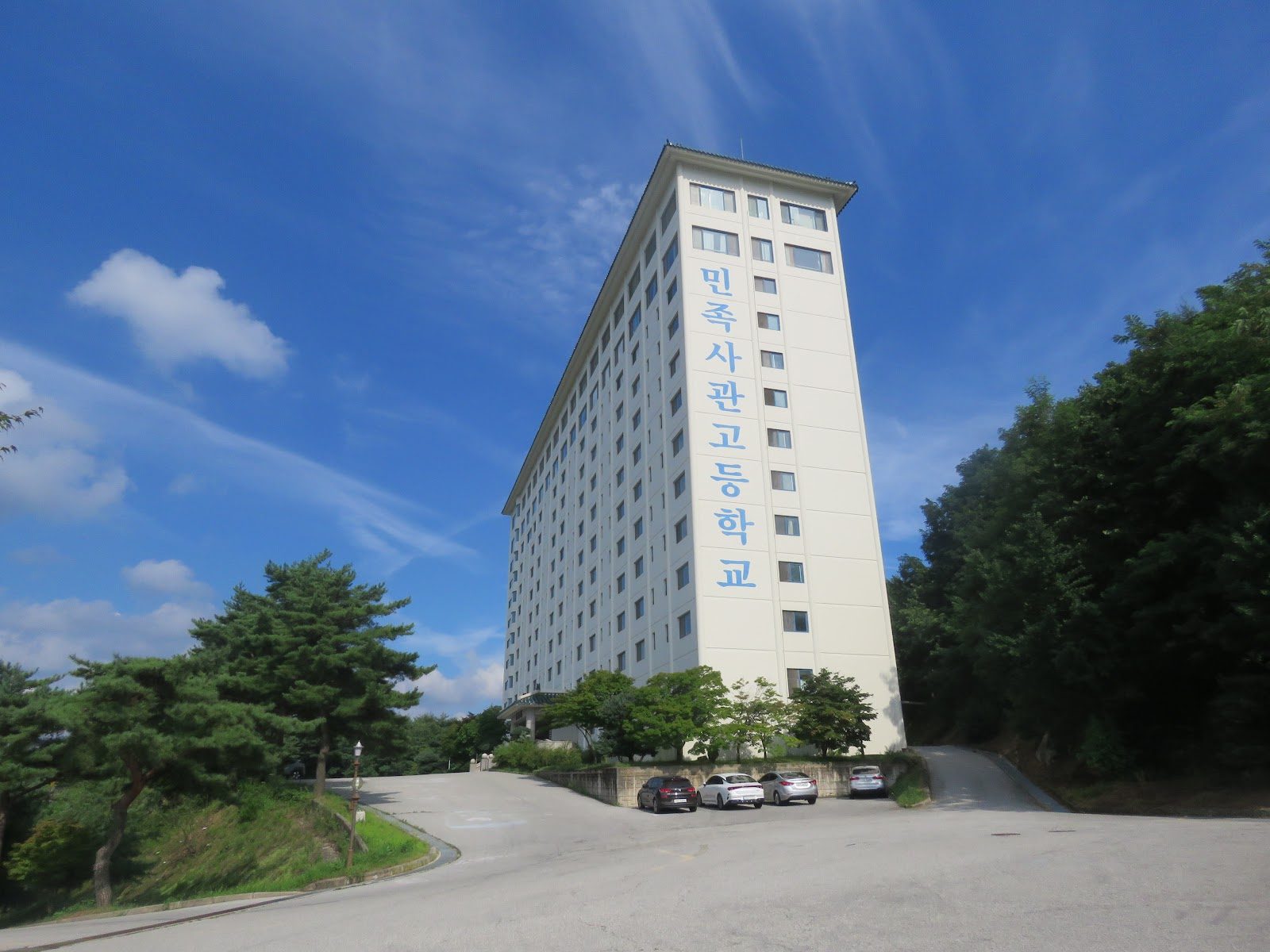
Korean Minjok Leadership Academy
Hoengseong · South Korea
On a Gangwon mountainside, hanbok-uniformed students hold English-only seminars, chasing an IB curriculum built to rival Eton.
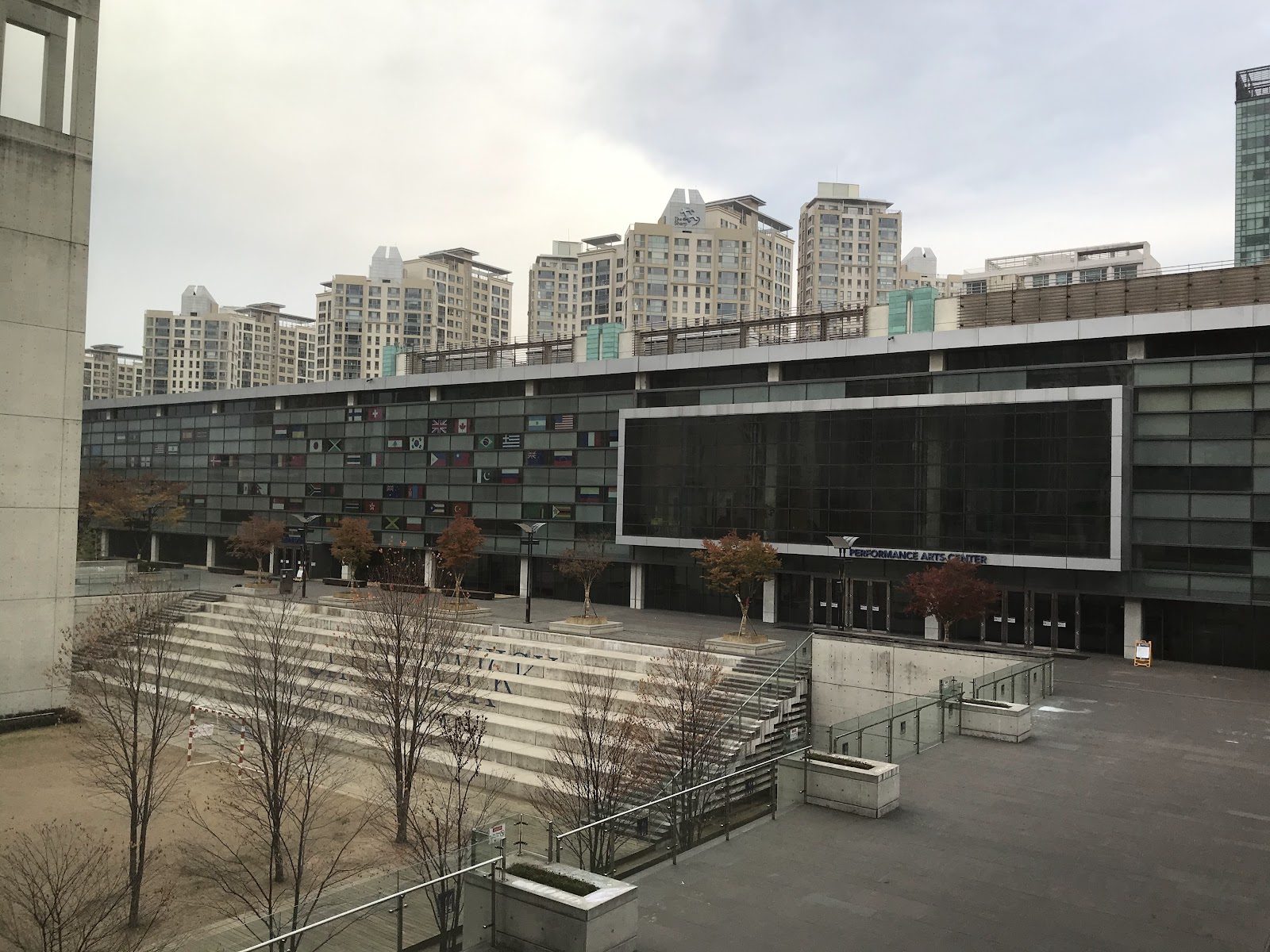
Chadwick International
Incheon · South Korea
One school, two continents: this Songdo campus mirrors a 1935 California founder, pairing IB rigor with mandatory outdoor-education expeditions.
Korea International School
Seongnam · South Korea
In Seongnam's Pangyo tech corridor, a dual IB-American track anchors a curriculum built around 24 Advanced Placement courses.
North London Collegiate School Jeju
Jeju · South Korea
Founding school of Jeju's Global Education City, blending a 170-year London pedigree with strong IB results and seven boarding houses.
Same country and curriculum — closest matches within ±10 points either way