
Rayong
Kamnoetvidya Science Academy
In Rayong's PTT-backed Wang Chan Valley research park, full scholarships fund a boarding school that admits 70 of 5,000 STEM applicants.
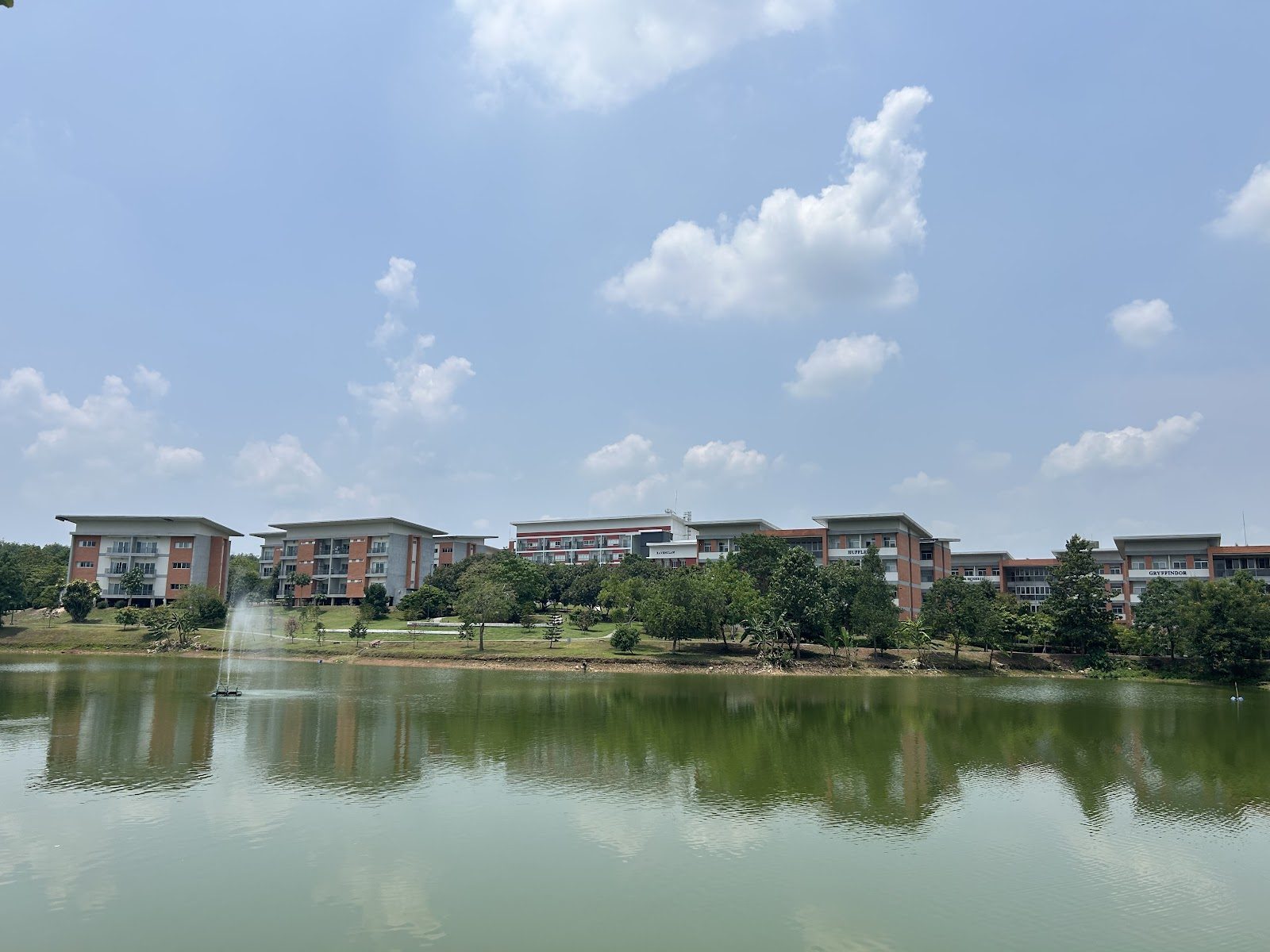
Photo © ขุนเขาทะเลหมอก via Google Maps
Type
Day
Ages
15–18
Curriculum
Thai National STEM
Qualifications
Thai Matthayom 6
Ratio
1:8
The Verdict
Editor's commitment
Right for
STEM specialists aged 15–18 who want a 1:8 ratio, English and Thai teaching, and an IB World School in Rayong.
Wrong for
Families wanting a broad all-through education: KVIS is a day school founded in 2015, with a Thai National STEM curriculum and 216 students.
Watch out for
Competition is brutal: 216 students, 18 per class, and a school built for national science talent rather than generalist teenagers.
Ranking breakdown
Kamnoetvidya Science Academy · #1049 of 1591
Composite score 61.5. 8 weighted criteria.
By criterion
Academic Outcomes
Weight 20%
#1085
of 1529 scored
University Placement
Weight 16%
#793
of 1529 scored
Prestige & Heritage
Weight 12%
#1150
of 1571 scored
Alumni Network
Weight 12%
#1247
of 1530 scored
Facilities
Weight 12%
#193
of 1533 scored
Transparency & Communications
Weight 8%
#1019
of 1532 scored
Peer & Industry Review
Weight 10%
#1373
of 1548 scored
Admissions Selectivity & Demand
Weight 8%
#229
of 1529 scored
Peer & Industry Review
How Kamnoetvidya Science Academy is regarded in the sector
60
Respected · medium confidence
Within Thailand, KVIS is viewed as a distinct model rather than a direct rival to legacy international schools like Bangkok Patana or NIST, since it is PTT-funded, tuition-free for admitted students, and selects nationally on science and math aptitude rather than fee-paying enrollment. Its closest institutional peer is Mahidol Wittayanusorn School, and Thai education commentators regularly pair the two as the country's leading STEM-selective schools. Its direct co-location and pipeline with VISTEC (Vidyasirimedhi Institute of Science and Technology) gives it credibility with Thai research universities and PTT-affiliated industry, with graduates commonly progressing to Chulalongkorn, Mahidol, KMUTT, and a growing number to overseas STEM programs. Thai-language press (Bangkok Post, The Nation, and PTT Group corporate reporting) covers it primarily as a national talent-development initiative rather than through the WhichSchoolAdvisor/Good Schools Guide international-school lens, so independent Western education press commentary is limited. It is not yet a fixture on international peer-conference circuits in the way established British- or American-curriculum schools are, reflecting its newer, domestically-focused positioning.
Award
Elite Science & Research 58
World's Top School · The Global Ranking
Kamnoetvidya Science Academy is featured on our Global Top 58 ranking at #5. This seal is available for the school's marketing team to use on their website, prospectus and social channels.
Editors' overview
Kamnoetvidya Science Academy occupies a rare niche in Thailand: a state-purpose science school built to identify exceptional STEM talent early and train it hard. The numbers define the proposition. The school has 216 students in total, classes of 18, and a 1:8 student-teacher ratio. Entry is ferociously selective: the school’s own framing is 70 places from 5,000 applicants. That gives KVIS a market position closer to a national talent pipeline than a conventional private school. It sits in Wang Chan Valley, alongside VISTEC and the wider PTT-backed research ecosystem, which gives the project a clear national mission and a serious scientific bias.
What sets it apart is not breadth for its own sake but concentration. KVIS serves ages 15–18, teaches in English and Thai, and runs a Thai National STEM curriculum; it is also an IB World School. The school states its purpose plainly: to develop future researchers, inventors and innovators who can work and compete internationally. That ambition runs through the design. This is a small senior school, not an all-through campus with a soft landing for every type of learner. Families looking for broad mainstream schooling, heavy pastoral packaging or a conventional social scene will find the proposition narrow. Families looking for intellectual pressure, laboratory seriousness and full-throttle academic focus will find exactly that.
KVIS belongs on a shortlist because it offers something few schools in the region can match: elite STEM selection, tiny cohorts, and full scholarships at a scale that changes access. The scholarship model matters. It shifts the school out of the luxury-international bracket and into the meritocratic one. Parents should also note the limits. The school does not publish the kind of aggregate outcomes data that would let outsiders judge academic performance in detail. There are public references to AP exam administration, but KVIS is not an AP school by curriculum in the verified context here. The attraction, then, is not glossy claims; it is the structure itself: a high-stakes academic enclave for mathematically and scientifically ambitious teenagers.
The student who will want KVIS is not a generalist and not a child who needs constant hand-holding. This school suits a disciplined, high-performing teenager with genuine appetite for maths, science, engineering and research, and with the resilience to thrive in a tiny, selective peer group. It will also suit students motivated by purpose as much as prestige: those who want their education tied to invention, national development and advanced study. For the right child, KVIS is a proving ground, not a finishing school.
An Elite Science & Research 58 school
Kamnoetvidya Science Academy, in Wang Chan, Rayong, sits at rank five on the Elite Science & Research 58 because it is Thailand's most selective science pipeline, admitting just 72 students a year from a pool of 5,000 to 7,000 national applicants, and it does so while sharing a single research park with a genuine postgraduate research university. That neighbor, VISTEC, ranked No. 1 in Thailand for chemical and natural sciences in the 2023 Nature Index and No. 12 in the world among academic institutions under 30 in 2018, and its scientists work directly with KVIS pupils rather than merely sitting next door.
The research architecture is built around the Kamnoetvidya Invitational Science Fair, hosted annually since 2017, which pushes every cohort toward a presentable original project judged by outside juries. VISTEC faculty cross onto the KVIS campus for mentorship, from AI and robotics camps run jointly with VISTEC and PTT, where more than 180 applicant teams compete for roughly fifteen places, to materials-science talks by MIT- and Oxford-trained VISTEC researchers on projects such as blue-emitting semiconductor synthesis. With only 18 students per class and four classes per grade, mentorship is unusually close for a state-linked school. The payoff shows: a KVIS team took a Regeneron ISEF grand award in 2024, fourth runner-up in environmental engineering, for a PET-plastic-degrading enzyme project.
Notable alumni are still emerging as a public-facing group, but the competition record is concrete: at the 2022 International Chemistry Olympiad, grade-12 student Weerapat Li and Cohort 5 alumnus Kijjakarn Namsawangrungrueng each won silver medals, part of three KVIS-linked silvers that year.
International openness here is limited and should be stated plainly: KVIS enrolls only Thai nationals through its national entrance competition, all 216 pupils on campus at any time hold full three-year PTT-funded scholarships, and it is not currently open to overseas applicants for enrollment. It is a genuine boarding school, English features heavily in science instruction, and it runs formal exchange links with sister gifted-science schools abroad, including the North Carolina School of Science and Mathematics and Korea Science Academy. For an overseas family, the realistic entry point is sending a team to the invitational science fair as visiting competitors, not applying for a seat; KVIS is best treated as a benchmark model to study rather than a school to apply to.
Academic Performance
KVIS does not publish the aggregate examination profile that serious parents need: no school-wide AP score distribution, no mean scores by subject, no full university-matriculation outcomes table, and no comparative trend data across cohorts. That weakens any hard claim about external academic performance. We can say this much: the school runs AP exam registration and has opened exam access beyond its own students, which confirms engagement with externally benchmarked assessment. We have not seen a public results set that shows how KVIS performs against Thailand’s top science schools or the strongest international schools in Bangkok. For a school built on extreme selectivity and high academic pressure, that opacity is a real weakness.
Relative to peers, KVIS sits in an unusual category. It is not a broad-market international school selling headline pass rates across a mixed-ability intake; it is a narrow, elite STEM school with a concentrated mission and a tiny senior cohort. That structure sets a high expectation for exam performance, especially in maths and science. The school also publishes “achievement research” as a category on its academic pages, which points to a culture of measurement, but without public aggregate results the outside world cannot test the claim. Parents weighing KVIS against established exam-driven competitors should treat it as a school with serious academic intent and insufficient public proof.
Facilities
The facilities that matter at KVIS are the ones tied to its academic purpose. Public descriptions of the campus point to classrooms, research laboratories, a learning resources centre, music rooms, dance rooms, art rooms and student houses, all within the Wang Chan Valley research setting and connected to visits with VISTEC and the wider science precinct. That matters more than decorative acreage. For a school with only 18 students per class, the useful question is not whether it has every amenity of a giant international campus; it is whether specialist spaces are embedded in daily work. On that test, KVIS looks well tooled for serious study. The inclusion of research labs in school tours is the key signal. Many Thai and international peers talk about STEM; fewer put laboratory work and research culture so close to the centre of school life.
Against peer schools, KVIS is stronger in scientific infrastructure than broad-market campuses that spread investment across theatres, aquatics and spectator sport. It is weaker if a family wants the sprawling sports inventory or polished social commons of a premium all-rounder. The arts provision is present, which prevents the place from collapsing into a one-dimensional test factory, but no public account positions arts or athletics as flagship strengths. Student housing also features in campus tours despite the verified listing here classifying the school as day; parents need that point clarified directly with the school. The overall facilities picture is *purpose-built, concentrated and unsentimental* — a campus designed to produce researchers, not to flatter tourists.
Kamnoetvidya Science Academy occupies a rare niche in Thailand: a state-purpose science school built to identify exceptional STEM talent early and train it hard
Prestige
KVIS carries real prestige, but it is a specialist prestige, not the social prestige of an old Bangkok name or a polished international-school brand. Its standing comes from scarcity, state purpose and association. Admission is brutally hard: the school’s own tagline frames entry as 70 places from 5,000 applicants. That alone confers status. Add the link to the PTT-backed Wang Chan Valley research ecosystem and the adjacent VISTEC environment, and KVIS reads less like a conventional school and more like a national talent project. For families in Thailand’s science and engineering circles, that is serious cachet. For families chasing broad name recognition outside STEM, the badge carries less weight than longer-established global brands.
We rate its prestige highly because the selection pressure is extreme, the mission is unapologetically elite, and the school’s identity is tied to research, invention and national scientific competitiveness rather than generic “all-round excellence”. That gives KVIS a hard-edged credibility that many glossy schools lack. It also narrows the audience. This is not prestige built on old-boy networks, grand sporting tradition or mass-market international polish. It is prestige built on intellectual filtration, scholarship access and scientific ambition. The weakness is public proof. Prestige rises further when a school publishes a decisive record of university destinations and external results. KVIS does not disclose that record in full, so part of its reputation rests on structure and selectivity rather than transparent outcomes. That still makes it formidable — but not beyond scrutiny.
We have not seen a public results set that shows how KVIS performs against Thailand’s top science schools or the strongest international schools in Bangkok
Communications
KVIS communicates in a structured, institutional way rather than a warm, parent-facing one. The website runs in Thai and English, carries a proper calendar, news and announcements, and keeps key school architecture visible: governance, leadership, curriculum structure, graduation criteria, staff, strategic plan and contact points. That is useful. Parents can trace who runs the school and what it says it is doing. The school also posts operational notices with concrete detail, including AP registration windows, dates and fees for external candidates. That kind of specificity signals administrative competence. The weakness is tone and audience. Much of the public communication reads upward to stakeholders and mission, not outward to families managing daily school life. There is plenty on institutional purpose, less on the ordinary parental questions that matter once a child is enrolled.
Effectiveness, then, is strong on formal information and weaker on lived transparency. The site shows an active news function and a public-facing archive, but it does not publish the richer parent information that distinguishes a truly open school: detailed academic outcomes, fuller reporting on student support, or a clear picture of routine home-school communication. Even the coexistence of student housing references with a verified day-school listing leaves a point that parents need clarified directly. The small scale of the school means communication needs to be precise, prompt and unambiguous. KVIS does precision well in notices. It does not yet deliver the fuller, confidence-building transparency that top schools publish as standard.
Uniqueness
What makes KVIS unique is the way it compresses school, scholarship and national science policy into one institution. This is not an international school that happens to be good at STEM. It is a deliberately engineered pipeline for high-end scientific talent, built inside a research park and tied to a wider innovation ecosystem rather than a suburban school market. The school’s own language is blunt about the goal: produce future researchers, inventors and innovators who can operate internationally and add value to Thailand. That gives student life a clearer purpose than the usual blend of grades, activities and vague “leadership”. The scale sharpens it further: 216 students in total and 18 per class create a tight, high-pressure academic community where anonymity has no place.
For students, that structure brings concentration, access and expectation. They study in a cohort selected for scientific ability, with specialist facilities woven into daily work and exposure to a neighbouring advanced-study environment that most teenagers never get near. The school also teaches additional languages beyond English, including Chinese, Korean, Japanese, Spanish, German and French, which broadens a model that might otherwise narrow into pure lab training. The scholarship basis changes the social contract. KVIS is meritocratic in a hard sense: students are there to do serious work, not to consume a premium lifestyle. For the right teenager, that is transformative. For anyone who wants breadth, ease or a softer ride, it is not for the faint-hearted.
It does not yet deliver the fuller, confidence-building transparency that top schools publish as standard
Student Profile
The KVIS student is an academic specialist, not a balanced-all-rounder by default. This school fits teenagers who already know that maths, science, engineering or research work sits at the centre of their ambition, and who gain energy from being surrounded by equally able peers rather than intimidated by them. With only 216 students across the whole school, there is nowhere to hide socially or academically. That suits students who are self-propelled, intellectually competitive and comfortable having their ability tested every day. It also suits pupils who can handle adult expectations early: independent study, sustained concentration, and serious engagement with laboratory and project work rather than passive classroom compliance.
The less obvious fit is cultural. KVIS serves children who can buy into a mission larger than personal advancement. The school talks openly about producing future researchers, inventors and innovators for Thailand, and that civic framing will matter to the students who thrive here. They do not need polish, status performance or a big-school social circuit; they need purpose. A teenager who wants broad subject choice, constant pastoral cushioning or a conventional teenage campus life will find KVIS narrow, high-pressure and demanding. A teenager who wants scholarship-funded access to an elite STEM enclave with a peer group selected from a vast applicant pool will find it electrifying.
What makes KVIS unique is the way it compresses school, scholarship and national science policy into one institution
Co-curricular strengths
Arts & sport, on a separate axis
Overall 6/10
Scored 0-10 from the school's own published evidence. This axis is editorial-only — it does not feed the main WTS ranking.
Sports
6/10
Drama
5.5/10
Dance
5.5/10
Music
6.5/10
Visual Arts
6.5/10
Strengths
- +Only 72 high-ability students are admitted each year for a total student body of 216 students, all on full three-year scholarships, so no family pays tuition or boarding fees.
- +Each academic year, KVIS recruits 72 high-ability science and mathematics students selected from 5,000 to 7,000 applicants from all parts of the country, giving it one of the tightest acceptance rates among Thai state-linked schools.
- +The aim is to keep KVIS small with four classes at each grade level, and 18 students per class, allowing close staff-student contact in science and maths.
- +Students have recently won individual medals at international subject olympiads, including a gold and two silvers for KVIS students at the 2025 International Chemistry Olympiad in Dubai and a gold plus two silvers at the first International Nuclear Science Olympiad 2024 in the Philippines.
- +The school sits alongside Vidyasirimedhi Institute of Science and Technology (VISTEC); Wang Chan Forest Learning Center; and the Eastern Economic Corridor of Innovation (EECi) project, giving pupils proximity to a graduate research campus and applied-science labs.
Considerations
- −Admission is restricted to Thai nationals aged 15-18 entering Grade 10; a blog account of a school visit states currently, it is not open to foreign students, ruling it out for most relocating expat families.
- −Despite being classified here as a day school, every source describes KVIS as a full weekday boarding institution: all of the students, as well as teachers, are required to stay on weekdays in dormitories or other facilities, so families cannot choose a day-only arrangement.
- −The campus is deliberately remote: it is located some 160 kilometers southeast of Bangkok, on a rural site described as Campus type: Rural, making regular family visits during term time impractical.
- −The curriculum is narrowly built around mathematics, science, engineering and technology for a small cohort of around 200-220 pupils, offering little breadth for students who may want strong arts, humanities or languages provision.
Availability
Primary entry gate & tests
KVIS National Entrance Exam
Gallery
Photo © ขุนเขาทะเลหมอก via Google Maps
Photo © Jinjuta Paripurana via Google Maps
Photo © Kittisak R via Google Maps
Photo © Kittisak R via Google Maps
Photo © varon Sriganjana via Google Maps
Photo © Kittisak R via Google Maps
Photo © Prasert Krai via Google Maps
Parent reviews
Have you sent your child here?
Voice reviews carry the strongest trust badge — we transcribe them for you to tidy up before they go live. Prefer to type? A written review is fine too.
Add your voice
In 60 seconds, tell other parents: what's the best thing about Kamnoetvidya Science Academy, and what surprised you when your child joined?
We ask for a Google sign-in so every review has a real face behind it — no anonymous drive-by attacks on schools, and no faked positive reviews. Your email is never shown publicly.
Send this profile to a friend
International parents rely on word-of-mouth. Share this review with someone weighing the same decision.
Schools with places
Similar schools to Kamnoetvidya Science Academy with places available now.
NIST International School
Bangkok · Thailand
- 2026-27
- WAITPOOLSpace-dependent
- 2027-28
- PLACES OPENRolling
Bangkok Patana School
Bangkok · Thailand
- 2026-27
- CLOSEDThai closed / Non-Thai open
- 2027-28
- OPENS SOONThai 1 Sept / Non-Thai rolling
Shrewsbury International School Bangkok
Bangkok · Thailand
- 2026-27
- WAITPOOLSpace-dependent
- 2027-28
- PLACES OPENRolling
International School Bangkok
Bangkok · Thailand
- 2026-27
- WAITPOOLSpace-dependent
- 2027-28
- OPENS SOONOpens Sept '26
Availability first, then country, area, curriculum, price, co-curricular
Consider also
Also worth looking at alongside Kamnoetvidya Science Academy.
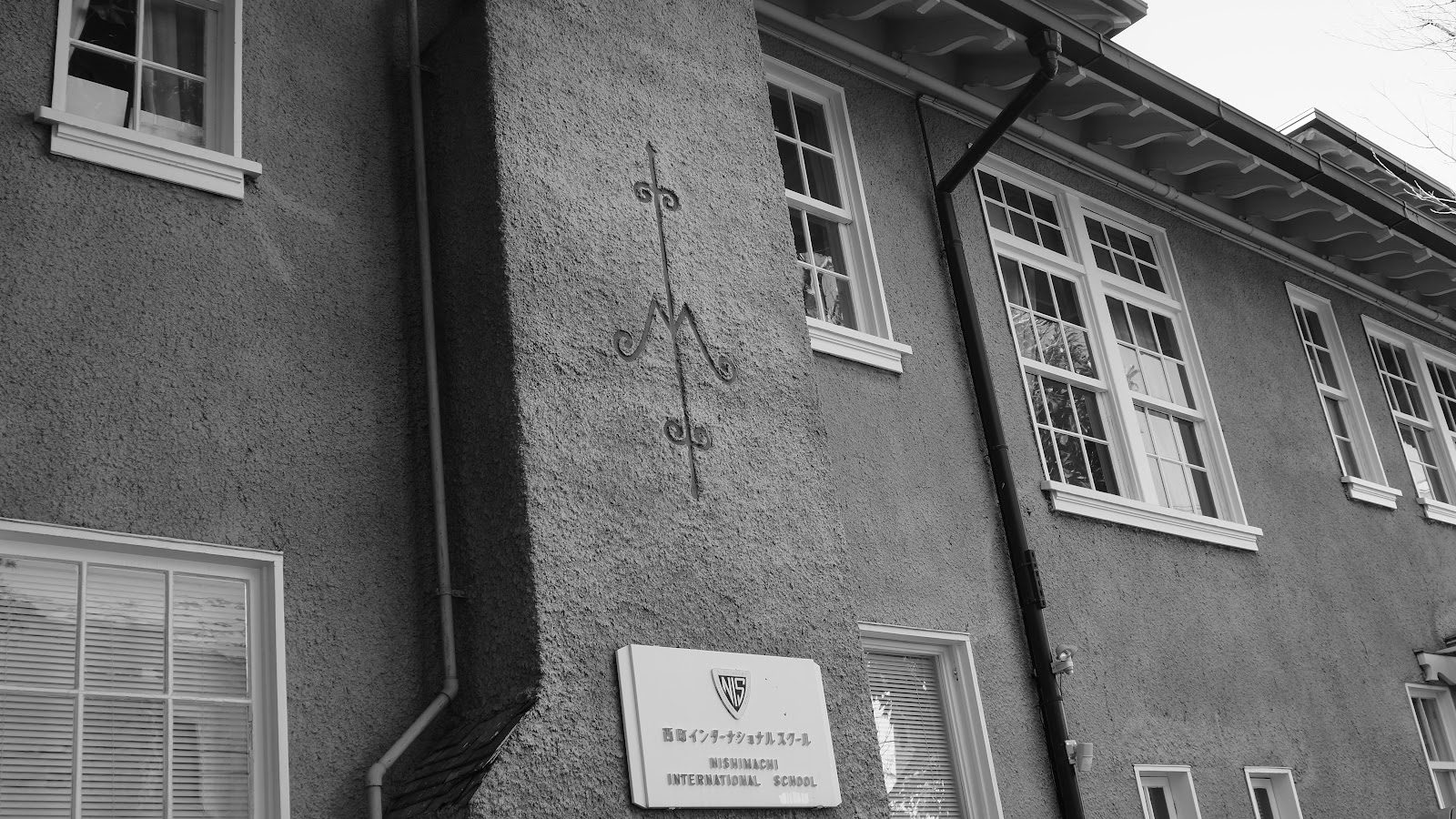
Nishimachi International School
Tokyo · Japan
On a Meiji-era Moto-Azabu estate since 1949, an American K-9 curriculum paired with mandatory daily Japanese lessons
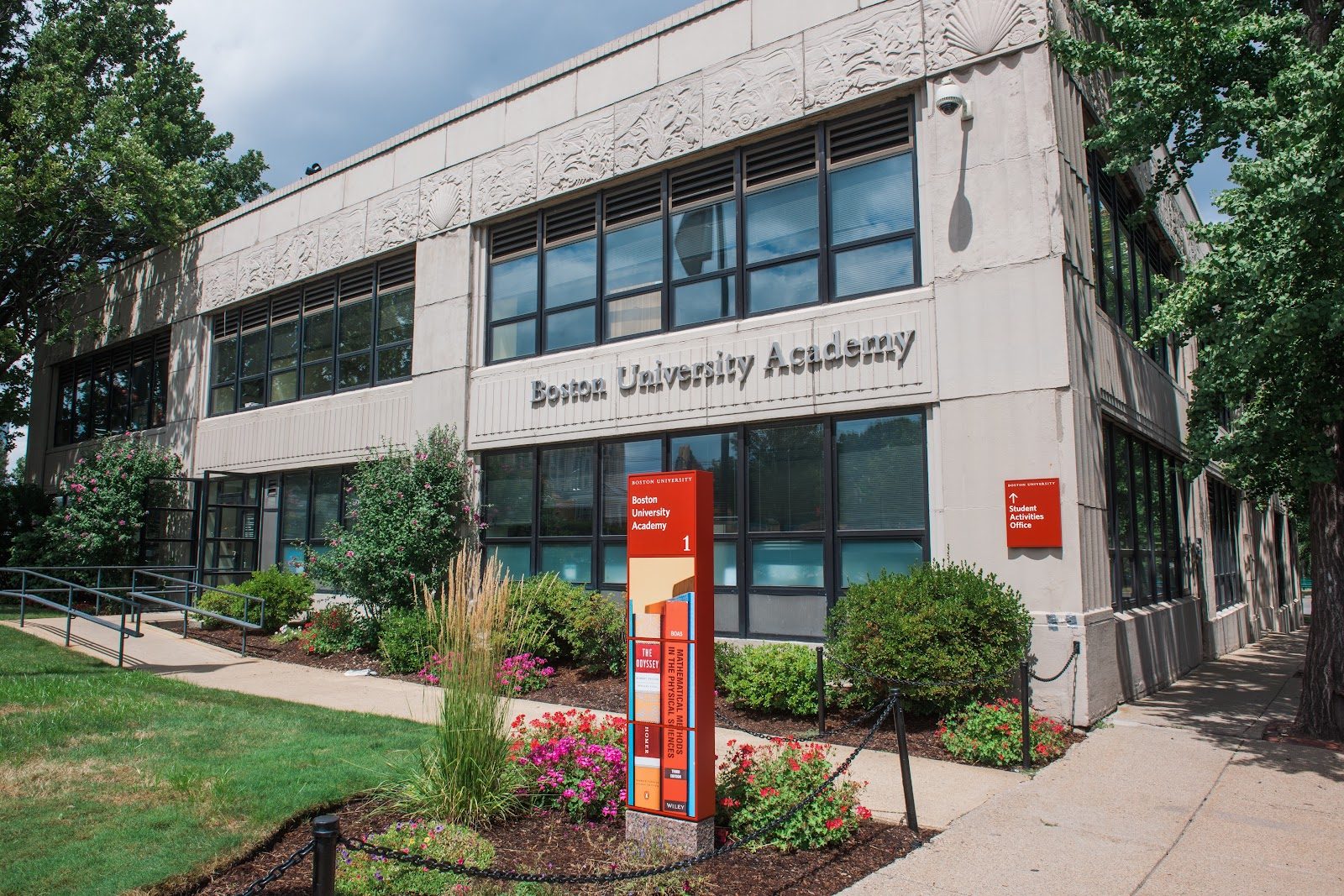
Boston University Academy
Boston · United States
Upperclassmen trade study halls for Boston University lecture halls, banking college credit before graduation.

Collège Champittet
Pully · Switzerland
A Dominican-founded lakeside campus above Lake Geneva, where boarders choose between IB, French Bac and Swiss Maturite tracks.
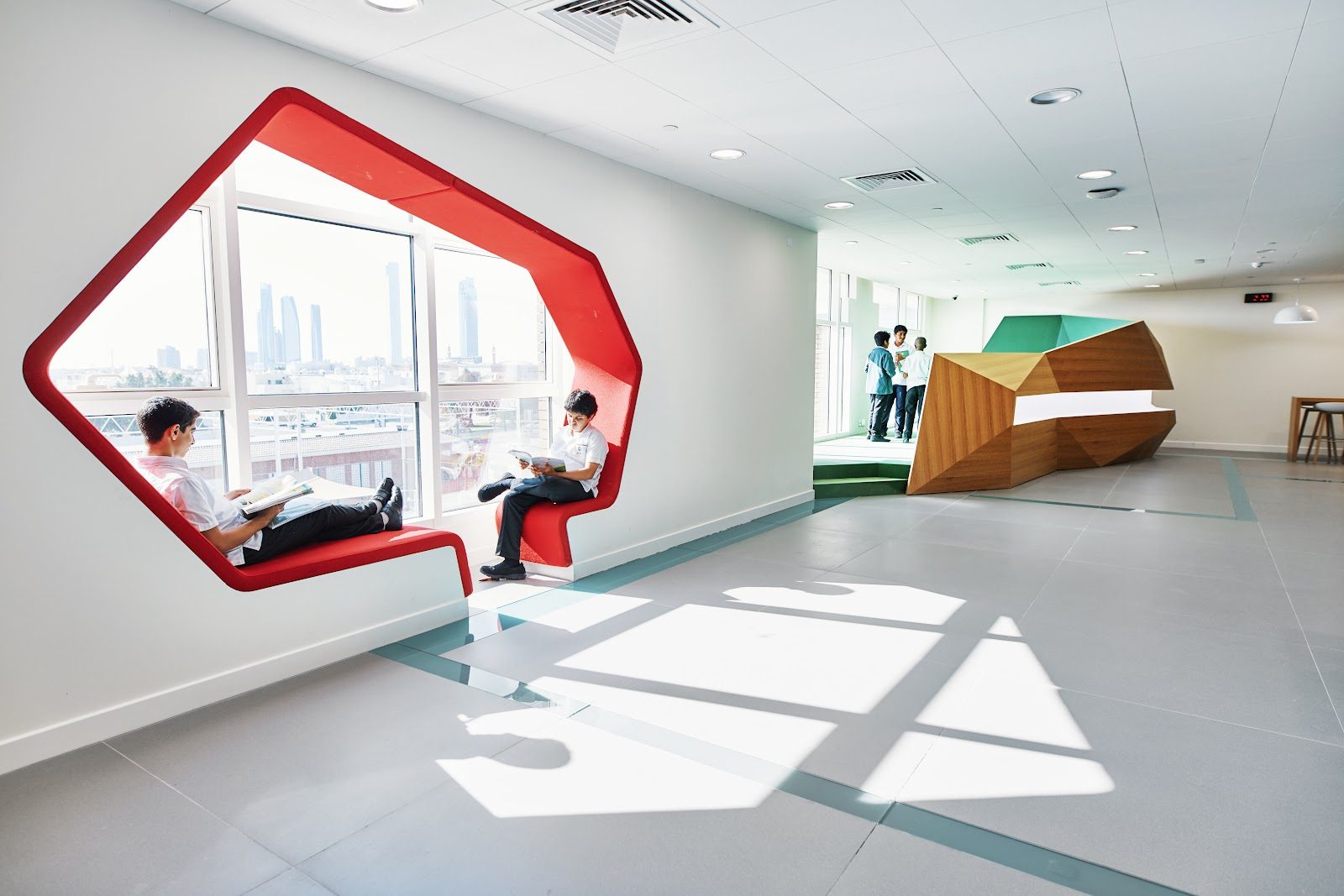
The Sheikh Zayed Private Academy for Boys
Abu Dhabi · United Arab Emirates
Massachusetts Common Core meets a UAE Armed Forces leadership programme, forging Emirati identity into an American diploma.
Same country and curriculum — closest matches within ±10 points either way