
Bangkok
Suankularb Wittayalai School
Founded by King Chulalongkorn in 1882, this all-boys Bangkok school remains Thailand's oldest public secondary institution.
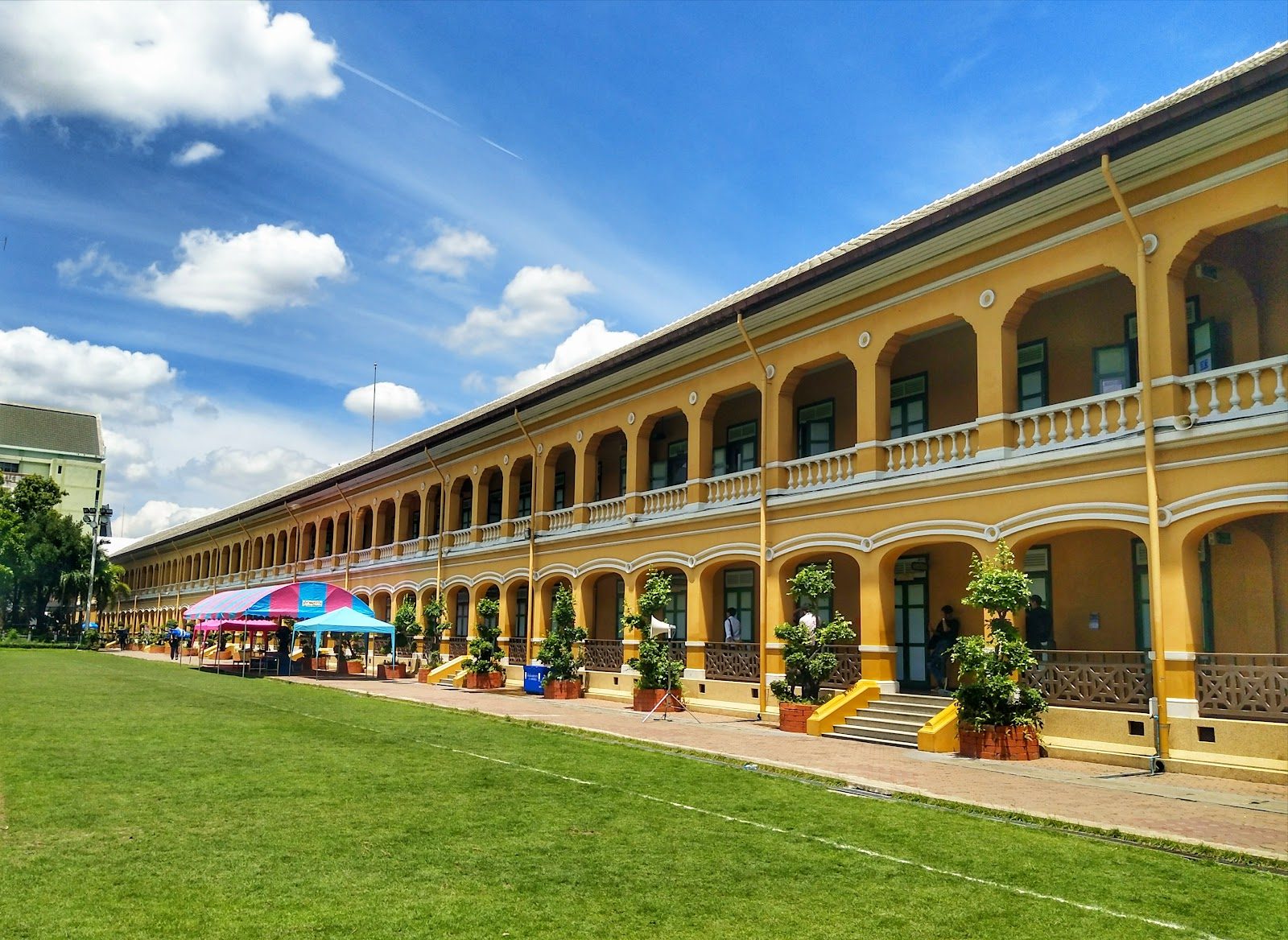
Photo © SUWAT SANGLIAMTHONG via Google Maps
Type
Day
Ages
12–18
Curriculum
Thai National
Qualifications
Thai Matthayom 6
Ratio
—
The Verdict
Editor's commitment
Right for
Bangkok families who want an all-boys day school, ages 12–18, with Thai National curriculum and a public-school pedigree dating to 1882.
Wrong for
Parents seeking co-education, boarding, or a non-Thai pathway: Suankularb is boys-only, day-only, and teaches the Thai National curriculum.
Watch out for
Its prestige is real — Thailand's oldest public secondary school, founded by King Chulalongkorn in 1882 — but the school does not publish outcomes here.
Ranking breakdown
Suankularb Wittayalai School · #1050 of 1591
Composite score 61.4. 8 weighted criteria.
By criterion
Academic Outcomes
Weight 20%
#512
of 1529 scored
University Placement
Weight 16%
#649
of 1529 scored
Prestige & Heritage
Weight 12%
#9
of 1571 scored
Alumni Network
Weight 12%
#1455
of 1530 scored
Facilities
Weight 12%
#1333
of 1533 scored
Transparency & Communications
Weight 8%
#1437
of 1532 scored
Peer & Industry Review
Weight 10%
#300
of 1548 scored
Admissions Selectivity & Demand
Weight 8%
#120
of 1529 scored
Peer & Industry Review
How Suankularb Wittayalai School is regarded in the sector
75
Strong · medium confidence
Suankularb Wittayalai is judged less through the private-school lens used by WhichSchoolAdvisor or the Good Schools Guide -- which rarely cover Thai state schools -- and more through domestic academic rankings and civil-service tradition. Within Thailand it is consistently grouped with Debsirin, Triam Udom Suksa and a small set of long-established Bangkok boys' schools as a benchmark public institution, and its century-old sporting/cultural rivalry with Debsirin is a fixture of Thai education press coverage each year. Its standing with universities rests on strong, sustained placement of graduates into Chulalongkorn University and Thammasat University, reflected in O-NET and national entrance-exam result reporting by Thai newspapers such as Bangkok Post and Matichon. Historically, its reputation among policymakers and fellow schools is anchored in its role as a training ground for senior civil servants and multiple Thai prime ministers, a fact frequently invoked in Ministry of Education discussions of legacy public schools. Independent international education press treats it primarily as a heritage institution rather than a globally benchmarked modern academy, so peer regard is strongest domestically and within Thai academic/bureaucratic circles rather than in international rankings.
- Kukrit Pramoj — Prime Minister of Thailand, politician/writer
- Chatichai Choonhavan — Prime Minister of Thailand
- Anand Panyarachun — Prime Minister of Thailand, businessman
Editors' overview
Suankularb Wittayalai School occupies a singular place in Thai education. Founded in 1882 by King Chulalongkorn, it is Thailand’s oldest public secondary school and one of Bangkok’s civic institutions rather than a polished export-school brand. The distinction matters. This is an all-boys day school for ages 12 to 18, teaching the Thai National curriculum in Thai and English, with the weight of national history behind it and a long record of producing men who move into public life. The alumni list is unusually consequential: eight prime ministers, nine chief justices and five attorneys general. That is not decorative prestige; it signals a school with deep institutional memory, real national standing and a network embedded in the Thai establishment.
What sets Suankularb apart is not progressive educational theatre or glossy international-school positioning. It is tradition, selectivity by reputation, and the force of a serious old-school academic culture. Parents who value earned status over marketing polish will understand the appeal. The all-boys setting, the school’s age, and its place in the Jaturamitr group of the four oldest boys’ schools in Thailand give it a strong sense of identity and a tribal loyalty that newer schools cannot manufacture. For families seeking a campus full of boutique facilities and imported educational jargon, this is the wrong shortlist. For families who want a boy educated inside one of Thailand’s defining state-school traditions, it belongs near the top.
The right student for Suankularb is academically able, disciplined and comfortable in a competitive male environment with a pronounced collective culture. He does not need hand-holding. He will value history, hierarchy and belonging, and he will thrive in a school where the name itself carries weight. This suits families rooted in Thailand, or families who want their son fully immersed in Thai educational and civic culture rather than insulated from it. The school’s public status also gives it a market position that many Bangkok independents cannot match: serious prestige without private-school affectation, and a formidable old-boy network built over 140+ years.
Academic Performance
Public exam performance is the central question here, and the school does not publish the data a serious parent would want: no aggregate national examination scores, no subject-by-subject breakdowns, no university placement tables, no distribution of top grades, and no year-on-year trend line. That lack of transparency matters. At a school with this level of prestige, one expects hard outcomes in the public domain, not reputation alone. What is clear is that Suankularb sits in the top tier of Thailand’s state-school hierarchy by name, selectivity and alumni reach. It belongs in any conversation about the country’s high-status academic public schools. That does not equal proof of present-day exam dominance.
Relative to peers, the school’s standing rests more securely on institutional weight than on published performance metrics. Families comparing it with Bangkok’s strongest public and private academic schools need to accept a blunt trade-off: immense social capital and a formidable competitive culture, but limited public disclosure on measurable attainment. In practice, that places Suankularb among Thailand’s serious academic destinations, yet stops short of allowing a clean ranking against schools that disclose results in full. The alumni record — including 8 prime ministers, 9 chief justices and 5 attorneys general — confirms long-term influence, not current exam precision. Parents who need audited academic evidence will find the picture frustratingly opaque.
Facilities
Suankularb’s facilities profile is hard to assess because the school does not publish a clear, parent-facing account of its campus assets. That absence is a weakness in itself. At a school of this stature, one expects a concrete map of laboratories, sports provision, arts spaces and specialist teaching rooms. We have not seen that level of disclosure. The practical reading is straightforward: families should not choose Suankularb for showpiece infrastructure or the curated facilities language common in Bangkok’s premium private sector. Choose it for culture, academic seriousness and institutional weight. Against elite international schools and top-fee Thai independents, it loses on public visibility of campus provision. Against ordinary state schools, the bar is different, and its age, status and place among Thailand’s historic boys’ schools point to a campus built for scale, routine and tradition rather than architectural spectacle.
That distinction matters. Peer schools at the top end of the market advertise black-box theatres, aquatics complexes, maker spaces and branded innovation labs because facilities are part of the sales pitch. Suankularb does not trade on that register. The school reads as function-first, tradition-bound and uninterested in lifestyle packaging. For the right family, that is a strength: boys are there to work, compete and absorb the habits of a storied public institution, not to inhabit a resort campus. For parents who rank physical plant near the top of the checklist, the school asks for more faith than it earns. The facilities may be perfectly serviceable; the public case for them is thin.
Suankularb Wittayalai School occupies a singular place in Thai education
Prestige
Suankularb carries rare public-school prestige in Thailand. Not the polished prestige of an international brand, but the heavier kind that sits inside the national establishment. The school’s status rests on two things: its place in the country’s educational history and the calibre of its alumni network in public life, law and business. An alumni body that includes 8 prime ministers, 9 chief justices and 5 attorneys general tells you exactly where this school has mattered. That record gives a Suankularb education real social and symbolic value. In Thailand, the name opens recognition far beyond education circles; it signals that a boy has been formed inside one of the country’s defining male institutions.
That prestige is not universal in the way of a top global boarding school or an IB powerhouse with transparent university outcomes. It is more domestic, more establishment-facing and more culturally rooted. For families operating inside Thai civic, professional and governmental networks, that makes it exceptionally potent. For internationally mobile families who prize published results, overseas admissions data and cross-border brand recognition, the value proposition narrows. Still, within its own lane, Suankularb sits in elite company. Membership of the Jaturamitr group reinforces that standing; these are old names with deep tribal loyalty and public cachet that newer schools cannot copy. The prestige here is durable, serious and tied to influence, not polish.
The alumni list is unusually consequential: eight prime ministers, nine chief justices and five attorneys general
Communications
Parent communication is not a visible strength. The school does not publish the kind of clear, parent-facing communications architecture that strong contemporary schools now treat as standard: no obvious consolidated portal for news, academic tracking, pastoral updates, calendar clarity or routine policy explanation. That matters because institutional prestige is not a substitute for usable communication. At a school with this much history and social standing, families still need the basics done well: timely notices, readable systems, and a straightforward account of how parents stay informed about school life. We have not seen that presented with real precision or modern confidence. The public face reads more like that of a historic state institution than a school competing for parental trust every day.
That does not mean communication is absent; it means the school does not make its parent-communication systems legible to outsiders. For some local families, that will be acceptable, even familiar. They will read the school’s authority and reputation as enough, and they will navigate a more old-school, institution-led model without complaint. International families, first-time entrants to the Thai system, and parents who expect dashboard-style transparency will find the setup thin and unhelpfully opaque. The central judgement is simple: communication works on the school’s terms, not the parent’s. In a market where schools are judged as much on responsiveness as on tradition, that is a clear weakness.
Uniqueness
What makes Suankularb unique is not a specialist programme or a polished international proposition. It is the force of an old national institution that has helped shape Thailand’s governing class for generations. Few schools can point to an alumni body that includes 8 prime ministers, 9 chief justices and 5 attorneys general. That record gives students something more consequential than brand prestige: daily life inside a school whose name carries real establishment weight. Boys inherit a strong civic script about leadership, competition and public responsibility. They also absorb the habits of an institution with hard-edged continuity — rituals, loyalties and expectations that newer schools cannot replicate.
That distinctiveness brings clear benefits and clear limits. For the right student, it offers entry into a deep-rooted male culture with unusual social reach, strong peer ambition and a sense that school identity extends well beyond graduation. The Jaturamitr connection adds another layer of belonging; this is not just a school but part of a historic boys’ network with its own codes and rivalries. Students who thrive here gain status, affiliation and a serious understanding of Thai elite culture from the inside. Students who need a softer environment, broader co-educational socialisation or a more individualised ethos will find the model narrower and less forgiving. That is the trade: institutional power and belonging in exchange for flexibility.
For families who want a boy educated inside one of Thailand’s defining state-school traditions, it belongs near the top
Student Profile
The boy who fits Suankularb is able, self-directed and comfortable inside a hard-edged, status-conscious peer culture. He does not need soft framing, therapeutic language or constant parental mediation. He can handle strict routines, public comparison and the social pressure that follows a famous school name. In an all-boys environment, energy and rivalry run high; boys who enjoy competition, group identity and hierarchy will find that energising. Boys who need gentler pacing, more emotional scaffolding or a highly personalised relationship with teachers will find the atmosphere less forgiving. This is a school for students who can absorb institutional discipline without resenting it.
It also suits families who want their son embedded in Thai mainstream elite culture rather than sheltered from it. The ideal student values belonging, takes pride in school identity and understands that reputation here carries obligations as well as benefits. He does not arrive expecting boutique pastoral care, international-school hand-holding or expressive individualism as the organising principle of school life. He arrives ready to work, compete and represent the school well. The social reward is substantial: entry into a network shaped by public influence and long memory, with alumni reach that extends to 8 prime ministers and 9 chief justices. For ambitious boys with stamina and a taste for old-school seriousness, that remains a powerful fit.
What is clear is that Suankularb sits in the top tier of Thailand’s state-school hierarchy by name, selectivity and alumni reach
Co-curricular strengths
Arts & sport, on a separate axis
Overall 6.46/10
Scored 0-10 from the school's own published evidence. This axis is editorial-only — it does not feed the main WTS ranking.
Sports
7.8/10
Drama
6.2/10
Dance
5/10
Music
7.3/10
Visual Arts
6/10
Strengths
- +Thailand's oldest public secondary school, founded in 1882 by King Chulalongkorn and holding continuous royal patronage since its inception.
- +Alumni network includes eight Prime Ministers of Thailand, nine Supreme Court Chief Justices and five attorneys general, giving the school unusual national influence.
- +As a government day school, tuition is minimal compared with international or private alternatives, making it accessible on an ordinary local salary.
- +Historic Tuek Yao building, a 200-metre neoclassical structure from 1910, doubles as an educational museum open to visitors on weekdays.
- +Member of the Jaturamitr group of Thailand's four oldest boys' schools, with a biennial inter-school football and card-stunt tradition that reinforces strong alumni identity.
Considerations
- −All-boys institution, so it is not an option for families wanting co-education.
- −Teaches the Thai National curriculum only, meaning no IB, A-Level or bilingual pathway for children planning to study abroad.
- −Large cohort size, with enrolment historically around 3,600 students across 73 classrooms, implying sizeable class sizes typical of Thai public schools.
- −Located in the congested Rattanakosin Old Town area of Phra Nakhon district, which can mean traffic-heavy commutes from most expat residential areas.
Availability
Primary entry gate & tests
National Entrance Exam (Boys)
Gallery
Photo © Cityflo Chan via Google Maps
Photo © Chaiyawat via Google Maps
Photo © I was, I am, I will via Google Maps
Photo © Cityflo Chan via Google Maps
Photo © Peeravit R via Google Maps
Photo © SaturnyX 'GM via Google Maps
Photo © Tawatchai Sakarin via Google Maps
Parent reviews
Have you sent your child here?
Voice reviews carry the strongest trust badge — we transcribe them for you to tidy up before they go live. Prefer to type? A written review is fine too.
Add your voice
In 60 seconds, tell other parents: what's the best thing about Suankularb Wittayalai School, and what surprised you when your child joined?
We ask for a Google sign-in so every review has a real face behind it — no anonymous drive-by attacks on schools, and no faked positive reviews. Your email is never shown publicly.
Send this profile to a friend
International parents rely on word-of-mouth. Share this review with someone weighing the same decision.
Schools with places
Similar schools to Suankularb Wittayalai School with places available now.
NIST International School
Bangkok · Thailand
- 2026-27
- WAITPOOLSpace-dependent
- 2027-28
- PLACES OPENRolling
Bangkok Patana School
Bangkok · Thailand
- 2026-27
- CLOSEDThai closed / Non-Thai open
- 2027-28
- OPENS SOONThai 1 Sept / Non-Thai rolling
Shrewsbury International School Bangkok
Bangkok · Thailand
- 2026-27
- WAITPOOLSpace-dependent
- 2027-28
- PLACES OPENRolling
International School Bangkok
Bangkok · Thailand
- 2026-27
- WAITPOOLSpace-dependent
- 2027-28
- OPENS SOONOpens Sept '26
Availability first, then country, area, curriculum, price, co-curricular
Consider also
Also worth looking at alongside Suankularb Wittayalai School.

Oakham School
Oakham · United Kingdom
Where a 1584 market-town foundation meets Rutland Water sailing, early co-education, and a long-standing IB Diploma alongside A-levels.
Bladins International School of Malmö
Malmö · Sweden
Traced to a 1980s Australian submarine contract, this Malmo school became Sweden's first IB Middle Years authoriser.

Balboa Academy
Panama City · Panama
Rooted in Canal Zone teaching lineage, this Ciudad del Saber day school pairs a dual US-Panamanian diploma with the country's deepest Advanced Placement slate.
Lycée Français Jean Mermoz
Dubai · United Arab Emirates
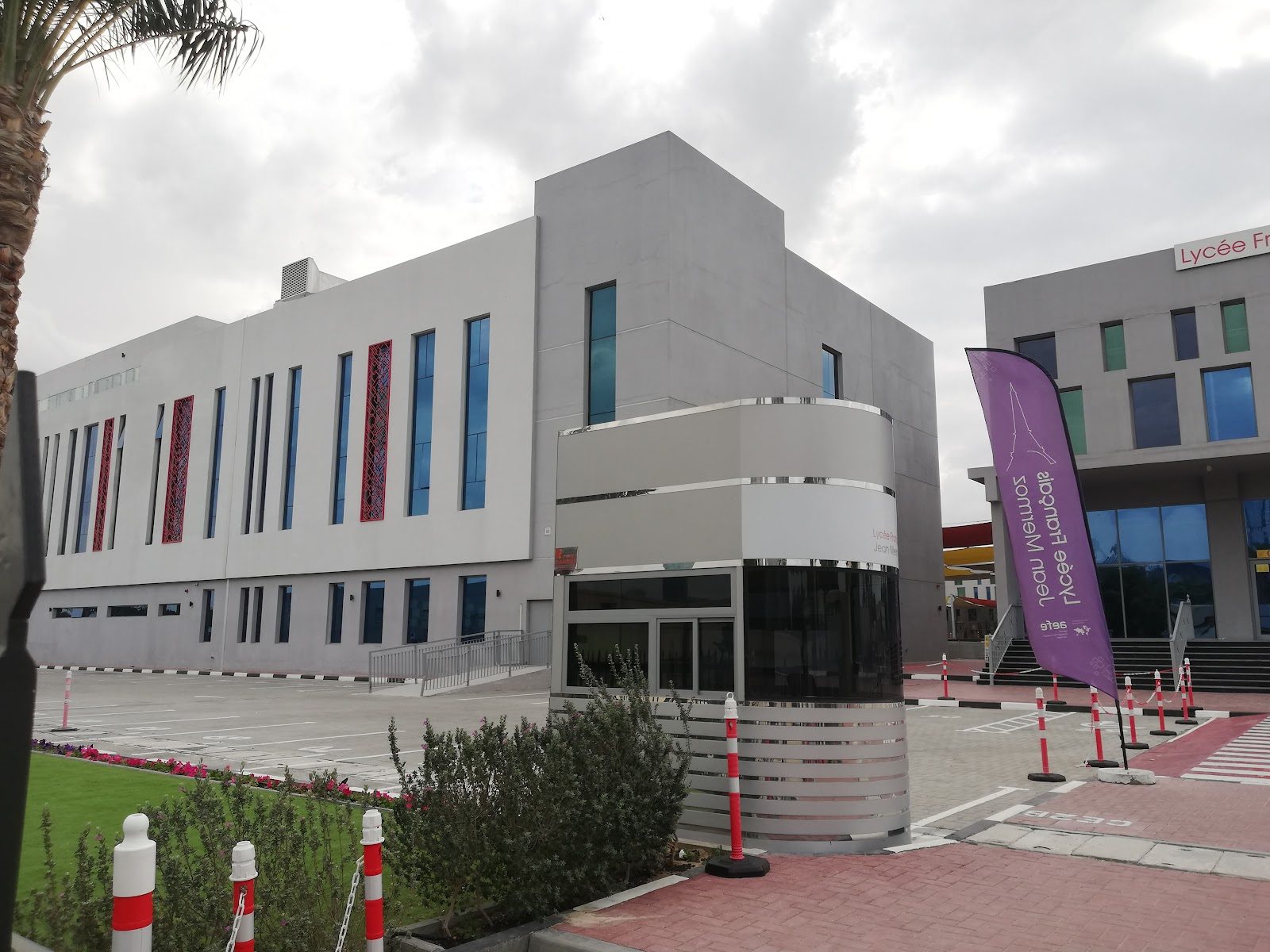
Named for aviation pioneer Jean Mermoz, this AEFE campus caps classes at 26 across trilingual French, English and Arabic tracks.
Same country and curriculum — closest matches within ±10 points either way