
Cercado de Lima
Colegio Sagrados Corazones Recoleta
medium confidence· 4/6 cats · 1.5 avg sourcesFounded in 1893 by French Sacred Hearts missionaries, the school's early faculty went on to help found Peru's Catholic University.
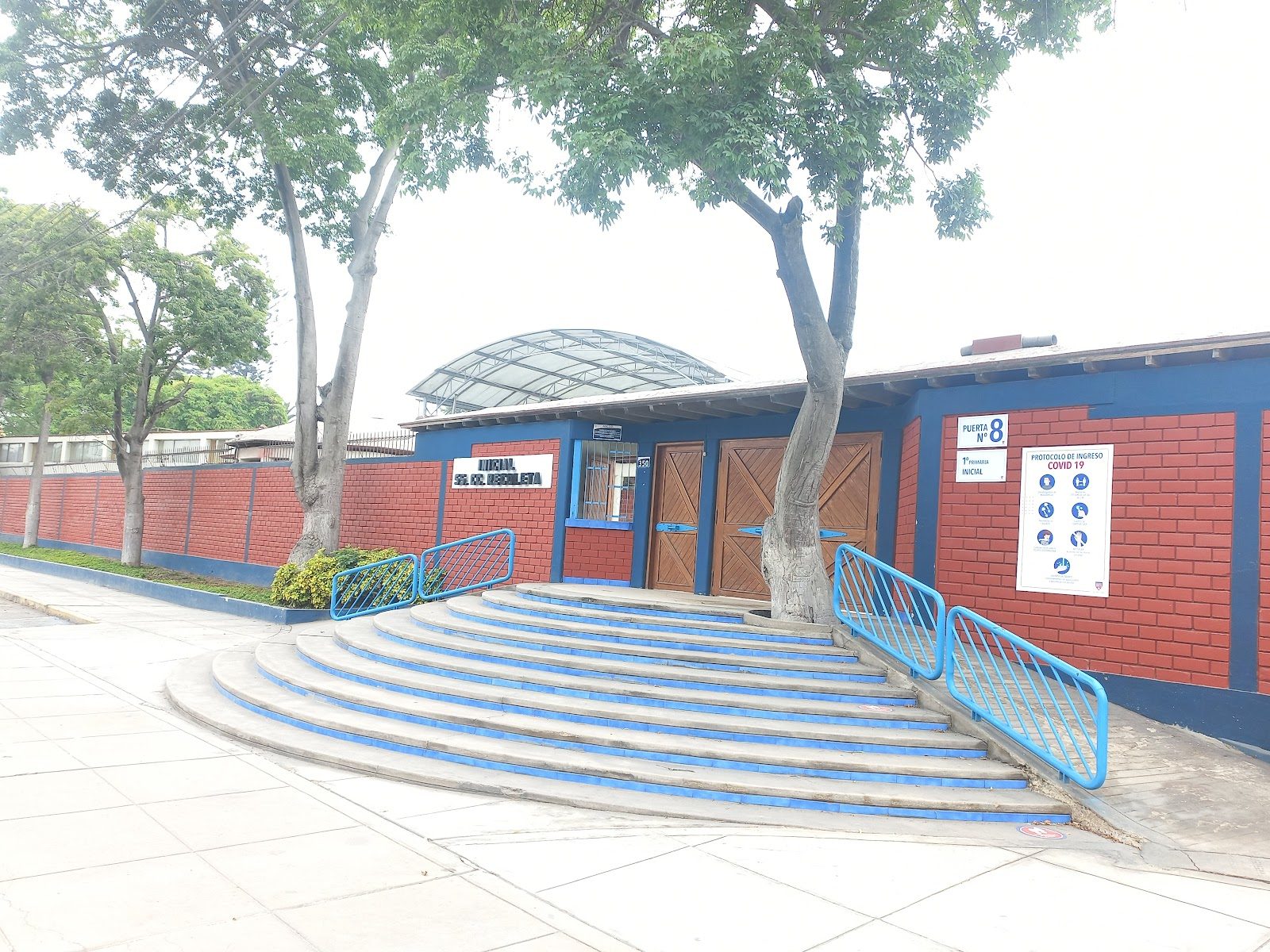
Photo © Raul Hormaza via Google Maps
Type
Day
Ages
3–18
Curriculum
Peruvian National Curriculum
Ratio
—
The Verdict
Editor's commitment
Right for
Lima families wanting a Catholic day school in La Molina with Spanish and English teaching from ages 3–18, plus the IB.
Wrong for
Families wanting a secular school, boarding, or a curriculum outside the Peruvian National Curriculum from this 1848 foundation.
Watch out for
The school advertises three libraries, two first-aid rooms and psychopedagogical support, but publishes no aggregate IB outcomes or university destinations.
Ranking breakdown
Colegio Sagrados Corazones Recoleta · #1260 of 1591
Composite score 56.7. 8 weighted criteria.
By criterion
Academic Outcomes
Weight 20%
#1220
of 1529 scored
University Placement
Weight 16%
#1227
of 1529 scored
Prestige & Heritage
Weight 12%
#1219
of 1571 scored
Alumni Network
Weight 12%
#835
of 1530 scored
Facilities
Weight 12%
#1297
of 1533 scored
Transparency & Communications
Weight 8%
#1243
of 1532 scored
Peer & Industry Review
Weight 10%
#1108
of 1548 scored
Admissions Selectivity & Demand
Weight 8%
#1077
of 1529 scored
Peer & Industry Review
How Colegio Sagrados Corazones Recoleta is regarded in the sector
64
Respected · medium confidence
I could not locate independent third-party sources (Tatler, Good Schools Guide, specialist press, alumni network coverage, or expat forums) that specifically assess or rank Colegio Sagrados Corazones Recoleta in Lima. Without at least two independent references establishing peer or press reputation, I cannot responsibly assign a score.
Editors' overview
Colegio Sagrados Corazones Recoleta occupies a distinct niche in Lima: a long-established Catholic day school in La Molina with a declared Peruvian National Curriculum, Spanish and English instruction, and an International Baccalaureate strand at the top end. The school’s real point of difference is not novelty but continuity. Founded in 1848, with the Sacred Hearts identity embedded in daily school life, it offers a version of education that is unapologetically values-led, structured and institutionally rooted. For families who want moral seriousness, clear religious identity and a school that treats pastoral formation as part of the core brief rather than an add-on, Recoleta earns a place on the shortlist.
What stands out is the breadth of support wrapped around that mission. The school highlights spiritual counselling for pupils and parents, a psychopedagogical department staffed by psychologists and inclusion specialists, three specialist libraries split by age phase, and 2 first-aid rooms with dedicated staff. That package matters. It tells parents that Recoleta puts weight on formation, welfare and family partnership, not only classroom delivery. The website also points to project-based learning in the early years, student agency in primary, and a more cumulative academic approach in secondary. The IB mention adds a layer of international aspiration, though the school does not publish the kind of outcome data that would let parents judge academic performance with precision. That opacity is a weakness in a competitive market.
The market position is clear: Recoleta suits families who want a Catholic school first, an academic school second, and an internationally aware school third. It is not the choice for parents chasing glossy branding or exhaustive public data; it is the choice for those drawn to institutional depth, pastoral ballast and a school culture shaped by faith. Children who thrive here will value structure, community and a strong ethical frame. Families who want a secular environment, a looser educational style or hard public metrics on results will find stronger fits elsewhere. For the right child, though, Recoleta offers something durable: a settled culture, serious pastoral care and a school identity that has held its line for well over 100 years.
Academic Performance
Recoleta gives parents almost no hard public evidence on academic performance. We have not seen aggregate IB results, university destination lists, national examination data, subject-by-subject outcomes or longitudinal attainment measures. That matters. In a market where stronger academic schools publish mean scores, pass rates and destination patterns, Recoleta asks families to trust the institution rather than inspect the numbers. For a school that advertises an IB pathway, that gap is conspicuous. It does not prove weak performance; it does confirm thin public accountability. The school’s own academic messaging focuses on pedagogy, formation and student development, not measurable attainment.
Relative to peers, that places Recoleta in the opaque middle ground: not a school with documented top-tier outcomes, and not one making an overt results-driven pitch. Parents looking for hard-edged academic comparison will find little to work with here. Parents who prioritise ethos over data will tolerate that trade-off more easily. The existence of 3 specialist libraries and 2 first-aid rooms points to a school with support structures and baseline institutional seriousness, but facilities are not results. Until the school publishes external exam performance in a consistent way, Recoleta cannot claim the academic visibility of Lima’s more transparent competitors. That is the central judgment: *credible infrastructure, unclear outcomes*.
Facilities
Recoleta’s facilities profile is practical, pastoral and academic rather than grand. The clearest strengths are the school’s 3 age-specific libraries, which signal a serious attempt to match resources to developmental stage instead of running a single generic library for everyone. That is better than the norm at many mid-market private schools, where library provision exists but lacks clear phase separation or subject identity. The psychopedagogical department also matters as a facility in the broad sense: psychologists and inclusion specialists are part of the support infrastructure, not an afterthought. Add spiritual counselling for pupils and parents, and the school’s physical and human environment reads as deliberately supportive, faith-shaped and family-facing. The presence of 2 first-aid rooms with dedicated staff and accident insurance for all pupils strengthens that impression.
What Recoleta does not advertise is just as telling. We have not seen the kind of high-spec facilities list that top-fee competitors now push hard: no published theatre, aquatic centre, specialist science complex, elite sports provision or standout design language. The website refers to a campus that is safe and modern, but gives little detail that would mark it out in a crowded Lima market. Extracurricular workshops are in place, and virtual document services add a measure of administrative competence, yet the overall picture stays serviceable rather than showpiece. Against peers, Recoleta looks stronger in welfare and pastoral infrastructure than in flashier capital investment. For families who value care over spectacle, that is a credible trade.
Recoleta’s distinctiveness lies in the way it binds Catholic formation, family-facing pastoral care and an international track into one institutional fabric
Prestige
Recoleta carries old-guard Catholic prestige rather than elite-market glamour. In Lima, that still counts. The school’s Sacred Hearts identity gives it a recognisable ecclesial pedigree, and the editorial record that early Recoleta faculty helped found Peru’s Catholic University adds real institutional weight. That is not the same as modern academic prestige. Prestige here rests on lineage, religious seriousness and social recognition within Catholic education, not on publicly documented examination dominance. The school also benefits from the social cachet that attaches to an established private school with a visible alumni network and an International Baccalaureate strand, but it does not convert that standing into the kind of public performance narrative that top-tier prestige schools now use to defend their reputation.
That distinction matters. Recoleta offers inherited status, community credibility and a conservative kind of esteem; it does not offer the hard-edged prestige that comes from published outcomes, famous university placements or relentless selectivity. The support architecture reinforces that standing: 3 age-specific libraries, 2 first-aid rooms, spiritual guidance for families, and a psychopedagogical team with inclusion specialists. Those details point to a school that takes institutional care seriously. For many Peruvian families, that is prestigious in its own right. For internationally mobile parents comparing schools across cities and systems, the prestige is real but local, solid but not exalted.
The school’s real point of difference is not novelty but continuity
Communications
Recoleta communicates with parents through a busy, functional set of channels rather than a polished narrative. The website foregrounds communications, admissions, calendars, bulletins, notices, contact directories, an intranet, Sieweb access, Gmail access and even virtual document processing for certificates and study records. That breadth matters. It gives families multiple points of entry and signals a school that expects regular administrative exchange, not occasional outreach. The ex-alumni reconnection page, month menu, blog and convention links also point to a school that keeps community traffic moving. This is workmanlike communication, institution-first and operationally serious. It is not elegant, but it is active.
Effectiveness is mixed. On routine parent logistics, the school looks competent and well-wired: families can find the calendar, contact the relevant area and handle paperwork online without unnecessary friction. The presence of direct portals strengthens that. On strategic communication, the school is weaker. The site carries many tabs and repeated navigation labels, which makes the experience feel cluttered and harder to scan than it needs to be. More important, the school communicates process better than performance. Parents get routes to offices and services; they do not get clear public academic reporting or a crisp account of outcomes. That limits trust at the higher-stakes end of decision-making. In short: strong on day-to-day information flow, thin on the disclosures that serious parents use to judge a school properly.
Uniqueness
Recoleta’s distinctiveness lies in the way it binds Catholic formation, family-facing pastoral care and an international track into one institutional fabric. Plenty of schools offer religion classes; fewer build spiritual guidance for both pupils and parents into the core proposition. That changes the tone of school life. Recoleta treats education as moral formation, not only academic progression, and that gives children a more strongly framed experience than they will find at schools where values sit in the branding but not in the daily structure. The psychopedagogical department, with psychologists and inclusion specialists, adds another layer: this is a school that has organised itself around guidance, supervision and support, not adolescent self-invention. For the right family, that is deeply reassuring. For others, it will feel tradition-bound.
The other point of difference is its blend of rootedness and aspiration. Recoleta does not chase novelty, yet it does place an international pathway at the senior end and backs the academic journey with 3 phase-specific libraries, 2 first-aid rooms and a visible alumni culture. The result for students is a school experience with institutional continuity and a clear sense of belonging. Children who do well here gain steadiness, adult oversight and a coherent ethical frame. They also gain access to a school culture that values community before individual display. That is a real strength. It also narrows the appeal: pupils who want a more liberal, self-directed or secular environment will find Recoleta too tightly drawn for comfort.
What stands out is the breadth of support wrapped around that mission
Student Profile
The pupils who fit Recoleta best are those who do well with structure, adult guidance and a school culture that asks for buy-in rather than detached attendance. This is not a loose, student-led environment in the progressive mould. It suits children who are comfortable inside a clearly bounded moral framework, who can handle expectations around conduct and community, and who do not need a secular atmosphere to feel at ease. The school’s Catholic identity is not decorative; it shapes the texture of daily life. That will suit families who want education tied to faith, reflection and institutional continuity. It will grate on pupils who want ideological distance, constant choice or a more self-invented adolescence.
There is also a strong fit for children who benefit from close pastoral scaffolding. Spiritual guidance for both pupils and parents, a psychopedagogical team, and 3 separate libraries by age phase point to a student body served through oversight as much as independence. Recoleta works for steady, community-minded children, including those who value belonging over display and routine over reinvention. It also gives support to families who want the school involved in the child’s wider formation, not only academic throughput. The harder fit is the pupil who wants a free-range, aggressively competitive or overtly secular school culture. Recoleta is protective, values-driven and tradition-conscious. For the right child, that feels secure; for the wrong one, confining.
It tells parents that Recoleta puts weight on formation, welfare and family partnership, not only classroom delivery
Co-curricular strengths
Arts & sport, on a separate axis
Overall 7.5/10
Scored 0-10 from the school's own published evidence. This axis is editorial-only — it does not feed the main WTS ranking.
Sports
8/10
Drama
7.5/10
Dance
7/10
Music
7.5/10
Visual Arts
7.5/10
Editor first-pass · editor-reviewable · 7/30/2026
Strengths
- +Run by the Congregation of the Sacred Hearts (Padres de los Sagrados Corazones), giving it a long-established Catholic educational tradition in Lima.
- +Located in San Isidro, one of Lima's more central and accessible upper-income districts, simplifying daily commutes for many expat families.
- +Single-sex boys' schooling with an integrated religious and moral formation component alongside the national academic curriculum.
- +Part of a recognised network of Sagrados Corazones schools in Peru, suggesting institutional continuity and shared pedagogical standards.
- +Day-school structure allows full family life at home rather than boarding separation, a common preference for younger expat placements.
Considerations
- −Single-sex (boys only), which rules it out for families wanting co-education or who have daughters to place in the same school.
- −Delivers the Peruvian National Curriculum rather than an international programme (IB, A-Levels, etc.), which can complicate transfers back to non-Spanish-speaking systems.
- −Publicly available performance data, fee schedules and admissions statistics are limited, making outside verification of academic outcomes difficult.
- −Catholic religious instruction is embedded in school life, which may not suit strictly secular or non-Christian families.
Availability
Primary entry gate & tests
Academic Record
Gallery
Photo © marco rios pita via Google Maps
Photo © marco rios pita via Google Maps
Photo © marco rios pita via Google Maps
Photo © Leonardo Valencia via Google Maps
Photo © Leonardo Valencia via Google Maps
Parent reviews
Have you sent your child here?
Voice reviews carry the strongest trust badge — we transcribe them for you to tidy up before they go live. Prefer to type? A written review is fine too.
Add your voice
In 60 seconds, tell other parents: what's the best thing about Colegio Sagrados Corazones Recoleta, and what surprised you when your child joined?
We ask for a Google sign-in so every review has a real face behind it — no anonymous drive-by attacks on schools, and no faked positive reviews. Your email is never shown publicly.
Send this profile to a friend
International parents rely on word-of-mouth. Share this review with someone weighing the same decision.
Schools with places
Similar schools to Colegio Sagrados Corazones Recoleta with places available now.
Markham College
Lima · Peru
- 2026-27
- WAITPOOLVacancy-dependent / enquire
- 2027-28
- PLACES OPEN
Colegio Roosevelt — The American School of Lima
Lima · Peru
- 2026-27
- WAITPOOLSpace-dependent
- 2027-28
- PLACES OPENRolling
Availability first, then country, area, curriculum, price, co-curricular
Consider also
Also worth looking at alongside Colegio Sagrados Corazones Recoleta.
Colegio Villa María Marianistas
Lima · Peru
A Lima day school rooted in Marianist pedagogy, where Christian formation and family spirit shape the Peruvian curriculum classroom.
Colegio León Pinelo
Lima · Peru
In San Isidro, Peru's only Jewish day school threads Hebrew language and tradition through a trilingual, full IB continuum.
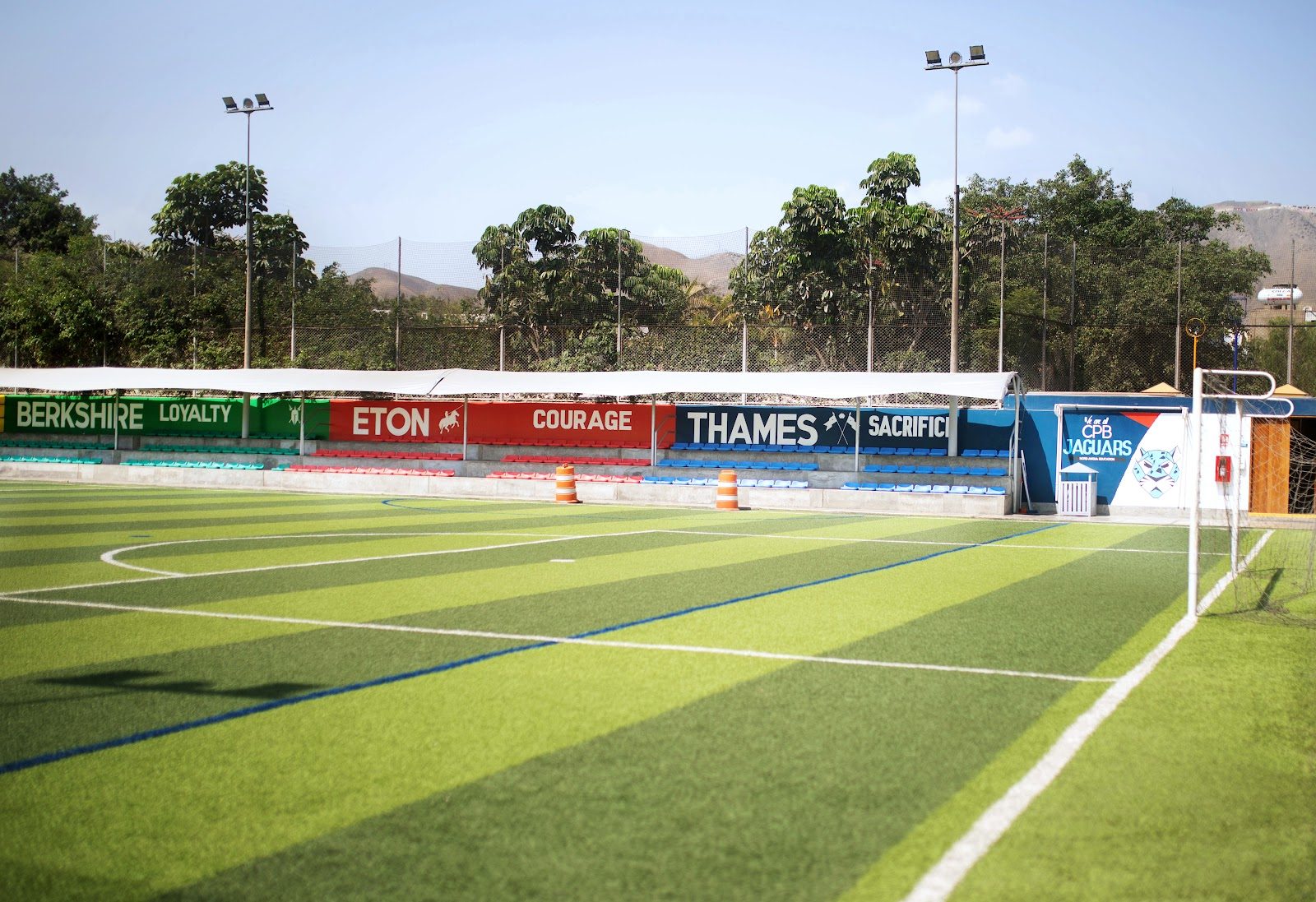
Colegio Peruano Británico
Lima · Peru
Trilingual since 1963, this Monterrico campus blends a Juilliard-shaped arts curriculum with IB rigor as Nord Anglia's first Peruvian school.
Colegio San Silvestre
Lima · Peru
In Miraflores, girls inherit their house colours the way alumnae once inherited a curriculum built on British roots since 1932.
Same country and curriculum — closest matches within ±10 points either way