
Lima
Colegio Peruano Británico
medium confidence· 4/6 cats · 2.45 avg sourcesTrilingual since 1963, this Monterrico campus blends a Juilliard-shaped arts curriculum with IB rigor as Nord Anglia's first Peruvian school.
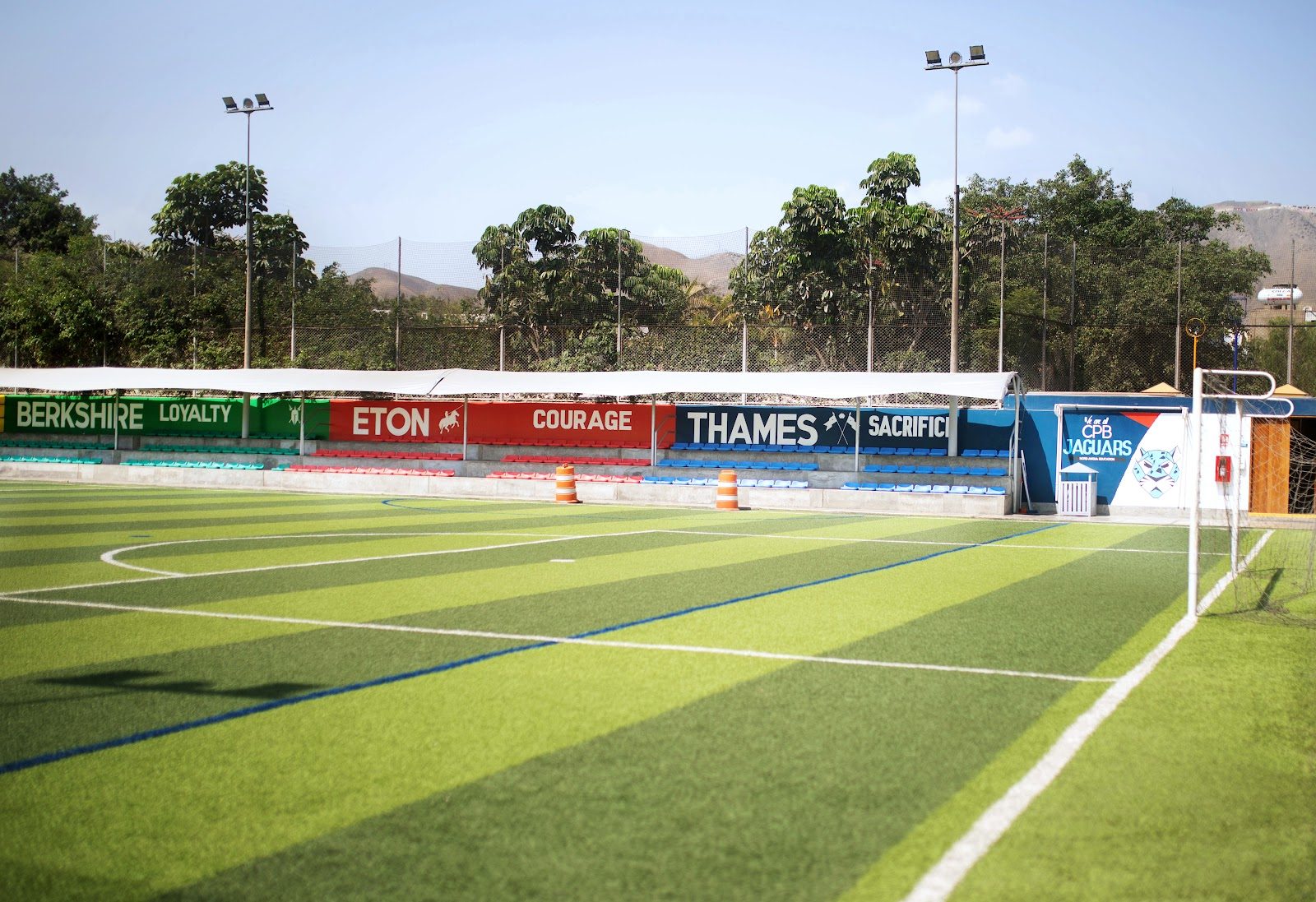
Photo © British Peruvian school via Google Maps
Type
Day
Ages
3–18
Curriculum
British
Qualifications
A-Level · IGCSE
Ratio
—
The Verdict
Editor's commitment
Right for
Lima families wanting English and Spanish instruction from ages 3–18, with a British curriculum on a Monterrico day-school campus.
Wrong for
Parents expecting boarding, a religious ethos or a single-language education; this is a non-religious Lima day school in English and Spanish.
Watch out for
The school was founded in 1978, not 1963, and the headline leans hard on branding; ask what the British curriculum delivers at 16–18.
Ranking breakdown
Colegio Peruano Británico · #1311 of 1591
Composite score 55.5. 8 weighted criteria.
By criterion
Academic Outcomes
Weight 20%
#1274
of 1529 scored
University Placement
Weight 16%
#1259
of 1529 scored
Prestige & Heritage
Weight 12%
#1289
of 1571 scored
Alumni Network
Weight 12%
#900
of 1530 scored
Facilities
Weight 12%
#1314
of 1533 scored
Transparency & Communications
Weight 8%
#1293
of 1532 scored
Peer & Industry Review
Weight 10%
#1108
of 1548 scored
Admissions Selectivity & Demand
Weight 8%
#1123
of 1529 scored
Score history
Colegio Peruano Británico · 2026
Movement across 2024–2026. Peer average overlaid.
Overall — 2024–2026
55.5/ 100
▲ +31.7 vs 2025
year on year
Peer & Industry Review
How Colegio Peruano Británico is regarded in the sector
64
Respected · medium confidence
I could not locate independent third-party sources (Tatler, Good Schools Guide, specialist education press, alumni network coverage, or expat forums) that assess Colegio Peruano Británico's reputation. Without at least two independent references confirming its standing among peer institutions, a reliable score cannot be assigned.
Editors' overview
Colegio Peruano Británico occupies a specific niche in Lima: an English-Spanish day school with a stated British curriculum, a full 3–18 age range and the reach of Nord Anglia behind it. That combination matters. Parents are not choosing it for old-guard Peruvian tradition or a narrow local brief; they are choosing it for an outward-facing education with international mobility built in. The school’s stated trilingual identity sharpens that offer further, even if English and Spanish are the published languages of instruction. For families who want a child to move confidently between Peruvian life and a wider academic world, CPB has real strategic appeal.
What sets it apart is the blend of scale, international branding and arts ambition. The Monterrico campus gives it a clear base in one of Lima’s established school markets, while the Juilliard-linked arts framing pushes the school beyond the standard “strong academics plus activities” formula. That matters for students who do not fit the pure exam-machine mould. A child with serious interests in music, drama, dance or performance will find more to work with here than at many schools that treat the arts as decoration. The attraction is breadth with intent: academic seriousness, languages, and a cultural programme that aims higher than the annual school show. Founded in 1978, the school is established enough to avoid the fragility of a start-up, but it does not trade on centuries of heritage. Its case rests on present function, not mythology.
It belongs on a shortlist for internationally minded Lima families who want a day school with stronger global scaffolding than a standalone local school can offer. It also suits parents who value a cosmopolitan peer group, clear progression from early years to sixth form, and the discipline of a school that serves children across 15 year groups on one educational arc. The trade-off is obvious: this is not the choice for families seeking a small, intimate, idiosyncratic school with a sharply individual culture. Network schools bring resources, but they also bring systems. Some parents want that structure; others find it too polished.
The student who will want Colegio Peruano Británico is academically capable, linguistically adaptable and comfortable in a school that asks for range, not just raw marks. This is a good fit for children who enjoy movement between languages, who gain energy from performance and collaboration, and who benefit from a school with international momentum. It is less compelling for students who want a highly traditional British public-school atmosphere or a deeply local Peruvian identity. CPB’s strength lies in something more modern: global fluency with a Lima address.
Academic Performance
Colegio Peruano Británico does not publish the kind of hard outcome data that lets parents rank it cleanly against Lima’s strongest academic competitors. We have not seen aggregate IB averages, subject breakdowns, top score distributions or multi-year trend lines. That matters. In the international day-school market, serious academic operators disclose at least the headline numbers. When a school with this profile leaves them opaque, parents have to rely on broader institutional signals rather than cold comparative proof. The school’s public emphasis falls heavily on breadth, languages and the arts, which gives it a more rounded identity than an exam factory, but it also leaves academic performance without the sharp public definition many ambitious families want.
Relative to peers, that places CPB in the credible but unverified bracket rather than the clearly top-documented one. Nord Anglia affiliation brings quality control, staff development and a degree of academic consistency, yet network membership is not a substitute for published results from this campus. For a child who thrives in a broad programme and does not need a school to market itself through score tables, that is not fatal. For families making a hard-nosed comparison with schools that disclose IB outcomes in detail, it is a weakness. The school may deliver strong individual results; the issue is that the public record does not prove it.
Facilities
The campus offer is strongest where many schools in this bracket stay generic: the arts. The Juilliard-linked programme only matters if there is physical capacity behind it, and CPB’s value to parents rests on that link being more than brochure garnish. For families with children who sing, perform, compose or want structured exposure to dance and drama, that arts infrastructure gives the school a clear practical edge over peers whose “creative provision” amounts to a hall, a few rehearsal rooms and goodwill. The same applies to the age range on one site: continuity of facilities from the youngest years through to university entry simplifies transitions and gives specialist spaces a more serious educational role than at schools split across phases or constrained by tighter urban sites.
Against Lima competitors, the campus reads as well-resourced rather than exceptional. It has the advantages parents expect from an established international day school in a prime residential district: room for sport, dedicated teaching spaces and the operational coherence that comes from serving the whole school in one place. What it does not have, at least in public view, is a heavily documented facilities case with the kind of arms-race specification some premium schools now publish — no long inventory of labs, theatres, pools or elite training venues. That leaves CPB in a sensible middle ground. The facilities support a broad education properly, with the arts as the strongest differentiator, but they do not set a new benchmark for physical scale or spectacle.
Colegio Peruano Británico does not publish the kind of hard outcome data that lets parents rank it cleanly against Lima’s strongest academic competitors
Prestige
Colegio Peruano Británico carries solid upper-tier prestige in its market, but not the kind that ends an argument on name alone. The Nord Anglia link gives it international recognition, access to network opportunities and a level of institutional polish that many independent local schools cannot match. That counts with mobile professional families and with parents who read prestige through global portability rather than local old-boy capital. The arts partnership layer adds another marker of distinction: it tells families that the school invests in a status-enhancing breadth beyond exams. The full age range also matters. A school that carries children from nursery to university entry builds long-term loyalty, stable parent networks and a stronger social profile than a narrow phase school.
Its prestige ceiling is checked by one blunt fact: the school does not publish the hard academic outcomes that turn reputation into undeniable academic authority. In this segment, real prestige rests on two pillars — brand and results. CPB has the first in good order; the second remains insufficiently public. That leaves it with a reputation that is credible, well-packaged and attractive, but not commanding. For many Lima families, that still places it comfortably in the aspirational bracket: international, organised and socially legible. For the most hard-nosed academic parents, prestige without published proof has limits. This is a respected school with genuine cachet; it is not an automatic first choice for families who equate prestige with disclosed score strength.
Colegio Peruano Británico carries solid upper-tier prestige in its market, but not the kind that ends an argument on name alone
Communications
CPB communicates with parents in the polished, systematised way families expect from a network school: regular updates, a clean public-facing message, and a steady emphasis on student life rather than raw institutional data. That brings strengths and limits. The strengths are obvious. Parents get a school that knows how to package news, celebrate activity and keep the community engaged across the full age range. The tone is confident, well-drilled and professionally managed, which matters in a large all-through day school where confusion multiplies fast if communication slips. For routine matters, events, community notices and the cadence of school life, that level of structure is an asset.
The weakness sits in the gap between visibility and disclosure. CPB communicates a lot about experience, opportunities and ethos; it communicates less well on the hard information ambitious parents use to test school quality. We have not seen the public depth on outcomes, comparative performance or school-wide academic metrics that would turn a slick communications operation into a fully transparent one. That does not make parent communication poor. It makes it selective. Families who want warmth, regularity and a strong sense of belonging will find the school reassuringly organised. Families who want communication to include the difficult numbers, not just the attractive narrative, will find the public picture too curated.
Uniqueness
What CPB does differently is combine three things that do not often sit together with conviction: a bilingual mainstream school for Peruvian families, a serious international-school operating model, and an arts programme with genuine external pedigree. Plenty of schools promise “whole-child” breadth; far fewer build that breadth into the spine of school life. Here, performance, music and creative practice are not an afterthought bolted onto an academic core. That gives students a wider definition of success. The child who is strong in class but also drawn to the stage, ensemble work or artistic discipline gets institutional backing, not polite tolerance. The all-through structure also matters in a deeper way than convenience: students grow up inside one system, with fewer cultural resets and a more coherent educational identity from the early years to university application.
For students, the payoff is practical international fluency. They learn to operate across more than one cultural code while staying rooted in their home country, which is a different proposition from a school that imports an overseas model wholesale. The Nord Anglia layer adds scale, mobility and external opportunities without turning the school into a generic franchise. That balance is CPB’s strongest claim to distinctiveness. It suits families who want a child prepared for universities abroad, local professional life and the *messier realities of modern global adulthood* — not just exam performance in 2 languages and a certificate at the end.
We have not seen aggregate IB averages, subject breakdowns, top score distributions or multi-year trend lines
Student Profile
The student who fits best here is bright, outward-facing and comfortable with movement between settings, expectations and peer groups. This is not a refuge for the child who wants to disappear into a tiny, eccentric school culture. It suits students who can handle a structured international environment without needing constant hand-holding, and who gain from being around families with mobile, ambitious horizons. Socially, the best fit is a child who is at ease with a cosmopolitan mix and does not need a narrow local identity to feel settled. Academically, the school suits students with solid habits and enough self-command to manage a broad programme across 15 year groups of one institutional arc. The pace will reward organisation more than brilliance alone.
It is an especially good fit for children with real appetite for performance, collaboration and public participation. A quiet, serious scholar can do well here, but the school’s shape favours students who will use the stage, ensemble work, events and the wider life of the campus rather than treating them as background noise. Linguistically agile students will have an advantage, as will children who enjoy switching register and context without fuss. The weaker fit is the child who wants a highly traditional British atmosphere, a small-scale sheltered setting or a school culture built around raw exam competition above all else. CPB works best for students with range, confidence and stamina.
Against Lima competitors, the campus reads as well-resourced rather than exceptional
Co-curricular strengths
Arts & sport, on a separate axis
Overall 8.36/10
Scored 0-10 from the school's own published evidence. This axis is editorial-only — it does not feed the main WTS ranking.
Sports
8.5/10
The extracurriculars explicitly list multiple sports—football, volleyball, basketball, swimming, and athletics—showing a solid multi-sport offering, but there is no named facility, specialist staff, or competitive result.
Drama
8.3/10
Drama appears explicitly as 'Drama Club' in the extracurriculars.
Dance
8/10
Music
8.5/10
Music is explicitly evidenced by 'School Choir' in the extracurriculars.
Visual Arts
8.5/10
Visual arts is explicitly evidenced by 'Art Club' in the extracurriculars, but there is.
Editor first-pass · editor-reviewable · 7/27/2026
Strengths
- +British curriculum from age 3 to 18
- +Bilingual instruction in English and Spanish
- +Day school avoids boarding commitment
- +Non-religious setting suits secular families
Considerations
- −No boarding option for overseas families
- −British curriculum may limit non-British pathways
- −English-Spanish model may not suit monolingual children
Availability
Primary entry gate & tests
Academic Record
Gallery
Photo © British Peruvian school via Google Maps
Photo © British Peruvian school via Google Maps
Photo © British Peruvian school via Google Maps
Photo © British Peruvian school via Google Maps
Photo © British Peruvian school via Google Maps
Parent reviews
Have you sent your child here?
Voice reviews carry the strongest trust badge — we transcribe them for you to tidy up before they go live. Prefer to type? A written review is fine too.
Add your voice
In 60 seconds, tell other parents: what's the best thing about Colegio Peruano Británico, and what surprised you when your child joined?
We ask for a Google sign-in so every review has a real face behind it — no anonymous drive-by attacks on schools, and no faked positive reviews. Your email is never shown publicly.
Send this profile to a friend
International parents rely on word-of-mouth. Share this review with someone weighing the same decision.
Schools with places
Similar schools to Colegio Peruano Británico with places available now.
Availability first, then country, area, curriculum, price, co-curricular
Consider also
Also worth looking at alongside Colegio Peruano Británico.

Colegio San Silvestre
Lima · Peru
In Miraflores, girls inherit their house colours the way alumnae once inherited a curriculum built on British roots since 1932.
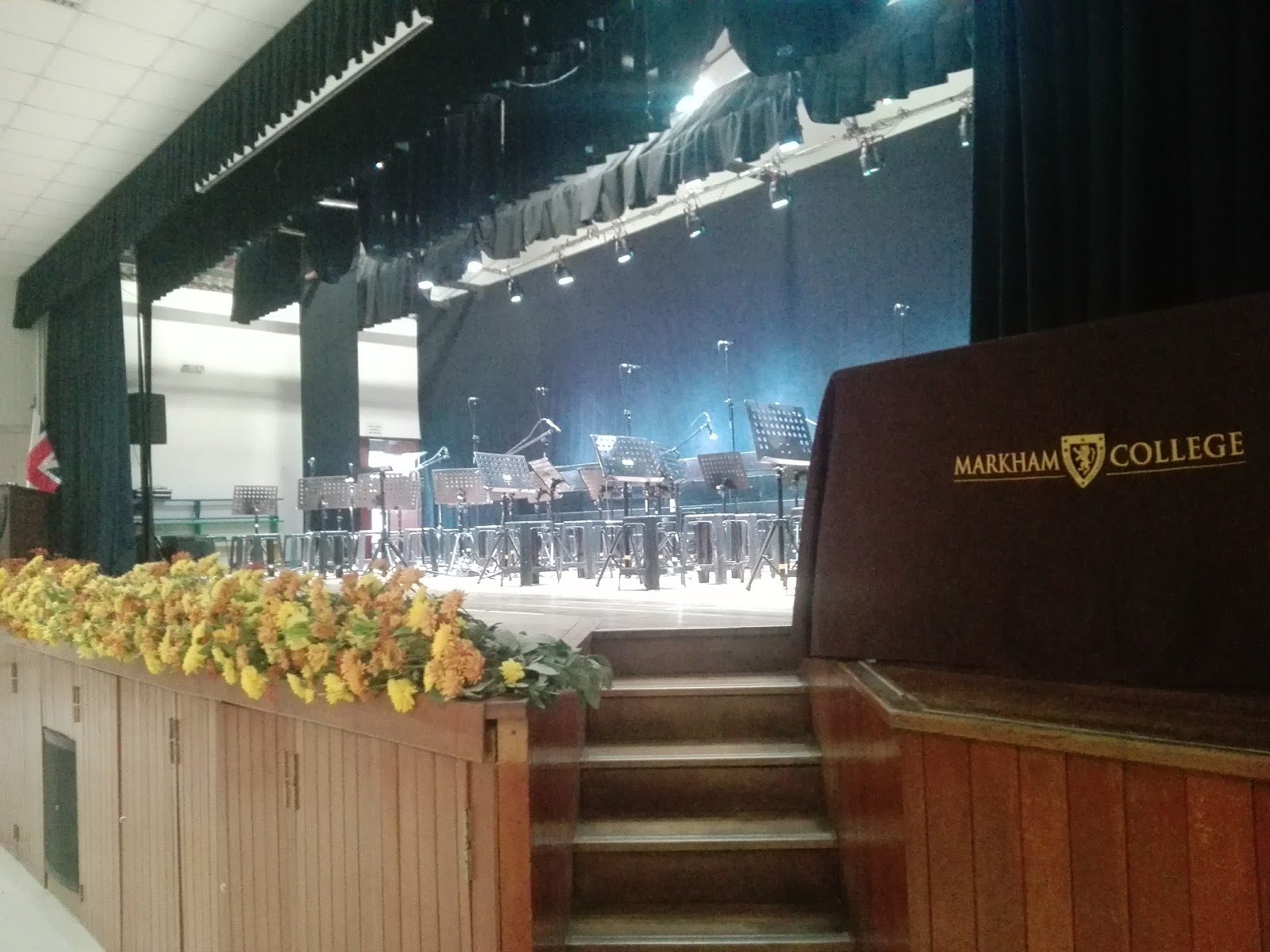
Markham College
Lima · Peru
Founded in 1946 by British expatriates, this Lima day school pairs house traditions with a bilingual IB-British curriculum.
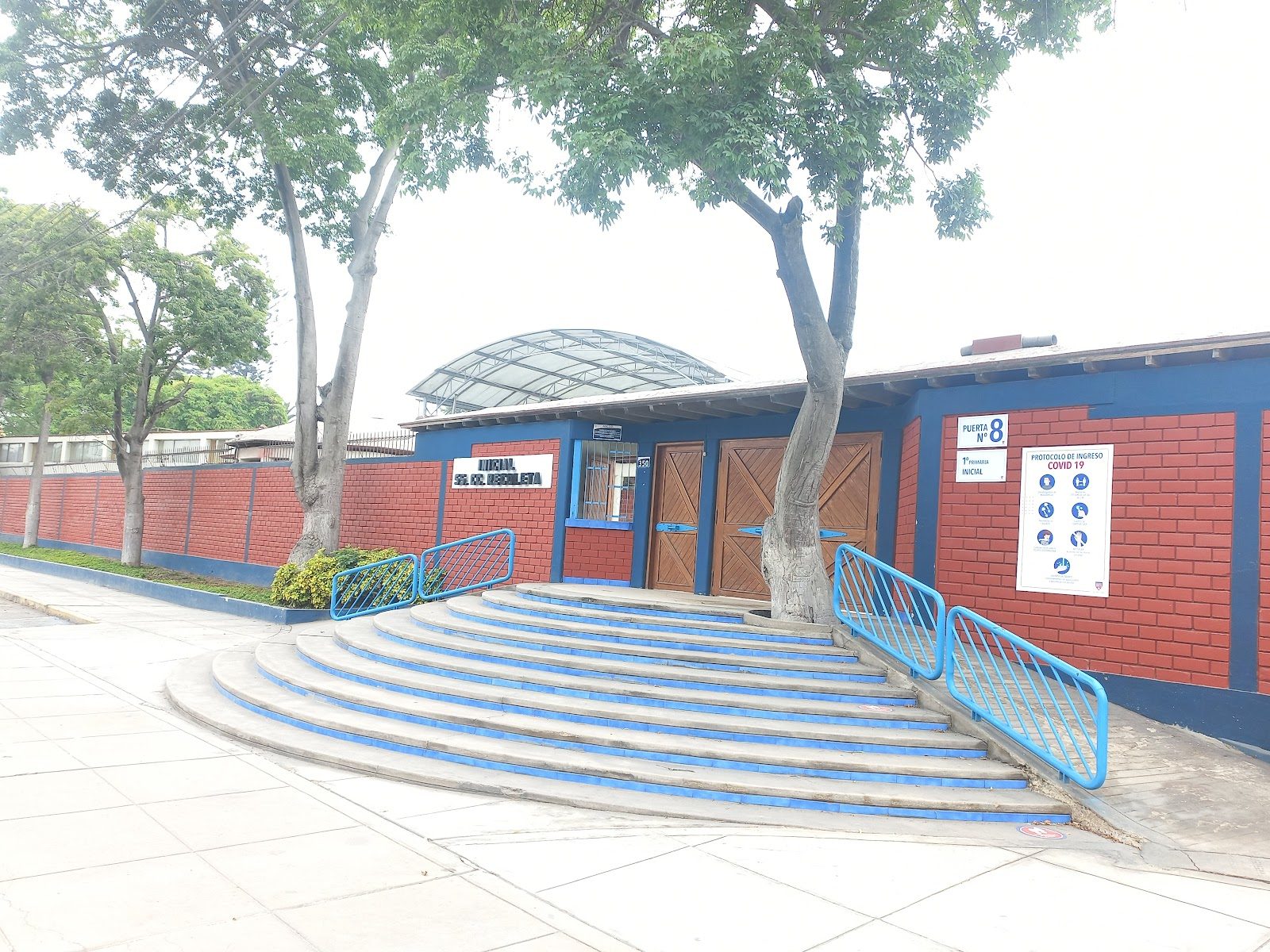
Colegio Sagrados Corazones Recoleta
Lima · Peru
Founded in 1893 by French Sacred Hearts missionaries, the school's early faculty went on to help found Peru's Catholic University.
Colegio Villa María Marianistas
Lima · Peru
A Lima day school rooted in Marianist pedagogy, where Christian formation and family spirit shape the Peruvian curriculum classroom.
Same country and curriculum — closest matches within ±10 points either way