
London
In central SW19, girls debate weekly in Civil Discourse class, embracing a distinctive ethos of 'Playful Scholarship'.
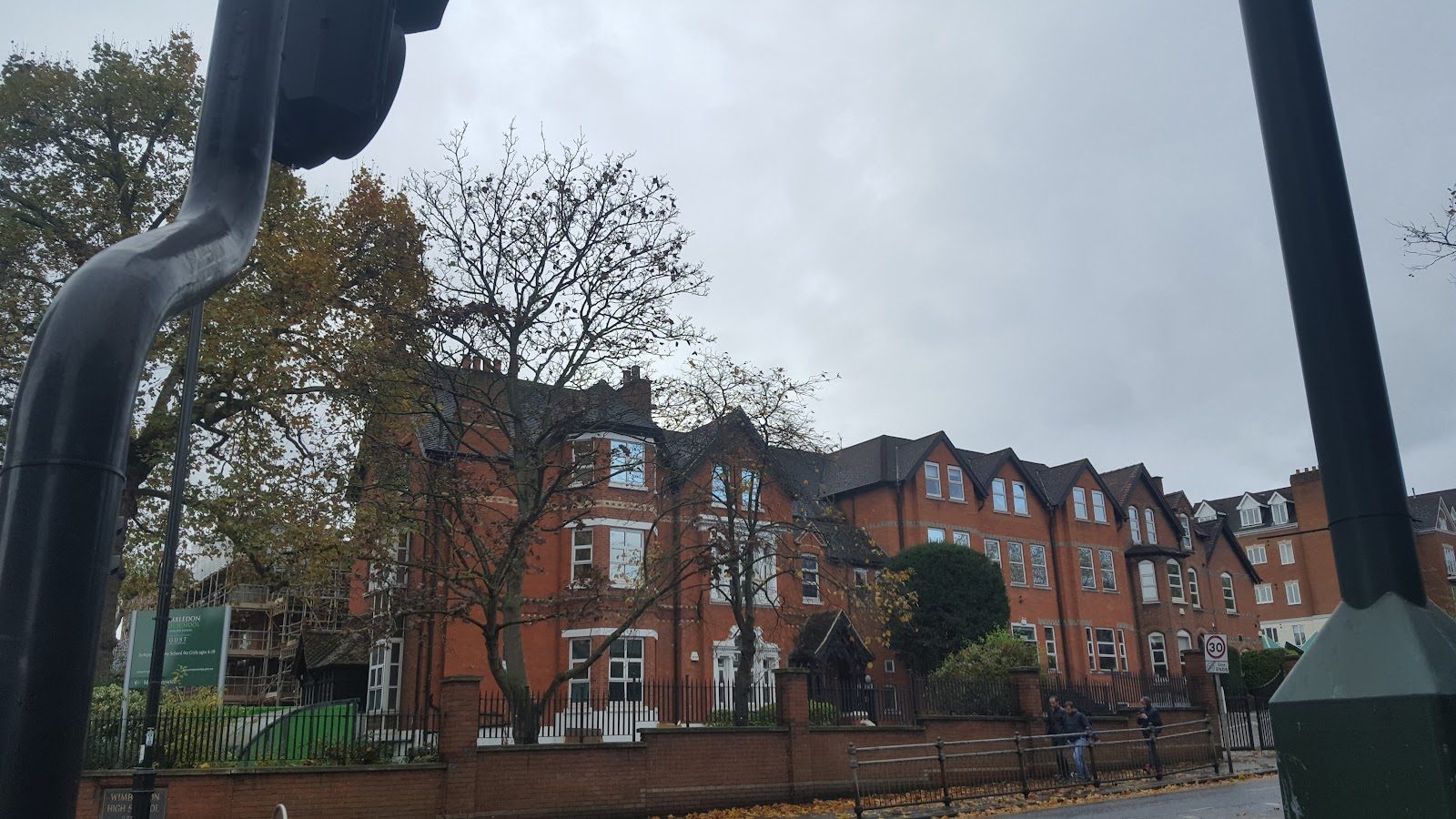
Photo © YS Jung via Google Maps
Type
Day
Ages
4–18
Curriculum
British
Qualifications
A-Level · IGCSE
Ratio
—
The Verdict
Editor's commitment
Right for
Girls aged 4–18 who want a British day school in SW19 with mandatory Civil Discourse and a clear girls-only intellectual agenda.
Wrong for
Families wanting co-education, boarding, religious formation or a softer ethos; Wimbledon High is a secular GDST girls’ school founded in 1880.
Watch out for
The average annual day fee is £27,064, and the school’s stated emphasis on articulate debate will test any girl who dislikes speaking up.
Ranking breakdown
Wimbledon High School · #135 of 1591
Composite score 77.2. 8 weighted criteria.
By criterion
Academic Outcomes
Weight 20%
#118
of 1529 scored
University Placement
Weight 16%
#136
of 1529 scored
Prestige & Heritage
Weight 12%
#199
of 1529 scored
Alumni Network
Weight 12%
#144
of 1529 scored
Facilities
Weight 12%
#502
of 1529 scored
Transparency & Communications
Weight 8%
#204
of 1529 scored
Peer & Industry Review
Weight 10%
#255
of 1529 scored
Admissions Selectivity & Demand
Weight 8%
#143
of 1529 scored
Score history
Wimbledon High School · 2026
Movement across 2024–2026. Peer average overlaid.
Overall — 2024–2026
77.2/ 100
▲ +19.4 vs 2025
year on year
Peer & Industry Review
How Wimbledon High School is regarded in the sector
82
Strong · high confidence
Wimbledon High School sits firmly among the most consistently benchmarked girls' schools in London, with WhichSchoolAdvisor noting it is regularly in the top 20 in the league tables in the UK for both A Level and GCSE results, and its 2024 A-level cohort delivering the best results in the school's history. The Good Schools Guide is emphatic in its praise, judging that girls there feel empowered on a path paved, if not with gold, at least with opportunities, challenge and fun, while Tatler's Schools Guide has featured it for its 'attractive array of red-bricked buildings', its 140 societies and various outreach initiatives. Its inclusion alongside Westminster, Wycombe Abbey and King's College School Wimbledon in WhichSchoolAdvisor's roundup of top UK schools for GCSE results underlines a peer standing that extends well beyond marketing puffery. Coverage is consistently strong rather than unanimous top-tier, keeping it a notch below the handful of schools referenced in every "best of UK" list.
Editors' overview
The clearest marker of Wimbledon High School is not a building or a result table but a lesson: its mandatory Civil Discourse class, where girls debate live political questions such as the treatment of women in politics. That tells you a great deal about the school’s priorities. This is a girls’ day school in central SW19 for ages 4 to 18, founded in 1880, teaching the British curriculum in English, and it uses that long-established structure to push a distinctly modern line on female confidence, argument and public voice. The school’s own language about girls using their brains, backing themselves and “enjoying the room” is not empty rhetoric when debate is built into the timetable. The result is a school with a clear intellectual signature: academically serious, verbally confident and unapologetic about the value of girls-only education.
Its market position is strong and precise. Wimbledon High sits in the London day-school bracket where parents expect substance, not theatre: a known name, GDST backing, ISI accreditation, and an average annual day fee of £27,064 across the full 4–18 ladder. That fee places it in the expensive end of the market, but not in the stratosphere occupied by some London competitors. The draw is not grandiosity; it is sharp-minded culture. The editorial tagline’s “Playful Scholarship” matters here because it captures a balance many schools claim and few execute: intellectual ambition without the joyless grind. The school also has a verified minimum of 34 notable alumni catalogued on Wikidata, with strength across politics, scholarship, writing and the arts, which supports the case that it produces women who go on to operate comfortably in public and professional life.
This school belongs on a shortlist for parents who want a fiercely articulate education for daughters who enjoy ideas, discussion and academic stretch, and who will make use of a girls-only environment rather than merely pass through it. It will suit students who like to speak up, test arguments and take classroom discussion seriously; it will also suit able girls who need a school that treats intellectual confidence as something to be trained, not apologised for. It is less compelling for families hunting for glossy acreage, a diluted pastoral fantasy or a low-pressure experience. Wimbledon High’s appeal is more exacting than that. It offers a distinctive, high-agency education for girls who want to think hard, talk well and take up space without asking permission.
Academic Performance
Wimbledon High has a strong academic reputation, but the public case is less transparent than top-tier London competitors that publish a fuller run of headline outcomes and destination data. We have not seen aggregate GCSE or A-level results in the public domain in the sources here, so any parent comparing it against the most results-forward day schools will hit an immediate gap. That does not damage the school’s standing on its own, but it does matter. In this segment of the market, families pay for academic confidence and deserve hard numbers. When a school makes its intellectual culture central to its identity, scrutiny of external performance follows. On that front, the school’s public profile is more opaque than ideal.
Relative to peers, Wimbledon High fits the group of established London girls’ schools that trade on academic seriousness, strong classroom discourse and a clear expectation of intellectual ambition. The mandatory Civil Discourse programme points to a school that values argument, precision and high-agency thinking rather than rote polish. That usually aligns with strong examination performance, but the school does not publish the figures needed to prove where it sits within the sharply competitive London hierarchy. The safer conclusion is this: Wimbledon High reads as an academically forceful school with serious standards, but not one that currently makes exam metrics the centrepiece of its public case. For data-driven parents, that is the weak point.
Facilities
Facilities are the one area where Wimbledon High’s public case is thin. We have not seen a clear published account of specialist spaces, sports provision, laboratories, theatres, design workshops or campus acreage, which leaves parents without the practical detail that good London independents now give as standard. That matters because in this part of the market, facilities are not decorative; they shape timetable breadth, arts ambition and how easily a school can run serious co-curricular life within a day-school week. What is visible points less to a grand estate than to a school whose strongest asset is intellectual culture rather than showpiece bricks and mortar. If you want a campus that sells itself on spectacle, Wimbledon High does not make that case.
Against peer schools, that places it at a disadvantage in presentation, not necessarily in substance. Plenty of strong London day schools operate on constrained urban sites and still deliver excellent teaching, music, drama and sport through efficient use of space, partnerships and disciplined timetabling. Wimbledon High fits that urban pattern more than the country-house fantasy some parents still chase. The school’s distinctive weekly debate culture also tells you something important about infrastructure: it invests visible energy in rooms, teaching formats and staff time that support discussion and high-agency learning, not just in buildings that photograph well. Still, the absence of hard detail is a weakness. At an average fee of £27,064, parents merit a sharper account of what their daughter will use day to day.
It offers a distinctive, high-agency education for girls who want to think hard, talk well and take up space without asking permission
Prestige
Wimbledon High carries real London day-school prestige, but it is a precise kind of prestige rather than a trophy-school aura. The status rests on three things: long institutional standing, membership of the GDST, and a public identity that centres female intellectual confidence rather than social gloss. That combination matters. In the independent girls’ sector, GDST schools occupy a serious place in the hierarchy, and Wimbledon High benefits from that network’s reputation for academic discipline and purposeful education. The verified minimum of 34 notable alumni also gives the school substance beyond branding: there is depth across public life, scholarship, writing and the arts, with 10 scientists and scholars in that count. That is a credible record of producing women who do things, not just women who attended a known school.
I rate its prestige highly, though not at the theatrical end of the market. This is not prestige built on spectacle, landed grandeur or endless public chest-beating about results. It is more intellectual than grand, more exacting than glossy. The mandatory Civil Discourse programme sharpens that identity. A school that puts structured argument about women, power and public life into the timetable is making a serious statement about what kind of pupil it wants to shape. For many families, that reads as modern, hard-edged prestige: a school respected for brains, voice and seriousness of purpose. The weak point is straightforward: public academic data remain too thin for a school of this standing. That limits how emphatically its prestige can be evidenced, even if the reputation itself is strong.
The other distinctive feature is the school’s refusal to sentimentalise girls’ education
Communications
Wimbledon High’s parent communication carries the same house style as its educational pitch: direct, idea-led and unapologetically values-driven. The school does not hide behind bland pastoral euphemism. Its public voice, at least in the examples visible, speaks plainly about girls’ mental health, public voice, misogyny and the pressure on clever girls to stay quiet. That gives parents a clear line of sight into the school’s priorities. The Radio 4 tie-in, the head’s quoted remarks and the prominence given to Civil Discourse all point to a school that communicates through substance rather than spin. For families who want to know what is actually discussed in classrooms, that is a strength. For parents who prefer a quieter, more neutral tone, it will feel ideologically explicit.
Effectiveness is strong at the level of ethos and weak at the level of operational detail. The school explains what it believes with striking clarity; it is less good at publishing the practical information parents use to benchmark a school day to day. Across the wider profile, hard detail on outcomes and facilities is thin, and that affects communications too: conviction is not the same thing as disclosure. The result is a communications model that builds trust through candour and intellectual seriousness, but leaves avoidable gaps in the factual picture. At an average annual fee of £27,064 and with a verified minimum of 34 notable alumni in public record, parents can expect both a strong voice and fuller evidence. Wimbledon High delivers the first more convincingly than the second.
Uniqueness
What sets Wimbledon High apart is the fact that argument is not left to the sixth form, the debating society or the confident few. The school has built formal Civil Discourse lessons into pupil life, and that matters. Plenty of academically ambitious schools talk about voice, leadership and critical thinking; far fewer timetable direct, uncomfortable discussion about power, politics, gender and public life. Here, girls are expected to practise disagreement in the open, with structure and seriousness. That gives the school a distinct intellectual signature: not just bright teaching, but trained verbal confidence. For students, the gain is concrete. They learn to speak without apology, defend a position under pressure, listen properly, and hold their ground when the room pushes back. In a girls’ school, that focus carries extra force.
The other distinctive feature is the school’s refusal to sentimentalise girls’ education. Its public language is blunt about clever girls being told to stay quiet, and blunt too about the need for girls-only space. That produces a culture with more edge than the usual empowerment boilerplate. For the right pupil, it is seriously formative: a place that treats intellect as public, not private; ambition as normal, not embarrassing; and classroom presence as something to be taught. The verified minimum of 34 notable alumni supports that pattern. Wimbledon High’s uniqueness lies in turning confidence into a habit, not a slogan — a high-agency, hard-thinking education for girls who need more than reassurance.
The result is a school with a clear intellectual signature: academically serious, verbally confident and unapologetic about the value of girls-only education
Student Profile
The pupil who fits best here is bright, verbal and willing to enter the arena. This is not a school for girls who want to hide in the back row while brighter classmates carry the discussion. The public emphasis on weekly debate, candid discussion and girls “finding their voices” points to a student body expected to speak, listen, rebut and think in real time. That suits girls who enjoy ideas and do not mind intellectual friction. It also suits able students who have been quiet elsewhere and need a school that trains confidence instead of waiting for it to emerge by magic. The social tone reads brain-forward, self-possessed and more serious than soft-focus. With an average annual fee of £27,064, the intake will also skew toward families who are making a deliberate, high-cost choice about academic culture rather than buying a generic private-school experience.
The less comfortable fit is easy to identify. A girl who dislikes open disagreement, wants a low-stakes classroom, or needs a highly buffered environment may find the tempo too exposed and the ethos too exacting. The school’s line on girls-only education has ideological clarity and edge; families who want that question left unspoken will not get their preference met here. Equally, a student drawn first by sprawling grounds, polished spectacle or a more socially ornamental version of independent schooling has stronger options elsewhere. Wimbledon High suits girls who want to use school as a place to sharpen judgement, test arguments and build a public voice, not just collect grades and move on.
That fee places it in the expensive end of the market, but not in the stratosphere occupied by some London competitors
Co-curricular strengths
Arts & sport, on a separate axis
Overall 8.52/10
Scored 0-10 from the school's own published evidence. This axis is editorial-only — it does not feed the main WTS ranking.
Sports
8.8/10
Netball, hockey, tennis and swimming, showing a solid multi-sport extracurricular offering but no named sports facilities, specialist staff or competitive results.
Drama
8.8/10
Drama productions are explicitly listed and the school has a verified Oscar-winning alumna, Margaret Rutherford, which anchors drama at at least 7.
Dance
7.5/10
Music
9/10
Choir and orchestra are explicitly listed, indicating structured music participation beyond a bare mention, but there is no named facility, specialist staff or major recognition cited.
Visual Arts
8.5/10
Editor-verified · 8/6/2026
Notable alumni · Wikidata
34notable alumni
16 historic (born pre-1930) · 4 modern (born post-1970)wikidata:2026-07-28 How we source this

WTS 300 badge
2025/26 editionWimbledon High School is one of the World's Top 300 Schools for 2025/26. Claim your listing to add it to your site →
Strengths
- +The school publishes strong A-level outcomes, with a three-year average of 42% of entries at A* and 79% at A*–A, and 32% A* in 2026 (school results page).
- +The school offers means-tested GDST bursaries up to 100% of fees at 11+ and 16+ entry, and merit-based scholarships in Academic, Sport, Music, Drama and Art at Sixth Form.
- +Rowing is a standout: the Wimbledon High School Boat Club has won the National Schools' Regatta and qualified for Henley Royal Regatta multiple times, developed under an Olympic silver medallist head of rowing.
- +University progression is competitive, with the vast majority securing first-choice places and several leavers heading to Oxbridge and to US institutions.
- +Facilities include a 167-seat theatre, a large auditorium, a swimming pool and dedicated sports grounds at Nursery Road, minutes from central London by train.
- +Music is rated world-class (9.0) with elite sport, drama and visual arts, giving strong co-curricular breadth.
Considerations
- −The school is single-sex and day-only, so families wanting co-education or boarding for their daughter will need to look elsewhere.
- −At Year 7, roughly 2,000 candidates typically apply for about 150 places, making entry highly selective and stressful for many families.
- −Day fees are substantial — around GBP 7,223 to 9,293 per term depending on phase (WSA) — with lunches and exam fees charged separately.
- −Student visa sponsorship is offered only at Sixth Form entry, limiting options for internationally relocating families with younger daughters.
Availability
Primary entry gate & tests
11+ VR/NVR + Creative Assessment (Girls)
Gallery
Photo © Sue McGhie via Google Maps
Photo © Kamal Jaswal via Google Maps
Photo © Kamal Jaswal via Google Maps
Photo © Park watching around world via Google Maps
Photo © Daniel Doherty via Google Maps
Recommended reading
Independent write-ups of this school from editorial outlets we trust.
- Wimbledon High School reviewGood Schools Guide
- Wimbledon High School — review on WhichSchoolAdvisorWhichSchoolAdvisor
Parent reviews
Have you sent your child here?
Voice reviews carry the strongest trust badge — we transcribe them for you to tidy up before they go live. Prefer to type? A written review is fine too.
Add your voice
In 60 seconds, tell other parents: what's the best thing about Wimbledon High School, and what surprised you when your child joined?
We ask for a Google sign-in so every review has a real face behind it — no anonymous drive-by attacks on schools, and no faked positive reviews. Your email is never shown publicly.
Send this profile to a friend
International parents rely on word-of-mouth. Share this review with someone weighing the same decision.
Schools with places
Similar schools to Wimbledon High School with places available now.
Availability first, then country, area, curriculum, price, co-curricular
Consider also
Also worth looking at alongside Wimbledon High School.
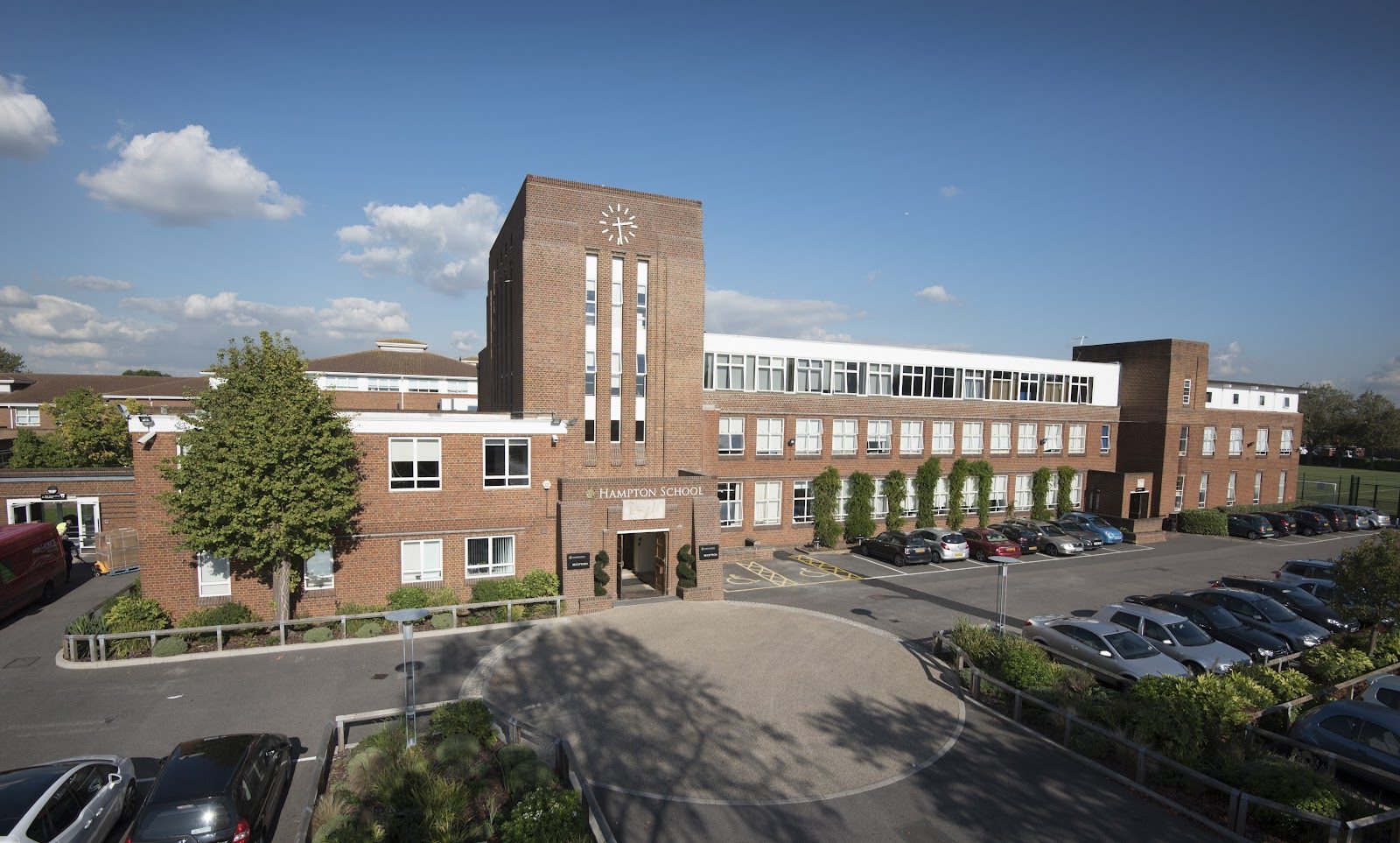
Hampton School
Hampton · United Kingdom
A 1557 grammar-school foundation on the Thames, where Molesey boathouse silverware rivals A-level success rates.
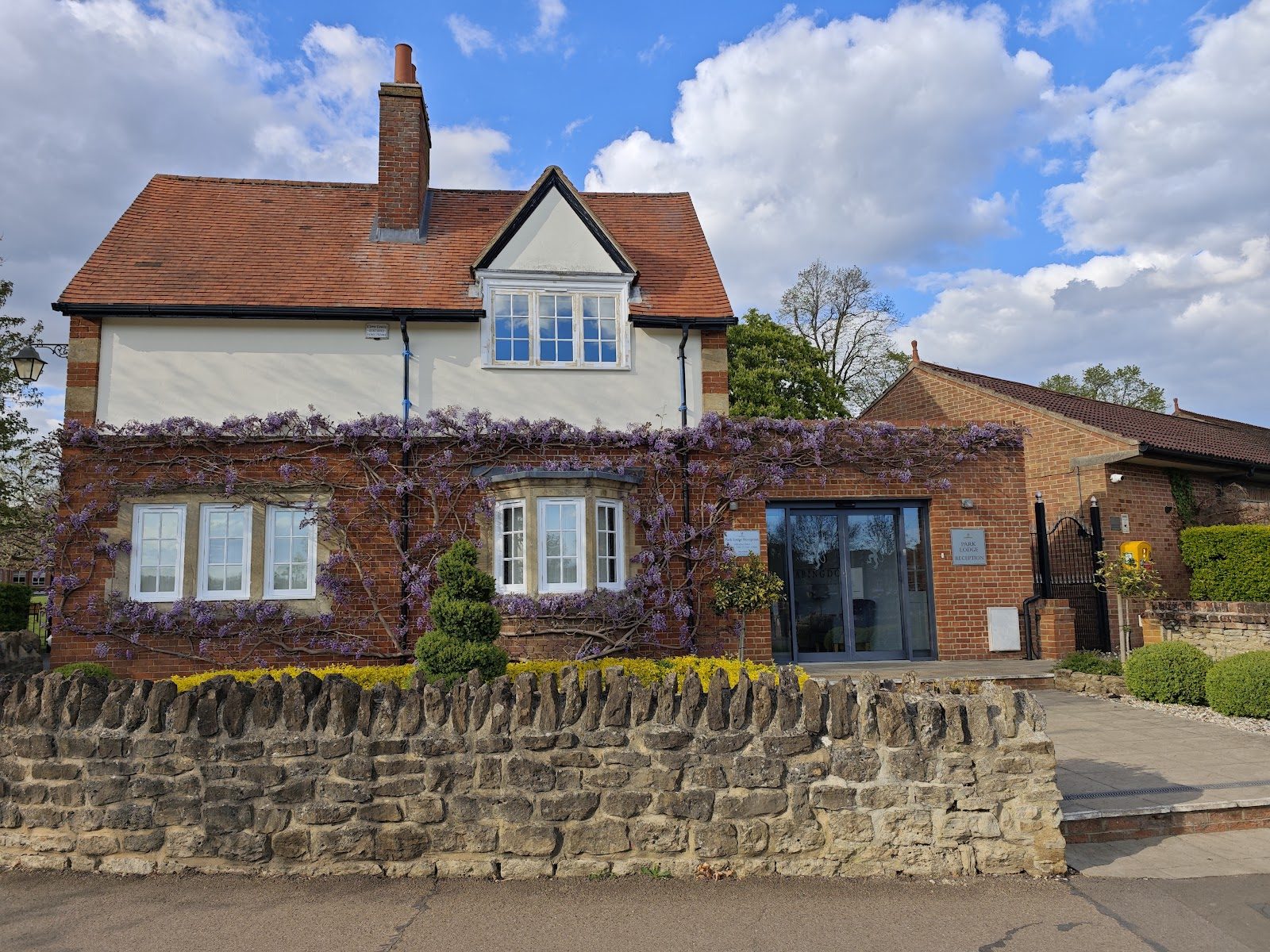
Abingdon School
Abingdon · United Kingdom
On the banks of the Thames just south of Oxford, a nine-century foundation whose boathouse has long fed Oxbridge rowing crews.
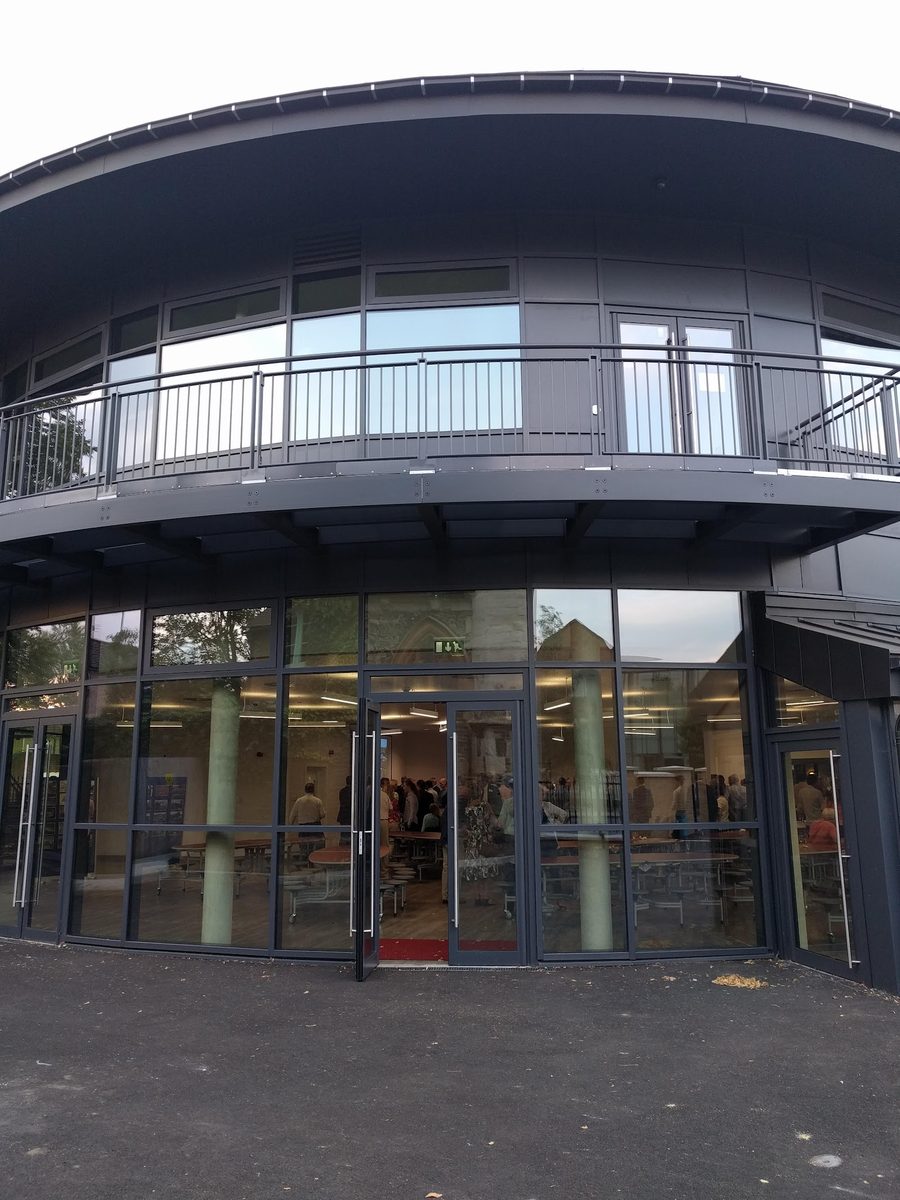
Tiffin School
Kingston upon Thames · United Kingdom
No fees, no let-up: a Kingston grammar school where two-stage testing turns 2,000 hopefuls into a class of 180.
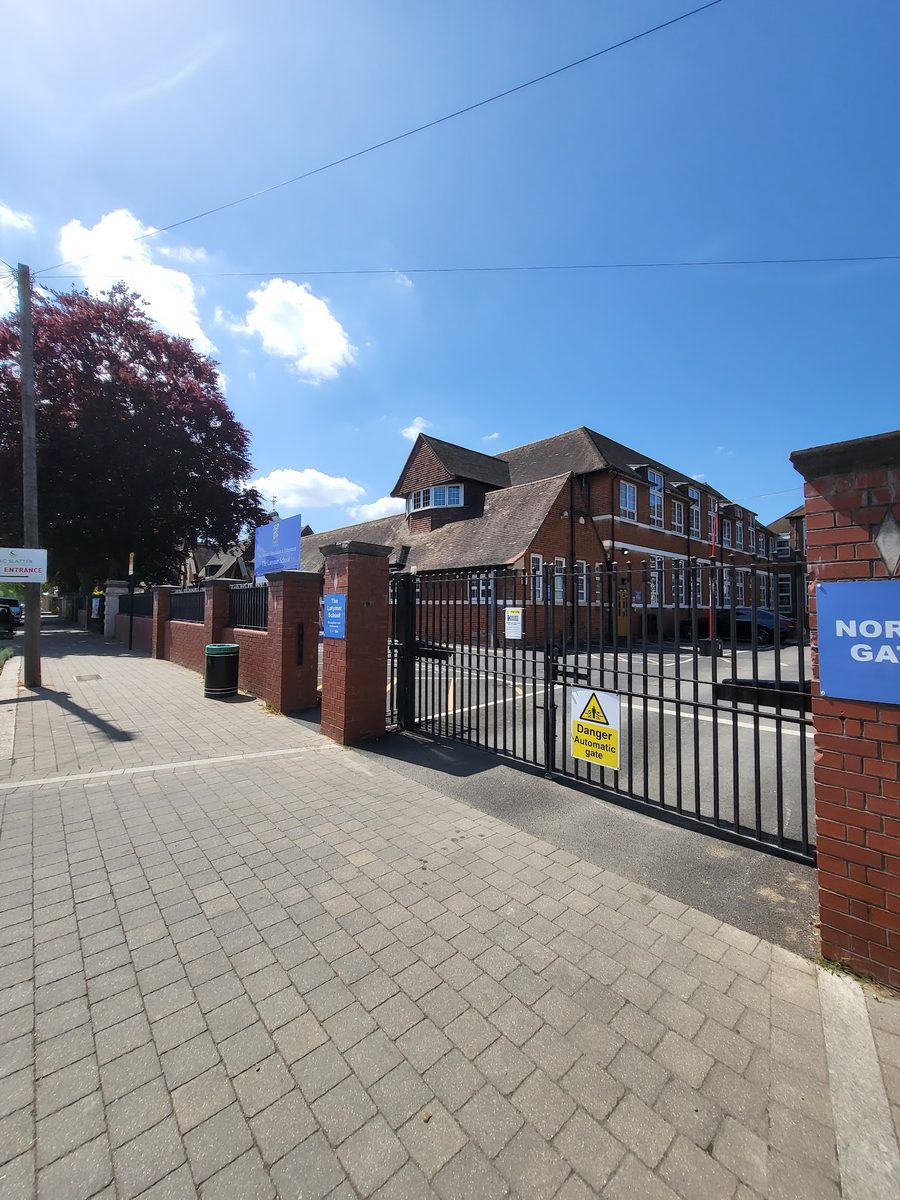
The Latymer School
London · United Kingdom
A 400-year-old state grammar in Edmonton where over 1,000 applicants compete yearly for just 192 places, with Cambridge college endowments still funding leavers.
Same country and curriculum — closest matches within ±10 points either way