
Guangdong
Shenzhen Foreign Language School
Guangdong's first post-reform public foreign-language school, teaching six languages across a four-college house system in Shenzhen.
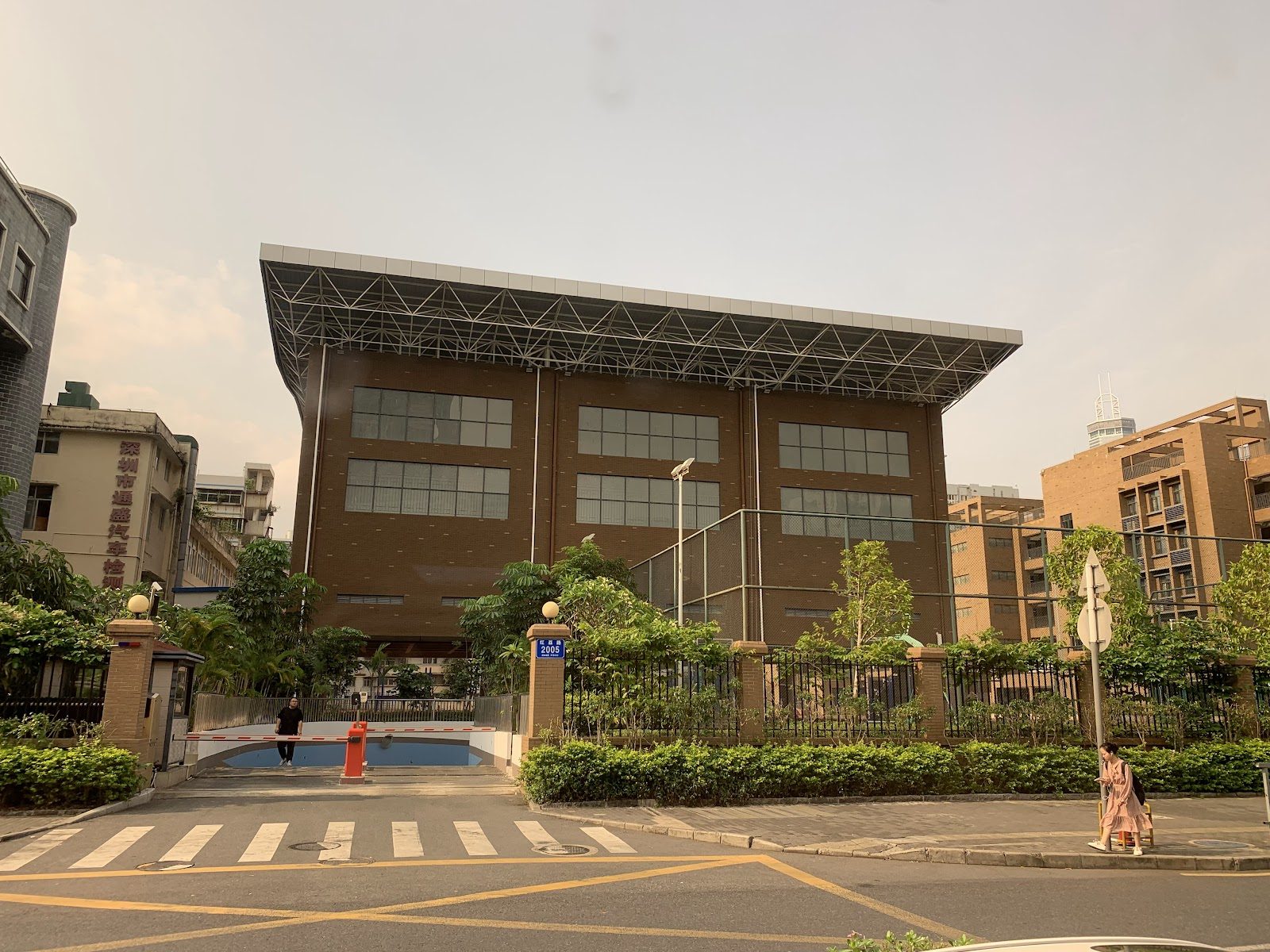
Photo © Libra Liu via Google Maps
Type
Day
Ages
12–18
Curriculum
Chinese National
Qualifications
Gaokao · IB · AP
Ratio
—
The Verdict
Editor's commitment
Right for
Families who want a public day school, founded in 1990, with English instruction and a serious foreign-language identity in Shenzhen.
Wrong for
Parents seeking boarding, a religious ethos, or a British or IB curriculum; this is a non-religious 12–18 school on the Chinese National curriculum.
Watch out for
The website trumpets a vast group and four colleges, but publishes no aggregate exam data; judge the 1990-founded flagship on hard outcomes.
Ranking breakdown
Shenzhen Foreign Language School · #953 of 1591
Composite score 62.9. 8 weighted criteria.
By criterion
Academic Outcomes
Weight 20%
#792
of 1529 scored
University Placement
Weight 16%
#848
of 1529 scored
Prestige & Heritage
Weight 12%
#608
of 1571 scored
Alumni Network
Weight 12%
#1082
of 1530 scored
Facilities
Weight 12%
#1110
of 1533 scored
Transparency & Communications
Weight 8%
#1243
of 1532 scored
Peer & Industry Review
Weight 10%
#1373
of 1548 scored
Admissions Selectivity & Demand
Weight 8%
#153
of 1529 scored
Peer & Industry Review
How Shenzhen Foreign Language School is regarded in the sector
60
Respected · medium confidence
SFLS is one of a small cohort of schools formally designated by China's Ministry of Education as a National Foreign Language School, a status shared with peers such as Guangzhou, Nanjing and Chengdu Foreign Language Schools; this designation grants exemption-recommendation pathways into Beijing Foreign Studies University and Shanghai International Studies University, and its inclusion in that circuit is the clearest peer-recognition signal available. Shenzhen and Guangdong education bureau league tables and local outlets (Shenzhen Evening News, Nanfang Daily) regularly cite its gaokao results and English-proficiency competition wins among the top tier in Guangdong. Its international/AP division is a recognised feeder into Chinese C9 universities and, in smaller numbers, into US, UK and Hong Kong institutions, though verifiable Oxbridge/Ivy admissions data is not independently published. Coverage in Western independent-education press (Good Schools Guide, WhichSchoolAdvisor) is essentially absent, reflecting the domestic rather than international nature of its reputation; its standing rests on Ministry-level accreditation and provincial academic rankings rather than global rankings press.
Editors' overview
Shenzhen Foreign Language School occupies a rare position in southern China: a public secondary school founded in 1990 with a long, explicit foreign-language mission and the scale to act on it. This is not a generic municipal high school with a token international wing. Foreign languages sit at the centre of the institution’s identity, and the school’s own history records the expansion to a sixth language, Russian, in 2008. The current structure also matters. The group spans multiple campuses across Shenzhen, with the secondary school footprint identified in Futian, Yantian and Longhua, and the high school section organised through four colleges — Innovation, Foreign Languages, International, and Liberal Arts and Sciences. That combination of public status, city backing and language specialism gives the school a market position few rivals can match: serious linguistic ambition inside a mainstream Chinese public-school framework.
What puts it on a shortlist is not polish but record. The school states that university entrance progression has stayed at 100% since its first graduating cohort, and it has a long archive of national prizes in languages, mathematics, robotics and research competitions. It has hosted major events, from national Model United Nations to informatics competitions and Yale Model United Nations China, which tells parents something concrete about intellectual culture and institutional reach. The offer extends beyond classes: six annual festivals cover foreign languages, sport, food, science, debate and the arts. That points to a school that values competitive energy, public performance and visible achievement, not quiet pastoralism. Parents looking for small-scale hand-holding or a soft academic environment should look elsewhere.
The right student for Shenzhen Foreign Language School is disciplined, quick, and comfortable in a selective, high-output public system. This suits children who want strong academics without giving up languages, debate, science competitions, choral work or student-led performance. It also suits ambitious bilingual or multilingual students who enjoy structured challenge and do not need constant reassurance. The school’s own language — mission, crisis awareness, innovation, excellence — is blunt, and the culture follows suit. For the right child, that produces high standards, intellectual stretch and a clear sense of momentum. For the wrong child, it produces pressure. That is the trade.
Academic Performance
On published headline outcomes, Shenzhen Foreign Language School sits in the top tier of the local public market. The school states that university entrance progression has remained at 100% since its first graduating cohort, and that record matters in context: in a Chinese public secondary system, sustained full progression marks a school with strong academic control, selective intake and disciplined execution. The same historical record also points to a pattern of high-end distinction, not mere pass rates. The school cites provincial top scorers in the gaokao, including science and politics, alongside a Shenzhen middle-school entrance top scorer. That places it above the level of an ordinary strong municipal school. It belongs with the city’s serious exam factories, but with a more pronounced language profile than most peers.
The more interesting question is breadth. Here the evidence is strong, if unevenly quantified. The school publishes a long run of external competition success in English and Japanese speech, mathematics olympiad, informatics, robotics and iGEM, plus direct recommendation links and university pathway agreements. That record points to a student body that does more than drill for standardised exams. It also reinforces the school’s standing among high-performing public schools in Guangdong: high-output, competition-driven and thin-skinned students need not apply. The limitation is transparency. The school does not publish cohort-wide gaokao score distributions, subject averages or university destination tables in a format that allows clean benchmarking against direct rivals. Parents get prestige markers and standout wins; they do not get full aggregate data.
Facilities
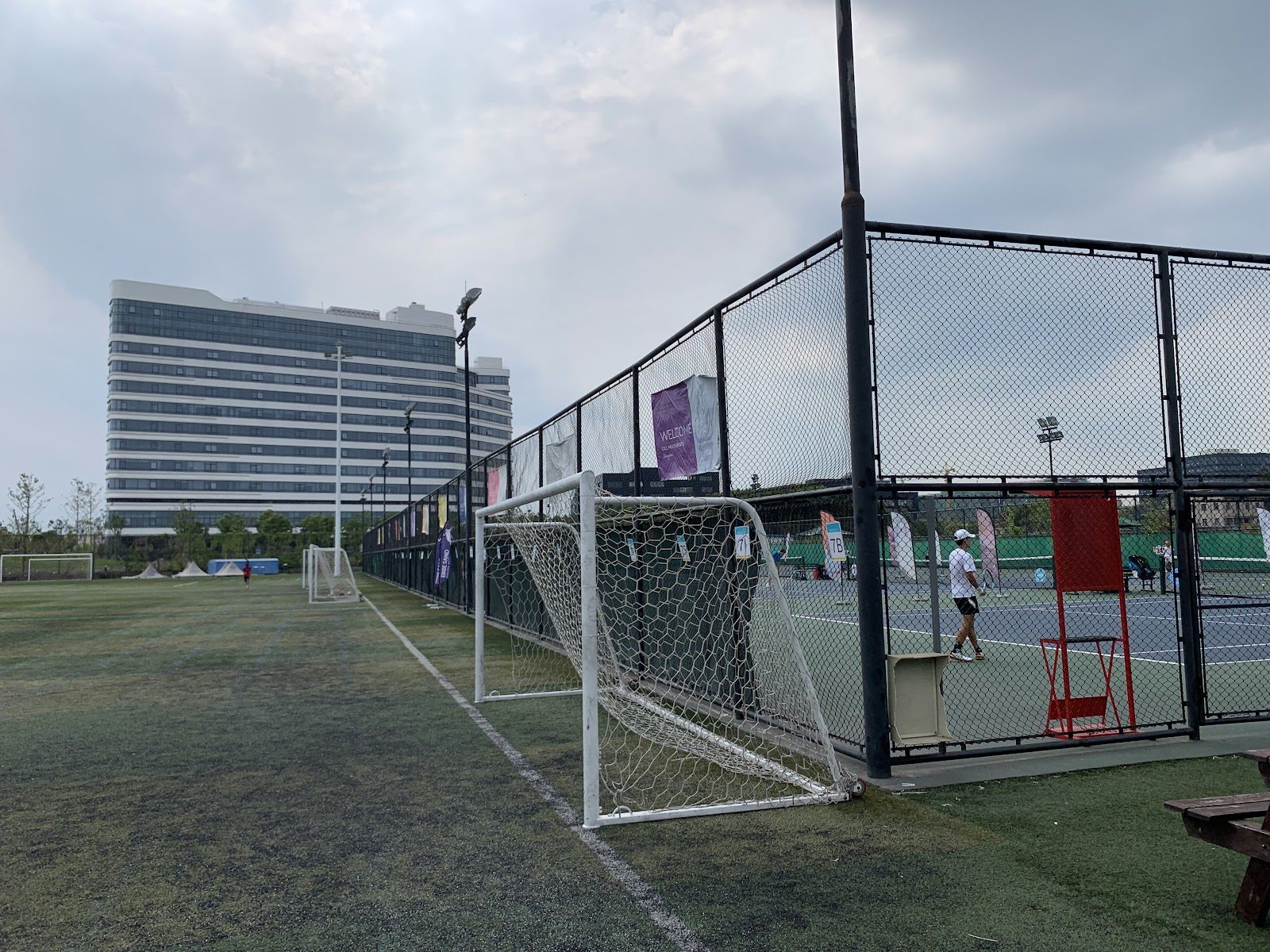
Facilities here support a high-output public school with a strong competition and performance culture, not a resort-style campus built to impress on tours. The clearest published assets are the dedicated high-school sports hall, a rebuilt junior campus, a separate international division campus, and a group structure spread across multiple secondary sites. The school also gives unusual weight to specialist spaces through its 4 college model and its 6 annual festivals: foreign languages, sport, food, science, debate and the arts. That matters because schools do not run that breadth of programmed activity without real teaching, rehearsal and event space behind it. News coverage of robotics, choir, Model United Nations and science competitions points to functioning labs, assembly venues and practice rooms, even if the school does not publish the kind of room-by-room facilities list that top private competitors now treat as standard.
Against peer schools in Shenzhen’s public top tier, that is a solid if not lavish offer. The strength lies in infrastructure tied to use: competition teams, festivals, large events and cross-campus provision. The weakness is disclosure. Parents get little hard detail on libraries, laboratory stock, theatre provision, design workshops or pitch access, and no polished masterplan of specialist facilities. Private bilingual and international rivals beat Shenzhen Foreign Language School on presentational clarity and amenity packaging. This school beats many of them on institutional utility: facilities built to keep a demanding student body working, competing and performing.
On published headline outcomes, Shenzhen Foreign Language School sits in the top tier of the local public market
Prestige
Shenzhen Foreign Language School carries real public-sector prestige in Guangdong because it combines selectivity, municipal backing and a foreign-language specialism that few state schools can match. This is not prestige built on glossy international branding. It rests on institutional status inside the Chinese system: direct management by the city education bureau, designation as a provincial demonstration high school, and a long record of being trusted to host high-level academic events and policy-facing forums. The school’s own history also shows unusual reach beyond standard classroom teaching: six taught foreign languages, direct university agreements abroad, and a role in opening government-backed international provision. That mix gives the school serious civic weight as well as academic clout.
Why rate it highly? Because the prestige is earned in ways that matter to families who understand the mainland market. This school has produced provincial top scorers, national competition winners and high-profile speech champions; it has also built a reputation strong enough to attract visits from senior officials, leading academics and even Nobel-level speakers. The four-college structure at high-school level adds another layer of status by signalling internal differentiation rather than one-size-fits-all streaming. There is, though, a limit to the shine. The school trades in institutional honours, standout individuals and public recognition more than in hard comparative disclosure. Parents get a picture of a high-pressure, high-status school with 6 language streams and 4 colleges; they do not get the full data set that would let them rank it cleanly against every rival.
The right student for Shenzhen Foreign Language School is disciplined, quick, and comfortable in a selective, high-output public system
Communications
Parent communication is functional, frequent and institution-first. The website carries a steady stream of dated notices, event reports, recruitment items and admissions announcements across the group, with clear navigation into school news, parent–school links and student activity. Parents do not face the fog that plagues many public-school sites. There is visible administrative structure, a published address, a direct email contact and dedicated portals for office systems, smart classes and campus services. The school also signals a heavy calendar load — competitions, performances, forums and enrolment windows move fast — so regular digital updates are not optional here; they are part of how the institution keeps a large operation moving. The result is disciplined, high-volume communication, with enough public-facing detail to track the school’s rhythm.
What it does less well is warmth, synthesis and parent usability. The site reads like an institutional noticeboard, not a parent guide. Important information sits amid slogans, internal sections and celebratory coverage, which means families must work to extract the essentials. The volume is high; the curation is weaker. That matters because a school with multiple divisions, specialist admissions and a crowded events programme needs ruthless clarity. There is also a lot of emphasis on public achievements and official visits, and less on everyday practical questions parents ask: who to contact, how routines work, what academic reporting looks like, how concerns are handled. In short, communication is energetic and operationally competent, but not parent-centred. For confident local families, that is enough. For newcomers, it is hard work.
Uniqueness
What makes Shenzhen Foreign Language School unusual is not the existence of an international division or a few high-profile exchange links. It is the fact that a municipal public school has built its identity around foreign-language study and sustained that focus across the whole institution. The school’s own record traces the expansion to 6 taught languages, culminating in Russian as the sixth. That matters because it gives able students a route beyond standard exam strength into genuine linguistic specialisation. Add the 4-college structure at high-school level — Innovation, Foreign Languages, International, and Liberal Arts and Sciences — and the school starts to look less like a single-track public school and more like a selective engine room with differentiated lanes for strong performers.
For students, the benefit is concrete. Linguists get a school where language learning carries status rather than functioning as an add-on. Academically ambitious pupils get access to a culture that values debate, speech, Model United Nations, research and competition alongside mainstream classroom performance. The annual programme of 6 themed festivals reinforces that breadth and gives students repeated chances to perform in public, organise events and test themselves outside ordinary lessons. The result is a student experience that is hard-driving, outward-facing and conspicuously ambitious. The trade-off is plain: this is a school for children who enjoy pressure, public standards and visible competition, not for those who want anonymity or a gentle adolescence.
Private bilingual and international rivals beat Shenzhen Foreign Language School on presentational clarity and amenity packaging
Student Profile
The students who fit here are bright, fast-moving and highly tolerant of scrutiny. This is a strong match for children who enjoy measurable success, public competition and a timetable packed with things to prepare for: speeches, debates, performances, science work, robotics, Model United Nations and language contests. The school’s culture rewards students who are organised, self-propelled and comfortable being judged against other able peers. Linguistically ambitious pupils stand out as the clearest fit, because foreign-language study carries real status here and extends well beyond English into 6 language pathways. Students who like being stretched in more than one direction at once — academic study, extracurricular competition and formal presentation — will find serious room to run.
The weaker fit is just as clear. Children who need a soft landing, extensive hand-holding or a low-pressure social climate will struggle. The rhetoric of mission, crisis awareness, innovation and excellence is not decorative; it reflects a demanding, performance-led institutional temperament. The high-school college structure also points students towards differentiated identities and expectations through 4 internal pathways, which suits teenagers with a defined sense of their strengths. In practice, the social profile tilts towards the driven, the thick-skinned and the competitive-minded. If your child likes anonymity, resists comparison or works best in a quietly nurturing environment, this is the wrong school. If they thrive on standards and momentum, it is a strong fit.
What makes Shenzhen Foreign Language School unusual is not the existence of an international division or a few high-profile exchange links
Co-curricular strengths
Arts & sport, on a separate axis
Overall 7/10
Scored 0-10 from the school's own published evidence. This axis is editorial-only — it does not feed the main WTS ranking.
Sports
7.5/10
Drama
7/10
Dance
6/10
Music
7.5/10
Visual Arts
7/10
Strengths
- +Founded in 1990 under the Shenzhen Municipal Education Bureau, it is one of the first 13 foreign language schools in China authorized to recommend 20% of its graduates directly to key universities without the standard gaokao route.
- +Teaches six foreign languages -- English, Japanese, French, German, Spanish and Russian -- an unusually broad language offering for a Chinese national-curriculum school.
- +In the 2025 gaokao cohort, 18 students were admitted to Peking or Tsinghua University, and the school reported a 985-university admission rate of about 43%.
- +Since December 2020 it has operated as a group with nine departments (junior high, senior high, a Longhua senior high, primary school, international department, Bay Area school, Longhua school, Bao'an school and a high-school park), serving well over 10,000 students.
- +Its international division has secured IB PYP, MYP and DP authorisation and passed CIS and WASC accreditation, in addition to running separate AP and A-level tracks.
Considerations
- −Mainstream admission is generally restricted to elementary or junior-high graduates holding Shenzhen household registration (hukou) or meeting district-specific eligibility, which limits access for many expatriate families.
- −Entry is exam-based and competitive: junior-high recruitment covers only around 630 places a year, decided after online registration and a short (about 20-minute) language-ability assessment ranked against fixed quotas.
- −As a large public day school built around the Chinese national curriculum and gaokao pathway, it is not a substitute for a full Western/IB school for families who are not planning for the Chinese exam system.
- −With over 800 faculty and roughly 6,200 students at the core campuses alone, class sizes and pastoral attention in the mainstream track are shaped by the school's considerable scale.
Availability
Primary entry gate & tests
Shenzhen Zhongkao + English
Gallery
Photo © Jason Xu via Google Maps
Photo © xw liang via Google Maps
Photo © Ethan Meng via Google Maps
Photo © Ethan Meng via Google Maps
Photo © Ethan Meng via Google Maps
Photo © Asaa Mba via Google Maps
Parent reviews
Have you sent your child here?
Voice reviews carry the strongest trust badge — we transcribe them for you to tidy up before they go live. Prefer to type? A written review is fine too.
Add your voice
In 60 seconds, tell other parents: what's the best thing about Shenzhen Foreign Language School, and what surprised you when your child joined?
We ask for a Google sign-in so every review has a real face behind it — no anonymous drive-by attacks on schools, and no faked positive reviews. Your email is never shown publicly.
Send this profile to a friend
International parents rely on word-of-mouth. Share this review with someone weighing the same decision.
Schools with places
Similar schools to Shenzhen Foreign Language School with places available now.
Utahloy International School Guangzhou
Guangzhou · China
- 2026-27
- WAITPOOLSpace-dependent
- 2027-28
- PLACES OPENRolling
Shekou International School
Shenzhen · China
- 2026-27
- WAITPOOLSpace-dependent
- 2027-28
- PLACES OPENRolling
American International School of Guangzhou
Guangzhou · China
- 2026-27
- WAITPOOLSpace-dependent
- 2027-28
- PLACES OPENRolling
Availability first, then country, area, curriculum, price, co-curricular
Consider also
Also worth looking at alongside Shenzhen Foreign Language School.
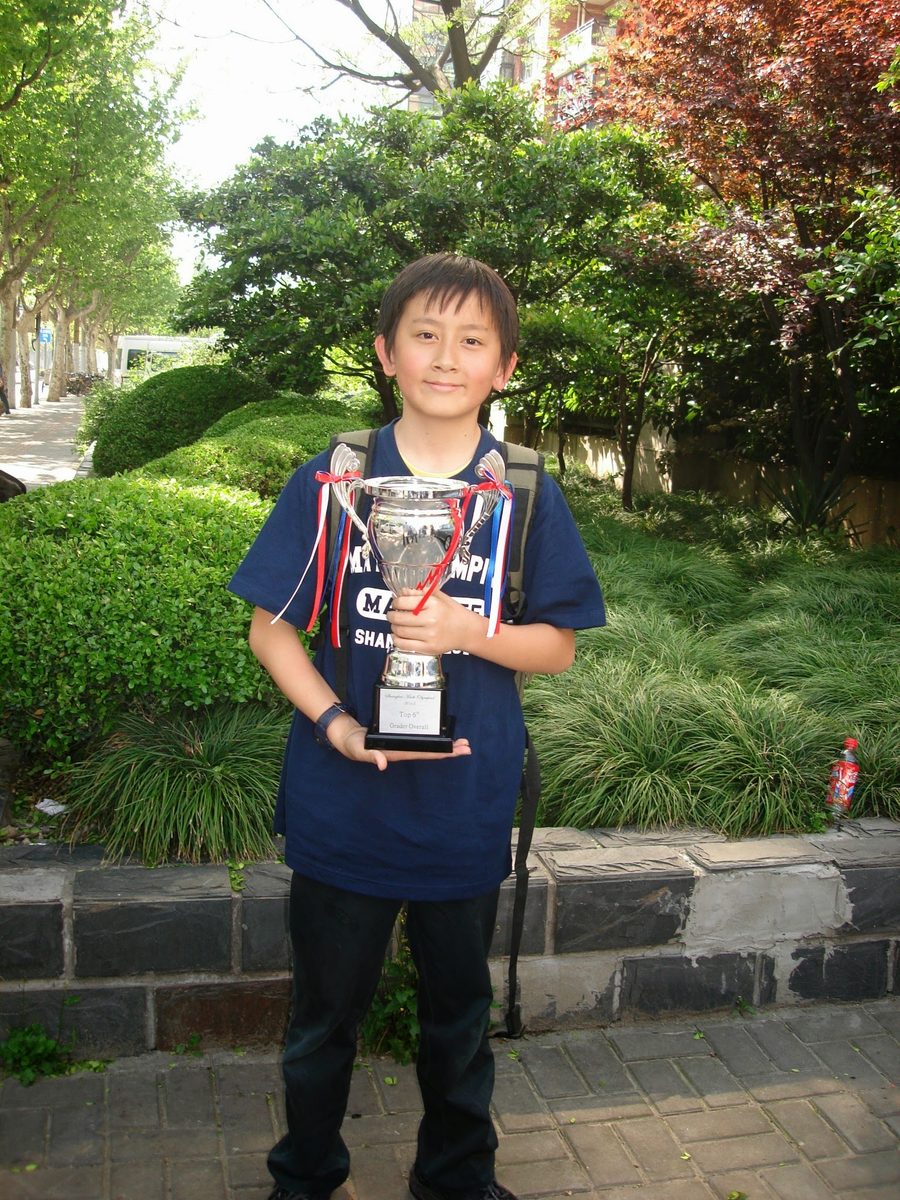
Yew Chung International School of Shanghai
Shanghai · China
Since 1993, paired Chinese and English co-teachers lead every classroom, carrying bilingual immersion from nursery through the IB diploma.
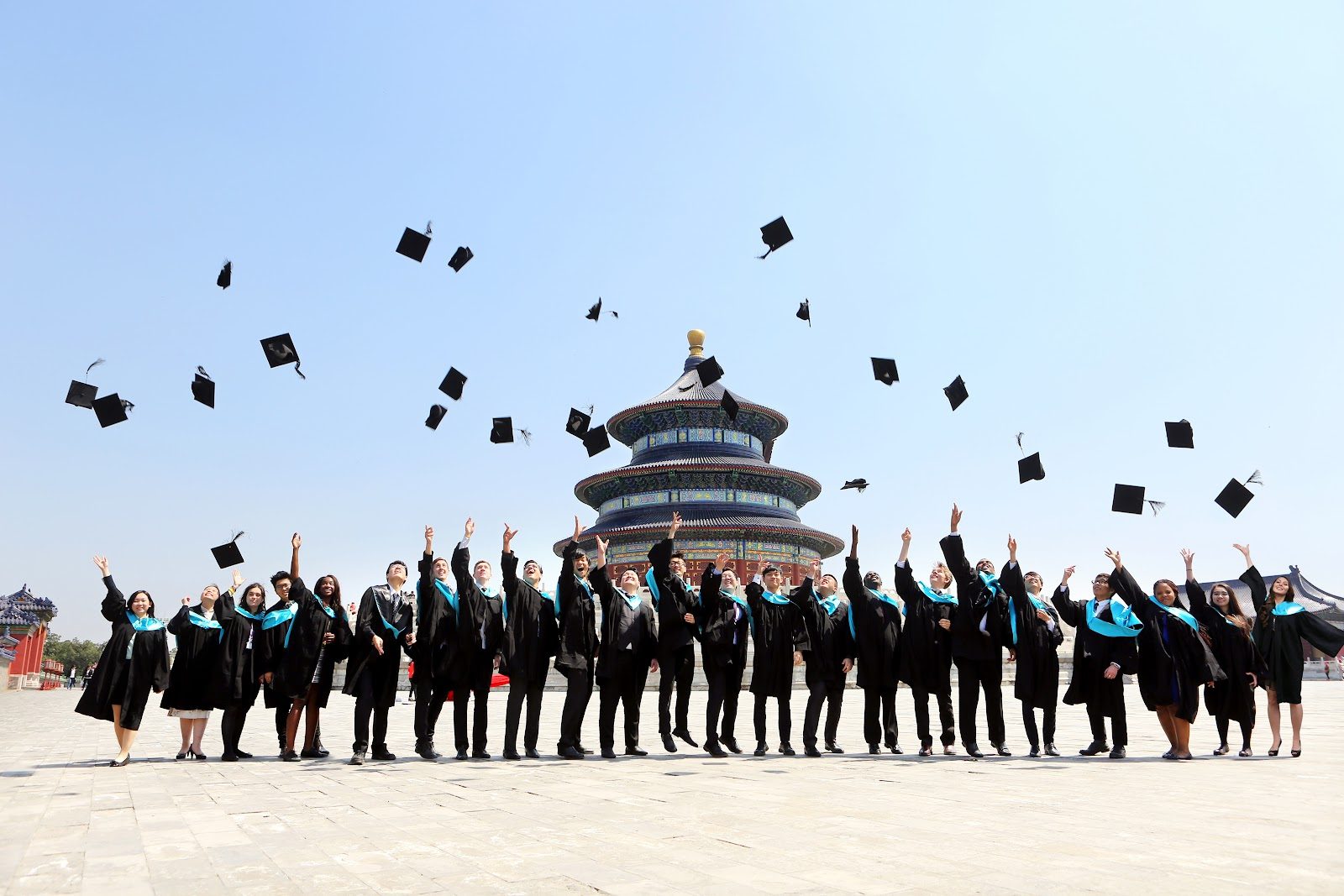
The British School of Beijing, Shunyi
Beijing · China
Behind air-filtered domes sits Beijing's longest-running British campus, pairing an MIT-built STEAM centre with a Juilliard performing arts partnership.
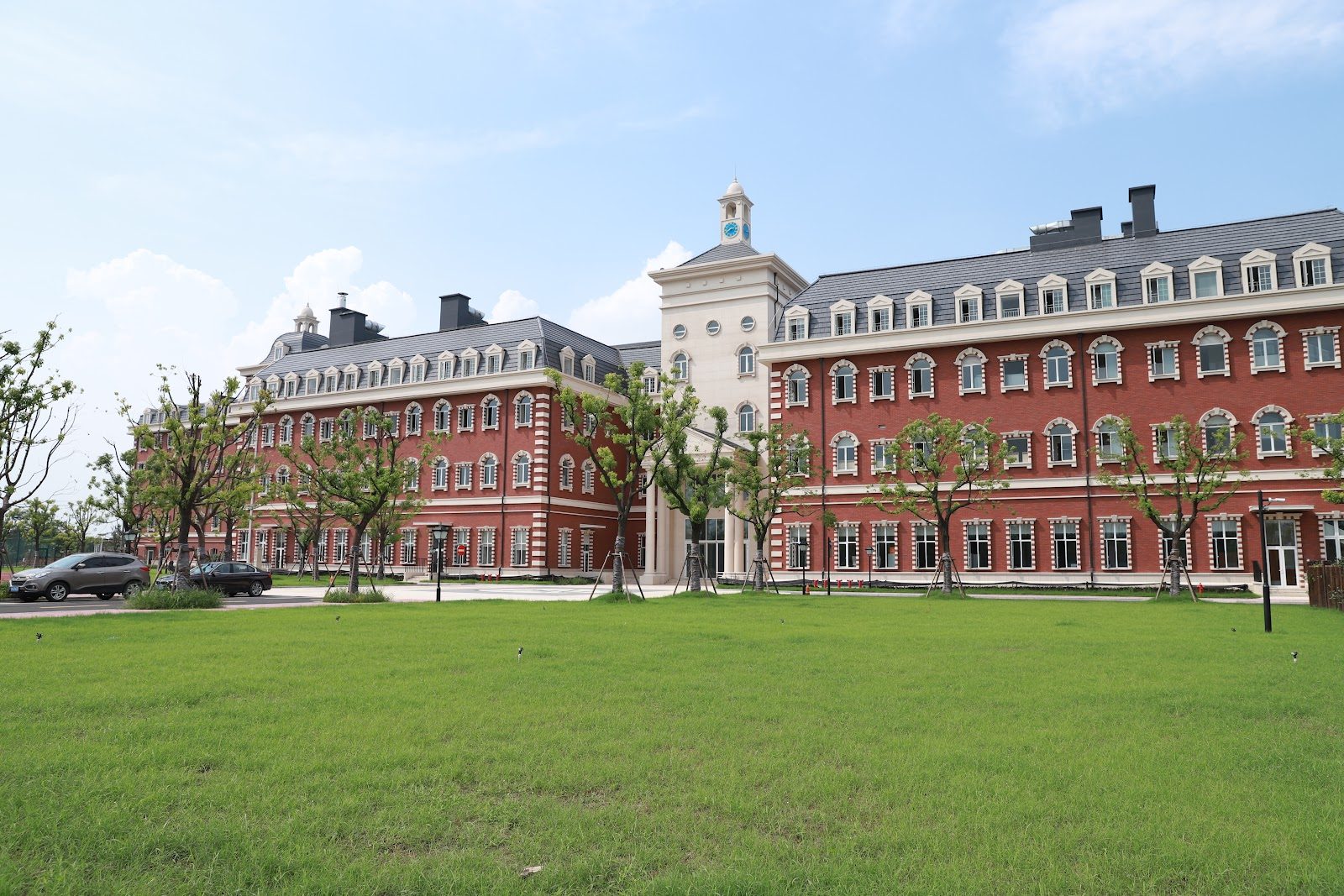
Wellington College International Hangzhou
Hangzhou · China
Houses named for the Duke of Wellington's generals anchor a British curriculum amid Hangzhou's tech-driven skyline.
British International School Shanghai, Puxi
Shanghai · China
In Huacao's expat quarter, British curriculum runs through IB alongside a fully integrated Dutch school and UNICEF-linked sustainability projects.
Same country and curriculum — closest matches within ±10 points either way