
Kuala Lumpur
Bukit Jalil Sports School
Set within Malaysia's National Sports Complex, this pioneer sports school pairs SPM classrooms with daily training across 23 disciplines.
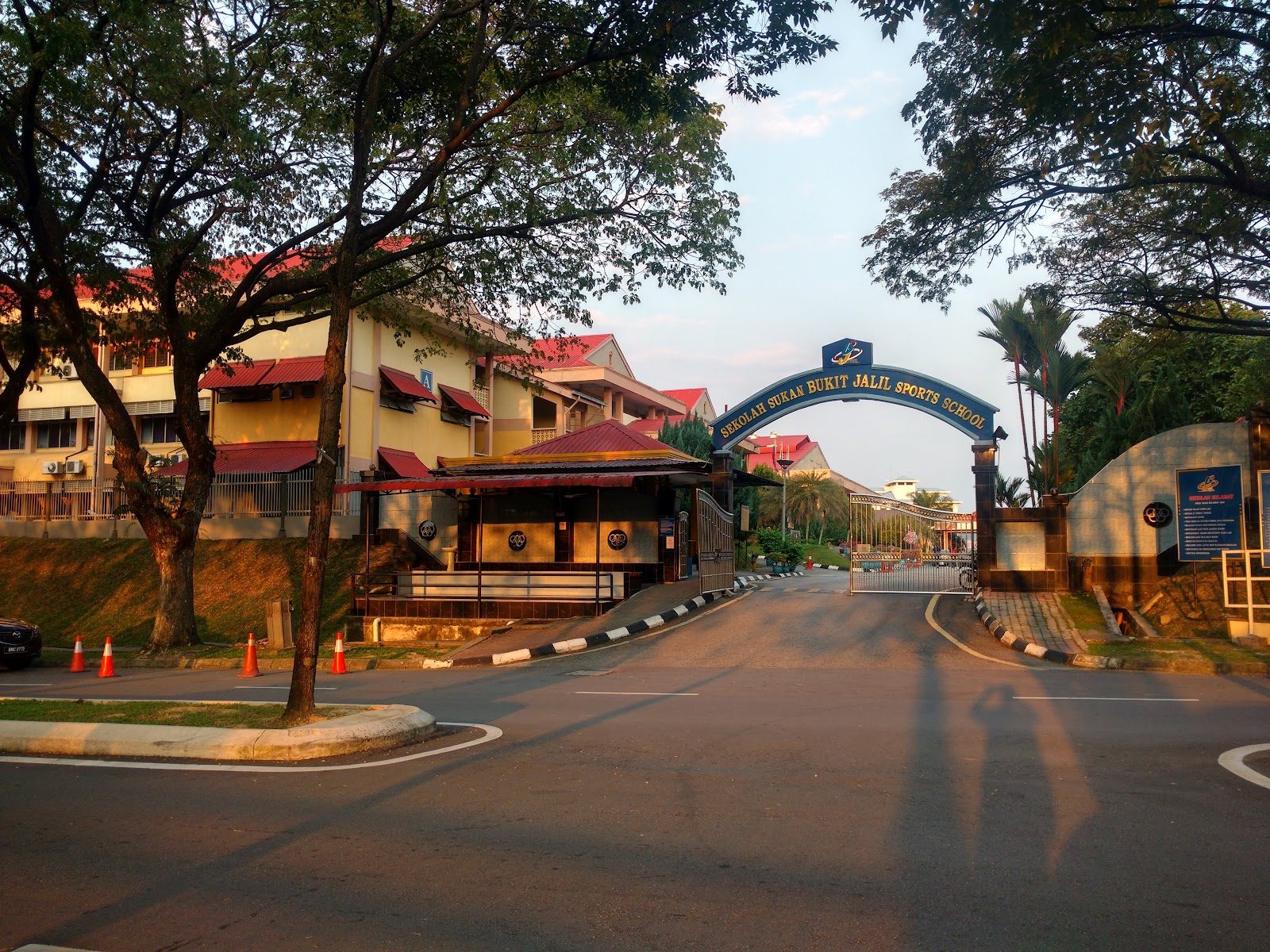
Photo © Abdulgafoor A via Google Maps
Type
Boarding
Ages
13–17
Curriculum
SPM (Sijil Pelajaran Malaysia)
Ratio
—
The Verdict
Editor's commitment
Right for
Talented athletes aged 13–17 who want SPM schooling inside Kuala Lumpur's National Sports Complex, with daily training built into boarding life.
Wrong for
Families wanting a conventional academic school: Bukit Jalil is Malaysia's pioneer elite national sports school, not a broad church.
Watch out for
The school is accredited by Malaysia's Ministry of Education, but it does not publish public outcome data beyond the SPM label.
Ranking breakdown
Bukit Jalil Sports School · #1271 of 1591
Composite score 56.4. 8 weighted criteria.
By criterion
Academic Outcomes
Weight 20%
#1481
of 1529 scored
University Placement
Weight 16%
#1496
of 1529 scored
Prestige & Heritage
Weight 12%
#1324
of 1571 scored
Alumni Network
Weight 12%
#544
of 1530 scored
Facilities
Weight 12%
#193
of 1533 scored
Transparency & Communications
Weight 8%
#1383
of 1532 scored
Peer & Industry Review
Weight 10%
#83
of 1548 scored
Admissions Selectivity & Demand
Weight 8%
#760
of 1529 scored
Peer & Industry Review
How Bukit Jalil Sports School is regarded in the sector
80
Strong · medium confidence
Bukit Jalil Sports School sits outside the private/international-school ecosystem that WhichSchoolAdvisor and the Good Schools Guide typically rank, so it does not appear in their comparative tables; its reputation is instead built within Malaysia's public education and sports administration circles. Local press (New Straits Times, The Star, Bernama) regularly cites it as the country's flagship specialist sports school, crediting it with producing a large share of Malaysia's SUKMA Games and national squad athletes, a distinction acknowledged by the Ministry of Education and National Sports Council rather than by independent school reviewers. Other government-run sports/boarding schools (e.g., Bukit Jalil's state-level counterparts) treat it as the benchmark model for combining the KSSM/KSSR curriculum with elite training. University uptake is mainly through sports scholarship pathways at Malaysian public universities (UiTM, UPM) rather than international admissions offices, so there is little commentary from overseas university admissions staff. Overall, its standing is strong but confined to national sports-education discourse, with minimal visibility in the international independent-school peer review press that ranks fee-paying schools.
Award

Elite Sport 80
World's Top School · The Global Ranking
Bukit Jalil Sports School is featured on our Global Top 80 ranking at #60. This seal is available for the school's marketing team to use on their website, prospectus and social channels.
- Lee Chong Wei — Badminton player, Sport
- Pandelela Rinong — Olympic diver, Sport
- Chan Peng Soon — Badminton player, Sport
Editors' overview
Bukit Jalil Sports School occupies a narrow, serious niche: it is Malaysia’s pioneer elite national sports school, set inside the National Sports Complex in Kuala Lumpur. That location is the point. This is not a conventional boarding school with a stronger-than-average PE department. It is a specialist institution for students aged 13–17 whose week revolves around training as much as study, with SPM academics delivered in Malay and English alongside high-performance sport. For families who want a standard broad school experience with sport as an enrichment, this is the wrong shortlist. For families raising a committed young athlete, it earns attention at once.
What distinguishes BJSS is concentration. Students live and study in a boarding environment tied directly to a national sports setting, and that creates a single-minded, high-pressure routine that few mainstream schools can match. The school’s editorial brief puts the offer plainly: SPM classrooms paired with daily training across 23 disciplines. That scale matters. It means sport is not an after-school add-on but the organising principle of the institution. The advantage is obvious: access to a peer group built around performance, structure and discipline. The trade-off is just as clear: students who need a wide menu of academic pathways, a large arts programme, or a looser adolescence will find the model constricting.
Its market position is clear. BJSS sits between a standard Ministry of Education school and a full sports academy, delivering state-recognised schooling with a national-sport focus. That makes it attractive to parents who refuse to abandon academic certification but want their child embedded in a competitive, demanding, purpose-built training environment during the secondary years. It also carries the authority of Ministry of Education Malaysia accreditation, which matters for families unwilling to gamble on an unrecognised specialist route. What the school does not publish here is the deeper evidence parents will want before committing: selection ratios, sport-by-sport performance data, and aggregate SPM outcomes. The concept is strong; the public disclosure is thin.
The right student for Bukit Jalil Sports School is not the child who merely enjoys games. It is the athlete with real appetite for repetition, coaching, schedule and scrutiny — a teenager ready to accept that sport will shape the school day, the friendship group and the rhythm of boarding life. For that student, BJSS offers something rare in Malaysia: a national sports setting, a clear academic spine in SPM, and an environment built for adolescents who want their talent tested early and hard. For the undecided, the merely sporty, or the academically omnivorous, there are better fits elsewhere.
An Elite Sport 80 school
Bukit Jalil Sports School is Malaysia's national sports school and sits at rank sixty on the Elite Sport 80 because it is the dominant supplier of Malaysian athletes to the Southeast Asian Games, Asian Games, Commonwealth Games and Olympic Games across a broad basket of sports. The school operates as a fully integrated academic and athletic institution within the Bukit Jalil National Sports Complex — the largest single-site sporting facility in Malaysia — and its athletes have consistently accounted for the majority of Malaysian medals at continental and Olympic level.
The specialisms cover the full Malaysian medal-hope portfolio: badminton, squash, athletics, football, hockey, sepak takraw, gymnastics, diving, swimming, taekwondo, wushu, cycling and archery. Each sport operates as a formal academy programme within the school in partnership with the relevant Malaysian national federation and the National Sports Council. Facilities include an Olympic pool, IAAF-standard track, national gymnastics hall and multiple international-standard courts and pitches.
Notable alumni across codes include Nicol David (long-serving world number-one squash player), Lee Chong Wei (multi-time Olympic silver medallist and former world number-one badminton player, associated with the pathway), current national badminton and squash champions, and a rolling roster of Malaysian Olympic representatives across athletics, swimming and gymnastics.
International openness is limited by design. Bukit Jalil admits primarily Malaysian citizens through a national talent-identification programme; a small number of ASEAN-region international pupils are accepted each year on formal government-scholarship or bilateral federation nomination. There is no fee-paying overseas application route for casual applicants and no dedicated international boarding stream. Language of instruction is Malay with strong English support. For families already resident in Malaysia whose child is inside a national development track, this is one of Southeast Asia's most efficient sport-plus-academic institutions; for overseas families arriving without federation backing it is effectively closed, and one of Kuala Lumpur's international schools with a strong sport programme is a more practical route.
Academic Performance
Bukit Jalil Sports School’s academic performance is hard to judge because the school does not publish aggregate SPM results, grade distributions, value-added data or university destinations. That is a serious gap in a school asking families to trust a demanding dual-track model. In a mainstream academic school, thin disclosure is a weakness; in a specialist sports school, it matters even more, because parents need clear evidence that training time does not erode exam performance. Without published outcomes, BJSS cannot claim a place among Malaysia’s strong academic performers on public evidence alone. It sits in a different category from exam-driven day schools and science residential schools whose results are routinely scrutinised and compared.
That does not make the academic offer weak. It means the school’s public case for academic strength is unfinished. A specialist institution serving student-athletes does not need to dominate national league tables to justify itself; it does need to show that pupils leave with credible, consistent external results. Here, the school is opaque. The central question is not whether every student achieves top grades, but whether the cohort secures solid outcomes across the board while sustaining an elite training load. Until BJSS publishes hard SPM data — pass rates, top-grade counts, subject performance and multi-year trends — its academic standing relative to peers remains unclear, and parents must treat any claim of classroom success with caution.
Facilities
The decisive facility here is not a theatre, library or makerspace. It is direct access to a national sports environment inside the National Sports Complex, with training provision spanning 23 disciplines. That puts Bukit Jalil Sports School in a different facilities bracket from ordinary secondary schools, even strong sporting ones. Most peer schools offer pitches, a hall, a gym and, at best, a polished performance centre. BJSS sits in a far more specialised setting geared to athlete development first. For families choosing this school, that concentration matters more than whether the campus has the decorative extras that dominate mainstream prospectuses. The advantage is plain and substantial: student-athletes train in a setting built for high-performance sport, not school-level recreation.
The limitation is just as plain. The school does not publish the kind of detailed facilities breakdown that serious parents need: named venues by sport, strength and conditioning provision, recovery and sports science support, indoor versus outdoor capacity, or how access is scheduled around the wider complex. That leaves the public picture frustratingly thin. Against specialist sports schools, that lack of operational detail is a weakness; against conventional boarding schools, the location itself still gives BJSS an unusually strong sporting infrastructure. The benchmark, then, is mixed: superior for competitive sport, less convincing on disclosure, and silent on the broader non-sport estate that many families still want to assess before committing to a demanding, narrow-track school.
The right student for Bukit Jalil Sports School is not the child who merely enjoys games
Prestige
Bukit Jalil Sports School carries real prestige, but it is niche prestige. In Malaysia, the name has force because the school occupies a singular place in the national sporting system: it is the pioneer elite national sports school, based inside the National Sports Complex, with training spread across 23 disciplines. That is not the profile of a standard secondary school with sporting ambition; it is a state-linked talent pathway with a clear remit. For families inside competitive youth sport, that confers serious status. Admission signals that a student has moved beyond school-team promise into a more exacting environment built around performance, selection and scrutiny.
Outside that world, the prestige is narrower. BJSS does not carry the all-purpose social cachet of a famous academic boarding school, nor does it publish the academic outcome data that would elevate its standing beyond sport. Its reputation rests on specialisation, not breadth. That cuts both ways. For an aspiring athlete, the school’s focus, setting and peer group make it highly distinctive and hard to replicate. For a family measuring prestige through examination dominance, university placement or old-school institutional glamour, the case is less convincing. The right rating, then, is strong but specialised: impressive within its lane, influential in sport, and short of top-tier prestige in the wider school market.
That puts Bukit Jalil Sports School in a different facilities bracket from ordinary secondary schools, even strong sporting ones
Communications
Communication with parents is hard to rate highly because the school does not publish much of what serious families need before enrolment and during decision-making. The broad outline is clear enough: this is a specialist school inside a national sports setting, and the website establishes that core identity without confusion. Beyond that, public communication looks thin, functional and short on proof. We have not seen the level of routine parent-facing detail that strong boarding schools now treat as standard: clear academic reporting structures, named pastoral contacts, house or dormitory information, sample timetables, transport guidance, health provision, safeguarding detail, or a proper account of how training and study are coordinated day to day. For a school built around 23 sports, that absence is a real weakness.
That matters because parents in this category are not buying a simple school place. They are handing a teenager into a demanding, schedule-heavy system where welfare, recovery, academic oversight and coach-family communication all need precision. Schools with complex student routines need disciplined communication; BJSS does not yet show that standard in public. The institution may communicate far better once a student is admitted, but the published picture does not prove it. At present, the message to parents is strong on mission and weak on mechanics. For a niche school with a high-commitment proposition, that is not enough.
Uniqueness
Bukit Jalil Sports School is unusual because it is not a school that happens to support athletes; it is a school built around athlete production. The distinction matters. In most schools, sport fits around the timetable. Here, the timetable bends around sport, and student life takes its shape from training demands, recovery, discipline and selection pressure. The school’s place inside the national sports system gives it a hard-edged, single-purpose identity that mainstream schools cannot mimic. The spread across 23 disciplines also widens the peer culture beyond one or two flagship games. Students live among teenagers whose ambitions are concrete, whose routines are monitored, and whose tolerance for distraction is low. That creates a rare adolescent environment: less rounded, less carefree, and far more focused.
What students gain from that is clarity. A young athlete does not need to justify taking sport seriously because the whole institution already does. Coaching, scheduling and daily expectations all reinforce the same message: performance matters. For the right child, that is immensely valuable. It replaces the social friction that talented athletes often face in ordinary schools with a community that treats commitment as normal. It also exposes students early to the unforgiving truth of competitive sport — repetition, hierarchy, fatigue and constant comparison. That is a strength, not a flaw, but it narrows the school’s appeal. BJSS offers a distinctive, demanding route for students who want their school years organised around sporting ambition, not merely decorated by it.
Bukit Jalil Sports School carries real prestige, but it is niche prestige
Student Profile
The right student for Bukit Jalil Sports School is a teenager whose identity already centres on sport, not one who merely enjoys competition after class. This is a place for young athletes who tolerate repetition, instruction and constant measurement without complaint, and who can absorb a school day built around training demands across 23 disciplines. They need stamina of temperament as much as physical talent: patience with routine, respect for hierarchy, and enough self-command to move between lesson time, practice and communal living without drama. Students who need wide academic choice, expansive arts provision or a relaxed adolescence will chafe here. Students who want a single-track, performance-first environment will not.
The social fit is just as specific. BJSS suits adolescents who draw energy from disciplined peers and who do not need coaxing to take goals seriously. Confidence helps, but thick-skinned resilience matters more. In a specialist sports setting, comparison is constant, selection pressure is real, and not every athlete stays at the top of the internal pecking order. The students who thrive are the ones who can lose form, take correction and return to work the next day without self-pity. For families, that means looking past talent alone. A gifted child with fragile motivation or broad, undecided interests is a poor fit. A committed athlete with high tolerance for structure and a hard-working, unsentimental streak fits the school far better.
Bukit Jalil Sports School is unusual because it is not a school that happens to support athletes; it is a school built around athlete production
Co-curricular strengths
Arts & sport, on a separate axis
Overall 5.56/10
Scored 0-10 from the school's own published evidence. This axis is editorial-only — it does not feed the main WTS ranking.
Strengths
- +Specialised government boarding school that combines the national SPM academic curriculum with structured elite-athlete training programmes.
- +Located adjacent to the Bukit Jalil National Sports Complex, giving students access to national-standard training and competition facilities.
- +Entry is merit-based on sporting ability, producing a highly motivated peer group of young athletes rather than a general admissions intake.
- +As a public school under the Ministry of Education, fees are far lower than those of private international boarding schools in Malaysia.
- +Part of Malaysia's national network of sports schools designed to feed talented youngsters into state and national squads.
Considerations
- −Curriculum is the Malaysian national SPM syllabus, taught largely in Bahasa Malaysia, which limits its use for families needing an English-medium or internationally portable qualification.
- −Admission is highly selective and oriented toward Malaysian citizens with demonstrated sporting talent, making it largely inaccessible to expatriate or non-athlete applicants.
- −Heavy time commitment to sports training may narrow the breadth of general academic and extracurricular exposure compared with conventional schools.
- −Little English-language public information is available on inspection outcomes, governance or exam results, making external benchmarking difficult.
Gallery
Photo © Azri Hazwan via Google Maps
Photo © SY Teo via Google Maps
Photo © SY Teo via Google Maps
Photo © SY Teo via Google Maps
Photo © SY Teo via Google Maps
Photo © maturuni tukiman via Google Maps
Photo © myusrimatcing mat ali via Google Maps
Parent reviews
Have you sent your child here?
Voice reviews carry the strongest trust badge — we transcribe them for you to tidy up before they go live. Prefer to type? A written review is fine too.
Add your voice
In 60 seconds, tell other parents: what's the best thing about Bukit Jalil Sports School, and what surprised you when your child joined?
We ask for a Google sign-in so every review has a real face behind it — no anonymous drive-by attacks on schools, and no faked positive reviews. Your email is never shown publicly.
Send this profile to a friend
International parents rely on word-of-mouth. Share this review with someone weighing the same decision.
Schools with places
Similar schools to Bukit Jalil Sports School with places available now.
Alice Smith School
Kuala Lumpur · Malaysia
- 2026-27
- WAITPOOLSpace-dependent
- 2027-28
- PLACES OPENRolling
International School of Kuala Lumpur
Kuala Lumpur · Malaysia
- 2026-27
- WAITPOOLSpace-dependent
- 2027-28
- PLACES OPENRolling
Availability first, then country, area, curriculum, price, co-curricular
Consider also
Also worth looking at alongside Bukit Jalil Sports School.

Shattuck-St. Mary's School
Faribault, MN · United States
A quiet Rice County campus since 1858, whose two NHL-sized rinks have fed the sport's pro and Olympic pipelines for decades.

Montverde Academy
Montverde, FL · United States
On a Lake Florence campus in Central Florida, boarders from some 80 countries share dorms with a basketball program that keeps feeding the NBA draft.
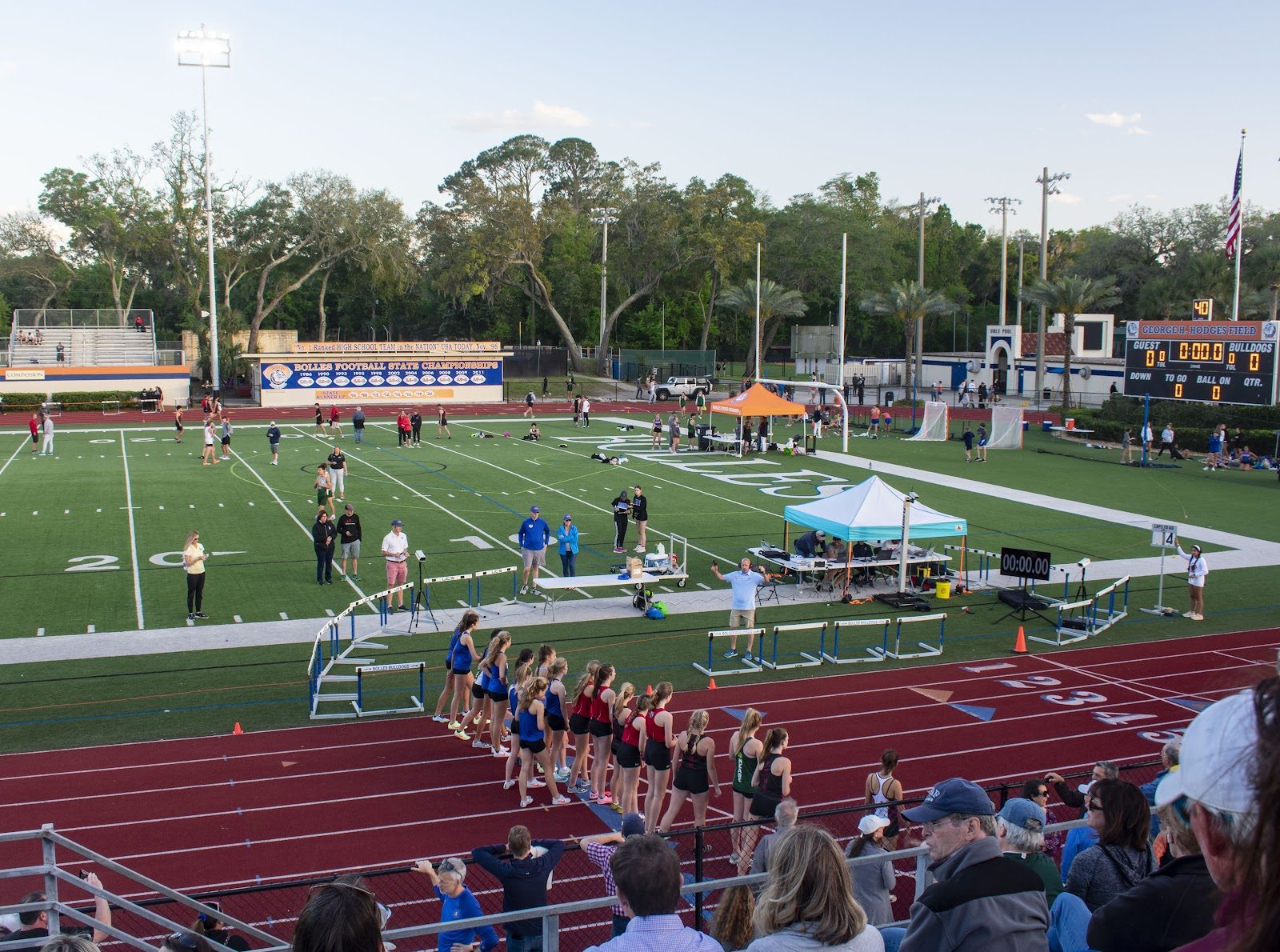
The Bolles School
Jacksonville, FL · United States
On a historic river bluff in Jacksonville, a swimming dynasty that has sent swimmers to Olympic podiums for decades.

Long Beach Poly High School
Long Beach, CA · United States
An urban Long Beach public school where the century-old motto 'Scholars and Champions' still fits a campus with more NFL alumni than any other in America.
Same specialism, country and curriculum — closest matches within ±10 points either way