
Japan
Joshibi High School of Art and Design
Type
Ages
—
Curriculum
—
Ratio
—
Ranking breakdown
Joshibi High School of Art and Design · #1394 of 1591
Composite score 52.5. 8 weighted criteria.
By criterion
Academic Outcomes
Weight 20%
No data yet
1529 of 1591 scored
University Placement
Weight 16%
No data yet
1529 of 1591 scored
Prestige & Heritage
Weight 12%
#608
of 1571 scored
Alumni Network
Weight 12%
No data yet
1530 of 1591 scored
Facilities
Weight 12%
No data yet
1533 of 1591 scored
Transparency & Communications
Weight 8%
No data yet
1532 of 1591 scored
Peer & Industry Review
Weight 10%
No data yet
1548 of 1591 scored
Admissions Selectivity & Demand
Weight 8%
No data yet
1529 of 1591 scored
Peer & Industry Review
How Joshibi High School of Art and Design is regarded in the sector
Insufficient peer signal
We couldn't find enough independent third-party evidence to score this school's peer & industry standing with confidence. It doesn't mean the school isn't well regarded — only that public reputation sources we trust don't yet cover it. This axis is left blank for now and the composite score is median-imputed from the other six categories.
Award
Elite Visual & Fine Arts 76
World's Top School · The Global Ranking
Joshibi High School of Art and Design is featured on our Global Top 76 ranking at #18. This seal is available for the school's marketing team to use on their website, prospectus and social channels.
Editors' overview
Full editorial coverage forthcoming. This institution has been included in the 2026 Visual Arts & Fine Art audit on the strength of its specialist Fine Art pathway. A long-form editorial review — covering curriculum, faculty, graduate conversion, portfolio provision and international accessibility — will be published as editorial capacity allows. The rank position, country and international-access classification shown on the ranking page have been verified against the methodology.
An Elite Visual & Fine Arts 76 school
Joshibi High School of Art and Design, in Suginami-ku, Tokyo, Japan, sits at rank eighteen on the Elite Visual & Fine Arts 76 because it holds a distinction no other secondary school in the country can claim. Joshibi High School of Art and Design was established in 1915 as an affiliated school with Joshibi University of Art and Design. That university itself matters enormously to the ranking: Joshibi was the first fine art institution for female students in Japan, and is the oldest private art school, founded in 1900 because female students were not admitted to membership of the Tokyo University of the Arts until 1946. The high school sits physically inside that university's Suginami campus, giving pupils a specialist art pipeline most schools cannot replicate.
The specialism is delivered as a genuine foundation curriculum rather than a bolt-on elective. The school holds skill classes four hours a week at each grade level focusing on drawing and painting and design, developing a unique system of art education which takes the connection to high school and college programs into consideration. All three high school grades take collaborative classes taught directly by professors from Joshibi University and its Junior College, including oil-painting professor Tomoko Fukushi, and third-years can additionally audit real university lectures for transferable credit. Classrooms have movable partitions, art rooms are naturally lit, there is an on-campus gallery for exhibiting student work, a tatami room, and students gain guided access to the university library, one of Tokyo's best-stocked specialist art-book collections. Roughly 90 percent of graduates move into art-related paths, and matriculation is precise: 167 students to Joshibi University, 10 to Tama Art University, and 8 to Musashino Art University in the most recent cohort.
Alumnae include yoga (Western-style) painter Ritsu Tsugioka, who was appointed the school's sixteenth principal while serving as an adjunct lecturer at Joshibi University's graduate school, and film and television actresses Naomi Yasuda, Kaori Momoi and Chikako Kaku, reflecting the breadth the school's own materials claim across artists, designers and creative fields.
International openness is limited and should be stated plainly. This is a Japanese-medium, girls-only day school with no boarding facilities identified. Overseas-connected applicants apply through the kikokushijo (returnee) route, which is handled directly by the vice-principal's office, rather than a dedicated foreign-national admissions track; a special international-student examination exists only at Joshibi University's graduate, undergraduate and junior-college levels. Fees are modest by global standards: first-year admission costs around 374,000 yen with annual school fees rising from roughly 832,800 yen to 889,800 yen by the third year. This suits Japanese-fluent or bicultural families settling in Tokyo long-term, not English-medium boarding seekers. Start enquiries through the kikokushijo office at least a year ahead of the practical-art entrance exam.
Academic Performance
Joshibi High School of Art and Design, the secondary affiliate of Joshibi University of Art and Design in Suginami, Tokyo, follows a dual curriculum that combines the standard Japanese national syllabus with an extensive studio program in drawing, design and craft. Students typically specialise early, choosing tracks in fine art, design or crafts, with weekly hours devoted to life drawing, composition and material study alongside mathematics, science and languages. The school's central academic purpose is preparation for internal progression to Joshibi University, and a large proportion of graduates advance there each year through an articulated admissions arrangement rather than open examination. Because the school's mission is vocational and creative rather than purely academic, published data on national exam rankings or university placement outside the arts are limited. Subject depth is concentrated heavily in visual and applied arts, with academic subjects taught to support, rather than compete with, the studio curriculum.
Facilities
The school occupies a campus in Suginami Ward, Tokyo, adjacent to or shared with Joshibi University of Art and Design, allowing high school students access to university-level studio spaces, print workshops, ceramics rooms and design laboratories not typically found at ordinary secondary schools. Facilities are oriented almost entirely toward the visual arts: dedicated painting and drawing studios, textile and craft workshops, computer-aided design suites and exhibition spaces for student work. Science and general academic classrooms exist but are secondary in scale and emphasis to the art facilities. There is no strong tradition of competitive school sports comparable to mainstream Japanese secondary schools, with physical education present but not a defining feature of campus life. The proximity to the university library and gallery spaces gives students early exposure to a professional art-school environment, a facility advantage that is the institution's most distinctive physical asset.
This institution has been included in the 2026 Visual Arts & Fine Art audit on the strength of its specialist Fine Art pathway
Prestige
Joshibi's institutional lineage traces to 1900, when its parent university was founded as one of Japan's earliest schools of art education for women, making it among the oldest women's art institutions in the country. The attached high school inherits this historical standing within Japan's specialised art education sector, though it operates on a smaller and more regional scale of recognition than elite academic secondary schools. Its prestige is field-specific: it is known chiefly among families and educators interested in art and design pathways rather than in general league tables of academic achievement. The school's standing rests on its direct pipeline into Joshibi University, itself a respected name in Japanese art and design education, and on more than a century of continuous operation as a women's art institution. It carries cultural weight within Japan's art education community rather than broad national prominence.
The rank position, country and international-access classification shown on the ranking page have been verified against the methodology
Communications
As a small, specialised secondary school without an independent public-facing website, Joshibi High School relies substantially on its parent university's communications infrastructure and admissions office for outreach to prospective families. Information for applicants is typically distributed through open campus events, school explanation sessions and printed prospectuses coordinated with Joshibi University of Art and Design. Current families are kept informed through conventional Japanese school channels: printed newsletters, parent-teacher meetings and administrative notices rather than extensive digital platforms. Public communication about the school's programs and exhibitions is often folded into university-level publicity for degree shows and open studios. This reliance on the university's broader communications apparatus reflects the institution's structural position as an affiliated, feeder school rather than a fully independent secondary institution with its own separate public identity or media presence.
Uniqueness
The school's defining feature is its status as a girls-only secondary institution built entirely around art and design education, structurally and physically integrated with a university of the same name and tradition. Few Japanese secondary schools offer students direct studio access to university-level art facilities while still completing compulsory academic schooling, and fewer still combine this with a guaranteed or heavily favoured pathway into an affiliated art university. Its curriculum treats drawing, design and craft not as extracurricular activity but as the central academic discipline, taught with the intensity usually reserved for core examination subjects elsewhere. This produces a distinctive educational identity: a school whose students are, from age fifteen, already being trained within a professional art-school culture, shaped by more than a century of institutional history in women's art education dating back to the founding of its parent university in 1900.
Subject depth is concentrated heavily in visual and applied arts, with academic subjects taught to support, rather than compete with, the studio curriculum
Student Profile
Students at Joshibi High School are exclusively girls, drawn mainly from Tokyo and the wider Kanto region, who have chosen the school specifically for its concentration on visual art and design rather than general academic prestige. Many arrive already showing an inclination toward drawing, craft or design and are seeking a structured environment in which to develop technical skill ahead of specialised university study. The student body is unified less by a single socioeconomic profile than by shared creative intent, since admission and daily life centre on artistic aptitude and commitment to studio work. Character among pupils tends to be described, in the context of Japanese art education, as diligent and practice-oriented, with long hours spent on portfolio development. The school's identity as a girls' institution within a mixed art-university system also shapes a distinct, close-knit peer culture built around shared creative training.
Science and general academic classrooms exist but are secondary in scale and emphasis to the art facilities
Co-curricular strengths
Arts & sport, on a separate axis
Overall 5.72/10
Scored 0-10 from the school's own published evidence. This axis is editorial-only — it does not feed the main WTS ranking.
Sports
4.5/10
Drama
5/10
Dance
4.5/10
Music
5/10
Visual Arts
9.6/10
Parent reviews
Have you sent your child here?
Voice reviews carry the strongest trust badge — we transcribe them for you to tidy up before they go live. Prefer to type? A written review is fine too.
Add your voice
In 60 seconds, tell other parents: what's the best thing about Joshibi High School of Art and Design, and what surprised you when your child joined?
We ask for a Google sign-in so every review has a real face behind it — no anonymous drive-by attacks on schools, and no faked positive reviews. Your email is never shown publicly.
Send this profile to a friend
International parents rely on word-of-mouth. Share this review with someone weighing the same decision.
Schools with places
Similar schools to Joshibi High School of Art and Design with places available now.
Nishimachi International School
Tokyo · Japan
- 2026-27
- WAITPOOLSpace-dependent
- 2027-28
- PLACES OPENRolling
Christian Academy in Japan
Tokyo · Japan
- 2026-27
- WAITPOOLSpace-dependent
- 2027-28
- PLACES OPENRolling
Aoba-Japan International School
Tokyo · Japan
- 2026-27
- WAITPOOLSpace-dependent
- 2027-28
- PLACES OPENRolling
Osaka International School of Kwansei Gakuin
Osaka · Japan
- 2026-27
- WAITPOOLSpace-dependent
- 2027-28
- PLACES OPENRolling
Availability first, then country, area, curriculum, price, co-curricular
Consider also
Also worth looking at alongside Joshibi High School of Art and Design.

Tokyo International School
Tokyo · Japan
Grown from five preschoolers into a full IB continuum, this Minato campus relocates to Takanawa Gateway City ahead of its first DP class in 2027.

Kyoto International School
Kyoto · Japan
Grown from a 1957 missionary homeschool into Kyoto's only full IB continuum, blending British rigor with inquiry-based learning.
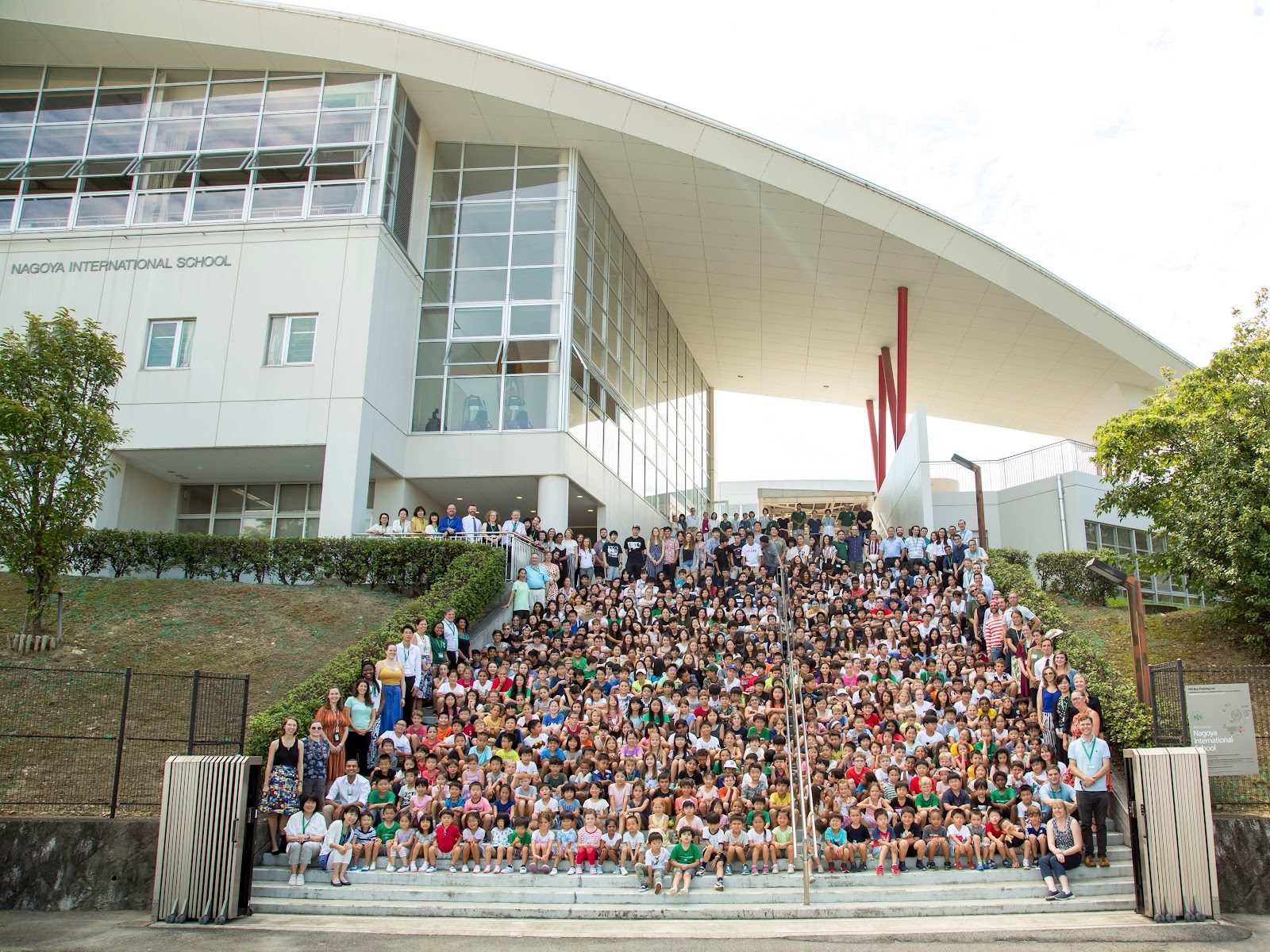
Nagoya International School
Nagoya · Japan
Since 1964, a full IB continuum school anchoring Nagoya's expatriate community at the heart of Japan's auto and aerospace corridor
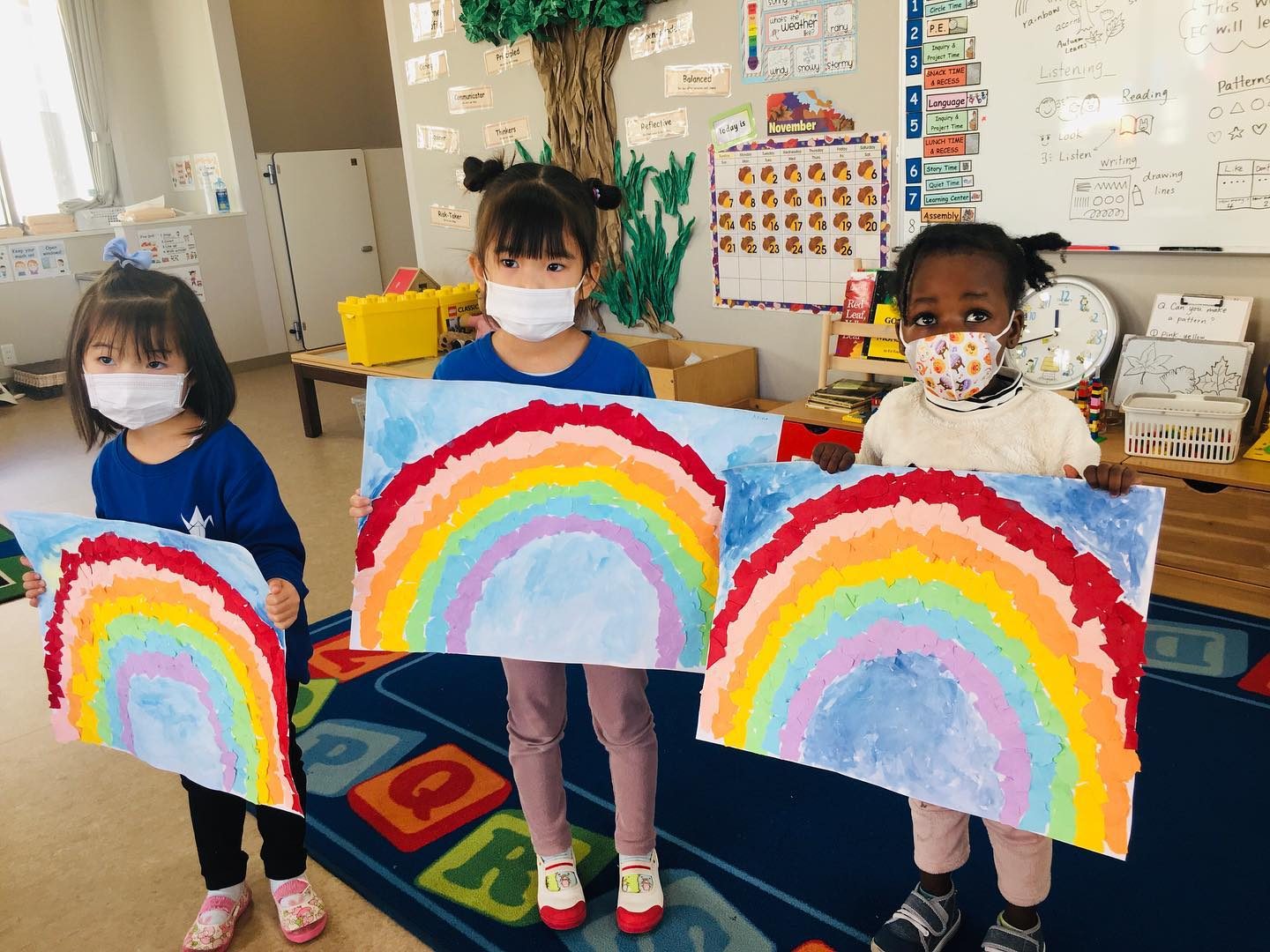
Hiroshima International School
Hiroshima · Japan
One of Japan's oldest IB schools, where students carry origami cranes to Hiroshima's Sadako Peace Monument each year.
Same country and curriculum — closest matches within ±10 points either way