
La Molina
Colegio Peruano Norteamericano Abraham Lincoln
low confidence· 4/6 cats · 1.2 avg sourcesPeru's first parent-owned cooperative school, pairing an American curriculum with IB Diploma studies in La Molina.
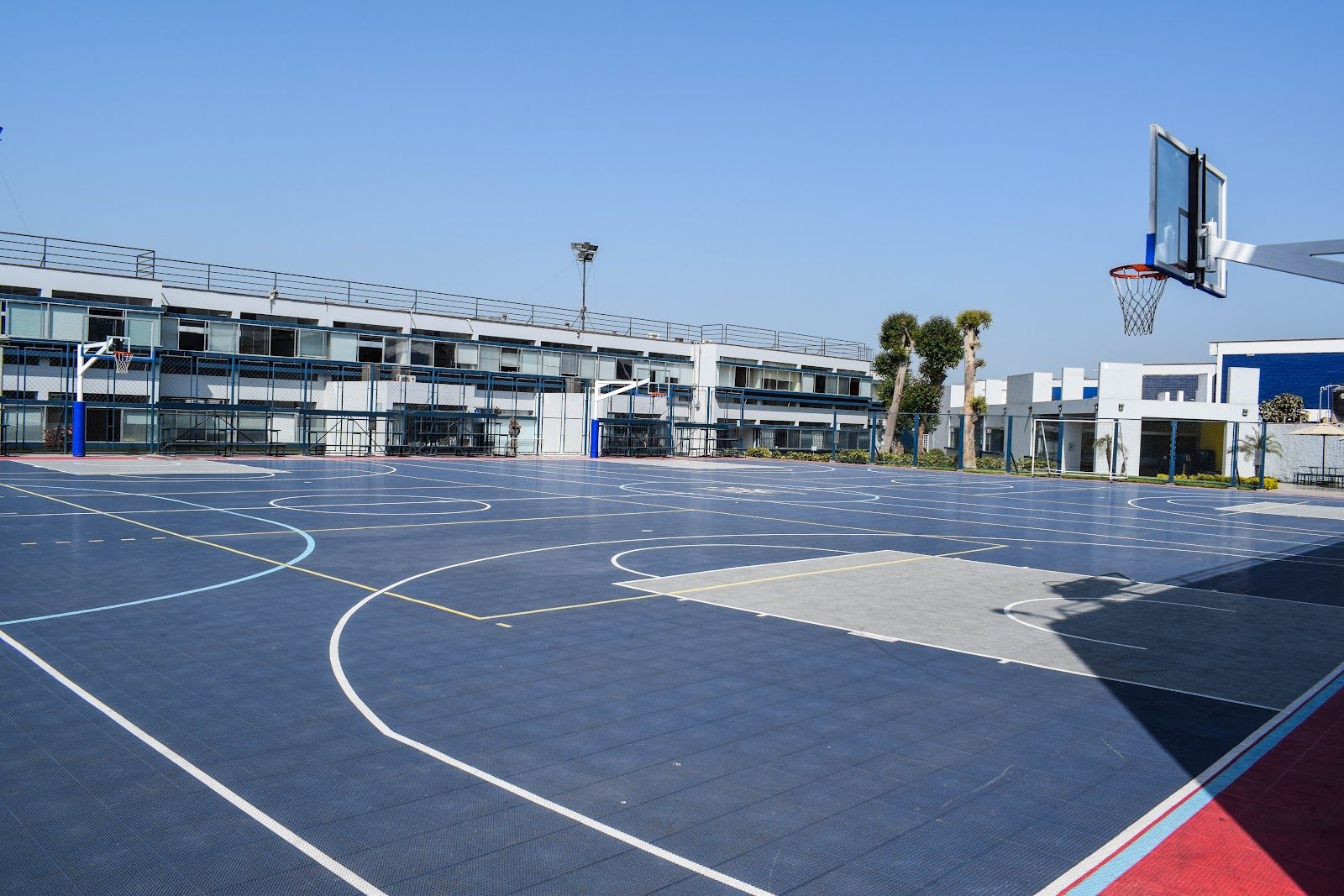
Photo © Colegio Peruano Norteamericano Abraham Lincoln via Google Maps
Type
Day
Ages
3–18
Curriculum
American
Qualifications
AP · US High School Diploma
Ratio
—
The Verdict
Editor's commitment
Right for
Lima families wanting a non-religious 3–18 day school in La Molina, with American curriculum teaching in English and Spanish.
Wrong for
Parents chasing boarding, a religious ethos, or a cheaper option: the average annual day fee is PEN 20,300.
Watch out for
Founded in 1961 and WASC-accredited, this parent-owned cooperative still needs scrutiny on how its American curriculum and IB Diploma mesh.
Ranking breakdown
Colegio Peruano Norteamericano Abraham Lincoln · #1393 of 1591
Composite score 52.5. 8 weighted criteria.
By criterion
Academic Outcomes
Weight 20%
#1352
of 1529 scored
University Placement
Weight 16%
#1332
of 1529 scored
Prestige & Heritage
Weight 12%
#1373
of 1571 scored
Alumni Network
Weight 12%
#1013
of 1530 scored
Facilities
Weight 12%
#1422
of 1533 scored
Transparency & Communications
Weight 8%
#1383
of 1532 scored
Peer & Industry Review
Weight 10%
#1216
of 1548 scored
Admissions Selectivity & Demand
Weight 8%
#1232
of 1529 scored
Peer & Industry Review
How Colegio Peruano Norteamericano Abraham Lincoln is regarded in the sector
63
Respected · medium confidence
I could not identify at least two independent, third-party sources (e.g., Tatler, Good Schools Guide, specialist education press, alumni-network coverage) that specifically assess Colegio Peruano Norteamericano Abraham Lincoln's reputation. Available information appears limited to the school's own materials or unverified directory listings, which do not meet the evidentiary threshold required.
Editors' overview
The fact that Abraham Lincoln is Peru’s first parent-owned cooperative school matters. It gives the school a governance model that is unusual in this market and changes the relationship between families and the institution: this is not a corporate chain campus, nor a church school, nor a founder-led private project. In Lima, that alone puts it in a distinct bracket. The school runs as a non-religious day school in La Molina for ages 3 to 18, with teaching in English and Spanish, and it combines an American curriculum with IB Diploma studies at the top end. That blend will appeal to families who want an education anchored in US-style schooling without giving up the international currency of the IB in the sixth form years. WASC accreditation adds a useful layer of external scrutiny.
The market position is clear. This is a bilingual, academically serious school for families who want continuity from early years to graduation and who value international options without boarding. The average annual day fee of 20,300 PEN places it in an accessible tier by international-school standards, which makes the school’s structure and academic offer more striking. Parents are not buying prestige theatre here; they are buying a long-established school, founded in 1961, with a defined identity and a governance model that gives families more stake than they get at most private schools. That makes Abraham Lincoln worth watching for internationally minded Peruvian families and mixed-nationality households who want English and Spanish used with purpose, not as a branding exercise.
The right student for Abraham Lincoln is the child who will thrive in a bilingual environment and can move comfortably between local and international frames of reference. This suits students aiming for the IB Diploma, students who need English to be more than an add-on, and students whose families want a clearer sense of ownership over school culture than standard private-school models allow. It will also suit parents who want a school with institutional substance rather than imported gloss. Families hunting for a hyper-elite badge school or a heavily branded global network will look elsewhere. Families who want a rooted Lima school with an American base, an IB endpoint and a distinctive cooperative structure should put it on the shortlist.
Academic Performance
Academic performance is hard to judge cleanly because the school does not publish a usable run of aggregate external exam results. We have not seen school-level IB Diploma averages, pass rates, subject distributions, SAT ranges or university matriculation tables in the public domain. That matters. In a market where academically confident schools publish headline outcomes, this level of opacity leaves parents without the core data needed to place Abraham Lincoln precisely against Lima’s strongest international peers. The school’s academic case therefore rests less on advertised scoreboards and more on structure: a full through-school model, a long-established operation, and an end-point qualification with international scrutiny. That is credible, but it is not the same as a hard-results story.
Relative to peers, that puts Abraham Lincoln in an awkward middle ground. It is not a school with the public exam transparency of the region’s most results-conscious operators, yet nor does it read as a loose, low-expectation campus. The average annual fee of 20,300 PEN also frames expectations: parents are not paying for a high-gloss, data-heavy premium proposition. For families who want published proof of top-tier academic outcomes, this is a weak spot. For families who care more about educational continuity, bilingual fluency and a less performative culture, the absence of public score-chasing will not be a deal-breaker. Still, on external results, Abraham Lincoln remains under-documented rather than demonstrably outstanding.
Facilities
Public detail on facilities is thin, and that limits any hard-edged assessment. The school does not publish the kind of granular campus inventory that stronger communicators now treat as standard: no clear breakdown of laboratories, specialist arts spaces, sports provision, performance venues or design-and-technology resources. For parents, that matters because facilities shape daily school life as much as academic programmes do. What can be said is narrower. As a through-school serving ages 3–18, Abraham Lincoln needs the full spread of core spaces: early years classrooms, age-appropriate play areas, secondary teaching rooms, science provision, libraries, and courts or fields for physical education. That is the baseline, not a differentiator. Against Lima’s sharper international competitors, the facilities story is under-explained and less polished than it needs to be.
That does not mean the campus is weak; it means the school leaves parents to infer too much. In this bracket, the best peer schools show their specialist rooms, explain how spaces support older students, and give a clear sense of whether sport and the arts are central or peripheral. Abraham Lincoln does not do that work publicly. The result is a facilities profile that reads as functional rather than showcase-led. Families who care most about teaching quality, community governance and continuity will tolerate that. Families comparing music suites, theatre standard, STEM infrastructure or high-performance sports provision school by school will find the picture frustratingly opaque and behind the market standard for international-school communication.
Families who want a rooted Lima school with an American base, an IB endpoint and a distinctive cooperative structure should put it on the shortlist
Prestige
Abraham Lincoln carries real local standing, but not the sort of prestige that travels on name alone across continents. Its reputation rests on durability, community ownership and seriousness of purpose, not on elite branding, inherited social cachet or a global-schools marketing machine. That distinction matters. In Lima, a parent-owned cooperative with a full through-school structure has a different kind of status from a polished premium import: it signals institutional trust, stable demand and families willing to invest time as well as fees. The school’s price point — an average of 20,300 PEN a year — also keeps the prestige in perspective. This is not a luxury-status purchase. It is a long-term educational choice with a strong local identity.
Why rate it this way? Because the school has markers of substance, but not the public proof that lifts a school into the top prestige bracket. WASC accreditation helps. So does the combination of an American programme with the IB at the top end. The cooperative model gives it a distinctive civic character that many international schools cannot match. But prestige at the highest level also depends on visible outcomes, selective scarcity or a powerful alumni narrative, and Abraham Lincoln does not publish enough to claim that ground cleanly. The result is earned respect rather than glamour: a school that commands confidence among informed local families, while stopping short of the rarefied, headline-making tier.
For families who want published proof of top-tier academic outcomes, this is a weak spot
Communications
Communication with parents reads as serviceable rather than exemplary. The website covers the basics — admissions, governance, school life and contact routes — but it does not offer the depth, clarity or rhythm that strong parent communication now requires. There is no rich public archive of newsletters, principal’s updates, calendar guidance, policy explainers or detailed operational notices that would show how the school speaks to families week by week. For a cooperative school, that gap matters more than it does elsewhere. A parent-owned structure raises the bar: families need clear channels, plain decisions and regular disclosure, not just a static front door. At an average annual fee of 20,300 PEN, parents are not paying for luxury polish, but they still need disciplined, transparent communication.
The tone that does come through is institutional rather than glossy. That has virtues. The school does not bury itself under branding language or lifestyle imagery, and that restraint will appeal to parents who distrust salesmanship. But restraint is not the same as strong communication. The weak spot lies in public-facing opacity: too little visible evidence of how leadership updates parents, how quickly practical information moves, and how the school handles the constant details that shape family confidence. In short, the communications model looks functional, not best-in-class. Existing families may get more through internal channels; the public picture does not prove it. For prospective parents comparing schools side by side, that leaves Abraham Lincoln behind stronger operators on clarity and reassurance.
Uniqueness
What marks Abraham Lincoln out is not a shinier version of the standard private-school formula, but a different ownership logic. A parent-owned cooperative changes incentives. Families are not just customers buying a service and complaining at the gate when it falls short; they have a formal stake in the institution’s direction. In practice, that can bring a stronger culture of accountability, a more grounded community life and less of the corporate theatre that clutters many international schools. For students, that matters because school culture is not an abstract governance question. It affects how decisions are made, how stable the community feels and whether the adults around them treat the school as a shared long-term project or a transactional purchase.
The other point of difference lies in the combination of an American academic base with the IB at the end of the school journey, delivered at an average annual fee of 20,300 PEN. That is a genuinely unusual mix in this segment of the Lima market: international in orientation, but not built as a prestige machine. Students get continuity across the age range, a bilingual daily environment and an exit route with international recognition, while staying in a school with a rooted local identity. That mix will suit children who benefit from consistency and families who want substance over status display. It will not satisfy parents hunting for a badge-value school or a campus designed to impress on first tour.
Because the school has markers of substance, but not the public proof that lifts a school into the top prestige bracket
Student Profile
The best fit here is the student who does not need a school to perform exclusivity. Abraham Lincoln suits children from families who value steadiness, shared norms and a school community with real parental involvement, not just consumer feedback dressed up as partnership. That points to self-possessed students who can work within a clear communal culture and families prepared to engage with it. Children who need endless novelty, high-status theatrics or a campus built around visible competition will find the atmosphere too grounded and too unflashy. By contrast, students who benefit from continuity across the full age range and who are comfortable moving between home, school and international pathways without identity strain are well placed here.
It also fits the student whose family wants substance at a cost that does not require elite-school signalling. The average annual fee of 20,300 PEN puts the school within reach of households looking for a serious education without entering Lima’s most expensive tier, and that shapes the intake. Expect a mix that is more committed than performative: children of parents who are choosing for durability, bilingual confidence and long-term fit, not for spectacle. This is a good match for students who are socially adaptable, open to community expectations and able to thrive without constant institutional hand-holding. It is a weaker fit for families who want public proof of standout results or a school name that does the talking for them.
So does the combination of an American programme with the IB at the top end
Co-curricular strengths
Arts & sport, on a separate axis
Overall 7.9/10
Scored 0-10 from the school's own published evidence. This axis is editorial-only — it does not feed the main WTS ranking.
Sports
9/10
Drama
5.5/10
Dance
8/10
Music
8.5/10
Visual Arts
8.5/10
Editor first-pass · editor-reviewable · 7/30/2026
Strengths
- +One of Lima's longest-established American-curriculum schools, tracing its roots to the late 1930s, giving it deep institutional history.
- +Offers the International Baccalaureate Diploma Programme alongside the US-style curriculum, broadening university pathways for graduates.
- +Large campus in La Molina district provides space for sports fields and extracurricular facilities not always available at smaller Lima day schools.
- +Bilingual English-Spanish instruction supports both expatriate families and Peruvian families seeking an American-style education.
- +Accredited by Cognia (formerly AdvancED), giving external validation of school governance and standards.
Considerations
- −As a large, long-established day school, it does not offer boarding, limiting options for families outside Lima or seeking full-time residential care.
- −Editorial ranking places it outside the top tier of internationally benchmarked schools, reflecting more limited global recognition than flagship American schools in the region.
- −Public information on recent academic results, university placement data, and fee structures is limited, making it harder for relocating families to benchmark against peer schools.
- −Being a well-known local institution, class sizes and admissions capacity may be driven more by local demand than by a globally competitive selection process.
Availability
Primary entry gate & tests
Academic Record
Gallery
Photo © Luis Hermoza Vergara via Google Maps
Photo © Miranda Hernández via Google Maps
Photo © Miranda Hernández via Google Maps
Photo © Ricardo Ortiz Vásquez via Google Maps
Parent reviews
Have you sent your child here?
Voice reviews carry the strongest trust badge — we transcribe them for you to tidy up before they go live. Prefer to type? A written review is fine too.
Add your voice
In 60 seconds, tell other parents: what's the best thing about Colegio Peruano Norteamericano Abraham Lincoln, and what surprised you when your child joined?
We ask for a Google sign-in so every review has a real face behind it — no anonymous drive-by attacks on schools, and no faked positive reviews. Your email is never shown publicly.
Send this profile to a friend
International parents rely on word-of-mouth. Share this review with someone weighing the same decision.
Schools with places
Similar schools to Colegio Peruano Norteamericano Abraham Lincoln with places available now.
Availability first, then country, area, curriculum, price, co-curricular
Consider also
Also worth looking at alongside Colegio Peruano Norteamericano Abraham Lincoln.

Colegio Franco Peruano
Lima · Peru
A 1950-founded AEFE outpost in Surco, where 25 nationalities converge for the French Baccalaureat and onward to universities in France.
Colegio León Pinelo
Lima · Peru
In San Isidro, Peru's only Jewish day school threads Hebrew language and tradition through a trilingual, full IB continuum.
Colegio Peruano Británico
Lima · Peru
Trilingual since 1963, this Monterrico campus blends a Juilliard-shaped arts curriculum with IB rigor as Nord Anglia's first Peruvian school.
Colegio Sagrados Corazones Recoleta
Lima · Peru
Founded in 1893 by French Sacred Hearts missionaries, the school's early faculty went on to help found Peru's Catholic University.
Same country and curriculum — closest matches within ±10 points either way