
Florida
Douglas Anderson School of the Arts
A Duval County magnet where auditioned students pair AP courses with training across seven arts disciplines.
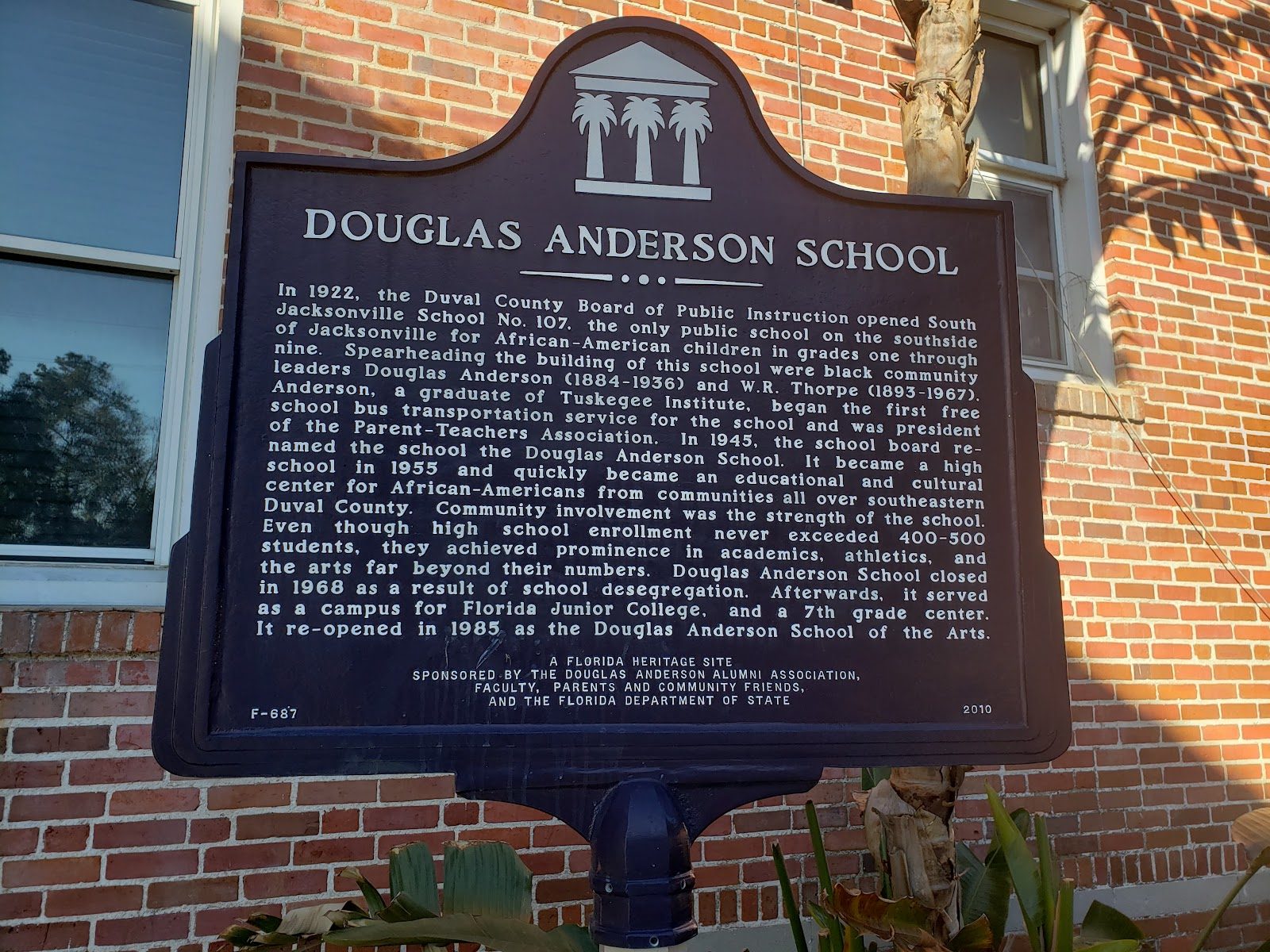
Photo © Gamer Historian via Google Maps
Type
Day
Ages
14–18
Curriculum
US High School Diploma · Advanced Placement
Ratio
—
The Verdict
Editor's commitment
Right for
Auditioned 14–18-year-olds who want AP alongside a US High School Diploma, within a Duval County magnet built around seven arts disciplines.
Wrong for
Families seeking boarding, broad suburban athletics, or a conventional comprehensive; this is a secular Jacksonville day school with an arts-first brief.
Watch out for
Cognia accreditation is clear; outcome data are not. The school opened in 1922 and became an arts magnet in 1985, but public results remain opaque.
Ranking breakdown
Douglas Anderson School of the Arts · #867 of 1591
Composite score 41.9. 8 weighted criteria.
By criterion
Academic Outcomes
Weight 20%
#792
of 1529 scored
University Placement
Weight 16%
#793
of 1529 scored
Prestige & Heritage
Weight 12%
#1538
of 1571 scored
Alumni Network
Weight 12%
#1516
of 1530 scored
Facilities
Weight 12%
#1524
of 1533 scored
Transparency & Communications
Weight 8%
#550
of 1532 scored
Peer & Industry Review
Weight 10%
#163
of 1548 scored
Admissions Selectivity & Demand
Weight 8%
#686
of 1529 scored
Peer & Industry Review
How Douglas Anderson School of the Arts is regarded in the sector
66
Respected · medium confidence
Within the scholastic film pipeline, DA's Cinematic Arts strand is regarded as one of the more serious public-school film programs in the Southeast, aided by Jacksonville's expanding film-production incentive ecosystem, though it carries less direct industry networking than premier private film-prep schools.
Award

Elite Film 50
World's Top School · The Global Ranking
Douglas Anderson School of the Arts is featured on our Global Top 50 ranking at #13. This seal is available for the school's marketing team to use on their website, prospectus and social channels.
- Lecrae — Musician/Rapper, Hip-hop
Editors' overview
Douglas Anderson School of the Arts occupies a distinct place in Jacksonville’s public-school landscape: a county magnet for students aged 14–18 who want serious arts training without giving up a full US high school diploma and Advanced Placement pathway. This is not a general high school with a strong drama club. It is an auditioned arts school built around specialist study across seven disciplines, with the academic programme running alongside it. That combination gives it real weight for families who want conservatoire-style commitment inside a mainstream secondary framework. Its history also matters. The campus opened in 1922 as a primary school for African American students during segregation, and its later reinvention in 1985 as an arts magnet gives the school a civic seriousness that many newer specialist schools lack. A strong sense of purpose and a history that carries weight are part of the proposition here.
What puts Douglas Anderson on a shortlist is the structure of the offer. Students do not have to choose between academic stretch and daily artistic immersion; the school is built to deliver both. For the right teenager, that matters more than glossy facilities or inflated branding. The attraction is clear: public magnet access, AP courses, English-medium instruction, and sustained training in the arts inside one timetable. That makes the school compelling for families who value disciplined artistic development and serious academic headroom in the same place. The trade-off is just as clear. This model suits students who want intensity, rehearsal, critique and performance deadlines. It does not suit a child who likes the idea of “an artsy environment” but not the work that goes with it.
The strongest fit is a student with proven talent, stamina and a clear appetite for specialisation. Douglas Anderson will appeal to teenagers who want peers who care deeply about their craft, and who are happy to be judged on it. They need resilience as much as flair. The school’s magnet identity means admission carries a selection logic; students arrive for a reason, and that shapes the culture. Parents who want broad, easy-going comprehensiveness should look elsewhere. Parents who want *high standards without private-school fees, creative seriousness*, and a public-school setting with a defined mission should look hard at Douglas Anderson. Its market position is straightforward: an academically credible, arts-led county magnet for students ready to make their art central to their school life.
A Global Elite 50 Film school
Douglas Anderson School of the Arts in Jacksonville, Florida sits at rank thirteen on the Elite Sport 50 Film because it runs one of the longest-standing dedicated Cinematic Arts departments inside any American public high school, with student work regularly selected into the National Film Festival for Talented Youth, the Austin Film Festival, YoungArts, the All-American High School Film Festival in New York, and Chicago's Cineyouth Festival. That is a genuine, externally verified festival footprint, not a marketing claim, and it is what separates this magnet school from a standard arts-elective program.
The department traces to 1997 as a Film/TV offshoot of the theatre program, became its own independent department in 2001, and gained a purpose-built studio with a dedicated editing bay in 2003. Students now work across screenwriting, cinematography, film studies, directing, animation and post-production, with real-world set experience alongside working industry professionals and the option to earn an Industry Certification in Editing and Post-Production. The focus, stated plainly by the department itself, is to prepare students for either post-secondary film study or direct industry entry rather than to dabble in media as a hobby class.
Notable alumni in film specifically are still emerging as a named, verifiable cohort; the school's most documented alumni successes to date sit in music and acting rather than a long roster of working directors or cinematographers. What is verifiable is the sustained pattern of festival selections described above, plus the school's broader distinction as a National Blue Ribbon School and a ten-time national GRAMMY Signature School, evidence of an institution that consistently produces work good enough to travel beyond the campus.
International openness is limited by structure rather than intent: this is a Duval County public magnet school with no boarding, auditions held each January, and admission built around residency in North Florida and South Georgia. As a public school, F-1 international students face a federally capped 12-month enrollment window and reimbursement requirements, making a one-year immersion via exchange far more realistic than a full diploma track for overseas families. Parents targeting Douglas Anderson from abroad should treat it as a short, audition-based cinematic-arts immersion year rather than a multi-year film pathway, and should confirm exchange-visa eligibility with the district at least a year ahead.
Academic Performance
Douglas Anderson’s academic case rests less on published headline data than on programme design. The school offers Advanced Placement alongside an arts-specialist timetable, which signals a student body expected to manage dual-track intensity rather than a diluted academic load. That matters in context: many arts schools trade on performance prestige while leaving parents to guess at exam depth. Here, the AP route gives a recognisable measure of academic ambition. What is missing is the aggregate evidence. The school does not publish headline AP outcomes, SAT or ACT profiles, or other whole-school attainment figures in the public domain. That leaves families without the comparative metrics that stronger US public magnets put front and centre.
Against peers, that places Douglas Anderson in a mixed position. It has more academic credibility than an arts programme bolted onto a standard comprehensive, because the structure commits students to serious study beyond their discipline. It has less transparency than the best-known exam-driven magnets, which release clear score distributions and college-going data. The result is a school with real academic intent but opaque performance reporting. For parents, the practical conclusion is simple: do not infer exam strength from selectivity in the arts. Ask for AP subject take-up, the share of students sitting 3+ APs, score distributions at 3, 4 and 5, and university destinations. Without that, comparisons with top academic magnets remain incomplete.
Facilities
Facilities matter more here than at a standard public high school, because the school’s core promise depends on rooms that can sustain long rehearsal blocks, critique, display and performance. The important point is functional fit, not luxury. Families should expect specialist spaces for performance, visual arts and language arts to sit at the centre of daily life, with ordinary academic classrooms working around that spine. That places Douglas Anderson ahead of comprehensive schools with a repurposed black-box theatre and a few art rooms, but it also sets a harder benchmark: parents need to inspect whether studios, rehearsal rooms and performance venues are plentiful enough for 7 disciplines to work without timetable logjams. In arts schools, space pressure is not a side issue; it shapes the quality of training.
Against peer arts magnets, the campus carries an advantage in institutional seriousness and a clear arts-first identity, but the public-school setting usually brings less spectacle than wealthy private conservatory-style campuses with major capital spending. That is not a flaw if the spaces are well used, technically competent and accessible to students throughout the week. It becomes a flaw if specialist provision is thin, aging or oversubscribed. We have not seen a public inventory of theatres, studios, galleries, recording spaces or technical production facilities, and that gap matters. Parents should ask blunt questions: how many dedicated rooms does each discipline control, how much after-hours access exists, and which spaces are fit for professional habits rather than good enough for school use?
Without that, comparisons with top academic magnets remain incomplete
Prestige
Douglas Anderson carries real prestige inside its niche, but this is specialist prestige, not broad national-status prestige. In Jacksonville and within arts-focused public education, the school has weight because entry turns on audition and the whole enterprise centres on sustained training across seven arts disciplines. That confers a level of peer respect that a standard comprehensive with a good arts department does not command. The school also benefits from a campus history with civic force: it occupies a place in the city’s educational story, and that gives it institutional gravity beyond the usual magnet-school pitch. For families who value serious artistic formation in a public setting, that matters.
The limits are clear. Douglas Anderson does not sit in the tier of American public magnets whose prestige rests on published academic outcomes, national admissions cachet, or dominant name recognition far beyond their home region. Its reputation is stronger in performance and arts circles than in the status-conscious academic market. That does not diminish the school’s value; it defines it. This is a high-regard local specialist with a clear identity, selective entry and a demanding internal culture, not an all-purpose badge school. I rate its prestige as strong where it counts for young artists and weaker where parents want portable brand power, headline exam data, or a school name that lands instantly outside north-east Florida.
What makes Douglas Anderson distinctive is not the simple fact that it teaches the arts, but the degree to which art organises the school
Communications
Communication at Douglas Anderson carries the strengths and limits of a public magnet. The school has a clear public identity and a defined audience: families who already accept audition, deadlines and a demanding student culture. That usually produces more purposeful parent communication than at a catch-all district school, because the school needs to explain pathways, events, performances and practical requirements with precision. The problem is transparency at whole-school level. We do not see strong public-facing disclosure of the metrics many parents now expect: headline attainment data, fuller destination information, or a detailed facilities picture. That does not make communication poor; it makes it selective. The school communicates the mission and day-to-day life of the arts programme more clearly than it communicates institutional performance. For some families, that imbalance will feel frustrating.
Effectiveness therefore depends on what a parent needs. If the priority is staying on top of rehearsals, showcases, auditions, calendars and school routines across 7 arts areas, Douglas Anderson has every incentive to communicate in a practical, deadline-driven way. If the priority is evaluating academic outcomes against rival magnets, the picture is less reassuring. Strong school communication answers both questions: what is happening this week, and what standards does the school deliver over time? Here, the first task looks central; the second remains underpowered in public view. Parents need to test responsiveness directly: how quickly staff reply, how clearly departments communicate performance expectations, and whether difficult questions get straight answers rather than generalities.
Uniqueness
What makes Douglas Anderson distinctive is not the simple fact that it teaches the arts, but the degree to which art organises the school. Students enter an environment built around 7 specialist disciplines, and that structure changes the texture of adolescence. The peer group is self-selecting, the standard of classroom discussion rises because pupils care about their work, and critique stops being an occasional exercise and becomes part of daily life. That produces a serious creative culture rather than a decorative one. The school’s roots also give it a civic dimension many specialist schools lack: this is a campus with a remembered past, not a newly branded arts project dropped into a generic building. That history lends moral weight to the place and connects artistic training to a wider public story.
For students, the gain is clear. They spend their secondary years among other young people who accept rehearsal, revision, failure and public scrutiny as normal. That sharpens discipline, raises tolerance for pressure and gives talent a more exacting test than a standard comprehensive can offer. It also makes identity formation cleaner: students do not have to defend taking art seriously, because the institution already does. The trade-off is intensity. This is not an easy fit for the half-committed or the casually expressive. For the right student, though, that concentration is the point. Douglas Anderson offers a rare public-school seriousness about the arts, and students benefit from that clear, demanding focus.
It is an auditioned arts school built around specialist study across seven disciplines, with the academic programme running alongside it
Student Profile
The students who thrive at Douglas Anderson are not dabblers. They want their art to structure the week, not decorate it. Expect teenagers who tolerate scrutiny, accept correction without drama and keep working when the first draft, first run-through or first performance falls flat. In a school organised around 7 specialist areas, peer culture matters as much as teaching: students are surrounded by others who practise, compare, revise and compete. That creates a hard-working, self-conscious environment in the best sense. It rewards focus, stamina and a real appetite for being measured against strong contemporaries. It will suit the pupil who finds ordinary high-school social life thin and wants friends whose identity rests on making things well.
The weaker fit is easy to identify. A student who wants broad school spirit, casual creativity or room to drift between interests will feel pinned down here. So will the child who likes applause but dislikes repetition, or who enjoys the idea of an arts school more than the discipline behind it. This intake needs thick skin, reliable self-management and a parent who respects deadlines, rehearsals and performance pressure rather than treating them as optional extras. For the right teenager, that intensity is formative and electrifying. For the wrong one, it is exhausting.
That combination gives it real weight for families who want conservatoire-style commitment inside a mainstream secondary framework
Co-curricular strengths
Arts & sport, on a separate axis
Overall 8.72/10
Scored 0-10 from the school's own published evidence. This axis is editorial-only — it does not feed the main WTS ranking.
Sports
4.5/10
Drama
9.7/10
Dance
9.8/10
Music
9.8/10
Visual Arts
9.8/10
Strengths
- +Operates as a public magnet high school within Duval County Public Schools, meaning no tuition fee for Florida resident students.
- +Offers a dedicated Film program within its Communications Arts strand, one of several distinct arts majors students audition into.
- +Combines Advanced Placement coursework with a full academic diploma track, letting students pair arts specialization with college-prep study.
- +Established in 1985, giving it several decades of operating history as one of Florida's established arts magnet schools.
Considerations
- −Being a public day school, it offers no boarding provision, so relocating families must arrange independent local housing or guardianship.
- −Entry is by audition or portfolio review in a chosen discipline, disadvantaging students without prior training in that art form.
- −As a public institution it relies on district and state funding rather than a private endowment, which can constrain facilities compared with independent arts academies.
- −Enrollment priority and any out-of-district or out-of-state admission routes are subject to Florida public-school residency rules, which can complicate access for international families.
Gallery
Photo © Александр Костюк via Google Maps
Photo © Александр Костюк via Google Maps
Photo © Александр Костюк via Google Maps
Photo © Александр Костюк via Google Maps
Photo © Lep Stewart via Google Maps
Photo © Александр Костюк via Google Maps
Photo © Александр Костюк via Google Maps
Parent reviews
Have you sent your child here?
Voice reviews carry the strongest trust badge — we transcribe them for you to tidy up before they go live. Prefer to type? A written review is fine too.
Add your voice
In 60 seconds, tell other parents: what's the best thing about Douglas Anderson School of the Arts, and what surprised you when your child joined?
We ask for a Google sign-in so every review has a real face behind it — no anonymous drive-by attacks on schools, and no faked positive reviews. Your email is never shown publicly.
Send this profile to a friend
International parents rely on word-of-mouth. Share this review with someone weighing the same decision.
Schools with places
Similar schools to Douglas Anderson School of the Arts with places available now.
Pine Crest School
Fort Lauderdale · United States
- 2026-27
- CLOSEDRegular cycle closed
- 2027-28
- OPENS SOONOpens Sept '26
Ransom Everglades School
Miami · United States
- 2026-27
- CLOSEDRegular cycle closed
- 2027-28
- OPENS SOONOpens Sept '26
Availability first, then country, area, curriculum, price, co-curricular
Consider also
Also worth looking at alongside Douglas Anderson School of the Arts.

The Cinema School
Bronx, New York · United States
A South Bronx public high school built with Ghetto Film School, where seniors write, shoot, and produce original movies on real sets.
Los Angeles County High School for the Arts
Los Angeles · United States
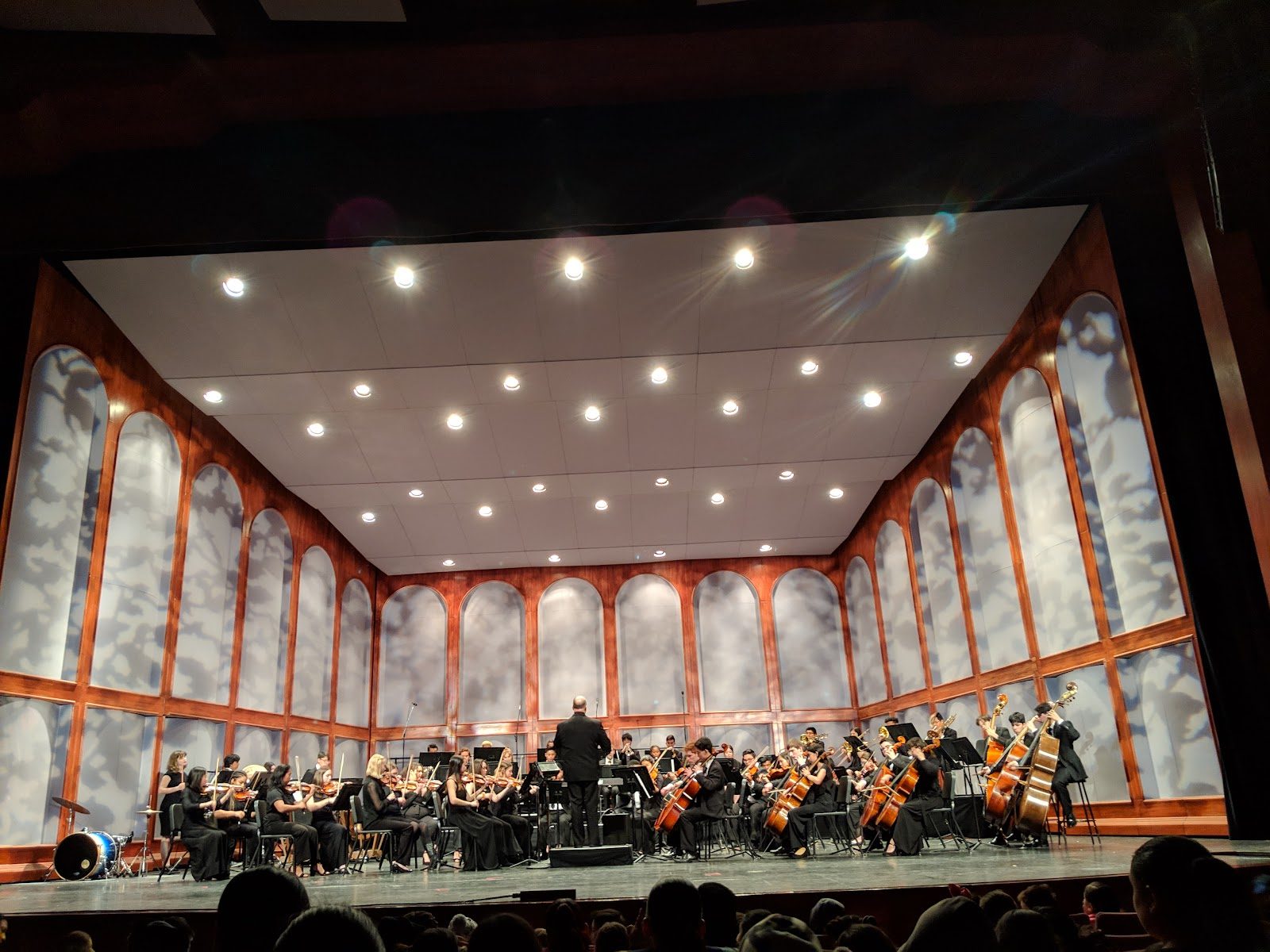
A tuition-free public conservatory embedded on a Cal State LA campus, where audition, not address, decides who studies art
Academy for Careers in Television & Film
Long Island City, New York · United States
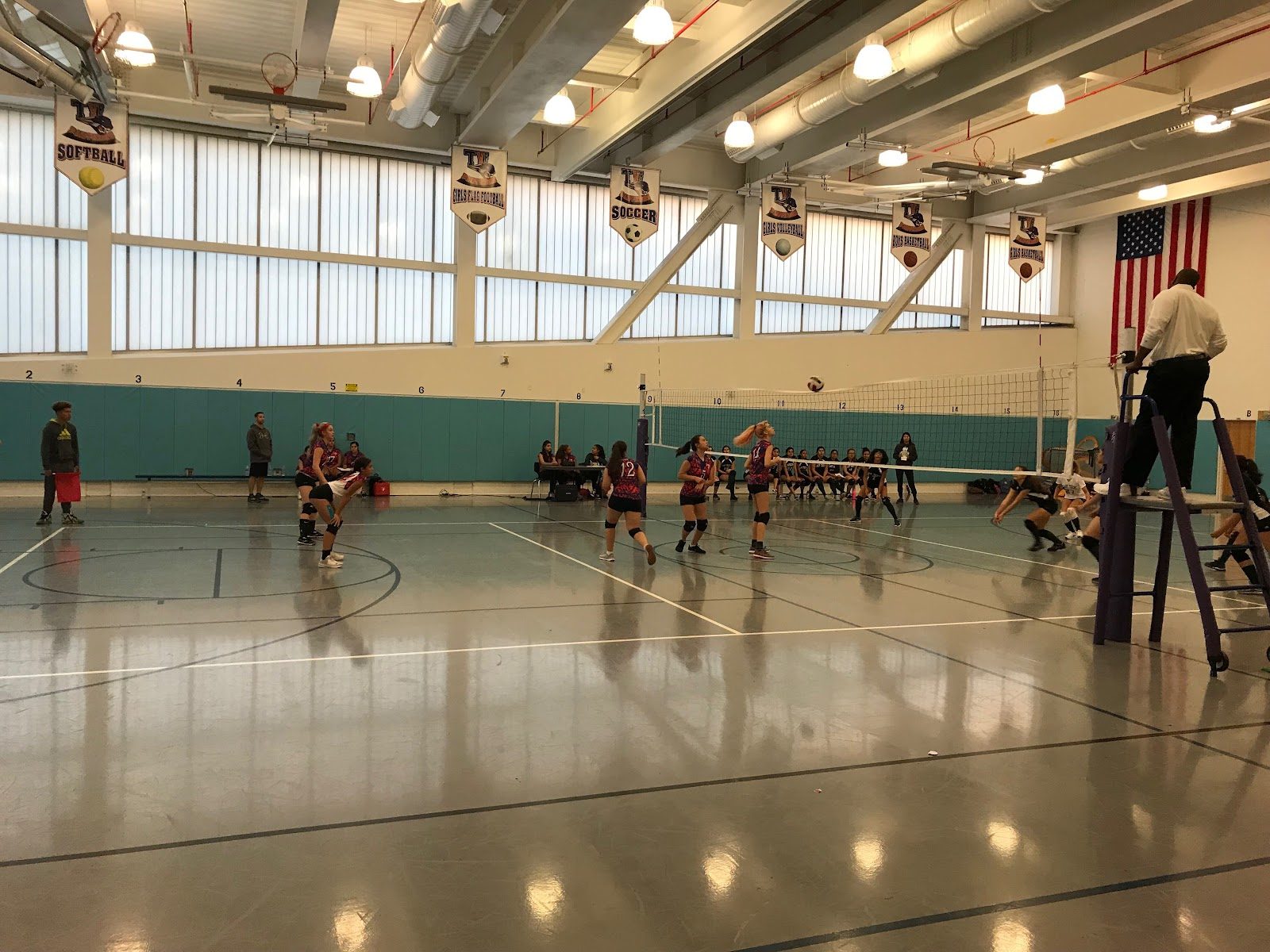
A waterfront Queens campus where students edit and shoot films against the Manhattan skyline, backed by a million-dollar production arsenal.
ELAM
London · United Kingdom
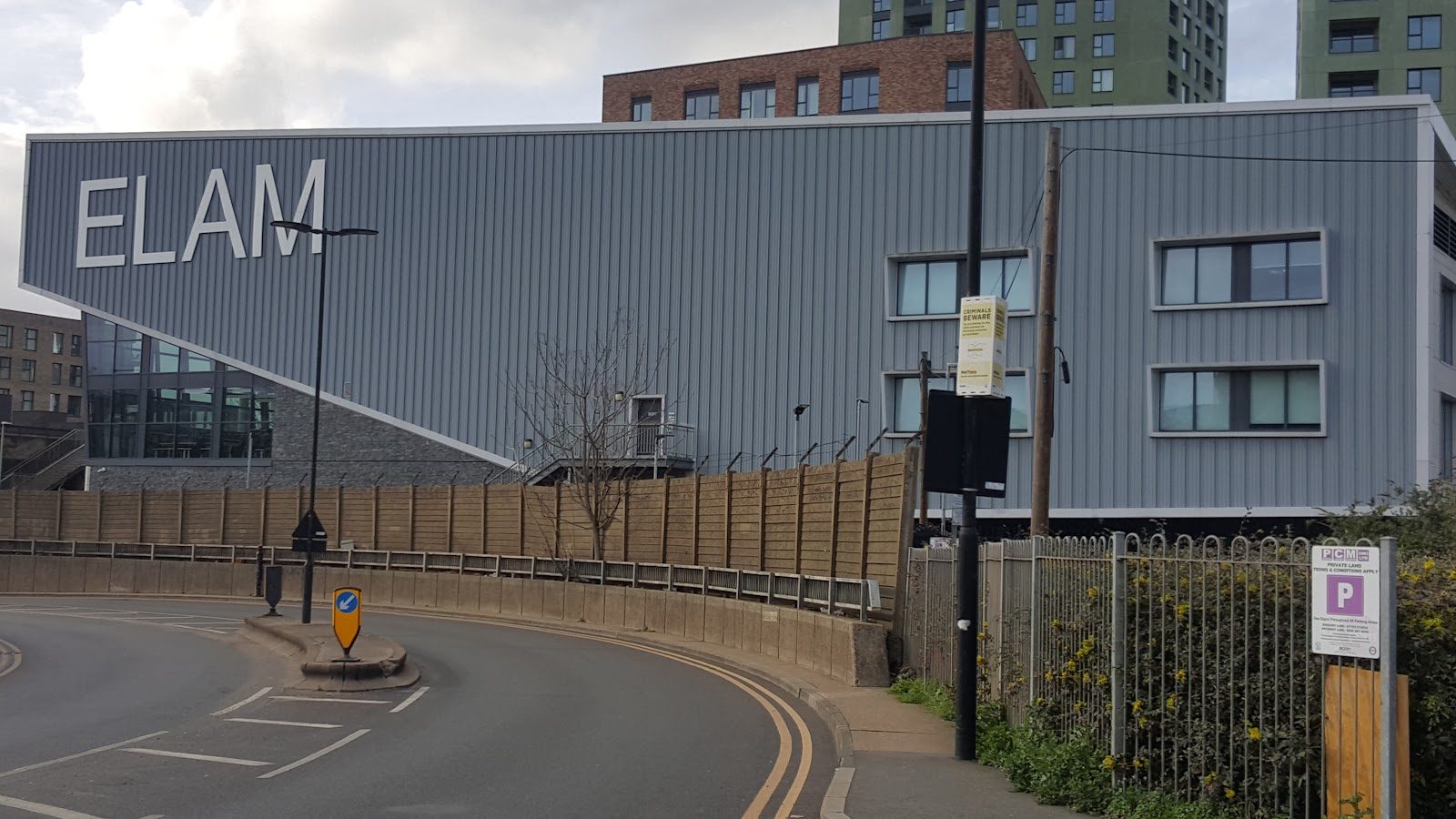
A free East London sixth form built around industry-standard studios, training music, games and film talent for direct industry entry.
Same specialism, country and curriculum — closest matches within ±10 points either way