
Capital District
Colegio Internacional de Caracas
medium confidence· 4/6 cats · 3.08 avg sourcesRooted in a school founded in 1896, this Baruta campus was the first in Venezuela to adopt the IB Middle Years Programme.

Photo © Ira via Google Maps
Type
Day
Ages
3–18
Curriculum
IB
Qualifications
IB Diploma · IB MYP
Ratio
—
The Verdict
Editor's commitment
Right for
Families in Caracas who want English-medium teaching from ages 3–18 with IB and SACS accreditation, in a school of just over 100 students.
Wrong for
Parents seeking scale, broad peer groups or deep programme breadth; just over 100 students from pre-nursery to high school is tiny.
Watch out for
The school publishes no aggregate IB outcomes, and the Wikipedia claim 'best school in Venezuela' is puff, not evidence.
Ranking breakdown
Colegio Internacional de Caracas · #1150 of 1591
Composite score 59.7. 8 weighted criteria.
By criterion
Academic Outcomes
Weight 20%
#1136
of 1529 scored
University Placement
Weight 16%
#1144
of 1529 scored
Prestige & Heritage
Weight 12%
#1115
of 1571 scored
Alumni Network
Weight 12%
#721
of 1530 scored
Facilities
Weight 12%
#1110
of 1533 scored
Transparency & Communications
Weight 8%
#1151
of 1532 scored
Peer & Industry Review
Weight 10%
#998
of 1548 scored
Admissions Selectivity & Demand
Weight 8%
#943
of 1529 scored
Score history
Colegio Internacional de Caracas · 2026
Movement across 2024–2026. Peer average overlaid.
Overall — 2024–2026
59.7/ 100
▲ +20.4 vs 2025
year on year
Peer & Industry Review
How Colegio Internacional de Caracas is regarded in the sector
65
Respected · medium confidence
I could not identify at least two independent, credible third-party sources (e.g., Tatler, Good Schools Guide, specialist education press, or established expat forums) that substantively assess Colegio Internacional de Caracas's reputation. Available information is largely limited to the school's own materials or unverified directory listings, which do not meet the evidentiary bar for this assessment.
Editors' overview
Colegio Internacional de Caracas occupies a narrow but distinctive niche in Venezuela: a very small, English-medium, non-religious day school with the IB and a lineage that runs back to 1896. Its current scale matters. With enrolment at just over 100 students, this is not a broad-market international school with endless subject combinations and a deep bench of teams and activities. It is a compact operation where students are known, classes stay small, and the tone is close-knit, intimate and hard to fake. The other point of substance is curricular: the school’s own history carries weight in a market where many schools still trade on labels rather than delivery. It was the first in Venezuela to adopt the IB Middle Years Programme, which gives it a credible claim to institutional experience with the continuum into the Diploma Programme.
Why shortlist it? Because there are very few schools in Caracas that combine English as the language of instruction, IB authorisation, and this level of scale. For the right family, that mix is compelling. A child who needs a tight academic community, direct access to teachers, and a school small enough to notice problems early will get more from CIC than from a larger campus built around volume and spectacle. Parents looking for cosmopolitan peers and an international frame in a volatile local environment will also see the appeal. The accreditations are serious — Southern Association of Colleges and Schools and the International Baccalaureate Organization — and they matter more than glossy claims.
The limitations are just as clear. A school of 3–18 with only a little over 100 students cannot offer the same breadth of options, facilities or social range as a larger competitor. Families wanting a vast sixth-form subject menu, a big sports culture, or the anonymity that suits some teenagers will find CIC too small. This is a school for students who thrive in high-visibility settings, who can handle being known by name, and who benefit from a community where absence, underperformance or withdrawal gets noticed fast. For internationally minded families who value continuity, personal attention and an English-language IB route in Caracas, CIC earns a place on the shortlist.
Academic Performance
Academic performance is hard to judge with confidence because the school does not publish aggregate IB Diploma results, subject-level scores, pass rates, or university destinations. That is a serious gap. For a school running external programmes with clear benchmarks, the absence of public outcomes leaves parents without the most basic tools for comparison. In a market where many international schools use exam data to prove academic quality, CIC asks families to rely on trust and fit rather than hard performance evidence. That makes it a high-trust choice, not a data-rich one.
Relative to peers, the school sits in an opaque category: established, accredited, and academically structured, but without the published results that would place it clearly among Venezuela’s stronger IB operators or the merely adequate. Its very small enrolment — just over 100 students across the whole school — also complicates interpretation. In tiny cohorts, one or two students can shift averages sharply, which makes single-year headlines less useful and multi-year reporting more important. CIC does not provide that reporting. The consequence is plain: parents can value the school’s close-grained academic setting, but they cannot verify exam strength in the way they can at more transparent competitors.
Facilities
Facilities are constrained by the school’s scale. Parents should expect a modest, functional campus rather than the multi-building, specialist-heavy infrastructure that larger international schools use to sell themselves. For early years through sixth form on one day-school site, that usually means shared spaces doing double duty, fewer dedicated labs and studios, and limited room for large spectator sports. That is not fatal; for some families it is the point. A compact physical environment keeps movement simple, supervision tight and access to teachers direct. It also sets a hard ceiling on breadth. If your benchmark is a major Latin American international school with separate performance venues, extensive athletics provision and a long list of specialist rooms, CIC sits below that tier.
Against closer peers — small private international schools serving a narrow expatriate and locally international market — the picture is more favourable. Schools at this scale rarely win on bricks and mortar; they win on usability, safety and how well the site supports daily learning. CIC’s facility story is therefore practical rather than showpiece. We have not seen a published inventory of science labs, library holdings, arts spaces or sports amenities, and that lack of detail matters. Parents comparing schools need to ask direct questions and insist on a tour. At CIC, facilities are part of a high-trust proposition, not a headline-grabbing one.
Colegio Internacional de Caracas occupies a narrow but distinctive niche in Venezuela: a very small, English-medium, non-religious day school with the IB and a lineage that runs back to 1896
Prestige
Prestige here is niche, not broad. CIC carries real standing with families who know the Caracas market and want a school with international academic legitimacy rather than social theatre. Its long institutional history helps, and the early adoption of the IB Middle Years Programme in Venezuela gives it a measure of educational credibility that newer operators cannot manufacture. The school also benefits from scarcity value: there are few local options in this category, and fewer still with a continuous age range and established external oversight. That said, prestige at CIC does not rest on public academic proof, elite selectivity, or a dominant local profile. It rests on continuity, seriousness, and the confidence of families willing to choose a small-scale, high-trust school over a more status-conscious brand.
That keeps the rating in the middle-to-upper tier rather than at the top. In elite-school terms, size cuts both ways. A total enrolment of just over 100 makes the school distinctive and close-knit, but it also limits visibility, alumni reach, programme breadth, and the kind of institutional heft that drives prestige in a capital city. The school’s accreditations matter, but accreditations alone do not create cachet. Nor does an IB label, which many schools use. CIC’s prestige is strongest among internationally minded parents who value substance over display. It is weaker for families chasing a grand-name school with public exam dominance, deep extracurricular range, or a powerful social network.
That keeps the rating in the middle-to-upper tier rather than at the top
Communications
Parent communication at CIC carries the strengths and weaknesses of a very small, high-visibility school. In schools of this scale, information does not need to travel through layers of management before it reaches families; messages can be direct, personal and fast. That suits routine pastoral issues, timetable changes and day-to-day academic concerns. Parents who want easy access to staff and quick answers will value that. The trade-off is formality. We have not seen a clear public map of communication channels, response standards, parent portal use, newsletter rhythm or leadership updates. That absence matters because good communication is not only about warmth; it is about systems, predictability and record-keeping.
Effectiveness therefore rests more on community proximity than on published process. For some families, that works well: a close-grained school can solve small problems before they become large ones, and staff know when a child is off track. For others, the model feels too dependent on trust. The school’s broader pattern of limited public disclosure reinforces that concern. When a school does not publish much hard information, parents need communication to do more of the heavy lifting, and they need it to be disciplined, not casual. CIC may deliver strong personal contact in practice, but the public-facing picture remains thin. Ask blunt questions: who answers what, how fast, through which platform, and how concerns are escalated across a community of just over 100 students.
Uniqueness
What marks CIC out is not spectacle, scale or social clout. It is the combination of a tiny whole-school community with an international academic structure that runs from the earliest years to university entry. That produces a student experience that is high-visibility in the strict sense: children do not vanish into year-group sprawl, weak habits get picked up early, and teachers know family patterns as well as classroom ones. In a school with just over 100 pupils across the full age range, age divisions feel less siloed than in larger institutions. Older students carry weight, younger ones are known, and community life depends more on daily contact than on institutional machinery. For the right child, that brings security, accountability and a sharper sense of belonging than many bigger schools manage.
Its other point of difference is cultural rather than architectural. In Caracas, an English-medium, non-religious school of this size occupies a narrow, unusual lane: it serves families who want an outward-facing education without the status theatre or operational bulk of a flagship campus. Students get a setting that is intimate, watchful and hard to game. That has costs as well as benefits. There is less room to reinvent yourself, fewer social niches to hide in, and limited anonymity in adolescence. Families who value breadth and distance from the adult gaze will find that constricting. Families who want steady oversight and a close-grained community will find it rare.
It is a compact operation where students are known, classes stay small, and the tone is close-knit, intimate and hard to fake
Student Profile
The student body fits a narrow brief. This is a school for children who do well in small-circle environments where adults know them closely and peer groups stay limited. New pupils who need a huge friendship pool, constant social novelty or the freedom to disappear into the background will find the setting tight. The better fit is a child who likes being known, can manage sustained contact across age groups, and does not need a campus full of tribes to find their place. Because total enrolment sits at just over 100, the social texture is intense, high-visibility and hard to escape. That suits steady, self-possessed students; it exposes evasive, status-driven or chronically disengaged ones very quickly.
The strongest fit, then, is an internationally minded family that values oversight, continuity and a serious daily rhythm over scale and spectacle. Children who respond well to direct teacher attention, who benefit from quick intervention when work slips, and who are comfortable in a close-watched community will do well here. So will families who want a non-religious setting and do not need a large local scene around the school. This is a weaker match for teenagers who want reinvention, anonymity or a wide sixth-form social world. CIC suits pupils who are comfortable being accountable and parents who want a school that keeps them close to the action, not at arm’s length.
The other point of substance is curricular: the school’s own history carries weight in a market where many schools still trade on labels rather than delivery
Co-curricular strengths
Arts & sport, on a separate axis
Overall 7.26/10
Scored 0-10 from the school's own published evidence. This axis is editorial-only — it does not feed the main WTS ranking.
Sports
7.5/10
Soccer, Basketball, Volleyball and Swimming as extracurriculars, showing a solid multi-sport offering.
Drama
7.5/10
Drama club is explicitly named in the extracurricular list.
Dance
6/10
Music
7.5/10
Choir and Jazz band, indicating structured music activities beyond a vague arts mention.
Visual Arts
7.8/10
Editor first-pass · editor-reviewable · 7/27/2026
Strengths
- +English-language teaching throughout ages 3–18
- +IB school with MYP and Diploma Programme
- +Day school format suits Caracas-based families
- +Founded 1896, unusually long-established for Venezuela
Considerations
- −Day-only; no boarding option for overseas families
- −Very small enrolment: just over 100 students
- −IB accreditation listed only for MYP and Diploma
Availability
Primary entry gate & tests
Academic Record
Gallery
Photo © Juan Carlos Freitas via Google Maps
Photo © Emmanuel. ca via Google Maps
Photo © Maria Intriago via Google Maps
Photo © Maria Intriago via Google Maps
Photo © Pauliss via Google Maps
Parent reviews
Have you sent your child here?
Voice reviews carry the strongest trust badge — we transcribe them for you to tidy up before they go live. Prefer to type? A written review is fine too.
Add your voice
In 60 seconds, tell other parents: what's the best thing about Colegio Internacional de Caracas, and what surprised you when your child joined?
We ask for a Google sign-in so every review has a real face behind it — no anonymous drive-by attacks on schools, and no faked positive reviews. Your email is never shown publicly.
Send this profile to a friend
International parents rely on word-of-mouth. Share this review with someone weighing the same decision.
Schools with places
Similar schools to Colegio Internacional de Caracas with places available now.
Marymount International School Rome
Rome · Italy
- 2026-27
- WAITPOOLSpace-dependent
- 2027-28
- PLACES OPENRolling
Santiago College
Santiago · Chile
- 2026-27
- WAITPOOLSpace-dependent
- 2027-28
- PLACES OPENRolling
Welham Girls' School
Dehradun · India
- 2026-27
- WAITPOOLSpace-dependent
- 2027-28
- PLACES OPENRolling
Christ's College
Christchurch · New Zealand
- 2026-27
- WAITPOOLVacancy-dependent
- 2027-28
- PLACES OPEN
Availability first, then country, area, curriculum, price, co-curricular
Consider also
Also worth looking at alongside Colegio Internacional de Caracas.
Marymount International School Rome
Rome · Italy
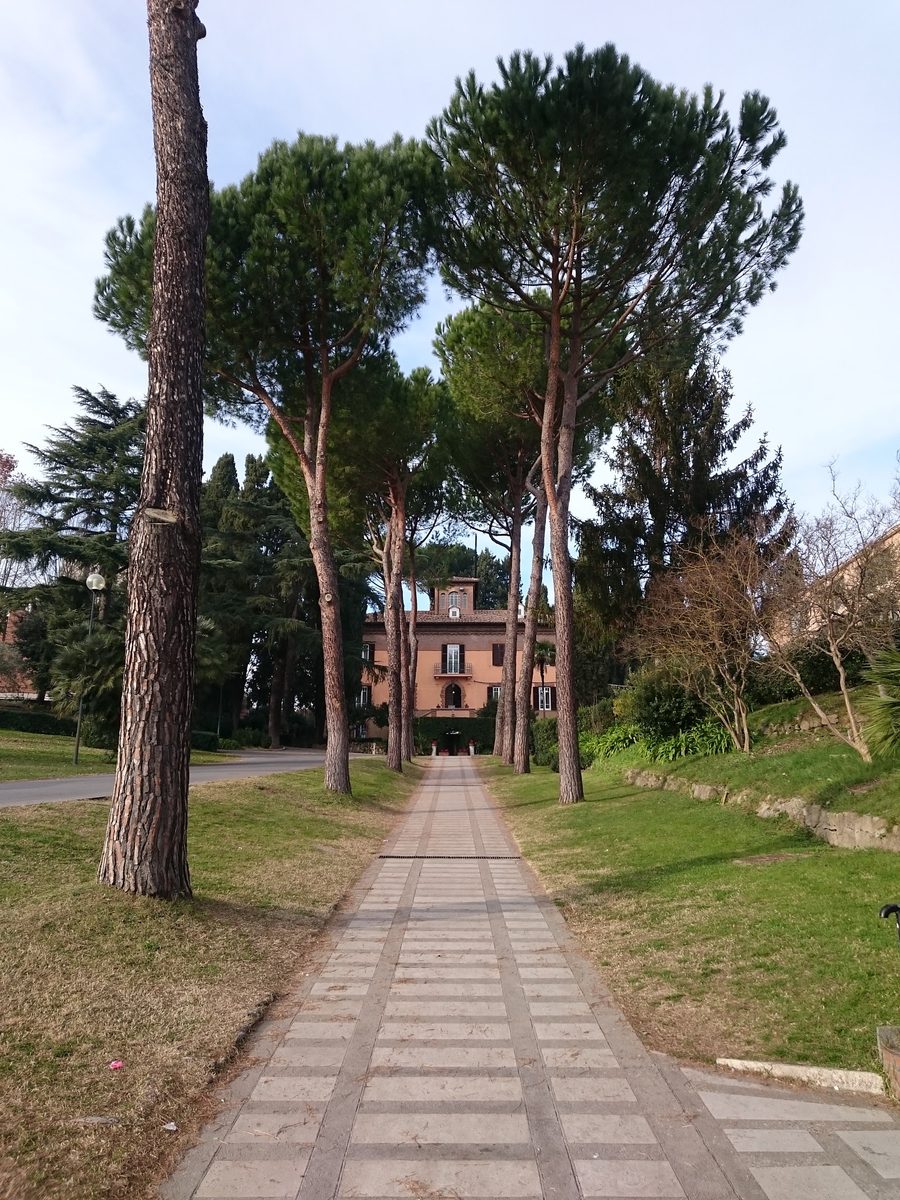
Italy's first international school pairs an American diploma with the IB on 40 acres of protected Roman parkland
Santiago College
Santiago · Chile
From an 1880 Methodist girls' boarding school to Chile's first IB pioneer, now coeducational in the Andean foothills.
Bali Island School
Denpasar · Indonesia
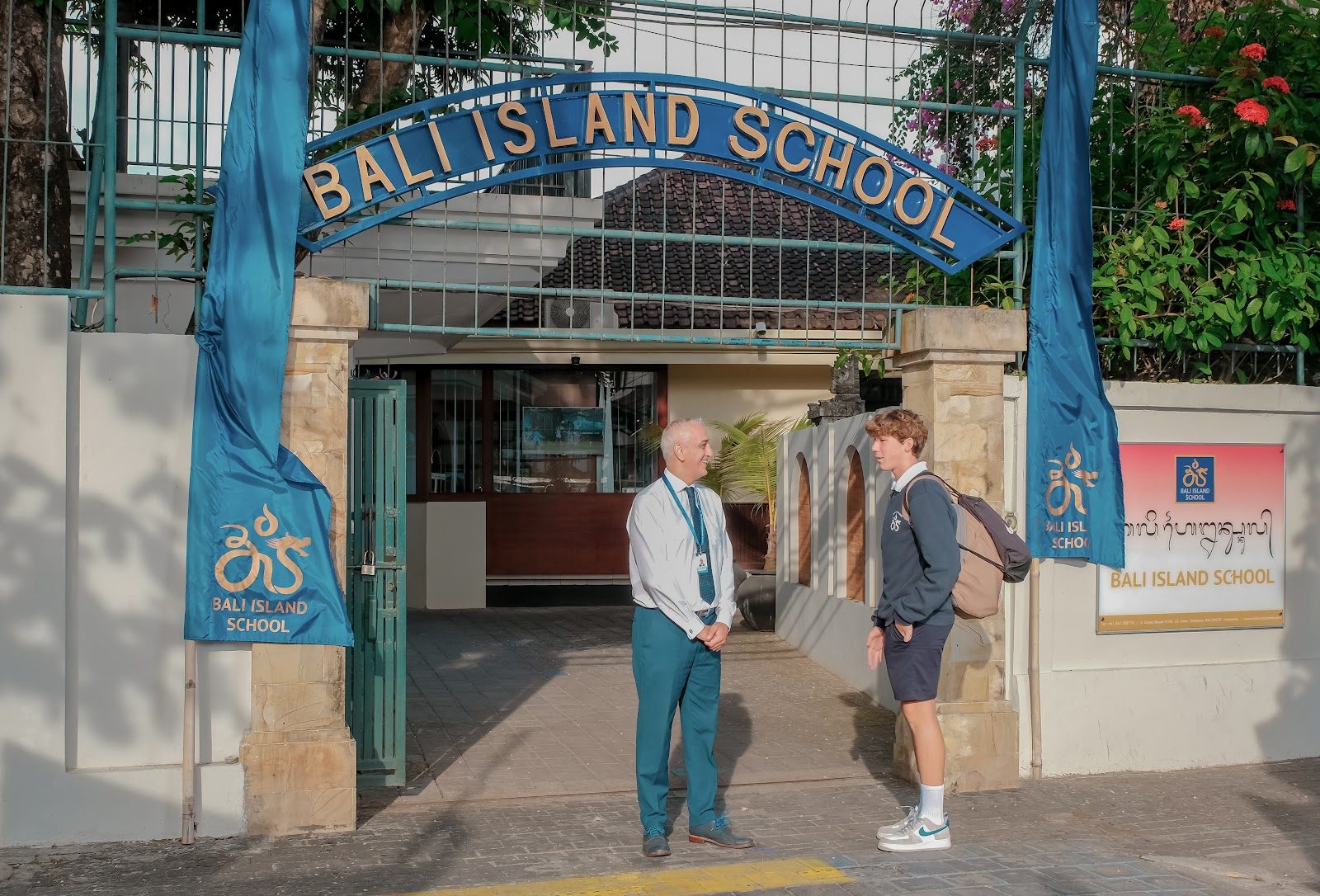
Amid Sanur's temple lanes, this Denpasar campus has run the island's only full IB continuum since 1985.

Le Régent International School
Crans-Montana · Switzerland
A purpose-built 2015 alpine campus at 1,500m pairing British and IB curricula with daily ski-in, ski-out outdoor education.
Same country and curriculum — closest matches within ±10 points either way