
Massachusetts
Eight miles from Boston, a 1798 charter still runs on Harkness-table debate rather than lecture halls.
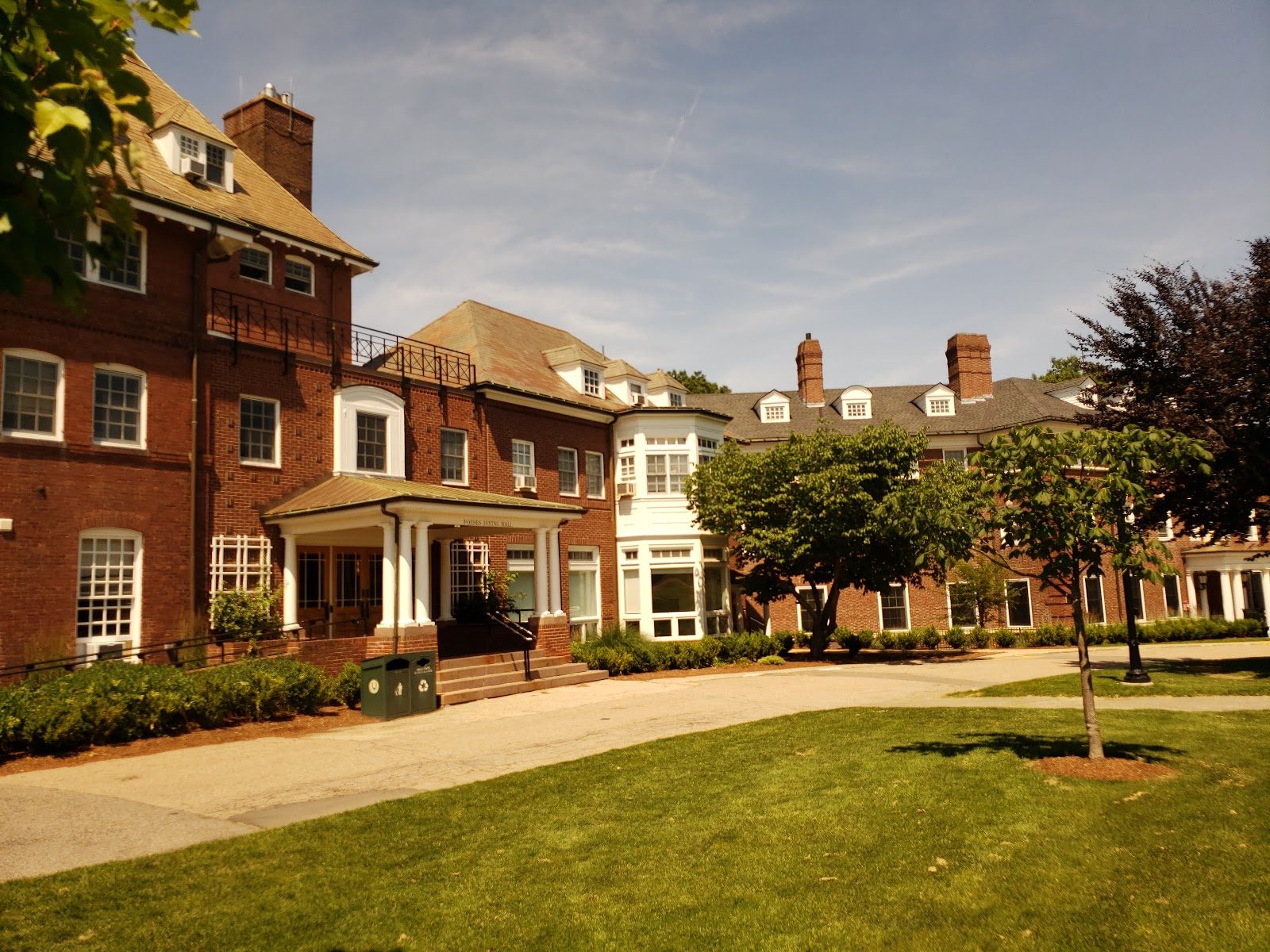
Photo © Wesly Gagerie via Google Maps
Type
Both
Ages
5–18
Curriculum
American
Qualifications
AP
Ratio
10:1
The Verdict
Editor's commitment
Right for
Children who relish Harkness-style discussion, a 10:1 ratio, and an American through-school that still sends 32 to Harvard.
Wrong for
Families wanting anonymity or light academic scrutiny; Milton runs from age 5 to 18, with classes averaging 18 and half the Upper School boarding.
Watch out for
Boarding averages USD 71,000 a year, and Milton’s polish is old-establishment America: 1798 foundations, NEASC and NAIS badges, elite university exits.
Ranking breakdown
Milton Academy · #59 of 1591
Composite score 79.1. 8 weighted criteria.
By criterion
Academic Outcomes
Weight 20%
#119
of 1529 scored
University Placement
Weight 16%
#59
of 1529 scored
Prestige & Heritage
Weight 12%
#76
of 1571 scored
Alumni Network
Weight 12%
#42
of 1530 scored
Facilities
Weight 12%
#193
of 1533 scored
Transparency & Communications
Weight 8%
#288
of 1532 scored
Peer & Industry Review
Weight 10%
#134
of 1548 scored
Admissions Selectivity & Demand
Weight 8%
#180
of 1529 scored
Score history
Milton Academy · 2026
Movement across 2024–2026. Peer average overlaid.
Overall — 2024–2026
79.1/ 100
▲ +12.9 vs 2025
year on year
Peer & Industry Review
How Milton Academy is regarded in the sector
92
Top-tier · high confidence
Milton Academy is consistently ranked among the top New England prep schools alongside Andover, Exeter, and Groton, with extensive coverage in Boston Globe, Niche.com rankings, and Chronicle of Higher Education college matriculation data showing strong Ivy League placement. Its alumni network includes prominent figures (T.S. Eliot, Robert F. Kennedy Jr., Deval Patrick, Florence Pugh's contemporaries at similar tier schools) frequently referenced in profiles of elite American boarding education, and it is a perennial benchmark in independent school peer comparisons for admissions selectivity and college outcomes.
Evidence sources
Editors' overview
Eight miles from Boston, Milton Academy trades on a rare combination: an eighteenth-century charter, a genuine boarding culture and a classroom model built around discussion rather than passive note-taking. The school is old, but not museum-piece old. Its stated commitment to an “active learning environment” matters because the structure supports it: a 10:1 student-teacher ratio and average class sizes of 18 give pupils little room to hide, and plenty of room to argue, test ideas and be known by adults. Half of Upper School students live on campus, which gives the place a real residential pulse rather than the token boarding found at some day schools with dorms attached. For families who want an American education without the sprawl or anonymity of a vast campus, Milton offers a high-pressure, high-attention version of the model.
What puts Milton on a shortlist is not mystique but output and texture. Recent university destinations include Harvard, Brown and Georgetown, with Harvard alone taking 32 pupils from recent cohorts. The alumni bench is deep and varied: 91 notable alumni catalogued in Wikidata, spanning politics, scholarship, journalism, the arts and business, with T. S. Eliot the most obvious marquee name. That breadth matters. It points to a school that has long produced articulate, intellectually confident graduates rather than churning out one narrow type. The accreditation profile is also solid rather than decorative: NEASC and NAIS place it firmly inside the established top tier of US independent schools. None of this makes Milton cheap. Boarding averages USD 71,000 a year across the full ladder, so parents are paying for a serious institution with an old network, small classes and a campus community that runs all week, not just from first bell to last.
The right child for Milton is bright, verbal and prepared to speak. This is a school for pupils who enjoy debate, can cope with scrutiny and want teachers to push back. It will suit students who thrive in a demanding, idea-driven environment and who want access to both day and boarding life in a school that serves ages 5 to 18. It will not flatter the passive, the thin-skinned or the child who wants to drift through lessons unnoticed. Milton’s appeal lies in that exact clarity: it is not for the faint-hearted, but for the student who wants intellectual friction, strong peers and the kind of institutional confidence that 1798 still carries.
Academic Performance
Milton does not publish the aggregate examination data that would let parents place it cleanly against the top US boarding-school field: no school-wide SAT or ACT profile, no AP score distribution, no median, and no subject-level breakdowns. That opacity matters. At this level, the strongest schools tend to put at least some hard academic outcomes into the public domain. Milton asks families to infer performance from selectivity, classroom design and university destinations instead. Those signals are meaningful, but they are not a substitute for published external results. For a school with this reputation, the absence of headline exam data is a conspicuous gap.
That said, the available indicators still point to a high-output academic culture. The recent university list is strong at the very top end, with 32 pupils heading to Harvard and 19 each to Brown and Georgetown across recent cohorts. That kind of placement does not come from weak teaching or soft standards. The school’s emphasis on active learning, discussion and intellectual confidence also fits a model that produces students who perform well in selective admissions environments, where writing, argument and teacher references carry real weight. Relative to peers, Milton sits in the serious top tier of American independent schools on reputation and destinations, but it does not match the most transparent schools on published exam evidence.
Facilities
Milton’s most important facilities are the ones tied directly to how pupils spend their day: classrooms arranged around discussion, laboratories, sports fields, studios, stage space and the boarding houses that keep a large share of older students on site after lessons. The school itself frames learning as active “around the table”, in labs, on fields and in dorms, and that matters because it points to a campus built for participation rather than spectacle. Parents should read this as a school where teaching rooms and shared working spaces matter more than atrium architecture. Against top American boarding-school peers, that is a serious strength if the spaces are well run, but it also means Milton’s public case on facilities is strikingly light on detail: no published theatre specifications, no arts-centre inventory, no research-lab profile, no athletic-complex breakdown.
The residential side carries more weight. With an even split between day and boarding pupils in the Upper School, the dorms are not peripheral; they are part of the school’s daily operating logic. That gives Milton a real all-day campus life that many day-led independents cannot match. The Lower School remains day-only, which keeps the boarding offer focused on older pupils rather than stretching pastoral infrastructure across the whole age range. Benchmarking it against direct rivals, Milton clears the credibility bar on breadth — academic, artistic, athletic and residential spaces are all present — but it does not out-disclose peers that publish floorplans, specialist-centre details and capital-project pipelines. For a school in this bracket, that restraint is oddly opaque.
The accreditation profile is also solid rather than decorative: NEASC and NAIS place it firmly inside the established top tier of US independent schools
Prestige
Milton carries serious old-school prestige in the American independent-school market, and not the flimsy sort built on branding alone. Its standing rests on three things that matter to parents: durable access to top universities, a national-and-international boarding community rather than a local day-school catchment with dorms bolted on, and an alumni network with real reach across public life, scholarship, media and the arts. The destination list already places it in rare company. So does the verified alumni footprint: 91 notable alumni catalogued in Wikidata is a substantial bench for any school, and the spread matters as much as the count. This is not a factory for one professional caste. It has produced political figures, writers, academics, performers and business leaders, which gives the name breadth as well as shine.
The prestige also has texture. Milton is close enough to Boston to draw ambition, scrutiny and competition, yet it retains the institutional self-belief of a school that does not need to shout. The classroom culture described by the school — discussion-heavy, active and intellectually exposed — strengthens that reputation because it signals a place where pupils earn their standing in public view, not through polished brochure talk. The main limit on Milton’s prestige case is transparency: a school at this level should publish harder academic outcome data. Even so, on reputation, network and social recognition, Milton sits in the upper echelon of US boarding schools and remains a genuinely prestigious education.
The recent university list is strong at the very top end, with 32 pupils heading to Harvard and 19 each to Brown and Georgetown across recent cohorts
Communications
Milton communicates with the confidence of an old institution that does not feel any need to over-explain itself. The public-facing site is clean, coherent and easy to navigate: leadership is named, key contacts are visible, and the school states its mission without jargon. There is a clear sense of who runs the Upper School, who oversees residential life, who handles college counselling and who carries responsibility for academics, athletics, health, and equity and inclusion. That matters to parents. When a school publishes names and roles plainly, families know where authority sits. The contact details are also direct rather than buried. For a school serving ages 5–18 with a genuine residential population, that baseline clarity is competent, disciplined and reassuringly adult.
Where Milton is weaker is depth. The tone is polished, but the information architecture prioritises ethos over hard operational detail. Parents get plenty on values, community and the school’s preferred self-image; they get less on the mechanics that matter once a child is enrolled — response times, reporting rhythms, parent portals, communication during pastoral or disciplinary issues, and the cadence of academic updates. That leaves the communications model controlled, selective and at moments frustratingly opaque. The school does enough to project order and seriousness, and the named leadership structure inspires more confidence than anonymous marketing copy. But the strongest schools pair polish with disclosure. Milton delivers the first more convincingly than the second.
Uniqueness
What marks Milton out is the way its teaching culture, residential life and age range reinforce one another instead of operating as separate selling points. The school talks about learning “around the table”, and that matters: discussion is not an enrichment extra here but part of the institution’s operating core. Pupils are trained to think in public, defend a position, absorb challenge and refine an argument under pressure. In a school with a low staffing ratio and classes averaging 18, that creates a high-exposure academic environment where silence is difficult and intellectual passivity has nowhere to hide. For the right child, that brings real educational traction: stronger habits of expression, sharper listening, and the confidence to deal with disagreement without folding.
The other distinctive feature is the integration of a full through-school structure with a boarding community that has genuine weight in the senior years. Milton is not just a sixth-form boarding enclave attached to younger day pupils; it has a continuous institutional life from the first years of schooling through graduation, with older students living and learning alongside classmates drawn from far beyond the local area. That gives pupils two things at once: continuity of culture and a broader social field than many commuter-led independents can offer. The result is a school that produces students who are not only academically polished but also socially practised, accustomed to shared living, strong peers and constant conversation. For articulate, ambitious children, that mix is distinctively powerful.
Even so, on reputation, network and social recognition, Milton sits in the upper echelon of US boarding schools and remains a genuinely prestigious education
Student Profile
Milton suits children who like the sound of their own thinking and can cope when that thinking is challenged in public. The school’s own language points to a student body that is smart, opinionated, busy and stretched across academics, sport, arts and leadership, with little patience for passivity. In classes of about 18, and within a community built around active participation, the successful pupil is not the one who memorises quietly and stays out of trouble. It is the one who speaks up, listens hard, changes position when the argument demands it and keeps going. This is a high-expectation environment for verbally confident, self-possessed children who can handle scrutiny without mistaking it for hostility.
Socially, the fit is broader than the stereotype of a narrow exam machine. The Upper School draws from a boarding and day mix split 50-50, which gives the older years a more varied social life than a purely local commuter school. Pupils who thrive here will have some independence, social stamina and a willingness to live among strong personalities. Diversity of background and viewpoint is central to the school’s self-definition, so the best fit is not the child who wants a socially frictionless ride; it is the child who can live with difference, hold a line, and still belong to a shared community. For thoughtful, energetic students, that produces a bracing, grown-up education. For the thin-skinned, the chronically disengaged or the child who wants to disappear into the back row, Milton is a bad fit.
The other distinctive feature is the integration of a full through-school structure with a boarding community that has genuine weight in the senior years
Co-curricular strengths
Arts & sport, on a separate axis
Overall 9/10
Scored 0-10 from the school's own published evidence. This axis is editorial-only — it does not feed the main WTS ranking.
Sports
9/10
Absolute ISL force, fielding dominant varsity teams in field hockey, ice hockey, and squash that regularly feed NCAA leagues.
Drama
9/10
The Kellner Performing Arts Center mounts complex, intellectually ambitious student-run and faculty-directed seasons.
Dance
8.7/10
Custom-designed sprung-floor dance complex providing high-end contemporary ballet and jazz choreography modules.
Music
9.3/10
Exceptional chamber orchestras, wind ensembles, and choral troupes that headline regional music festivals.
Visual Arts
9/10
Sun-drenched studio spaces specialized for advanced ceramics, fine oil painting, and digital design.
Editor-verified · 8/7/2026
Outcomes & destinations
Where students go next
Class of 2026
Top destinations
379 placements
- Harvard University· 32
- Brown University· 19
- Georgetown University· 19
- Northeastern University· 16
- Boston College· 15
- University of Chicago· 15
- Wake Forest University· 14
- Colby College· 13
- Wesleyan University· 13
- Columbia University· 12
- Yale University· 12
- Boston University· 11
- Middlebury College· 10
- Northwestern University· 10
- Princeton University· 10
- Bowdoin College· 9
- Trinity College· 9
- Cornell University· 8
- New York University· 8
- Tufts University· 8
- University of Michigan· 8
- Amherst College· 7
- Dartmouth College· 7
- Massachusetts Institute of Technology· 7
- Stanford University· 7
- University of Southern California· 7
- Carnegie Mellon University· 6
- Barnard College· 5
- Tulane University of Louisiana· 5
- University of California, Berkeley· 5
- University of North Carolina at Chapel Hill· 5
- University of Pennsylvania· 5
- University of Richmond· 5
- University of St Andrews· 5
- American University· 4
- Bates College· 4
- College of the Holy Cross· 4
- Emory University· 4
- Indiana University· 4
- Syracuse University· 4
- University of California, Los Angeles· 4
- University of Illinois· 4
Reported by the school. Confirm with admissions.
Notable alumni · Wikidata
91notable alumni
Includes
- T. S. Eliot(1888)
27 historic (born pre-1930) · 27 modern (born post-1970)wikidata:2026-07-28 How we source this
WTS 300 badge
2025/26 editionMilton Academy is one of the World's Top 300 Schools for 2025/26. Claim your listing to add it to your site →
Strengths
- +Founded in 1798, Milton Academy is one of the oldest independent schools in the United States, located on a 130-acre campus about seven miles from Boston.
- +The school offers both boarding and day options within the same Upper School, allowing families flexibility between residential and commuter arrangements.
- +Small classes and a low student-teacher ratio (around 5:1 to 6:1) support close academic attention across the curriculum.
- +Notable alumni include T.S. Eliot, Robert F. Kennedy, Ted Kennedy and former Massachusetts Governor Deval Patrick, reflecting a long history of producing figures in public life and the arts.
- +Milton states that roughly 35% of students receive financial aid, indicating a meaningful commitment to socio-economic diversity within a costly system.
Considerations
- −Tuition is high even by elite boarding school standards, with day fees around $69,900 and boarding fees around $79,900 for the 2025-26 year.
- −Admission is highly competitive, with an acceptance rate cited at around 13-20%, meaning most applicants, including strong candidates, are turned away.
- −Only about half of Upper School students board on campus, so international or long-distance families should confirm residential capacity is not oversubscribed before assuming a place is guaranteed.
- −Massachusetts winters and a New England boarding-school calendar (structured study halls, curfews, limited class sizes overall) may be a significant cultural and lifestyle adjustment for relocating expat families.
Availability
Primary entry gate & tests
SSAT/ISEE + Interview
Gallery
Photo © Sam T. via Google Maps
Photo © P Mm via Google Maps
Photo © Vaughn Greenidge via Google Maps
Photo © Vaughn Greenidge via Google Maps
Photo © Vaughn Greenidge via Google Maps
Photo © 全球全景 via Google Maps
Photo © 全球全景 via Google Maps
Photo © 全球全景 via Google Maps
Photo © 全球全景 via Google Maps
Parent reviews
Have you sent your child here?
Voice reviews carry the strongest trust badge — we transcribe them for you to tidy up before they go live. Prefer to type? A written review is fine too.
Add your voice
In 60 seconds, tell other parents: what's the best thing about Milton Academy, and what surprised you when your child joined?
We ask for a Google sign-in so every review has a real face behind it — no anonymous drive-by attacks on schools, and no faked positive reviews. Your email is never shown publicly.
Send this profile to a friend
International parents rely on word-of-mouth. Share this review with someone weighing the same decision.
Schools with places
Similar schools to Milton Academy with places available now.
The Roxbury Latin School
Boston · United States
- 2026-27
- CLOSEDRegular cycle
- 2027-28
- OPENS SOONOpens 1 Sept '26
Boston Latin School
Boston · United States
- 2026-27
- CLOSEDStandard route
- 2027-28
- OPENS SOONOpens Sept '26
The Winsor School
Boston · United States
- 2026-27
- CLOSEDRegular cycle
- 2027-28
- OPENS SOONOpens Sept '26
Groton School
Groton · United States
- 2026-27
- CLOSEDRegular cycle
- 2027-28
- PLACES OPENProfile live
Availability first, then country, area, curriculum, price, co-curricular
Consider also
Also worth looking at alongside Milton Academy.
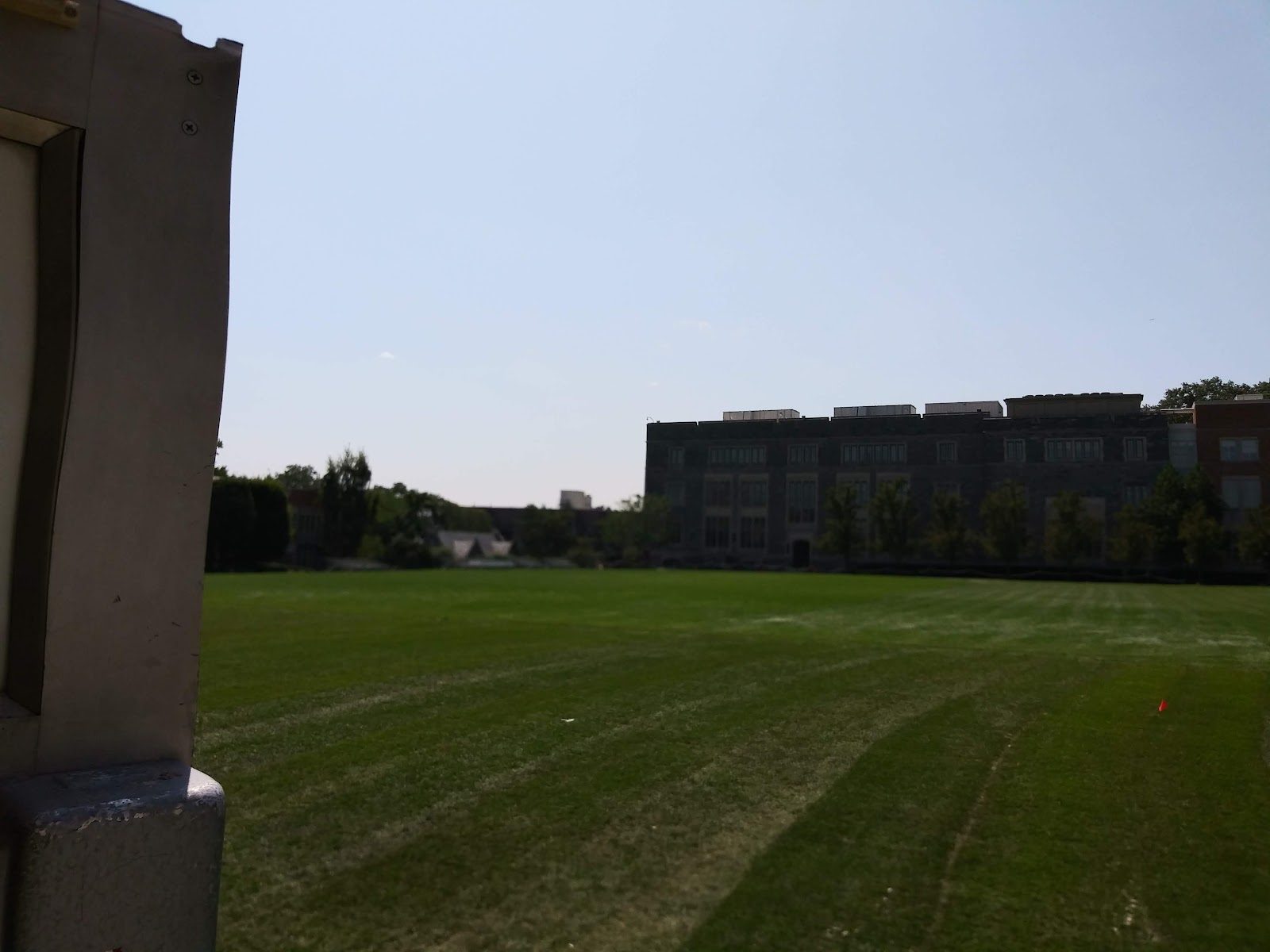
Horace Mann School
New York City · United States
Born as Columbia Teachers College's 1887 experiment, now a Riverdale hilltop campus that swaps AP exams for homegrown advanced courses
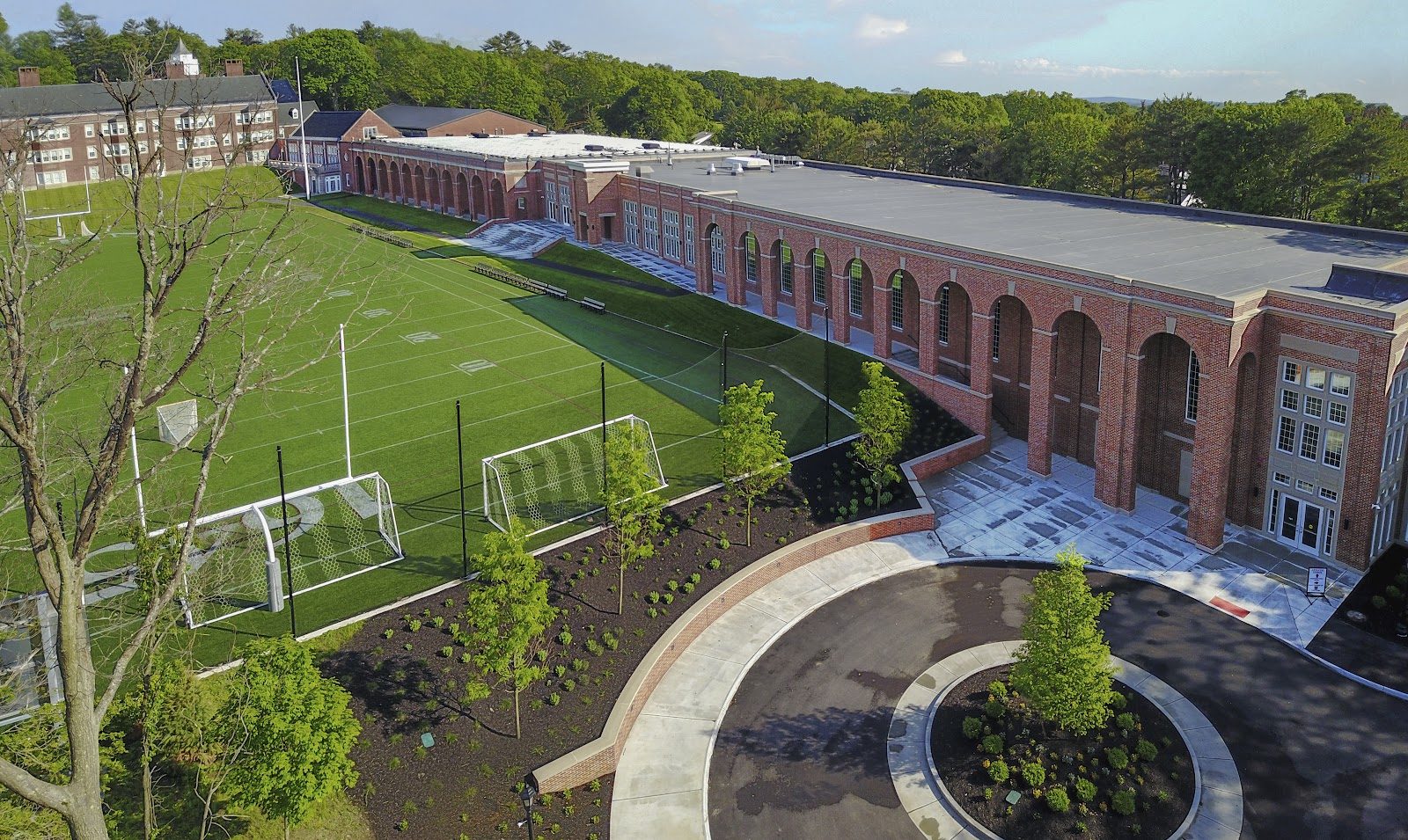
The Roxbury Latin School
Boston · United States
In West Roxbury, a boys' day school founded in 1645 has run continuously ever since, prizing 6:1 mentorship over scale.
Boston Latin School
Boston · United States
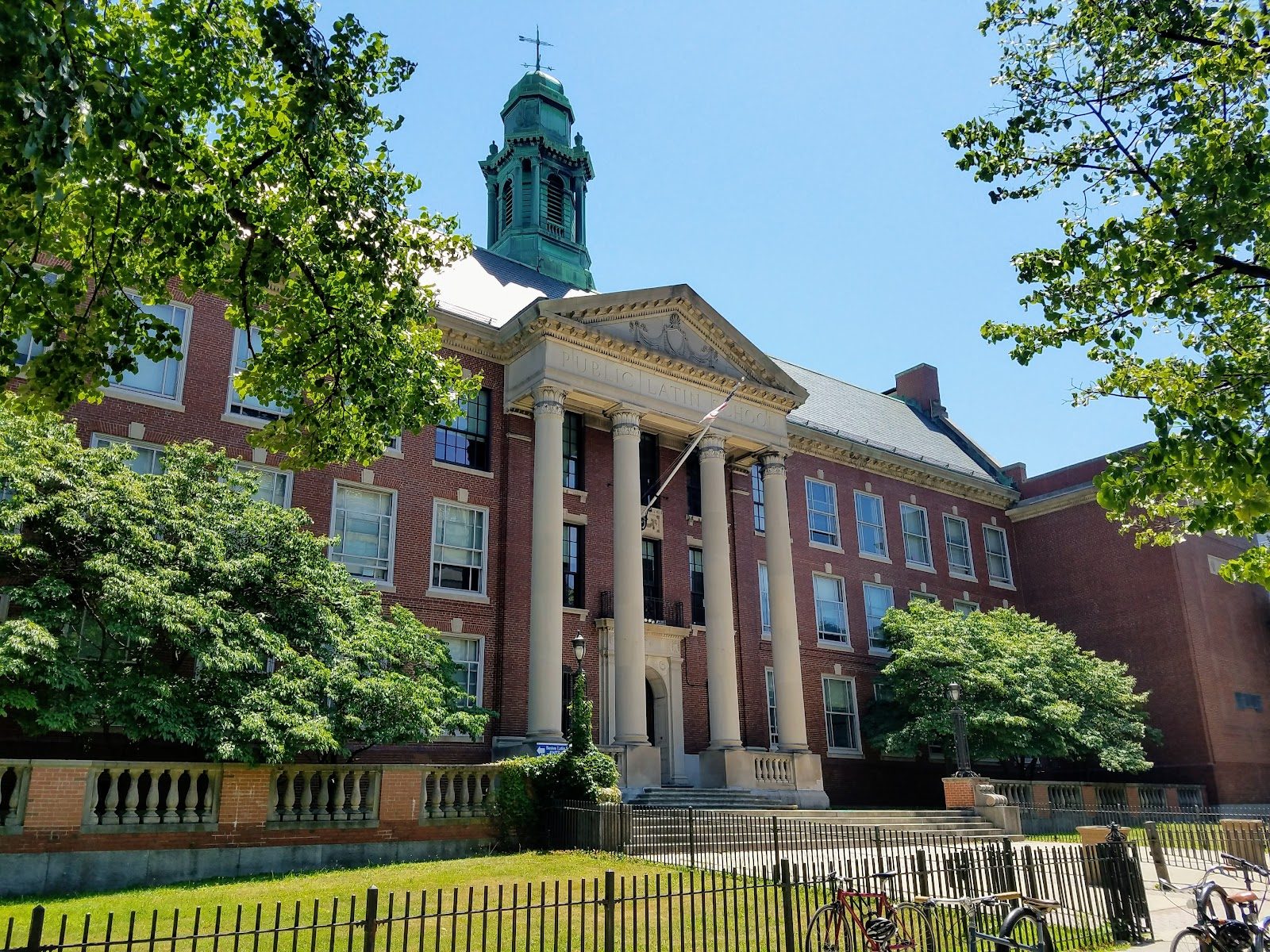
Founded in 1635, America's first public school still tests every applicant, predating Harvard by more than a year.
Taft School
Watertown · United States
On 226 acres in Connecticut's Litchfield Hills, a 19-percent-acceptance boarding school still lives by one motto: to serve, not be served.
Same country and curriculum — closest matches within ±10 points either way