
Greater London
Perched on its own hill above London since 1572, a full-boarding, all-boys house system still runs on ritual, song and rivalry.
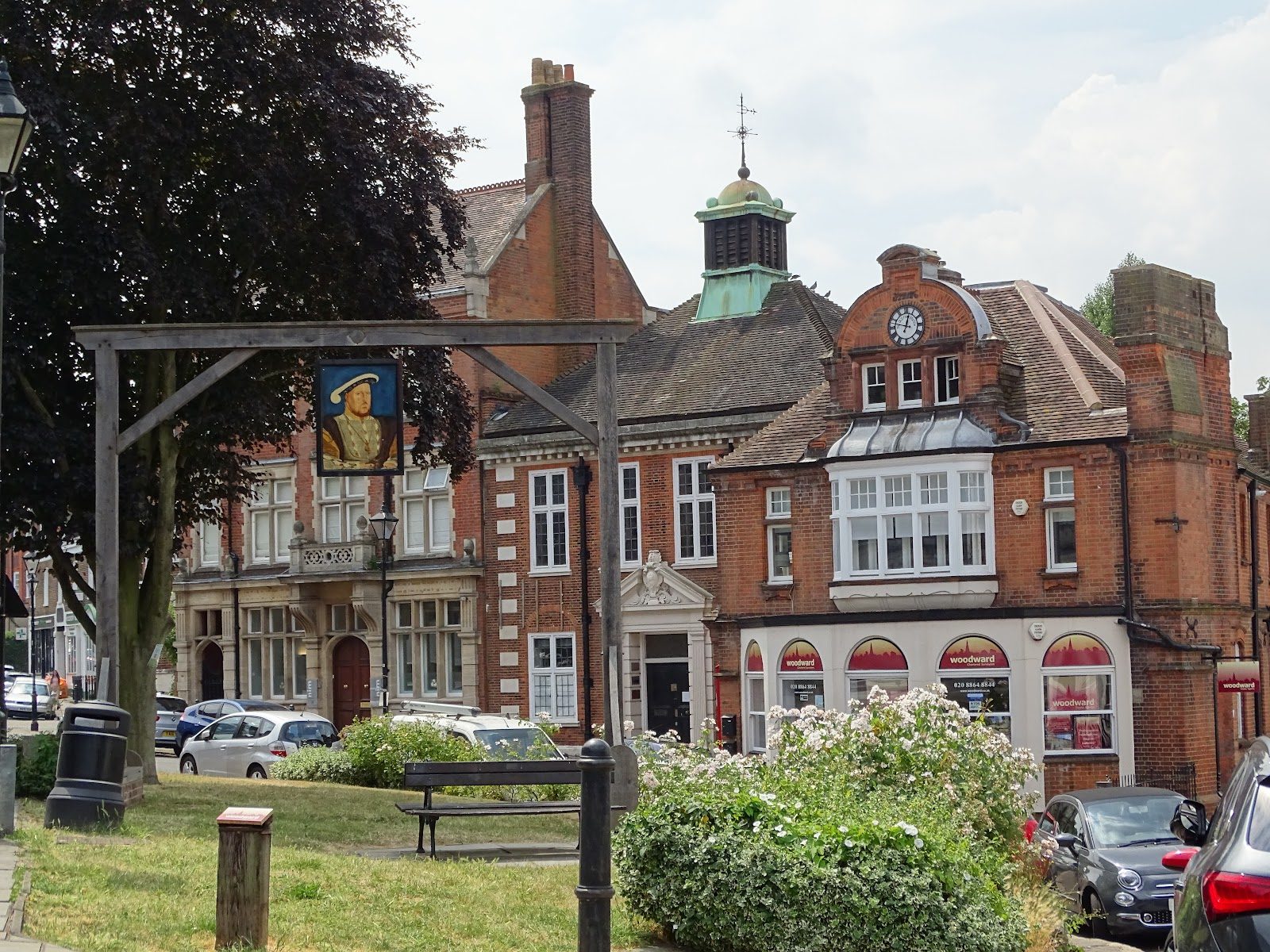
Photo © Gee king Chen via Google Maps
Type
Boarding
Ages
13–18
Curriculum
British
Qualifications
A-Level
Ratio
10:1
The Verdict
Editor's commitment
Right for
Boys who want full boarding from 13 to 18, a 10:1 ratio, and a cohort sending 14 leavers to Oxbridge.
Wrong for
Families wanting co-education, day schooling or a lighter institutional culture; Harrow is Anglican, all-boys, and built around boarding houses.
Watch out for
Boarding averages £64,000 a year, classes average 18, and 89% of 165 leavers reached top-100 universities: the pace is exacting.
Ranking breakdown
Harrow School · #58 of 1591
Composite score 79.1. 8 weighted criteria.
By criterion
Academic Outcomes
Weight 20%
#209
of 1529 scored
University Placement
Weight 16%
#219
of 1529 scored
Prestige & Heritage
Weight 12%
#35
of 1571 scored
Alumni Network
Weight 12%
#14
of 1530 scored
Facilities
Weight 12%
#71
of 1533 scored
Transparency & Communications
Weight 8%
#288
of 1532 scored
Peer & Industry Review
Weight 10%
#134
of 1548 scored
Admissions Selectivity & Demand
Weight 8%
#229
of 1529 scored
Score history
Harrow School · 2026
Movement across 2024–2026. Peer average overlaid.
Overall — 2024–2026
79.1/ 100
▲ +22.9 vs 2025
year on year
Peer & Industry Review
How Harrow School is regarded in the sector
96
Top-tier · high confidence
Harrow School sits at the very top of the UK boarding sector, its reputation resting on 450 years of history and a roll call of alumni that includes seven British prime ministers, among them Winston Churchill, alongside a first prime minister of India and numerous statesmen, royals and cultural figures. The Good Schools Guide places it in the "Premier league," praising an outstanding education for boys who throw themselves into everything the school offers, while WhichSchoolAdvisor's review highlights strong 2024 results, with 90% of A-Levels at A*-B and a cohort regularly placing pupils at Oxbridge and Ivy League universities. Its status as the only fully boarding school in London, and one of just five remaining single-sex boys' public schools nationally, keeps it a constant reference point in sector coverage, reinforced most recently by extensive press attention around its 2026 structural partnership with Downe House. Peer schools and expat parents alike treat Harrow as a defining benchmark of traditional British boarding education.
Editors' overview
Perched on Harrow on the Hill and still run as a full-boarding school for boys aged 13 to 18, Harrow trades on something many rivals no longer have: institutional distinctiveness. This is not a softened version of the British boarding tradition. It is the tradition, in one of its most ritualised and self-confident forms: houses, rivalry, song, Anglican foundation and a social culture built around total immersion rather than weekly flexi-boarding convenience. That clarity matters. Parents do not shortlist Harrow for a modern, casual interpretation of boarding life; they shortlist it because it offers an older, high-definition version of it. The academic structure is supported by a 10:1 student-teacher ratio and average classes of 18, which gives it room for proper teaching rather than lecture-hall schooling. ISI and HMC accreditation place it squarely within the established top end of the British independent sector.
The market position is straightforward: Harrow is expensive, highly prestigious and unapologetically niche. The average annual boarding fee across the school is £63,735, which puts it in the top bracket of UK boarding. Parents paying that price are not buying novelty facilities or a sprawling co-ed campus model; they are buying brand weight, continuity, access to a deep old-boy network and a boarding culture that still has real grip. The alumni floor alone is extraordinary: 2,103 notable alumni catalogued in Wikidata, including 698 politicians and statespersons, 130 business and finance figures, 156 scientists and scholars, and 397 elite athletes. That does not guarantee a child’s future, but it does tell you what sort of institutional pipeline Harrow has built over centuries.
The school also has current academic traction. In the Class of 2024, 165 boys left; 89% went to top-100 universities, with 14 Oxbridge places, 43 Russell Group destinations and 7 Ivy League admissions. The biggest single destinations were Oxford with 8, Cambridge with 6 and UCL with 12. Those numbers place Harrow exactly where parents expect it to be: strong access to elite universities without reducing the place to a sixth-form crammer. The school’s own language leans hard on “holistic” education, and in Harrow’s case that claim has substance because boarding still structures the whole week, not just the timetable.
The boy who wants Harrow is not searching for a relaxed adolescence. He wants intensity, hierarchy, tradition and a school identity strong enough to shape him. He will cope with formality, relish competition and gain energy from belonging to a house rather than resisting it. Families who want a softer, more contemporary, less codified boarding experience should look elsewhere. Families who want an all-boys school with serious social capital, durable academic outcomes and a culture that still feels distinct in a crowded market should keep Harrow near the top of the list.
Academic Performance
Harrow does not publish a clean set of aggregate GCSE and A-level headline results on the public pages cited here, and that matters. At this price point, many direct competitors put top-grade distributions front and centre. Harrow asks parents to infer academic strength from destinations and institutional reputation instead. That inference is not baseless: university outcomes are strong, with 89% of leavers moving on to top-100 universities and 14 securing Oxbridge places. That puts Harrow in the upper tier of British boarding schools, but not in the tiny subset of schools that market themselves through relentless exam-score disclosure and sixth-form point-maximisation. The academic offer reads as serious, high-pressure and broader than a pure results factory.
Relative to peers, Harrow fits best among the old-line, brand-heavy boarding schools where examination success is expected but not treated as the whole story. For some families, that balance is a strength: boys get academic traction without the atmosphere of a narrow crammer. For others, the opacity is a weakness. If you want precise public evidence on grade profiles before booking a visit, Harrow gives you less than several rivals. If you want a school whose academic performance still converts into elite university access inside a deeply codified all-boys environment, Harrow remains formidable.
Facilities
Harrow’s most important facility is not a shiny flagship building but the boarding-house estate itself. At an all-boarding school, houses are the operating system: where boys sleep, work, socialise and absorb the school’s code of conduct. The school invites families to visit a boarding house on open mornings, which tells you where it expects scrutiny to land. That focus is sound. At peer schools in the same bracket, parents need boarding to do more than provide a bed and a common room; it must sustain academic routine, pastoral oversight and social life across the full week. Harrow has the institutional seriousness for that model, and its hilltop setting adds a closed-world intensity that day-heavy or flexi-boarding rivals cannot replicate. For the right boy, that is a major asset. For others, it will feel claustrophobic.
The public-facing picture is weaker on specialist facilities. We have not seen the school publish a clear, consolidated case for standout science, arts or sports infrastructure on the pages cited here, and that leaves a gap. In this tier, several competitors push theatre spaces, labs, performance venues and elite sports provision hard because those assets influence parental choice. Harrow leans instead on atmosphere, ritual and house life. That does not mean the facilities are thin; it means the school does not sell itself through a facilities arms race. Parents who want a campus defined by statement architecture or conspicuous new-build gloss may find the presentation restrained. Parents who care more about immersion, structure and residential culture will rank the houses above almost everything else.
ISI and HMC accreditation place it squarely within the established top end of the British independent sector
Prestige
Harrow sits in the top rank of British school prestige because its name carries force far beyond education. This is one of the small group of English public schools that function as social shorthand: in politics, finance, the military, the arts and the upper reaches of public life, “Harrow” already tells people what sort of institutional world a boy has passed through. The alumni record explains why. Wikidata alone logs 2103 notable former pupils, including 698 politicians and statespersons and 397 elite athletes. Those are not decorative heritage numbers; they point to a school with centuries-deep reach, a powerful old-boy network and real cachet in fields where pedigree still opens doors. For families who value status, recognition and institutional memory, Harrow delivers elite brand weight in a way very few schools can match.
That prestige also rests on continuity of culture. Harrow has kept an unyielding sense of self while many competitors have diluted theirs. The house system, rituals, Anglican inheritance and all-boys boarding environment create a school identity that is instantly legible and hard to imitate. Prestige here is not about polished marketing or fashionable educational language; it comes from endurance, selectivity and the school’s place in the British establishment. There is a trade-off. Harrow’s prestige is traditionalist, not universal. It carries huge value for families who want inherited status and a strongly coded institutional culture, and less for those who want modern informality or a broader social mix.
The average annual boarding fee across the school is £63,735, which puts it in the top bracket of UK boarding
Communications
Harrow communicates in the voice of an institution that expects parents to buy into the whole culture, not just compare options on a spreadsheet. The website is clear on the admissions journey, open mornings and bursary route, and it gives practical signposts without clutter. Families can see that visits are structured, frequent and school-led, with 12 open mornings a year and a programme built around the Head Master, the Director of Studies, current pupils, the Registrar and a house visit. That is disciplined, high-control communication: the school sets the frame, introduces the people it wants families to meet and channels attention towards boarding life. For this market, that works. Parents considering a place like Harrow want direct exposure to leadership and to the residential core of the school.
The weakness is transparency. Harrow communicates ethos, process and institutional confidence far better than it communicates hard operational detail. Public messaging leans on values, tradition and the promise of a carefully managed journey; it gives less weight to the blunt comparative data many fee-paying parents now expect. That makes the school’s communications polished but also selective. If you already value ritual, hierarchy and house culture, the message lands with full force. If you want granular academic disclosure, richer day-to-day insight into pupil life or a more open account of outcomes beyond headline destinations, the communication feels guarded. In short: effective at selling Harrow’s world, less effective at answering every hard parental question before a visit.
Uniqueness
What marks Harrow out is not prestige alone but cultural density. Plenty of famous schools have a name; fewer still enforce a total social world with this much continuity. Boys do not dip into school life and head home at dusk. They live inside an institution with its own songs, codes, rivalries and inherited habits, all reinforced by the house structure and by the physical separation of a hilltop campus. That creates a high-pressure, high-identity environment in which belonging carries weight and conduct is constantly visible. The school’s Anglican inheritance still matters here too, not as decorative branding but as part of the moral and ceremonial frame. Harrow is unmistakably itself, and that is rare.
For students, that distinctiveness brings both gain and cost. The gain is deep formation: boys absorb confidence, fluency in institutions, loyalty to a group and ease with hierarchy. They also step into an alumni ecosystem of 2103 notable former pupils, which gives the school unusual reach in public life and professional networks. The cost is that Harrow leaves less room for anonymity, looseness or reinvention than more casual schools. A boy who thrives on ritual, competition and collective identity will find the place galvanising. A boy who wants softness, informality or distance from tradition will find it hard-edged. That sharpness is the point. Harrow does not dilute itself to suit every temperament, and students who fit it gain a powerful lifelong stamp.
In the Class of 2024, 165 boys left; 89% went to top-100 universities, with 14 Oxbridge places, 43 Russell Group destinations and 7 Ivy League admissions
Student Profile
The Harrow boy fits a school that rewards appetite for structure, competition and visibility. This is not a place for drifting through adolescence under light supervision. Life is organised, communal and rule-bound, with house loyalties, formal expectations and a social order that asks boys to take their place in it. The right student has enough self-possession to handle that pressure without folding, and enough stamina to live at close quarters with peers through the full week. He does not need to be a finished extrovert, but he does need to cope with scrutiny, hierarchy and a culture where participation counts. The low staffing ratio and average class size of 18 support boys who can use close adult attention well; they will not suit anyone hoping to disappear into the back row.
Temperament matters as much as attainment. Harrow suits boys who gain energy from collective identity, respond to tradition rather than resisting it, and want a school with sharp edges rather than a cushioned atmosphere. Ambition helps, but so does resilience: this is a school for students who can absorb high expectations and still keep their footing. Families also need to buy into the model. At an average annual boarding fee of £63,735, Harrow attracts households prepared to pay for institutional heft, intense immersion and the social capital that follows. Boys who want easy informality or a looser, more contemporary boarding culture will chafe. Boys who want belonging, challenge and an environment with 2103 notable alumni behind it will fit.
At this price point, many direct competitors put top-grade distributions front and centre
Co-curricular strengths
Arts & sport, on a separate axis
Overall 8.62/10
Scored 0-10 from the school's own published evidence. This axis is editorial-only — it does not feed the main WTS ranking.
Sports
9.6/10
Legendary sporting legacy; vast acreage hosting the historic Harrow School Farm, extensive cricket pitches, and elite rugby squads.
Drama
9.3/10
The Ryan Theatre stages massive, high-production classical Shakespeare and modern plays with professional technical rigs.
Dance
5.2/10
Maintained strictly as a minor auxiliary asset for musical choreography or traditional theatrical movement steps.
Music
9.8/10
Iconic "Harrow Songs" choral tradition alongside elite wind bands and symphony orchestras that perform in major London venues.
Visual Arts
9.2/10
Housed in the custom Paschal Art Centre, running high-end studio modules in classical fine oils, sculpture, and ceramics.
Editor-verified · 8/6/2026
Outcomes & destinations
Where students go next
Editorial estimateClass of 2024
165 graduates
A-Level distribution
98% covered
- A*34%
- A33%
- B24%
- C7%
Top destinations
64 placements
- Oxford· 8
- Cambridge· 6
- Yale· 3
- Harvard· 2
- Princeton· 2
- UCL· 12
- Durham· 10
- Edinburgh· 8
- Bristol· 7
- Exeter· 6
Boys' full-boarding. Figures approximate the school's leavers report.
Editor-approximated from the school's own leavers report. Awaiting school-attested figures.
Notable alumni · Wikidata
2,103notable alumni
Includes
1758 historic (born pre-1930) · 85 modern (born post-1970)wikidata:2026-07-28 How we source this
The story in one line
54% achieved ≥ AAB in 2+ facilitating subjects·ISI Routine Inspection 2024
AAB with 2 facilitating subjects is the Department for Education's published predictor of admission to a top-third UK university: the pupil has scored high grades in at least two of the classic Russell-Group subjects (maths, sciences, English, history, geography, or a modern language). Independent schools don't appear in the state-only HE-destinations dataset, so this is the strongest DfE-verified sixth-form signal available. Source: DfE 16-18 school and college performance data · 2023/24. Value-added +0.22
DfE-verified statistics
Official GCSE data · 2024/2025
Progress 8
—
Value-added score. State-schools only; 0 = expected progress, +1 = one grade above.
Attainment 8
24.9
Average grade across 8 GCSEs (score out of 90). National ≈ 46.
EBacc average score
1.91
Avg grade across the 5 EBacc pillars (English, Maths, Sciences, Language, Humanity).
EBacc slots filled
2
How many of the 5 EBacc pillars pupils typically enter (max 5).
A-Level attainment
Cohort · 2023/24
Avg A-Level grade
A
APS per entry: 49.12
Best 3 grade
A
Best-3 APS: 49.62
≥ AAB + 2 fac.
54.3%
Russell-Group predictor.
Progress (value-added)
+0.22
Above average
Read with care. Independent schools frequently sit IGCSEs or Pre-U qualifications instead of standard GCSEs — DfE data only counts standard GCSEs, so these numbers may reflect a partial cohort. For a fuller picture, cross-check with the school's own annually-published results.
URN 102245Verified · DfE 2024/2025
Official inspection
ISI report · 2024
Inspectorate
Independent Schools Inspectorate
The Government-approved inspectorate for English independent schools.
Latest report
6 February 2024
Routine Inspection
Report history
Verified · Independent Schools InspectorateSource-of-truth
WTS 300 badge
2025/26 editionHarrow School is one of the World's Top 300 Schools for 2025/26. Claim your listing to add it to your site →
Strengths
- +Founded in 1572 under a Royal Charter granted by Queen Elizabeth I, making it one of the oldest continuously operating boys' boarding schools in England.
- +Full boarding, all-boys community of around 800-830 pupils spread across a dozen boarding houses, giving a close-knit, tradition-rich house system rare among London-area schools.
- +Located on Harrow on the Hill, roughly 30 minutes from central London and about 13 miles from Heathrow, making term travel straightforward for international families.
- +ISI's February 2024 inspection found the school compliant in all respects and awarded the rare 'significant strengths' designation to its Super-Curriculum programme.
- +Long roll of notable alumni including several British prime ministers such as Winston Churchill and Jawaharlal Nehru, independent India's first prime minister.
Considerations
- −Single-sex, all-boys and full-boarding only, with no day option or co-education, which rules the school out for families wanting girls' education or a day-pupil arrangement.
- −Fees sit at the top of the UK boarding market, with 2025/26 termly charges of roughly 21,245 pounds (around 63,700 pounds a year), plus registration, deposit and acceptance fees on top.
- −Year 9 entry is highly competitive, with only around 160 places available annually against a multi-stage process involving the ISEB Common Pre-Test, a bespoke Harrow Test and interviews.
- −Steeped in distinctive, centuries-old customs such as boater hats, morning dress and archaic slang, a traditional public-school culture that will not suit every family's taste.
Availability
Primary entry gate & tests
13+ ISEB Pre-Test
(3-Year Delay)
Gallery
Photo © TrailTale via Google Maps
Photo © TrailTale via Google Maps
Photo © Janine Mekers via Google Maps
Photo © Peter Chadha via Google Maps
Photo © Peter Chadha via Google Maps
Photo © Victor Predescu via Google Maps
Photo © Raluca Laslo via Google Maps
Photo © รถสวย ฟรีดาวน์ via Google Maps
Photo © Elena Sánchez Rincón via Google Maps
Recommended reading
Independent write-ups of this school from editorial outlets we trust.
- Harrow SchoolGood Schools Guide
Parent reviews
Have you sent your child here?
Voice reviews carry the strongest trust badge — we transcribe them for you to tidy up before they go live. Prefer to type? A written review is fine too.
Add your voice
In 60 seconds, tell other parents: what's the best thing about Harrow School, and what surprised you when your child joined?
We ask for a Google sign-in so every review has a real face behind it — no anonymous drive-by attacks on schools, and no faked positive reviews. Your email is never shown publicly.
Send this profile to a friend
International parents rely on word-of-mouth. Share this review with someone weighing the same decision.
Schools with places
Similar schools to Harrow School with places available now.
City of London School for Girls
London · United Kingdom
- 2026-27
- CLOSEDStandard route
- 2027-28
- PLACES OPENCloses Nov
Godolphin and Latymer School
London · United Kingdom
- 2026-27
- CLOSEDStandard route
- 2027-28
- PLACES OPENCloses Nov
Highgate School
London · United Kingdom
- 2026-27
- CLOSEDStandard route
- 2027-28
- PLACES OPEN11+ (Closes 4 Nov); 16+ (16 Oct)
Alleyn's School
London · United Kingdom
- 2026-27
- CLOSEDStandard route
- 2027-28
- OPENS SOONOpens Sept '26 (11+ on 1 Sept)
Availability first, then country, area, curriculum, price, co-curricular
Consider also
Also worth looking at alongside Harrow School.
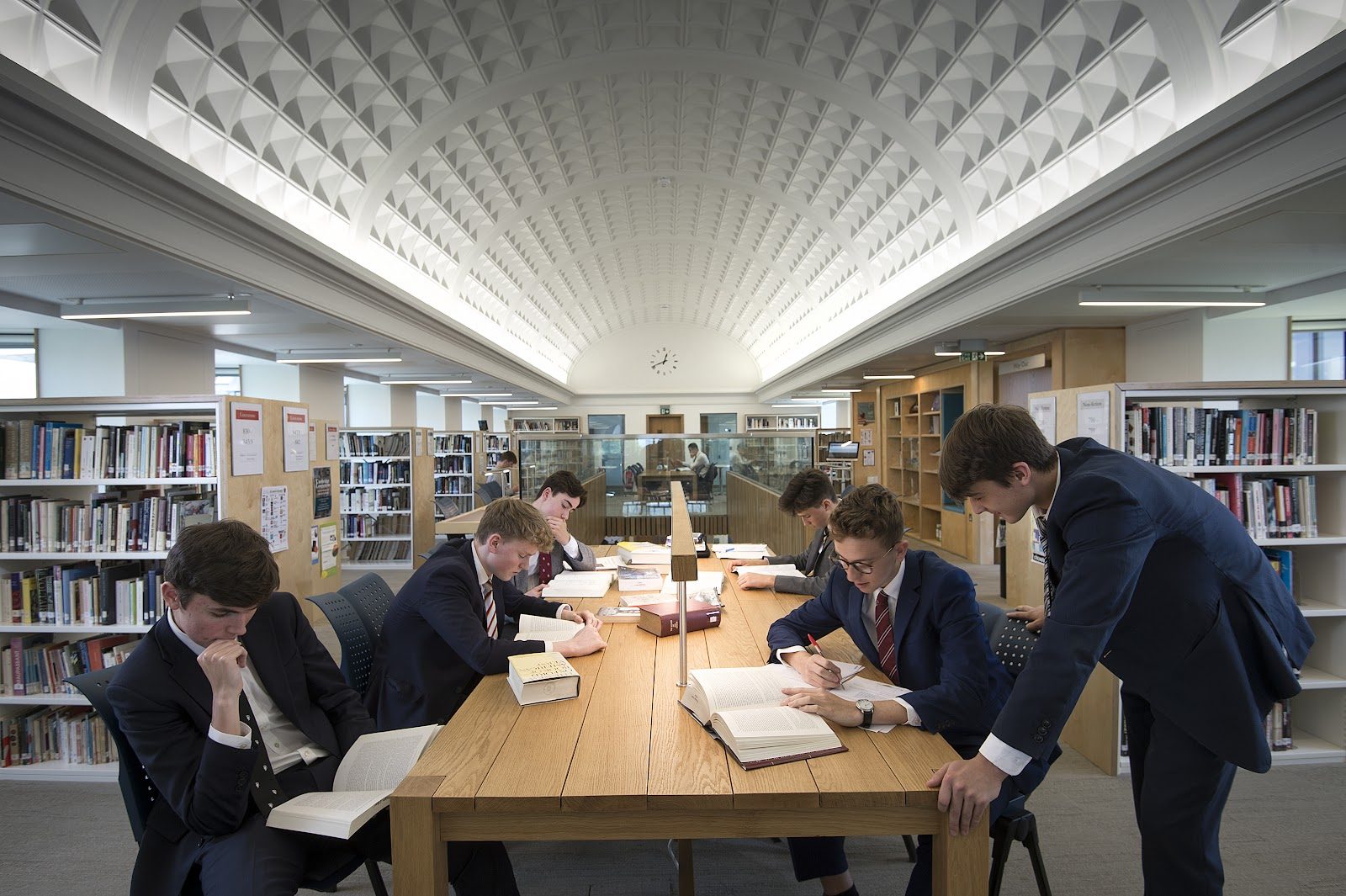
Tonbridge School
Tonbridge · United Kingdom
A 1553 foundation tied to London's Skinners' livery company, where seven Kent boarding houses still dine together each night
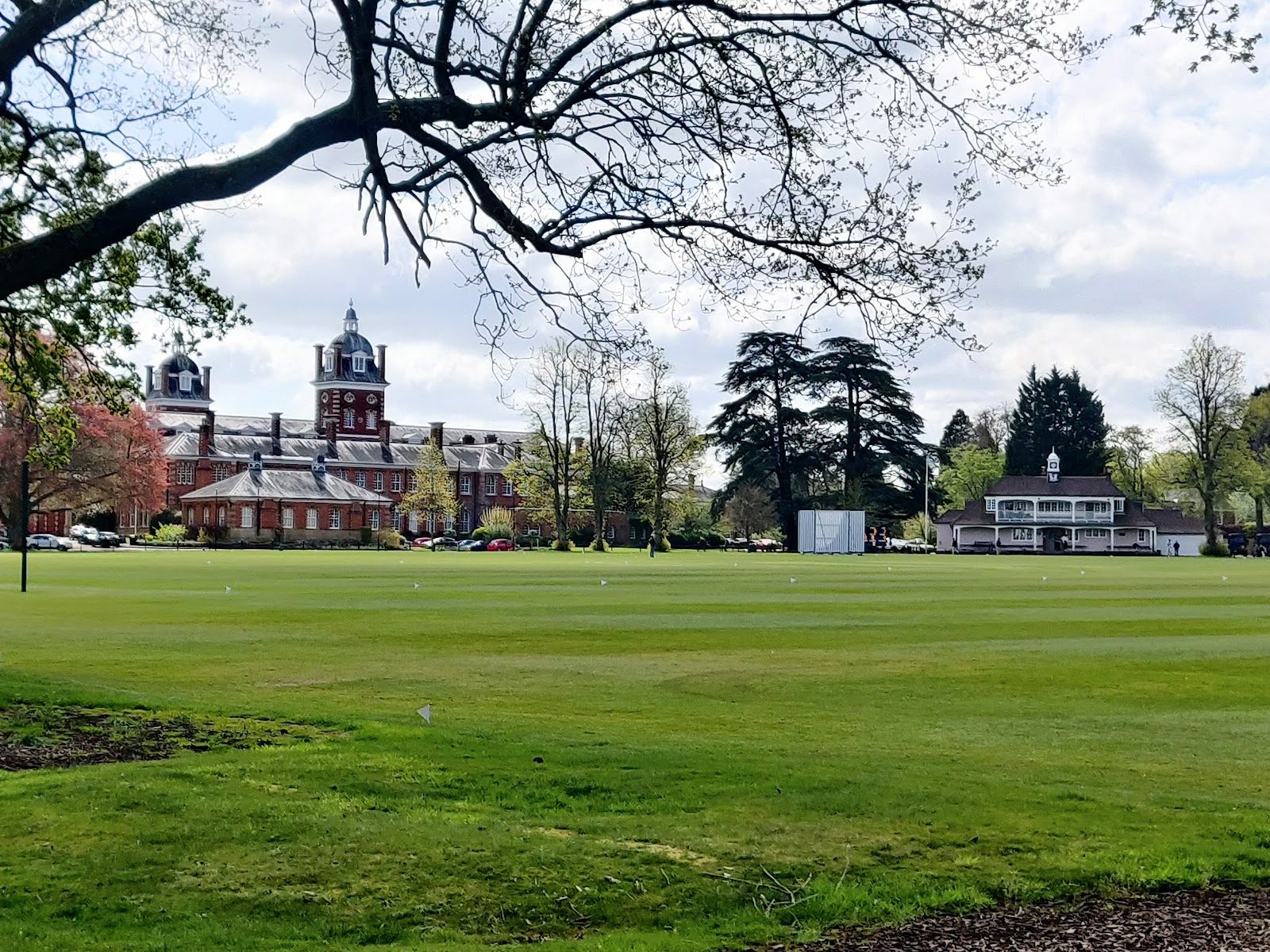
Wellington College
Crowthorne · United Kingdom
Built as the nation's memorial to the Iron Duke, this Berkshire campus later pioneered Britain's first happiness curriculum.
Brighton College
Brighton · United Kingdom
Between the South Downs and the sea, a two-decade climb from mid-table to Sunday Times School of the Decade.

Colchester Royal Grammar School
Colchester · United Kingdom
A state grammar bearing two royal charters, from Henry VIII to Elizabeth I, with its own boarding house and a science-and-languages bent.
Same country and curriculum — closest matches within ±10 points either way