Shanghai
Shanghai Singapore International School
medium confidence· 4/6 cats · 2.71 avg sourcesSingapore maths rigour anchors an IGCSE-to-IB pathway, threaded with banded Chinese immersion in Minhang's expatriate heartland.
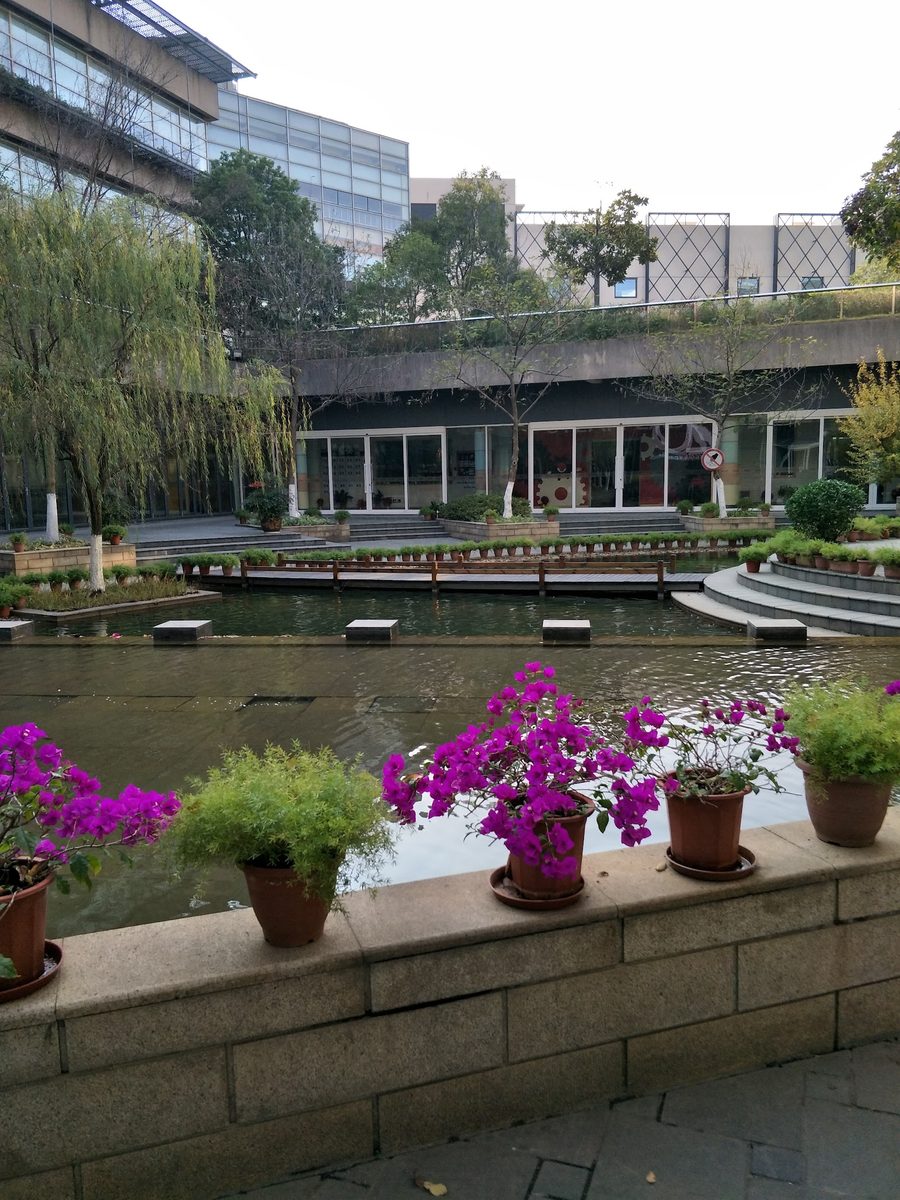
Photo © Jessica via Google Maps
Type
Day
Ages
3–18
Curriculum
Singapore · IB
Ratio
—
The Verdict
Editor's commitment
Right for
Families in Minhang who want Singapore foundations feeding into IGCSE and IB, with English and Mandarin used across a 3–18 day school.
Wrong for
Anyone expecting boarding, a broad university track record, or a school beyond the expatriate brief; recent destinations list only three named universities.
Watch out for
Founded in 1996 and accredited by IB, CIS and WASC, SSIS clears the compliance bar; published outcomes remain thin beyond ANU and two niche destinations.
Ranking breakdown
Shanghai Singapore International School · #1190 of 1591
Composite score 58.5. 8 weighted criteria.
By criterion
Academic Outcomes
Weight 20%
#1157
of 1529 scored
University Placement
Weight 16%
#1164
of 1529 scored
Prestige & Heritage
Weight 12%
#1219
of 1571 scored
Alumni Network
Weight 12%
#835
of 1530 scored
Facilities
Weight 12%
#1090
of 1533 scored
Transparency & Communications
Weight 8%
#1151
of 1532 scored
Peer & Industry Review
Weight 10%
#1108
of 1548 scored
Admissions Selectivity & Demand
Weight 8%
#960
of 1529 scored
Score history
Shanghai Singapore International School · 2026
Movement across 2024–2026. Peer average overlaid.
Overall — 2024–2026
58.5/ 100
▲ +19.2 vs 2025
year on year
Peer & Industry Review
How Shanghai Singapore International School is regarded in the sector
64
Respected · medium confidence
I could not identify at least two independent, credible third-party sources (e.g., Tatler, Good Schools Guide, specialist education press, or established expat forums) that substantively discuss Shanghai Singapore International School's reputation. Most available information appears to derive from the school's own marketing materials or unverifiable listings, which do not meet the evidentiary bar required.
Editors' overview
Shanghai Singapore International School occupies a distinct niche in Shanghai’s international market: it welds Singapore-style maths discipline to an English-medium pathway that runs from early years through IGCSE to the IB Diploma. That combination is not common. Families who want more structure and more arithmetic fluency than the average broad-church international school offers will clock the appeal at once. The school’s Minhang location also matters. This is an established expatriate corridor, and SSIS sits squarely in the part of the market that values continuity, bilingual competence and a clear academic spine over brand theatre.
What puts it on a shortlist is the dual-language proposition. Instruction runs in English and Mandarin, and the school’s identity rests on Chinese immersion threaded through an international framework rather than bolted on as an afterthought. For families in Shanghai, that has real force. Children can build literacy and confidence in Mandarin without giving up an internationally portable secondary route. The Singapore element adds another point of difference: parents hunting for tight classroom expectations, strong number sense and a less diffuse academic culture than many IB-led schools will find SSIS easier to place. The route from age 3 to 18 on one campus also gives families stability, which counts for a lot in an expatriate life that can otherwise feel administratively exhausting.
The school’s market position is solid rather than glamorous. It is not the obvious choice for families shopping for elite-sport spectacle, lavish campus mythology or a university destinations list packed with headline names. The published recent destinations are modest: Australian National University, Curtin University and Blue Mountains International Hotel Management School, 1 student each. That does not disqualify the school; it does mean parents need to ask harder questions about cohort size, subject breadth in the senior years and the depth of top-end university counselling. SSIS works best for families who prize bilingual seriousness, steady academic structure and a curriculum line that starts with Singapore foundations and ends with the IB, backed by CIS, WASC and IB World School accreditation.
The right student for SSIS is a child who benefits from order, repetition and explicit teaching, not one who needs a loose progressive environment to thrive. It suits internationally mobile families who want their children to operate confidently in both English and Mandarin, and who value a school that is secular, day-based and straightforward in its offer. Pupils who enjoy maths, respond well to clear routines and can handle a campus culture built around consistency rather than performance polish will do well here. For the right family, that is a serious advantage.
Academic Performance
SSIS does not publish the exam data that would let parents place it cleanly against Shanghai’s stronger academic operators. We have not seen cohort-wide IB averages, subject-level grade distributions, IGCSE pass rates, top scores, or multi-year trend lines. That is a material weakness in a market where serious schools know parents compare outcomes first and narrative second. Without those figures, SSIS sits in the opaque middle ground: not disqualified, but not able to make a hard public case for academic superiority either. The published university destinations list is also too thin to function as a reliable proxy for exam strength; with only 1 named student at each of the listed destinations, it tells you more about a small visible sample than about consistent top-end attainment.
Relative to peers, that leaves SSIS relying on its academic model rather than published proof of execution. The school’s Singapore-rooted approach gives it a plausible claim to stronger maths foundations than many generalist international schools, but parents need evidence that this carries through into external examinations at the senior end. In Shanghai’s competitive international sector, schools with robust results tables, score breakdowns and destination depth hold the advantage. SSIS does not. Families considering it need to ask directly for 3 years of IB results, IGCSE grade distributions and cohort sizes. Until the school discloses them, its academic performance remains insufficiently evidenced, hard to benchmark and less convincing than it needs to be.
Facilities
Publicly available detail on SSIS’s physical plant is thin, which is a weakness in itself. Schools that are proud of specialist spaces publish them clearly. SSIS does not. What parents can infer is that this is a through-school campus built to serve daily family logistics efficiently rather than to stage a showpiece premium experience. That matters in context: in Shanghai’s international market, some peers sell hard on theatres, competition pools, elite sports complexes and architecture designed for open-day effect. SSIS does not trade on that register. The attraction sits elsewhere. Families considering the school need a direct campus tour and a room-by-room account of science labs, libraries, indoor sport, music practice provision, performance space and early years outdoor areas before making a final call. The admissions office promises a reply within 24 hours; use it and ask for specifics.
Against peers, that places SSIS in the credible but under-documented category on facilities. That is not fatal, but it is a constraint. For a school whose appeal rests on structure, bilingual delivery and continuity from nursery to sixth form, the crucial test is not glamour; it is whether classrooms are well equipped, specialist rooms are sufficient for older students, and circulation across age groups works without friction. Parents comparing SSIS with Shanghai’s more heavily marketed international schools should expect less campus theatre and press harder on practical adequacy: lab capacity, shaded outdoor space, acoustic quality in music rooms, and the condition of sports areas. On facilities, SSIS has not earned the benefit of the doubt.
We have not seen cohort-wide IB averages, subject-level grade distributions, IGCSE pass rates, top scores, or multi-year trend lines
Prestige
SSIS carries mid-tier prestige in Shanghai’s international-school hierarchy: respected, established, but not coveted in the way the city’s most selective or most globally recognisable schools are. Its name signals a specific educational proposition rather than elite cachet. For families who value Singaporean academic discipline and serious Mandarin alongside an international pathway, that focus has weight. For families shopping on status alone, it has less pull. The school serves children of foreign personnel and has been in the market since 1996, which gives it durability and recognition, but prestige in this sector rests on three things: admissions selectivity, public academic proof and destination power. SSIS does not publish enough on the last two to claim top-table standing.
That is why the rating sits at solid rather than rarefied. The school has legitimate institutional credibility through its accreditations and its long operating history, and that matters. It is not a fringe operator. But prestige is also social currency, and SSIS does not command the same automatic recognition among internationally mobile parents as Shanghai’s better-known premium brands. The modest published destinations list reinforces that limit. In plain terms, this is a school people choose for fit, structure and bilingual ambition, not for bragging rights. That distinction matters: SSIS offers a serious education, but prestige is not its strongest asset.
SSIS does not publish enough on the last two to claim top-table standing
Communications
SSIS communicates in a serviceable, transactional way. The clearest public signal is the admissions setup: a direct phone line, a direct email address and an online enquiry prompt with a stated response window of 24 hours. That is useful. It tells parents the school understands that first contact matters and has built a simple path for questions. The bilingual site navigation also points to a parent community that spans more than one linguistic comfort zone, which fits the school’s core constituency. What is missing is just as important. The public-facing communication lacks depth on the things serious parents ask first: academic outcomes, senior-school subject detail, and a proper account of facilities. When a school leaves those gaps unfilled, communication stops being reassuringly clear and starts looking selective.
That makes effectiveness mixed. For routine admissions access, SSIS does the basics cleanly and with commendable speed. For trust-building, it falls short. Strong school communication is not only about answering quickly; it is about publishing the information that lets families judge quality without having to chase for it. SSIS still puts too much weight on direct enquiry and not enough on proactive disclosure. Parents can expect a responsive front door. They should not expect full-spectrum transparency unless they press for it. Ask for exam data, subject options, class sizes, pastoral structures and campus specifics in writing, then judge the school on the precision of the reply, not the warmth of the welcome.
Uniqueness
What marks SSIS out is not prestige or public results power, but a tight educational mix that few international schools execute in one place: Singapore-rooted mathematical discipline, sustained Mandarin immersion and a full through-school route from nursery to pre-university. That combination gives the school a clear operating logic. Children do not just study Chinese as an add-on; they work within a bilingual environment that treats Mandarin competence as part of the core project. For expatriate families who want children to function confidently in Shanghai rather than float above it, that matters. The Singapore influence also changes the classroom texture. Expect more explicit instruction, more practice, more emphasis on numerical fluency and less tolerance for woolly habits. For students who thrive on structure, that is a real academic advantage.
The gain for pupils is practical rather than romantic. They get continuity, linguistic stamina and a stronger chance of leaving school able to move between different academic cultures without much friction. In a market full of schools that offer either international portability or local-language depth, SSIS pushes both at once. That does not make it universally attractive. Students who need a looser, more exploratory environment may find the approach constraining. But for the right child, the school’s distinctiveness lies in turning bilingualism and mathematical rigour into daily habit rather than occasional aspiration, across a single age span of 3–18.
When a school leaves those gaps unfilled, communication stops being reassuringly clear and starts looking selective
Student Profile
The pupils who fit SSIS best are children who do not need constant novelty to stay engaged. They can cope with repetition, correction and clear academic demands without wilting. The school suits families who want visible structure in the school day and who value bilingual competence as a core expectation, not an optional extra. Children with strong habits, decent concentration and tolerance for routine will settle more easily than those who resist boundaries or need a highly permissive classroom culture. This is also a practical fit for internationally mobile families who want one school to carry a child from the early years to the end of secondary education, rather than forcing another transition midway. The age span of 3–18 matters here: pupils who benefit from continuity, familiar expectations and a stable peer environment have a clear advantage.
Socially, SSIS will suit students who are adaptable rather than performative. This does not read as a campus built around flashy confidence, big-status social theatre or relentless elite competition. It reads as a school for children who are prepared to work, prepared to engage with Mandarin seriously, and prepared to live inside a more orderly, no-nonsense culture. The strongest fit is a student who likes clarity, responds to direct teaching and does not need a free-range educational atmosphere to thrive. Children who want maximum subject choice, high-profile sporting culture or a more self-directed classroom experience may find the fit tight.
Families who want more structure and more arithmetic fluency than the average broad-church international school offers will clock the appeal at once
Co-curricular strengths
Arts & sport, on a separate axis
Overall 8.12/10
Scored 0-10 from the school's own published evidence. This axis is editorial-only — it does not feed the main WTS ranking.
Sports
8.2/10
Basketball, Football, Swimming, Badminton, Table Tennis and Volleyball as extracurriculars, showing a solid multi-sport offering.
Drama
8/10
Drama Club is explicitly named in the extracurricular list, but there is no further detail on productions, facilities or specialist staff.
Dance
8/10
Music
8.2/10
Choir and School Band, indicating a structured music offering with more than a bare single activity mention.
Visual Arts
8.2/10
Editor first-pass · editor-reviewable · 7/27/2026
Outcomes & destinations
Where students go next
Top destinations
188 placements
- Australian National University· 1
- Blue Mountains International Hotel Management School· 1
- Curtin University· 1
- International College of Hotel Management· 1
- Monash University· 1
- Queensland University of Technology· 1
- RMIT University· 1
- University of Melbourne· 1
- University of New South Wales· 1
- University of Queensland· 1
- University of Sydney· 1
- University of Western Australia· 1
- Dalhousie University· 1
- Emily Carr University of Art and Design· 1
- McGill University· 1
- Mount Saint Vincent University· 1
- OCAD University· 1
- Toronto Metropolitan University· 1
- Simon Fraser University· 1
- University of Alberta· 1
- University of British Columbia· 1
- University of Calgary· 1
- University of New Brunswick· 1
- University of Toronto· 1
- University of Waterloo· 1
- Vancouver Island University· 1
- York University· 1
- Saint Mary's University· 1
- Seneca College· 1
- Fudan University· 1
- East China Normal University· 1
- Renmin University of China· 1
- Shanghai Civil Aviation College· 1
- Shanghai Jiao Tong University· 1
- Tongji University· 1
- Nanjing Normal University· 1
- New York University Shanghai· 1
- Wuhan University· 1
- Xi'an Jiaotong-Liverpool University· 1
- EDHEC Business School· 1
- City University of Hong Kong· 1
- Hong Kong University of Science and Technology· 2
- Hong Kong Polytechnic University· 3
- The Chinese University of Hong Kong· 1
- The University of Hong Kong· 2
- Royal College of Surgeons in Ireland· 1
- University College Cork· 1
- Dongguk University· 1
- Ewha Womans University· 1
- Hanyang University· 1
- Korea University· 1
- Korea Aerospace University· 1
- Pohang University of Science and Technology· 1
- Seoul National University· 1
- Sogang University· 1
- Soonchunhyang University· 1
- Sungkyunkwan University· 1
- Yonsei University· 1
- Vellore Institute of Technology· 1
- International Christian University· 1
- Ritsumeikan University· 1
- Keio University· 1
- Nagoya University· 1
- Sophia University· 1
- Waseda University· 1
- International Medical University· 1
- Limkokwing University of Creative Technology· 1
- Monash University Malaysia· 1
- Taylor's University· 1
- University of Nottingham Malaysia· 1
- Newcastle University Medicine Malaysia· 1
- Leiden University· 1
- Saxion University of Applied Sciences· 1
- Maastricht University· 1
- University of Amsterdam· 1
- University of Santo Tomas· 1
- Embry-Riddle Aeronautical University· 1
- LASALLE College of the Arts· 1
- Nanyang Academy of Fine Arts· 1
- Nanyang Technological University· 1
- National University of Singapore· 2
- Singapore Institute of Management· 1
- IE University· 1
- EHL Hospitality Business School· 1
- Glion Institute of Higher Education· 1
- Les Roches International School of Hotel Management· 1
- Swiss Hotel Management School· 1
- Shih Chien University· 1
- Assumption University· 1
- Aston University· 1
- Central Saint Martins· 1
- Christie's Education· 1
- Coventry University· 1
- Goldsmiths, University of London· 1
- Herefordshire and Ludlow College· 1
- Heriot-Watt University· 1
- Imperial College London· 2
- King's College London· 1
- London College of Fashion· 1
- London School of Economics and Political Science· 1
- Middlesex University· 1
- St George's, University of London· 1
- University College London· 1
- University of Aberdeen· 1
- University of Bath· 1
- University of Birmingham· 1
- University of Buckingham· 1
- University of Edinburgh· 1
- University of Leicester· 1
- University of Manchester· 1
- University of Nottingham· 1
- University of Oxford· 1
- University of St Andrews· 1
- University of the Arts London· 1
- University of Warwick· 1
- University of York· 1
- Abilene Christian University· 1
- Babson College· 1
- Baylor University· 1
- Berklee College of Music· 1
- Boston College· 1
- Boston University· 1
- Brigham Young University· 1
- Bryant University· 1
- Bryn Mawr College· 1
- Butler University· 1
- California College of the Arts· 1
- California Polytechnic University· 1
- Carnegie Mellon University· 1
- City University of New York· 1
- De Anza College· 1
- Emmanuel College· 1
- Fashion Institute of Technology· 1
- Fordham University· 1
- Hawaii Pacific University· 1
- Illinois Institute of Technology· 1
- Jacksonville University· 1
- Loyola Marymount University· 1
- Massachusetts College of Pharmacy and Health Sciences· 1
- Michigan State University· 1
- New York University· 1
- Northeastern University· 1
- Northwestern University· 1
- Ohio State University· 1
- Otis College of Art and Design· 1
- Parsons School of Design· 1
- Philadelphia Academy of Fine Arts· 1
- Pratt Institute· 1
- Purdue University· 1
- Rochester Institute of Technology· 1
- Rollins College· 1
- San Diego State University· 1
- Santa Clara University· 1
- Savannah College of Art and Design· 1
- School of Visual Arts· 1
- St. John's University· 1
- University at Buffalo· 1
- Suffolk University· 1
- SUNY Geneseo· 1
- Syracuse University· 1
- Texas A&M University· 1
- Texas Christian University· 1
- Texas Southeast College· 1
- Union College· 1
- University of California, Berkeley· 1
- University of California, Irvine· 1
- University of California, Los Angeles· 1
- University of California, San Diego· 1
- University of California, Santa Barbara· 1
- University of California, Santa Cruz· 1
- University of Hawaiʻi at Mānoa· 1
- University of Illinois Urbana-Champaign· 1
- University of Massachusetts· 1
- University of Nebraska Lincoln· 1
- University of Oregon· 1
- University of Pennsylvania· 1
- University of Rochester· 1
- University of San Francisco· 1
- University of South Carolina· 1
- The University of Texas at Arlington· 1
- University of Washington· 1
- University of Wisconsin· 1
Reported by the school. Confirm with admissions.
Strengths
- +Singapore and IB curricula offered.
- +K-12 through-school continuity.
- +Private school for foreign personnel’s children.
- +Admissions replies promised within 24 hours.
Considerations
- −Only Singapore and IB curricula listed.
- −Foreign personnel focus may limit local eligibility.
- −No published accreditations in provided sources.
Availability
Primary entry gate & tests
Application + records / assessment
Gallery
Photo © Rey Zhang via Google Maps
Photo © Rey Zhang via Google Maps
Photo © Rey Zhang via Google Maps
Photo © Rey Zhang via Google Maps
Photo © Rey Zhang via Google Maps
Photo © Rey Zhang via Google Maps
Photo © harry chang via Google Maps
Photo © harry chang via Google Maps
Photo © Rey Zhang via Google Maps
Parent reviews
Have you sent your child here?
Voice reviews carry the strongest trust badge — we transcribe them for you to tidy up before they go live. Prefer to type? A written review is fine too.
Add your voice
In 60 seconds, tell other parents: what's the best thing about Shanghai Singapore International School, and what surprised you when your child joined?
We ask for a Google sign-in so every review has a real face behind it — no anonymous drive-by attacks on schools, and no faked positive reviews. Your email is never shown publicly.
Send this profile to a friend
International parents rely on word-of-mouth. Share this review with someone weighing the same decision.
Schools with places
Similar schools to Shanghai Singapore International School with places available now.
Wellington College International Shanghai
Shanghai · China
- 2026-27
- WAITPOOLSpace-dependent
- 2027-28
- PLACES OPENRolling
Shanghai American School
Shanghai · China
- 2026-27
- WAITPOOLSpace-dependent
- 2027-28
- PLACES OPENRolling
Shanghai High School International Division
Shanghai · China
- 2026-27
- CLOSEDStandard route
- 2027-28
- OPENS SOONOpens Late '26 (Spring '27)
Availability first, then country, area, curriculum, price, co-curricular
Consider also
Also worth looking at alongside Shanghai Singapore International School.
Daystar Academy
Beijing · China
A Chaoyang campus where bilingual immersion tilts from mostly Mandarin to mostly English by senior year, anchored by China's first K-12 social innovation curriculum.
Yew Chung International School of Chongqing
Chongqing · China
Chongqing's first Ministry-registered international school, pairing Chinese and Western co-teachers through IGCSE and the IB Diploma.
Yew Chung International School of Shanghai
Shanghai · China
Since 1993, paired Chinese and English co-teachers lead every classroom, carrying bilingual immersion from nursery through the IB diploma.
International School of Tianjin
Tianjin · China
Tianjin's only three-programme IB World School, where Diploma scores average 36 points against a global mean of 30
Same country and curriculum — closest matches within ±10 points either way