
Massachusetts
Founded in 1635, America's first public school still tests every applicant, predating Harvard by more than a year.
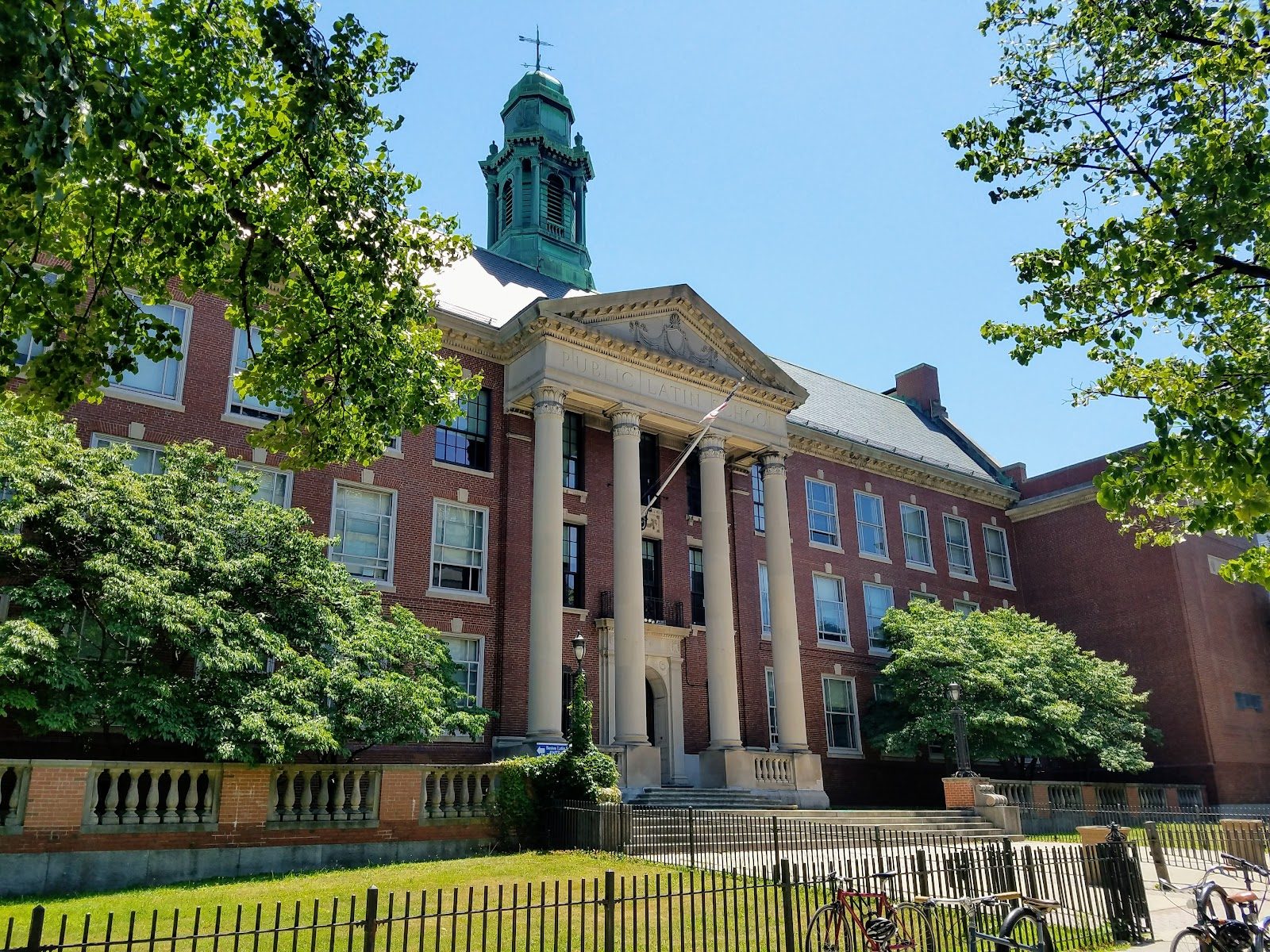
Photo © Arian Kamali via Google Maps
Type
Day
Ages
12–18
Curriculum
American · AP
Qualifications
AP
Ratio
—
The Verdict
Editor's commitment
Right for
Children who want a serious public school with AP courses, English instruction and an admissions bar that tests every applicant.
Wrong for
Families wanting a gentle, small-scale sixth form will clash with an ages 12–18 school founded in 1635 and built on selection.
Watch out for
NEASC and NAIS accreditation signal institutional heft, but the school does not publish aggregate AP results on its public site.
Ranking breakdown
Boston Latin School · #53 of 1591
Composite score 79.2. 8 weighted criteria.
By criterion
Academic Outcomes
Weight 20%
#31
of 1529 scored
University Placement
Weight 16%
#41
of 1529 scored
Prestige & Heritage
Weight 12%
#91
of 1571 scored
Alumni Network
Weight 12%
#62
of 1530 scored
Facilities
Weight 12%
#968
of 1533 scored
Transparency & Communications
Weight 8%
#123
of 1532 scored
Peer & Industry Review
Weight 10%
#134
of 1548 scored
Admissions Selectivity & Demand
Weight 8%
#72
of 1529 scored
Score history
Boston Latin School · 2026
Movement across 2024–2026. Peer average overlaid.
Overall — 2024–2026
79.2/ 100
▲ +18.5 vs 2025
year on year
Peer & Industry Review
How Boston Latin School is regarded in the sector
78
Strong · high confidence
Boston Latin School, the oldest public school in the U.S., is consistently ranked among top public high schools nationally by U.S. News & World Report and Niche.com, and is frequently cited in education press for its rigorous exam-school admissions and notable alumni including Benjamin Franklin, Samuel Adams, and several U.S. Senators. It has strong regional prestige within the Boston Public Schools exam-school tier and is a frequent benchmark for other selective public schools, though it does not receive the same global elite-private-school coverage as institutions tracked by Tatler or Good Schools Guide.
Evidence sources
Editors' overview
Boston Latin School has one fact no rival can borrow: it opened in 1635, more than a year before Harvard, and it still runs as a public day school with selective entry for ages 12 to 18. That combination matters. This is not a polished private-school imitation of academic seriousness; it is the original Boston grammar-school model, still geared to students who want hard intellectual competition rather than a padded adolescence. The school teaches an American curriculum with AP, works in English, and carries accreditation from NEASC and NAIS. Its alumni record is not a vague boast. Wikidata alone captures 133 notable former students, including 30 politicians and statespersons, 36 scientists and scholars, and 30 writers and journalists. That is a serious civic and intellectual footprint.
What puts Boston Latin on a shortlist is not warmth of branding or glossy claims about the whole child. It is institutional weight. Few schools in the United States can match a continuous history this long, and fewer still combine that history with a public-school mandate and an alumni network of this reach. The school’s own site reinforces that old-boy-and-old-girl machinery: reunion culture, graduate awards, fundraising, college jump-start programming, and a Boston Latin School Association that remains active and visible. Parents looking for transparent public-domain exam data will hit a limit here; the school does not publish aggregate AP results in the source provided. Still, the broad outline is clear enough: this is a place built for high-output students who value standards, tradition and academic status over pastoral theatre.
The right child for Boston Latin is self-propelled, resilient and comfortable in a school where achievement carries social weight. This suits students who enjoy being surrounded by other bright adolescents and who will use the school’s history, city location and alumni reach as working advantages rather than decorative prestige. It does not suit families who want small-scale hand-holding, progressive informality or a deliberately pressure-softened culture. Boston Latin’s appeal is bracingly old-fashioned: a non-religious public school, founded in 1635, with selective entry, AP coursework and a record of producing public figures. For the right student, that remains a rare proposition.
Academic Performance
Boston Latin’s academic reputation rests on selectivity and historical cachet, but the hard public data in the source set stop short of the figures parents need for a clean comparison. The school does not publish aggregate AP outcomes here, so there is no disclosed school-wide pass rate, no subject-score distribution, and no public headline that places it neatly against exam-driven private competitors. That opacity matters. In a US market where many strong schools trumpet National Merit counts, SAT medians or AP profiles, Boston Latin leaves outsiders to infer performance from admissions pressure, college-prep programming and the school’s deep-rooted academic culture. That is enough to establish seriousness; it is not enough to prove where the school sits in the top tier on examination metrics alone.
Relative to peers, Boston Latin still reads as a high-expectation public school rather than a data-polished independent. The school’s mission centres on preparation for successful college study, and the institutional ecosystem around alumni, university transition and graduate distinction points to a results-conscious culture. The notable-alumni record is also hard to ignore: 133 catalogued figures across public life, scholarship, business and the arts mark a school with exceptional long-range output. That is not the same thing as current exam transparency, and parents should keep the distinction clear. If you want published, granular external-results tables, look elsewhere. If you want a school with a serious intellectual track record and no interest in soft selling, Boston Latin remains a formidable contender.
Facilities
Boston Latin does not trade on spectacular physical plant in the way wealthy independents do. The school site provided points instead to a working institutional campus: an athletics programme, a dining hall, event spaces used by the alumni association, and school-wide gatherings substantial enough to support reunion traffic and community functions. That tells you the basics are in place for a full secondary school life, but it does not establish a facilities arms race. There is no published showcase here for cutting-edge science centres, black-box theatres, design labs or resort-grade sports provision. Against fee-paying peers, that matters. Families comparing Boston Latin with top private schools should expect a serious public-school estate, not a luxury campus engineered to impress on tour.
That is not a weakness in itself. For the right student, the more important asset is that the school’s facilities function in service of an academically hard-edged culture rather than as a selling tool. The visible infrastructure supports sport, student life, alumni continuity and college transition, and the school’s long-established association gives the place an institutional density many peers cannot match. Still, the public-facing detail is thin. Schools with stronger estates publish floor-by-floor evidence; Boston Latin does not. On facilities alone, it sits below top-tier independents with lavish capital budgets. On usefulness, continuity and civic heft, it remains distinctive.
That is enough to establish seriousness; it is not enough to prove where the school sits in the top tier on examination metrics alone
Prestige
Boston Latin carries serious public prestige because its name has weight far beyond the local catchment. In American education, very few state schools function as civic institutions in their own right; this one does. The combination of selective entry, academic tradition and a graduate network that still turns up, organises and gives back creates real social capital, not borrowed branding. Its alumni bench is the clearest proof. Even the verified floor is 133 notable former students, with deep representation in politics, scholarship, business and journalism. That breadth matters more than a handful of celebrity names. It marks a school that has fed the American establishment for generations and still expects pupils to take intellectual life seriously.
That prestige has a distinct texture. It is not polished, international-luxury prestige of the fee-paying sort. It is old republican prestige: examination, discipline, argument, public service, institutional memory. For some families, that carries more status than manicured campuses and glossy university placement pages. It also makes the school unforgiving. The brand value rests on difficulty and earned admission, not comfort. I rate its prestige highly because it combines public selectivity with a durable record of producing people who matter in national life. I do not rate it at the absolute summit of school prestige on global recognition alone; outside the US, the name travels less cleanly than elite boarding schools or top independents. Within its own system, though, Boston Latin is formidable.
Families comparing Boston Latin with top private schools should expect a serious public-school estate, not a luxury campus engineered to impress on tour
Communications
Parent communication is functional, centralised and public-facing rather than intimate. The homepage carries a steady stream of school and alumni updates, event notices, athletics coverage, reunion news and calls for nominations, all tied into a visible calendar. The presence of SIS/Aspen on the main navigation matters more than the celebratory copy around it: that signals a working parent portal for day-to-day information, not just a brochure site. Social channels are linked prominently, and the school also keeps a separate alumni association presence in view. That creates strong institutional communication across current families, students and graduates. It does not create a *warm, high-touch parent-relations machine*. The emphasis falls on announcements, schedules and community continuity, with a lot of weight given to the alumni body and school events.
Effectiveness is mixed, but clear enough. For operational communication, the structure looks competent and disciplined: calendar visibility, portal access, news flow and event promotion all sit where parents expect them. For parents who want deep academic reporting in the public domain, the school is less satisfying. We have not seen published aggregate AP outcomes, and the public site gives more space to alumni life and institutional ritual than to hard academic dashboards. That imbalance tells you something about the culture. Boston Latin communicates like an old, self-confident institution: it tells families what is happening, keeps the network engaged, and does not spend much energy performing transparency for outsiders. For some parents that reads as refreshingly unslick; for others, it leaves avoidable gaps.
Uniqueness
What no competitor can replicate is Boston Latin’s status as a living civic institution rather than a private brand. This is a selective public school with an admissions test, a grammar-school inheritance and an alumni organisation that still functions as an active force in school life. That combination is highly unusual in the US. Most schools offer either public access without inherited prestige, or prestige without public purpose. Boston Latin combines both, and that gives students entry into something bigger than a set of classrooms: a durable network of graduates, rituals, expectations and institutional memory that carries real weight. The verified notable-alumni floor of 133 underlines that reach. Students do not just attend; they join a lineage with a long record in public life, scholarship and letters.
For the right pupil, that distinctiveness brings clear advantages. Ambitious adolescents get a peer group that treats academic achievement as normal, not eccentric. They also get a school culture with unsoftened standards, where competition is part of the texture and status is tied to intellectual performance rather than polish. That can be galvanising. It can also be abrasive for students who need constant reassurance or a gentler social climate. Boston Latin’s uniqueness, then, is not charm or luxury. It is seriousness with public legitimacy: a school that still links selective academic schooling to civic purpose, and gives able students a rare route into an old, influential American educational tradition.
On facilities alone, it sits below top-tier independents with lavish capital budgets
Student Profile
The students who thrive here are hard-driving, intellectually competitive and comfortable with external standards. This is not a school for children who need constant adult cushioning or a culture built around reassurance. It suits pupils who are motivated by demanding peers, who can handle selection without making it their whole identity, and who treat school as a serious daily occupation. The active alumni machine and the school’s long civic shadow also shape the social mix: many students will value history, status and institutional belonging, and some will relish joining a network with at least 133 notable former pupils already on record. That can be energising for ambitious adolescents. It can also feel socially exacting for those who prefer a looser, less tradition-conscious environment.
A good fit is a teenager with stamina, self-command and a taste for argument, books and measurable achievement. Pupils who enjoy intellectual hierarchy, clear benchmarks and the company of other able students will find this bracingly serious. So will children with a strong sense of public purpose; the school’s mission still points beyond grades towards citizenship and adult responsibility. The weaker fit is easy to identify. If your child needs a small, pastorally soft atmosphere, resists comparison, or wants school to feel intimate and emotionally buffered, this will be a hard place to love. Boston Latin suits the student who wants challenge first, prestige second and comfort a distant third.
On usefulness, continuity and civic heft, it remains distinctive
Co-curricular strengths
Arts & sport, on a separate axis
Overall 7.5/10
Scored 0-10 from the school's own published evidence. This axis is editorial-only — it does not feed the main WTS ranking.
Sports
8.3/10
Cross country, and the external evidence adds a long-standing football rivalry since 1887 plus a 2024 MIAA Division 2 boys' ice hockey state championship, which constitutes sustained named fixtures and state-level competitive success.
Drama
8.2/10
The extracurriculars explicitly include theater productions, the external evidence confirms a school auditorium, and a verified alumnus won a Primetime Emmy Award, which under the laureate rule anchors drama at at least 7.
Dance
4.5/10
Music
8.7/10
The extracurriculars explicitly include orchestra and concert choir, showing named ensembles and visible participation.
Visual Arts
7.8/10
Editor first-pass · editor-reviewable · 7/28/2026
Notable alumni · Wikidata
133notable alumni
100 historic (born pre-1930) · 6 modern (born post-1970)wikidata:2026-07-28 How we source this

WTS 300 badge
2025/26 editionBoston Latin School is one of the World's Top 300 Schools for 2025/26. Claim your listing to add it to your site →
Strengths
- +Founded in 1635, Boston Latin School is the oldest continuously operating public school in the United States, predating Harvard College by more than a year.
- +As a tuition-free public exam school, it draws students on academic merit alone, giving access to families who could not otherwise afford independent-school fees.
- +Alumni include five signers of the Declaration of Independence and composer Leonard Bernstein, reflecting a long record of producing high achievers.
- +The school has been recognised among the top public high schools in the region, ranking 26th nationally on U.S. News & World Report's list in a recent cycle.
- +Curriculum is built around a rigorous six-year humanities core with mandatory Latin and AP coursework, offering genuine academic depth rather than breadth-for-breadth's-sake.
Considerations
- −Admission is restricted strictly to residents of the City of Boston, with no exceptions, ruling out relocating families who settle in surrounding suburbs such as Brookline or Somerville.
- −Entry is only possible at grade 7 or grade 9, via a competitive exam and grades-based process, so families arriving mid-cycle at other ages have no route in.
- −In 2016 a district investigation found the school had mishandled multiple reported incidents of racial harassment, leading to the headmaster's resignation and a federal civil-rights inquiry.
- −As a large public exam school, the student-teacher ratio sits around 18:1, higher than is typical at fee-paying independent day schools.
Availability
Primary entry gate & tests
MAP Growth + GPA (Boston Res.)
Gallery
Photo © T. C. via Google Maps
Photo © Katie Meyers via Google Maps
Photo © Katie Meyers via Google Maps
Photo © Katie Meyers via Google Maps
Photo © Katie Meyers via Google Maps
Photo © Katie Meyers via Google Maps
Photo © Katie Meyers via Google Maps
Photo © Katie Meyers via Google Maps
Photo © Katie Meyers via Google Maps
Parent reviews
Have you sent your child here?
Voice reviews carry the strongest trust badge — we transcribe them for you to tidy up before they go live. Prefer to type? A written review is fine too.
Add your voice
In 60 seconds, tell other parents: what's the best thing about Boston Latin School, and what surprised you when your child joined?
We ask for a Google sign-in so every review has a real face behind it — no anonymous drive-by attacks on schools, and no faked positive reviews. Your email is never shown publicly.
Send this profile to a friend
International parents rely on word-of-mouth. Share this review with someone weighing the same decision.
Schools with places
Similar schools to Boston Latin School with places available now.
The Roxbury Latin School
Boston · United States
- 2026-27
- CLOSEDRegular cycle
- 2027-28
- OPENS SOONOpens 1 Sept '26
Milton Academy
Milton · United States
- 2026-27
- CLOSEDRegular cycle
- 2027-28
- PLACES OPENInterviews underway
Groton School
Groton · United States
- 2026-27
- CLOSEDRegular cycle
- 2027-28
- PLACES OPENProfile live
The Winsor School
Boston · United States
- 2026-27
- CLOSEDRegular cycle
- 2027-28
- OPENS SOONOpens Sept '26
Availability first, then country, area, curriculum, price, co-curricular
Consider also
Also worth looking at alongside Boston Latin School.
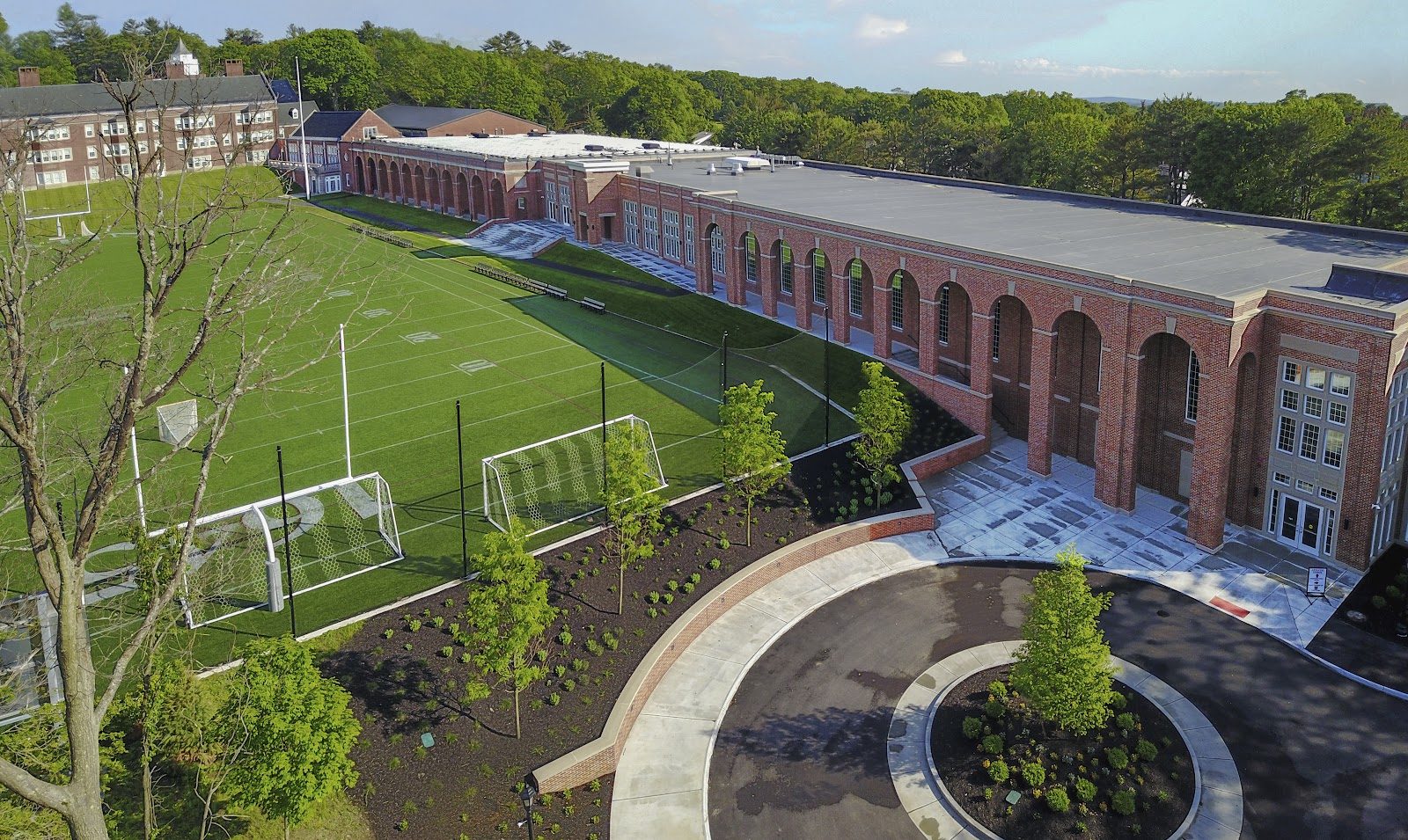
The Roxbury Latin School
Boston · United States
In West Roxbury, a boys' day school founded in 1645 has run continuously ever since, prizing 6:1 mentorship over scale.

The Nueva School
Hillsborough · United States
Since 1967, a Bay Area laboratory for gifted minds, pairing design thinking with the country's first dedicated social-emotional learning curriculum.
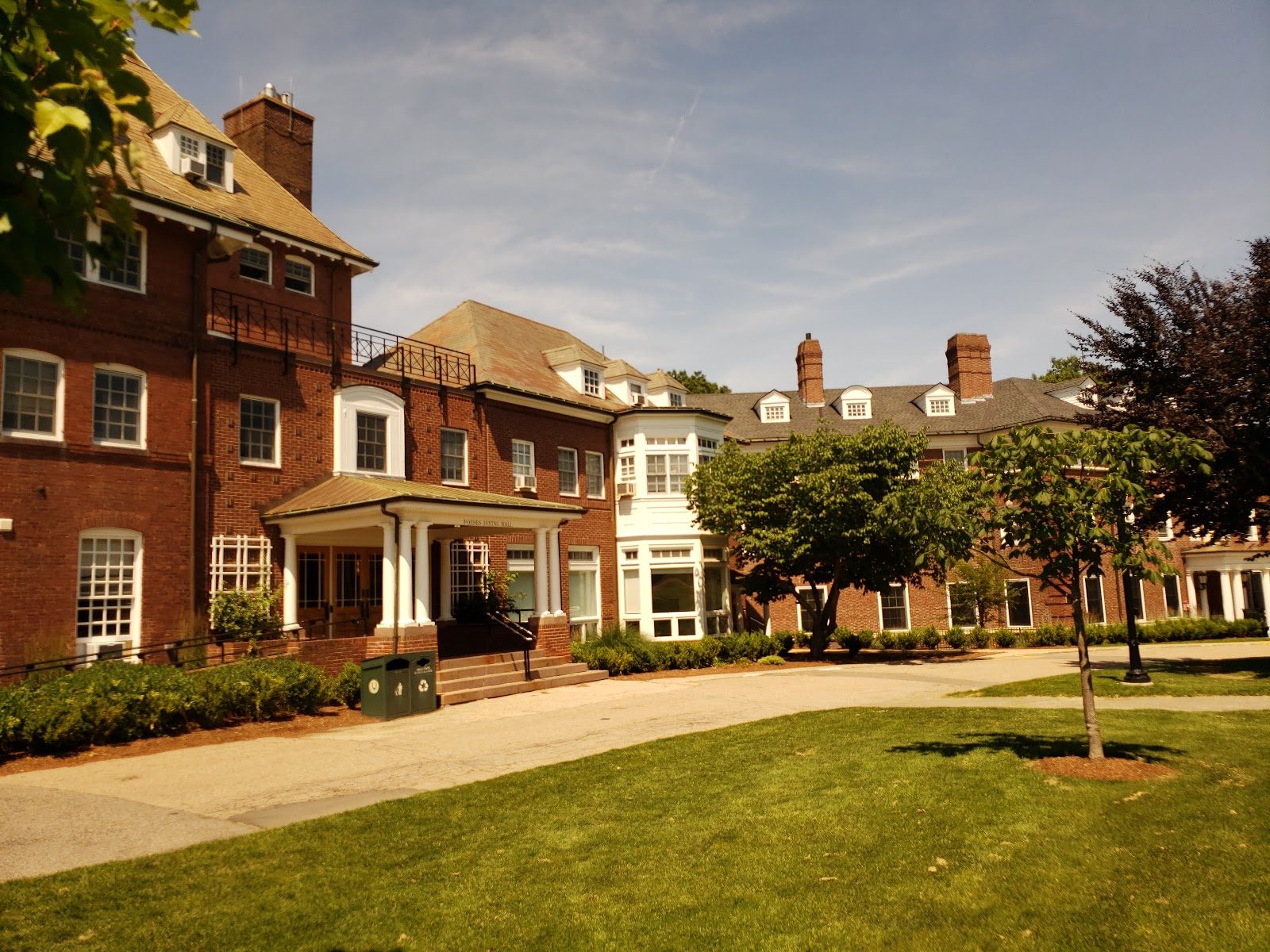
Milton Academy
Milton · United States
Eight miles from Boston, a 1798 charter still runs on Harkness-table debate rather than lecture halls.
Horace Mann School
New York City · United States
Born as Columbia Teachers College's 1887 experiment, now a Riverdale hilltop campus that swaps AP exams for homegrown advanced courses
Same country and curriculum — closest matches within ±10 points either way