
Al Muhammadiyah
Advanced Learning Schools
low confidence· 4/6 cats · 1 avg sourcesIn central Riyadh, a full IB continuum meets American college prep for a student body that is majority Al Saud.
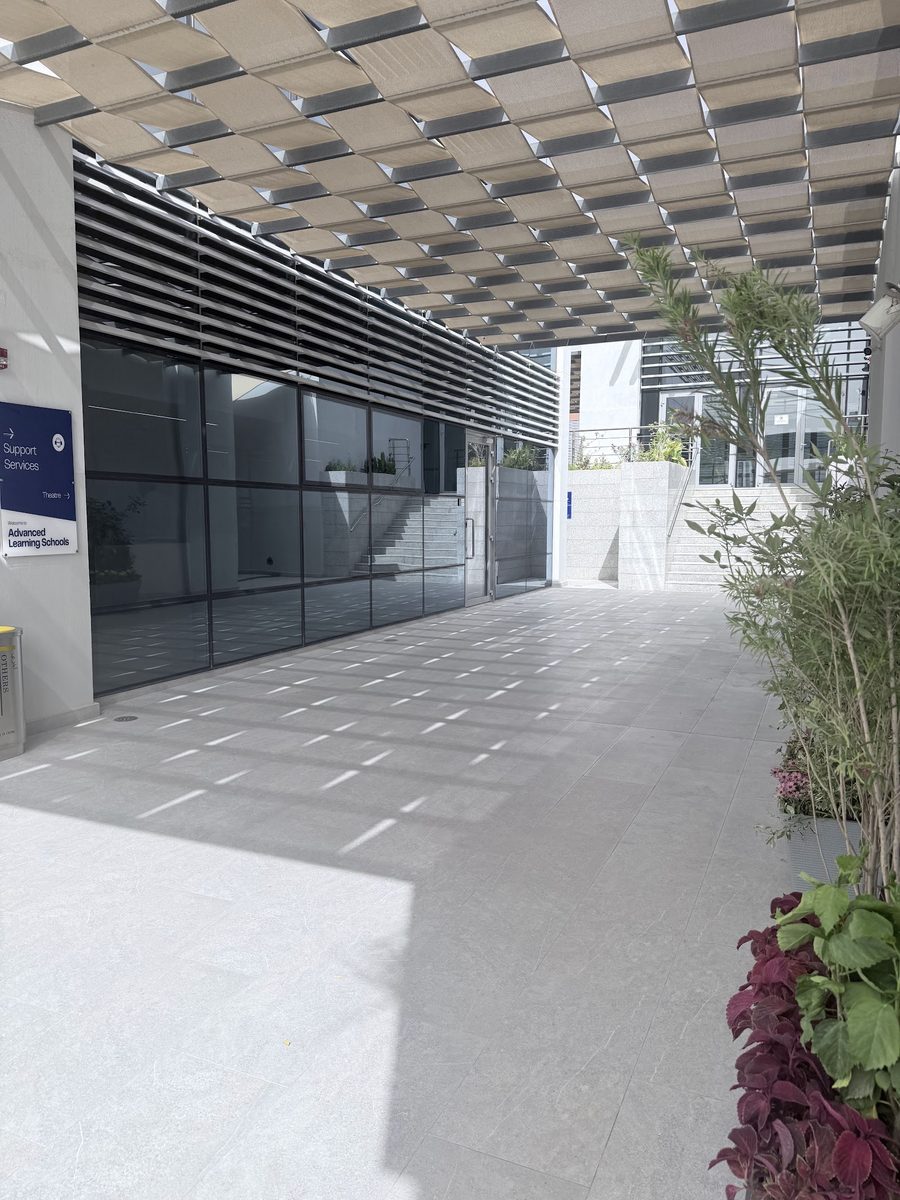
Photo © Advanced Learning Schools via Google Maps
Type
Day
Ages
3–18
Curriculum
American · IB
Qualifications
AP · IB Diploma · US High School Diploma
Ratio
—
The Verdict
Editor's commitment
Right for
Riyadh families wanting one school from age 3–18 with American and IB pathways, taught in English and Arabic.
Wrong for
Parents wanting boarding, a religious ethos, or a simpler intake profile than a Riyadh school with many Al Saud families.
Watch out for
Founded in 1998 and accredited by Middle States, CIS, NESA and the IB, it has pedigree; the social milieu will dominate daily life.
Ranking breakdown
Advanced Learning Schools · #1405 of 1591
Composite score 51.8. 8 weighted criteria.
By criterion
Academic Outcomes
Weight 20%
#1370
of 1529 scored
University Placement
Weight 16%
#1359
of 1529 scored
Prestige & Heritage
Weight 12%
#1426
of 1571 scored
Alumni Network
Weight 12%
#1082
of 1530 scored
Facilities
Weight 12%
#1382
of 1533 scored
Transparency & Communications
Weight 8%
#1383
of 1532 scored
Peer & Industry Review
Weight 10%
#1216
of 1548 scored
Admissions Selectivity & Demand
Weight 8%
#1308
of 1529 scored
Peer & Industry Review
How Advanced Learning Schools is regarded in the sector
58
Credible · medium confidence
Advanced Learning Schools carries a distinctive, if quietly-held, standing in Riyadh rooted less in sector awards than in its unusual client base and regulatory status. WhichSchoolAdvisor's review notes it is one of the few local independent schools in the Kingdom given permission to deviate from the Saudi National Curriculum, with over 60 per cent of students Al Sauds (members of the royal family), and highlights its long tenure since establishment in 2005 as a long-term provider of international education offering all three IB programmes and CIS accreditation. The Good Schools Guide lists it as a reviewed, non-profit institution, though it does not publish exam-results data for the school, leaving academic benchmarking largely untested by independent press. Coverage overall is respectful but modest in volume, reflecting a credible, well-connected local institution whose reputation rests more on its royal-family enrolment and curricular latitude than on broad sector acclaim.
Evidence sources
Editors' overview
Advanced Learning Schools occupies a rare niche in Riyadh: an English-medium day school with both an American academic spine and the full IB continuum, from the Primary Years Programme through to the Diploma Programme. That combination matters. It gives families a school that can handle students who need structure, breadth and international mobility without forcing an early choice between American transcripts and IB credibility. The other distinguishing fact is social, not academic: this is a school known for a student body with a strong Al Saud presence. For some families, that signals access, discretion and a peer group drawn from the kingdom’s top tier. For others, it will feel insular, status-conscious and too narrow in social mix. Either way, it sets ALS apart.
The school’s market position is clear. Founded in 1998, ALS is not an old Riyadh institution by local elite-school standards, but it is established enough to avoid the volatility of newer entrants. Its accreditations — Middle States, CIS, NESA and IB World School status — give it external scrutiny that many ambitious schools claim and fewer secure. As a 3–18 day school, it offers a single-campus journey for families who value continuity and want to avoid repeated admissions churn. The bilingual setting, with English and Arabic, suits internationally minded Saudi families and expatriate families who want strong access to English-medium university pathways without cutting students off from Arabic. The attraction is polished, well-connected and socially powerful; the risk is that families can mistake prestige for fit.
Parents should shortlist ALS if they want three things at once: a serious international curriculum, a protected Riyadh network and a school that can prepare students for overseas higher education without shedding local relevance. The full IB continuum is the headline feature, but the real selling point is the blend of academic portability and social capital. This is not the school for families hunting a rough-and-ready, hyper-diverse, mission-driven outlier. It suits students who are comfortable in high-expectation environments, who benefit from clear academic pathways, and who can navigate a community where background and family standing carry visible weight. The best-fit child is academically capable, socially assured and unfazed by a setting that is elite by design.
Academic Performance
ALS does not publish the kind of hard outcome data that would let parents place it cleanly against Riyadh’s strongest academic competitors. We have not seen aggregate IB Diploma averages, subject score distributions, pass rates, SAT ranges, AP results or university destination lists with enough detail to test the school’s claims. That matters. In an expensive, status-heavy market, serious schools distinguish themselves with transparent exam reporting, not polished language about student success. On public evidence, ALS leaves parents with too little to measure. The full programme range gives students multiple exit routes, but breadth is not the same as proof of performance.
That does not put ALS in the weak-academics category; it puts it in the opaque category. The external validations in place tell parents the school has institutional credibility, and the dual American/IB structure gives able students credible pathways into selective overseas admissions systems. But without published headline results, ALS sits below the most data-confident schools in the region on academic transparency alone. Families choosing this school for network, continuity and social environment may accept that trade-off. Families choosing on outcomes first should press for recent IB Diploma averages, full pass data, testing profiles and destination lists before treating ALS as a top-flight academic bet.
Facilities
ALS does not trade on a showpiece boarding estate or a sprawling edge-of-city campus; its facilities need to work harder because the school serves an urban, socially exacting market. The key advantage is functional breadth. A school running both an American track and the full IB sequence needs competent science provision, serious library space, age-appropriate early years areas, indoor sports capacity, arts rooms and enough specialist teaching space to stop the timetable collapsing into compromise. ALS clears that baseline, and parents do not choose it for lack of infrastructure. Against Riyadh’s strongest premium peers, though, the facilities story reads as solid rather than spectacular. We have not seen evidence of the kind of arms-race hardware — major theatres, competition-scale aquatics, vast performance venues, or landmark athletic complexes — that some rivals use to justify top-end fees.
That distinction matters. For students whose priorities are daily usability, security and a well-contained school day, ALS has what it needs. For families who want a campus that overwhelms on first visit, this is not the obvious front-runner. The school’s physical offer fits its real appeal: not architectural theatre, but a controlled, polished setting where teaching, social environment and parental confidence carry more weight than spectacle. In peer comparison, ALS sits above under-resourced mid-market schools on credibility and completeness, but below the city’s most facility-heavy flagships on scale and wow factor.
For some families, that signals access, discretion and a peer group drawn from the kingdom’s top tier
Prestige
ALS carries real social prestige in Riyadh, and the reason sits less in published academic proof than in who chooses it. A school with a student body known for strong Al Saud representation occupies a distinct tier in the local market. That brings cachet, discretion and a network many families actively want. In status terms, ALS is not an aspirational newcomer trying to buy credibility with facilities language; it is already part of the city’s upper social circuit. For families who value peer group as much as teaching, that matters. For families who distrust socially concentrated schools, it is a warning sign. Prestige here is bound up with access, family standing and the confidence that comes from being embedded in a rarified community.
That does not make ALS unassailable. The school has recognised international validation and a broad academic offer, which gives its name weight with globally minded families, but it does not publish the hard attainment data that turns local prestige into unquestioned academic prestige. That gap keeps ALS a step below the region’s most outcome-led elite schools in pure educational reputation. Its brand is strongest with families who want a protected, high-status environment with credible overseas pathways attached. In plain terms: ALS has high prestige socially, solid prestige institutionally, and only partial prestige academically because the school does not disclose enough results to prove top-tier performance.
We have not seen enough public-facing detail to call the school exceptionally transparent, and that matters in a premium market
Communications
ALS’s parent communication has to carry more weight than at a school where families simply accept distance and opacity. In a status-conscious community, parents expect speed, discretion and a clear line to people who can act. ALS gives the impression of a school built around controlled access rather than radical openness: polished enough, formal enough, and careful about what enters the public domain. That reading fits the school’s wider pattern. It does not publish the hard academic data that would reassure outcome-driven parents, and that same instinct for institutional privacy shapes how the school communicates externally. For some families, that registers as reassuringly discreet. For others, it reads as too closed.
Effectiveness therefore depends on what a parent wants from communication. If the priority is orderly day-to-day contact, predictable routines and a school that does not air its business noisily, ALS will satisfy. If the priority is forensic transparency — open publication of results, detailed comparative data, and a constant flow of measurable evidence — ALS falls short. We have not seen enough public-facing detail to call the school exceptionally transparent, and that matters in a premium market. The best reading is that ALS communicates selectively and professionally, with stronger control than candour. Families who value access behind the scenes more than information in public will be comfortable. Families who want every important question answered before they ask it will push harder.
Uniqueness
What sets ALS apart is not a single programme label or a flashy campus claim. It is the combination of an international academic route with a socially rarefied intake that few schools can match. In Riyadh, many schools offer status, and many offer overseas-facing academics; ALS ties the two together inside one tightly controlled community. That gives students more than classroom instruction. It gives them daily exposure to peers from influential families, a strong sense of social code, and early fluency in the manners and expectations of Saudi elite life. For the right child, that is a serious advantage: confidence, networks and cultural ease in rooms that matter. For the wrong child, it can feel insular, high-pressure and unforgiving.
The school’s age range also matters because it allows families to build a long educational runway from the earliest years to university entry without repeated disruption. That continuity can produce stronger pastoral knowledge of a child, steadier friendships and less of the performative churn that marks many prestige schools. The payoff for students is coherence: one institutional culture, one peer world, one set of expectations over time. ALS is therefore distinctive not because it is the most experimental or the most publicly data-rich, but because it offers a protected elite pipeline from nursery to sixth form. In a market crowded with schools chasing scale or spectacle, that is a specific and powerful proposition.
The other distinguishing fact is social, not academic: this is a school known for a student body with a strong Al Saud presence
Student Profile
The student who thrives here is socially confident, well-schooled in adult expectations, and comfortable in a community where family background carries visible weight. ALS suits children who do not need a sprawling social buffet to find their people; the peer group is more contained than at the most internationally mixed schools, and the culture rewards polish, self-command and ease with hierarchy. Students who value privacy, discretion and a high-status environment will fit. Students who want informality, eccentricity or a looser social code will feel pinned in. This is not an obvious home for the child who likes to test boundaries for sport.
Academically, the right pupil is organised, outward-facing and aiming at university options beyond Saudi Arabia, but the stronger fit is temperamental rather than purely scholarly. ALS works for children who can handle expectation without constant hand-holding, who read rooms well, and who are neither intimidated by privilege nor dazzled by it. The school also suits families planning a long stay: with ages running from 3–18, friendship groups and reputations harden over time, which can be stabilising for secure children and claustrophobic for those who need regular resets. In plain terms, ALS fits the assured, adaptable, socially fluent child. It is a weak fit for the deeply quirky, the conspicuously anti-elitist, or the student who needs a more open, anonymous crowd to relax.
For others, it will feel insular, status-conscious and too narrow in social mix
Co-curricular strengths
Arts & sport, on a separate axis
Overall 6.9/10
Scored 0-10 from the school's own published evidence. This axis is editorial-only — it does not feed the main WTS ranking.
Sports
7.5/10
Drama
7/10
Dance
6/10
Music
7/10
Visual Arts
7/10
Editor first-pass · editor-reviewable · 7/30/2026
Strengths
- +Offers both an American high school diploma track and the IB Diploma Programme, giving families two recognised university-entry pathways under one roof.
- +Runs as a single, continuous day school from early years through Grade 12, so families are not forced to change schools as children age up.
- +Coeducational structure allows siblings of different ages and genders to attend the same campus in Riyadh.
- +Based in Riyadh, giving access to the capital's large resident expatriate and Saudi professional community rather than a satellite city.
Considerations
- −Carries a 'candidate' editorial tier and a comparatively low editorial rank (1314), indicating it is less established than Riyadh's longer-tenured international schools.
- −Day school only, with no boarding option, so it is not viable for families wanting residential schooling.
- −Running both American and IB curricula in parallel means resourcing and teacher specialisation may be spread across two systems rather than concentrated in one.
- −Little independently published data (exam results, university placement lists, inspection reports) is available, making outcomes hard to verify from outside the school.
Availability
Primary entry gate & tests
CAT4 / Assessment
Gallery
Photo © Advanced Learning Schools via Google Maps
Photo © Advanced Learning Schools via Google Maps
Photo © Advanced Learning Schools via Google Maps
Photo © Admission Admission via Google Maps
Photo © FAN GROB via Google Maps
Parent reviews
Have you sent your child here?
Voice reviews carry the strongest trust badge — we transcribe them for you to tidy up before they go live. Prefer to type? A written review is fine too.
Add your voice
In 60 seconds, tell other parents: what's the best thing about Advanced Learning Schools, and what surprised you when your child joined?
We ask for a Google sign-in so every review has a real face behind it — no anonymous drive-by attacks on schools, and no faked positive reviews. Your email is never shown publicly.
Send this profile to a friend
International parents rely on word-of-mouth. Share this review with someone weighing the same decision.
Schools with places
Similar schools to Advanced Learning Schools with places available now.
Misk Schools
Riyadh · Saudi Arabia
- 2026-27
- PLACES OPENApps open / space-dependent
- 2027-28
- WAITPOOL2027/28 timetable TBC
Manarat Al Riyadh Schools
Riyadh · Saudi Arabia
- 2026-27
- WAITPOOLSpace-dependent
- 2027-28
- PLACES OPENRolling
Kingdom Schools
Riyadh · Saudi Arabia
- 2026-27
- WAITPOOLSpace-dependent
- 2027-28
- PLACES OPENRolling
British International School Riyadh
Riyadh · Saudi Arabia
- 2026-27
- WAITPOOLSpace-dependent
- 2027-28
- PLACES OPENRolling
Availability first, then country, area, curriculum, price, co-curricular
Consider also
Also worth looking at alongside Advanced Learning Schools.
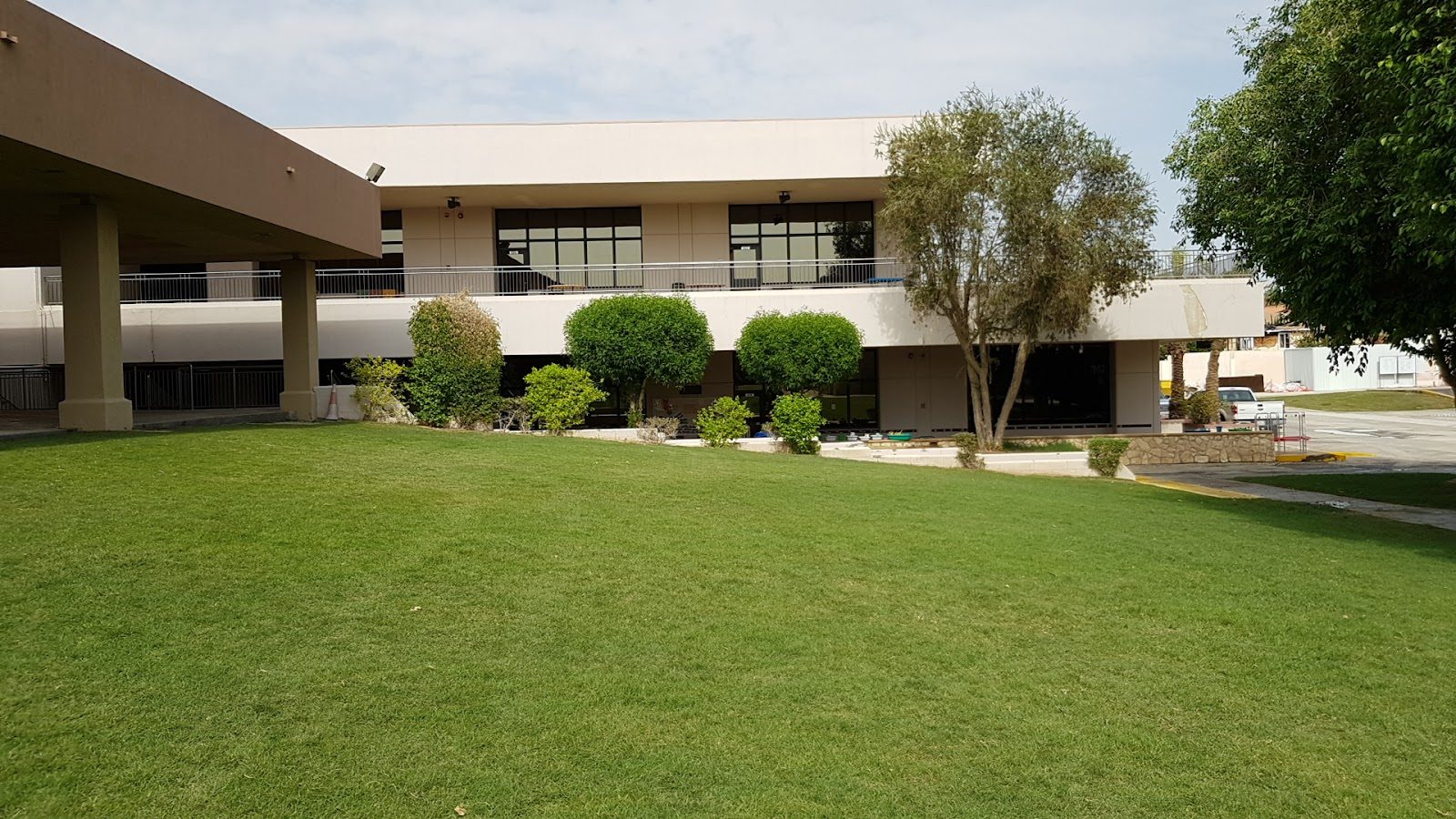
Dhahran Academy
Dhahran · Saudi Arabia
Founded in 1962 for US Consulate families, this Eastern Province campus now pairs AP Capstone rigor with a full IB Diploma pathway.

Aarhus International School
Aarhus · Denmark
PYP through MYP under one Aarhus roof, where 34 nationalities share a single Dalgas Avenue campus built for inquiry-based learning

Hiroshima International School
Hiroshima · Japan
One of Japan's oldest IB schools, where students carry origami cranes to Hiroshima's Sadako Peace Monument each year.
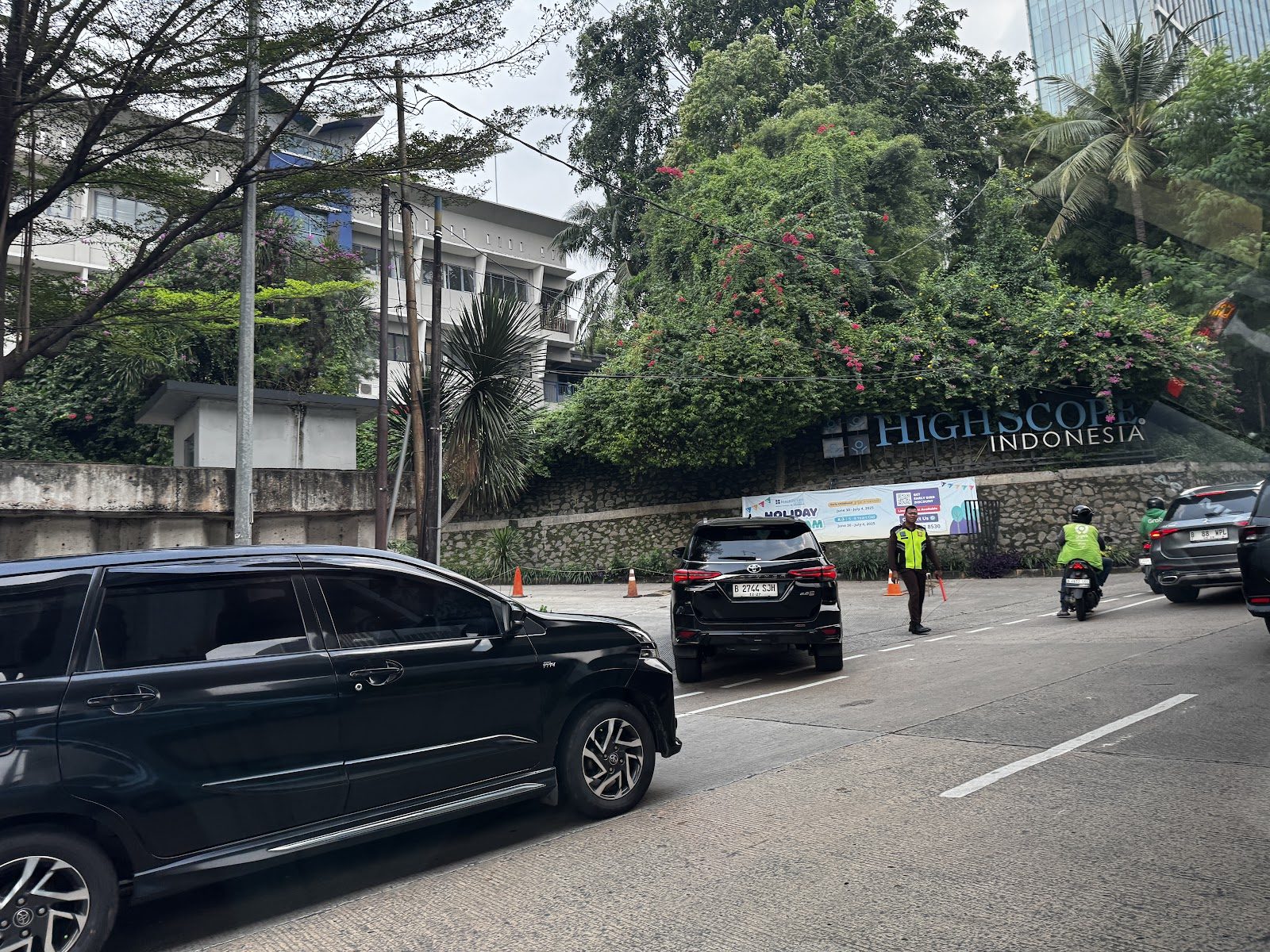
HighScope Indonesia TB Simatupang
Jakarta · Indonesia
Rooted in the 1962 Perry Preschool research, this Cilandak school pairs dual-language learning with three specialized high school majors.
Same country and curriculum — closest matches within ±10 points either way