
Massachusetts
Dana Hall School
high confidence· 6/6 cats · 3.17 avg sourcesFounded in 1881 as Wellesley College's feeder school, this all-girls campus pairs AP rigor with a decades-old equestrian tradition.

Photo © Dana Hall School via Google Maps
Type
Both
Ages
10–18
Curriculum
American (US High School Diploma) · AP (Advanced Placement)
Ratio
6:1
The Verdict
Editor's commitment
Right for
Girls aged 10–18 who want a single-sex US diploma with AP, 12-person classes and a 6:1 ratio on a boarding campus.
Wrong for
Families wanting co-education, a religious framework or IB; Dana Hall is non-religious, all-girls, and runs an American diploma with AP.
Watch out for
Boarding averages $75,950 a year, and the school publishes no aggregate AP score profile or university destination breakdown.
Ranking breakdown
Dana Hall School · #1008 of 1591
Composite score 62.1. 8 weighted criteria.
By criterion
Academic Outcomes
Weight 20%
#1050
of 1529 scored
University Placement
Weight 16%
#1057
of 1529 scored
Prestige & Heritage
Weight 12%
#967
of 1571 scored
Alumni Network
Weight 12%
#619
of 1530 scored
Facilities
Weight 12%
#1055
of 1534 scored
Transparency & Communications
Weight 8%
#998
of 1532 scored
Peer & Industry Review
Weight 10%
#998
of 1548 scored
Admissions Selectivity & Demand
Weight 8%
#760
of 1529 scored
Peer & Industry Review
How Dana Hall School is regarded in the sector
62
Respected · low confidence
Dana Hall is a well-established girls' boarding/day school in Wellesley, MA, regularly listed in Niche.com and Boarding School Review rankings of top New England girls' schools, and is known regionally as a solid alternative to more prestigious New England boarding schools. It lacks the consistent presence in top-tier specialist press (e.g., no regular Tatler or Sunday Times-style coverage, as those focus on UK schools) but maintains a credible peer reputation among independent school directories and college placement data cited by groups like the National Association of Independent Schools.
Evidence sources
Editors' overview
Dana Hall trades on a format that still has real force in the US market: an all-girls school with boarding, a compact age range of 10 to 18, and an academic programme built around the American high school diploma with AP on top. That combination gives it a clear identity. This is not a sprawling K–12 operation trying to be everything at once; it is a focused middle-and-upper-school campus in Wellesley, founded in 1881, with a long association with female academic ambition. The core academic proposition is strengthened by a 6:1 student-teacher ratio and an average class size of 12. Those numbers matter. They indicate a school built for discussion, close teacher attention and regular performance in class, not anonymity at the back of the room.
What marks Dana Hall out is the blend of serious academic pressure and a school culture designed for girls to take up space. The school talks a great deal about confidence and voice; in an all-girls setting, that has substance when the structure backs it up, and here the structure does. Parents looking for a co-ed social model will not find it. Parents looking for a place where girls lead discussions, take on advanced coursework and do so in a tightly staffed environment will. The boarding offer broadens the market beyond greater Boston, and the average annual boarding fee of $75,950 places Dana Hall firmly in the expensive, top-tier US independent bracket. At that price, families are paying for intensity, supervision and access, not scale.
The school will suit a student who wants high-expectation teaching without the machinery of a giant boarding school. It fits girls who are intellectually engaged, comfortable being known well by adults, and willing to participate rather than drift. The social and emotional learning emphasis will appeal to families who want pastoral infrastructure alongside AP rigour, though the school does not publish public outcome data in the information here, so parents will need to ask sharper questions about AP results, university destinations and year-group outcomes. Dana Hall belongs on a shortlist because it offers a distinct, coherent proposition: girls-only, academically demanding, small classes, boarding and day options, and a long-established campus identity in one of Greater Boston’s most education-focused towns. For the right student, that mix is hard to replicate.
Academic Performance
Dana Hall offers an academically serious US programme, but its public exam transparency is thin. The school does not publish aggregate AP score distributions, pass rates, mean scores, subject-by-subject performance, or a clear annual university destinations list in the sources we have seen. That matters. In the American independent-school market, especially at the fee level Dana Hall charges, parents should expect more than general claims about challenge and college success. Without hard outcome data, the school sits in an opaque bracket on measurable academic performance: not weak, but not publicly provable. The low staffing ratio and small classes strengthen the case for close academic attention, and the school’s own language points to a culture of discussion, proof, presentation and sustained teacher contact. Still, serious schools publish serious numbers.
Relative to peers, Dana Hall reads as a school whose academic quality is built through teaching conditions and institutional focus rather than through public score-chasing. That can work well for students who thrive in seminar-style classrooms and regular adult oversight. It also leaves parents doing more diligence themselves. Ask for the last three years of AP results, the share of pupils taking multiple APs, the range of score outcomes, and destination patterns beyond a few headline colleges. In a competitive New England girls’ school set, that information is the difference between earned academic credibility and marketing language. Dana Hall has the structural ingredients of a strong performer; it has not put the evidence into the public domain.
Facilities
Dana Hall’s facilities read as those of a compact, specialist school rather than a sprawling campus built to impress on a map. The school’s own account points parents to the spaces where girls are expected to do the work in public: the library, lab, classroom, stage and playing field. That matters. It indicates a campus organised around academic participation, performance and visible contribution, not one padded out with peripheral amenities. In peer terms, this sits below the arms-race excess of the biggest US boarding schools, which advertise theatres, research centres and athletics complexes on a different scale. But scale is not the only test. With a 6:1 staffing ratio and classes averaging 12, Dana Hall has the smaller-room advantage: facilities that are used hard, not admired from a prospectus.
The more distinctive asset is cultural rather than architectural. Dana Hall’s long association with girls’ education gives its teaching and performance spaces a clear institutional purpose: students are expected to lead discussion, make presentations, build things and compete, not wait to be called on. That can make ordinary rooms work harder than flashier campuses elsewhere. Still, parents comparing Dana Hall with top-tier New England rivals should ask direct questions about specialist provision in science, arts and sport, because the school does not publish the sort of granular facilities inventory that the strongest competitors now provide. The result is a campus offer that feels focused, usable and coherent, but less publicly documented than the best-resourced end of the market.
The more distinctive asset is cultural rather than architectural
Prestige
Dana Hall carries real old-school cachet in the American girls’ school market. The source of that prestige is not mystery. It began life as Wellesley College’s preparatory arm, and that lineage still gives the school a clear social and academic signal: serious education for girls, tied to one of the most recognisable women’s higher-education institutions in the US. Add boarding to that history and you get a school with reach beyond its local catchment, not just a strong suburban day school. The all-girls format sharpens the identity further. In a sector crowded with broad, co-educational independents, Dana Hall has a distinct institutional shape and a constituency that knows exactly what it is buying.
The rating also rests on operating conditions that affluent US parents read instantly: 6:1 staffing and classes of 12. Those figures support the prestige claim because they point to intimacy, scrutiny and a school built for participation rather than volume. What holds Dana Hall back from the very top prestige bracket is public visibility. We have not seen the kind of published outcomes data, headline university lists or dominant national profile that turn a respected New England school into a category-defining one. So the prestige here is substantial rather than absolute: strong heritage, strong niche, strong parent recognition, but less public academic proof than the most formidable names.
What holds Dana Hall back from the very top prestige bracket is public visibility
Communications
Dana Hall communicates with parents in the register many US independents favour: values first, operations second. The public voice is highly controlled, heavy on confidence, belonging and social-emotional framing, with more emphasis on what the school wants girls to feel and become than on the mechanics of school life. There is enough specificity to show real priorities — weekly Forum discussion, college-counselling events, explicit reference to difficult topics and historically marginalised voices — and that gives the message more substance than the usual empowerment gloss. The school also benefits from structural credibility: in a setting with a 6:1 staffing ratio and classes averaging 12, parents can expect direct contact with adults who know their children well. That supports communication in practice, not just on a website.
The weakness is public-facing sharpness. Dana Hall does not publish the kind of concrete academic reporting that would make its parent communication fully convincing: no aggregate AP data, no clear destinations list, no hard annual outcomes that test the school’s claims against results. For a school charging an average boarding fee of $75,950, that is a material omission. Parents will get a strong sense of ethos, pastoral intent and community language. They will not get enough evidence without asking for it. So the communication is warm, articulate and deliberate on culture, but incomplete on performance. Families who prize relationship, responsiveness and values-led messaging will be well served. Families who want hard data up front will find the school too guarded by half.
Uniqueness
Dana Hall’s clearest point of difference is not AP alone, or boarding alone, or an all-girls label on a prospectus. It is the combination of a narrow age span, a girls-only environment and a school structure that keeps pupils visible, answerable and expected to contribute. The school states that girls lead discussions, present proofs, wield tools and work publicly across classroom, lab, stage and field. That is more specific than the standard empowerment script. In practice, it means students spend their school years rehearsing intellectual authority rather than waiting for it later. The adult attention implied by the 6:1 ratio reinforces that. Girls who want room to hide will find Dana Hall uncomfortably direct; girls who want to be pushed into voice, leadership and self-possession get a setting built for exactly that.
The other distinctive strand is the school’s willingness to tie academic ambition to social and emotional work, equity language and explicit discussion of difficult issues. Weekly forum discussions and college events that include topics such as historically Black colleges and universities give that commitment a concrete shape. Plenty of schools claim to build confidence; fewer build routine structures around identity, argument and community life. Add the old equestrian tradition flagged in the school’s editorial framing, and Dana Hall lands in a niche that is unmistakably itself: academically demanding, girls-centred, pastorally deliberate and socially articulate. For students, that brings close scrutiny, stronger habits of participation and a school experience with a clear institutional point of view.
Weekly forum discussions and college events that include topics such as historically Black colleges and universities give that commitment a concrete shape
Student Profile
Dana Hall suits girls who want to be known, challenged and expected to speak. The school’s own language is unusually clear on this point: pupils are there to lead discussions, present proofs, build, perform and take part across academic and co-curricular life. In a setting with a 6:1 staffing ratio and classes averaging 12, there is little room for passive attendance. The best fit is a student who can handle close adult oversight, regular classroom visibility and a peer culture where contribution counts. This is a strong match for girls with intellectual drive, stage presence, athletic commitment or a defined extracurricular passion. It also works well for students who have outgrown louder co-ed dynamics and want a space where girls hold the floor as a matter of routine.
It is less well suited to the child who wants anonymity, loose expectations or a socially detached school life. Dana Hall’s emphasis on confidence, honest communication and discussion of difficult issues asks for a degree of self-possession and willingness to engage. That does not require extroversion. Quiet students can do well here if they are serious-minded, coachable and ready to participate when asked. Families drawn to a high-accountability environment with pastoral intent will find a good fit. Families looking for a more hands-off, socially anonymous or purely results-driven school will not. Dana Hall is for girls who can tolerate scrutiny, use support well and grow into a public, purposeful version of themselves.
The core academic proposition is strengthened by a 6:1 student-teacher ratio and an average class size of 12
Co-curricular strengths
Arts & sport, on a separate axis
Overall 9.4/10
Scored 0-10 from the school's own published evidence. This axis is editorial-only — it does not feed the main WTS ranking.
Sports
9.3/10
Students being 'on the stage and playing field' and refers to 'athletic venues,' which confirms sports provision.
Drama
9.4/10
Students working 'on the stage,' which supports the presence of drama/theatre.
Dance
9.4/10
Music
9.5/10
Visual Arts
9.4/10
The profile explicitly refers to 'arts rooms' and to campus breadth for 'academics, arts, and sports,' which indicates visual arts are offered but without specific courses, studios, exhibitions, or specialist facilities.
Editor first-pass · editor-reviewable · 8/2/2026
Notable alumni · Wikidata
10notable alumni
5 historic (born pre-1930) · 1 modern (born post-1970)wikidata:2026-08-02 How we source this
Strengths
- +Clear mission centered on girls’ education
- +Strong college-preparatory academic environment
- +Beautiful campus beside Wellesley College
- +Small scale allows students to be known
Considerations
- −All-girls model won’t suit every student
- −Selective admissions can feel competitive
- −Smaller size may limit overall program breadth
Availability
Primary entry gate & tests
ISEE/SSAT + Interview
Gallery
Photo © Dana Hall School via Google Maps
Photo © Dana Hall School via Google Maps
Photo © Dana Hall School via Google Maps
Photo © Zupeng Huang via Google Maps
Photo © Zupeng Huang via Google Maps
Photo © Zupeng Huang via Google Maps
Photo © Dana Hall School via Google Maps
Photo © Dana Hall School via Google Maps
Photo © Fred Clayton via Google Maps
Parent reviews
Have you sent your child here?
Voice reviews carry the strongest trust badge — we transcribe them for you to tidy up before they go live. Prefer to type? A written review is fine too.
Add your voice
In 60 seconds, tell other parents: what's the best thing about Dana Hall School, and what surprised you when your child joined?
We ask for a Google sign-in so every review has a real face behind it — no anonymous drive-by attacks on schools, and no faked positive reviews. Your email is never shown publicly.
Send this profile to a friend
International parents rely on word-of-mouth. Share this review with someone weighing the same decision.
Schools with places
Similar schools to Dana Hall School with places available now.
Boston University Academy
Boston · United States
- 2026-27
- CLOSEDRegular cycle closed
- 2027-28
- OPENS SOONOpens Sept '26
Belmont Hill School
Belmont · United States
- 2026-27
- CLOSEDRegular cycle
- 2027-28
- PLACES OPENApplication route live
Noble and Greenough School
Dedham · United States
- 2026-27
- CLOSEDRegular cycle
- 2027-28
- PLACES OPENJan 15 '27 Deadline
Middlesex School
Concord · United States
- 2026-27
- CLOSEDRegular cycle
- 2027-28
- OPENS SOONOpens 1 Sept '26
Availability first, then country, area, curriculum, price, co-curricular
Consider also
Also worth looking at alongside Dana Hall School.
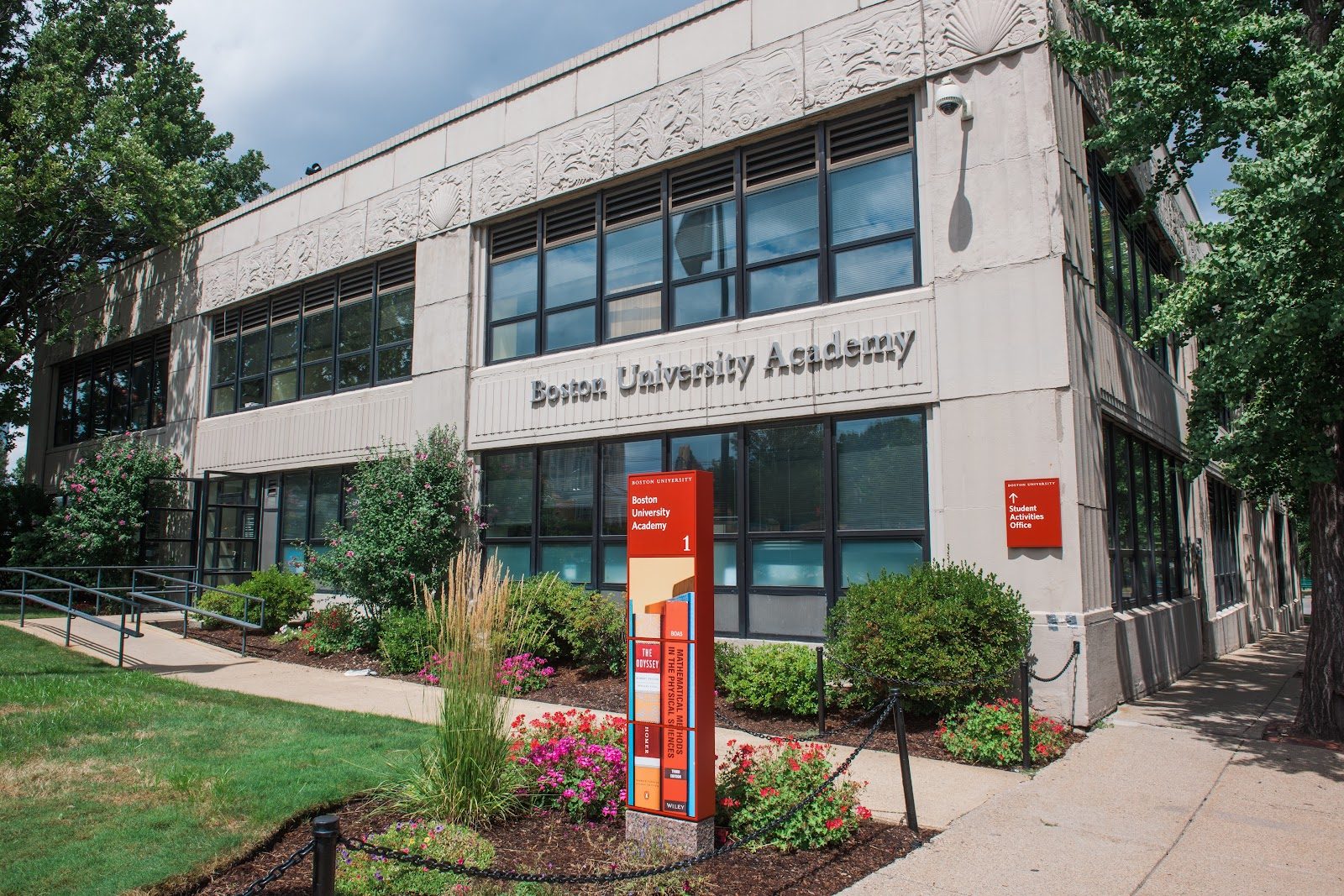
Boston University Academy
Boston · United States
Upperclassmen trade study halls for Boston University lecture halls, banking college credit before graduation.

The Browning School
New York City · United States
Manhattan's only K-12 all-boys day school, expanding onto East 64th Street after nearly 140 years on the Upper East Side.
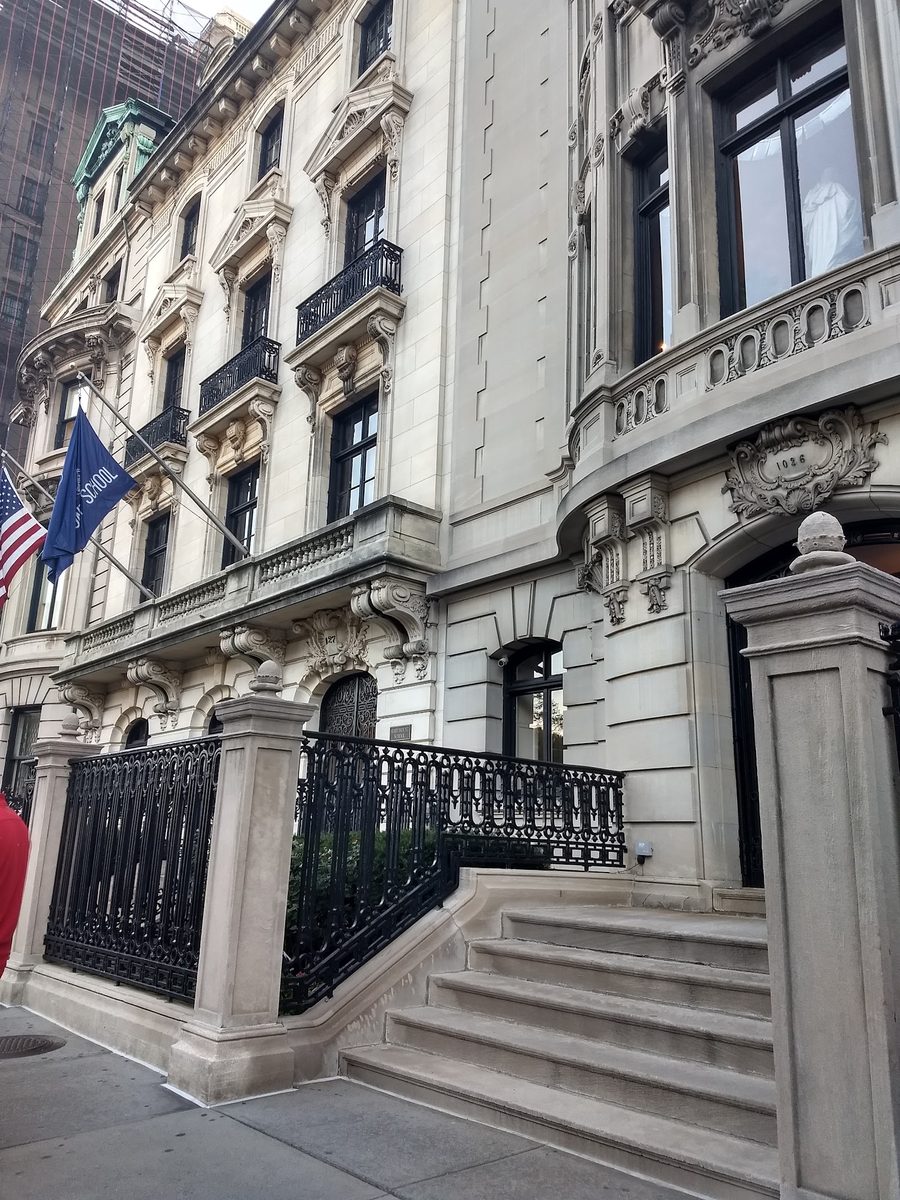
Marymount School of New York
New York City · United States
On Fifth Avenue, landmark mansions give way to Bloomberg terminals and classrooms inside the Met.

Greenwich Academy
Greenwich · United States
Connecticut's oldest all-girls school pairs single-sex grounding with coeducational upper-school classes shared alongside Brunswick's boys.
Same country and curriculum — closest matches within ±10 points either way