
United States
Frank Sinatra School of the Arts – Fine Arts
New · 2026/27Type
Ages
—
Curriculum
—
Ratio
—
The Verdict
Editor's commitment
Right for
United States families set on fine arts training and prepared to judge Frank Sinatra School of the Arts on a narrow brief.
Wrong for
Anyone needing published curriculum detail, accreditation or outcomes; this listing names only Fine Arts in the United States.
Watch out for
The public facts here stop at Frank Sinatra School of the Arts, Fine Arts, United States; opacity is the story.
Ranking breakdown
Frank Sinatra School of the Arts – Fine Arts · #1541 of 1591
Composite score 45.6. 8 weighted criteria.
By criterion
Academic Outcomes
Weight 20%
No data yet
1529 of 1591 scored
University Placement
Weight 16%
No data yet
1529 of 1591 scored
Prestige & Heritage
Weight 12%
#1566
of 1571 scored
Alumni Network
Weight 12%
No data yet
1530 of 1591 scored
Facilities
Weight 12%
No data yet
1533 of 1591 scored
Transparency & Communications
Weight 8%
No data yet
1532 of 1591 scored
Peer & Industry Review
Weight 10%
No data yet
1548 of 1591 scored
Admissions Selectivity & Demand
Weight 8%
No data yet
1529 of 1591 scored
Peer & Industry Review
How Frank Sinatra School of the Arts – Fine Arts is regarded in the sector
Insufficient peer signal
We couldn't find enough independent third-party evidence to score this school's peer & industry standing with confidence. It doesn't mean the school isn't well regarded — only that public reputation sources we trust don't yet cover it. This axis is left blank for now and the composite score is median-imputed from the other six categories.
Award
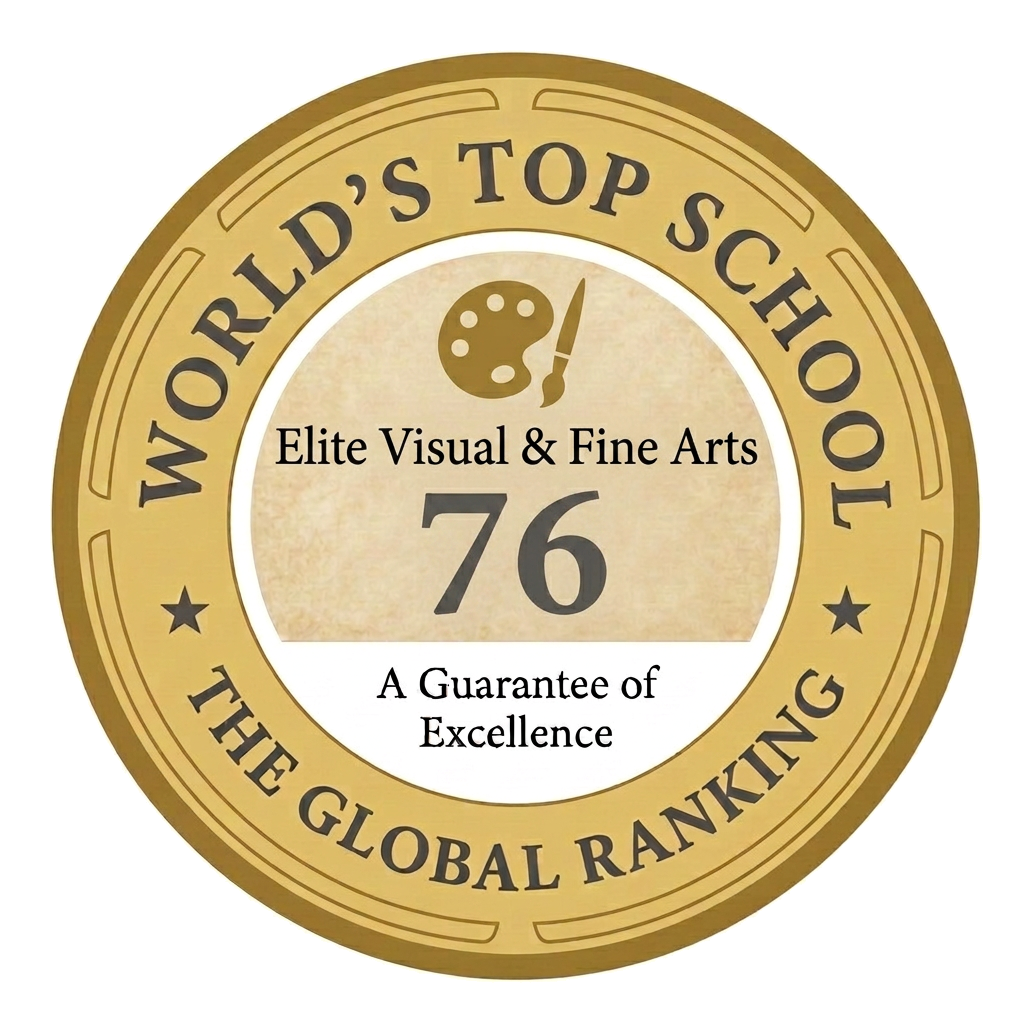
Elite Visual & Fine Arts 76
World's Top School · The Global Ranking
Frank Sinatra School of the Arts – Fine Arts is featured on our Global Top 76 ranking at #60. This seal is available for the school's marketing team to use on their website, prospectus and social channels.
Editors' overview
Frank Sinatra School of the Arts occupies a narrow but important niche: a public arts high school for students whose education needs to take creative training seriously, not treat it as an after-school extra. Its value lies in that focus. For the right child, this is not just another American secondary school with a decent drama club; it is a place built around serious artistic intent, daily discipline and performance culture. Parents looking for broad pastoral luxury, glossy campuses or the social insulation of an expensive private school should look elsewhere. Parents looking for a school where talent has structure, standards and public outcomes should pay attention.
What puts it on a shortlist is the premise itself. Specialist arts schools remain rare, and a school dedicated to fine arts offers a distinct proposition for students who already know that music, drama, dance, film or visual art matters to them at a high level. That creates creative intensity and a peer group shaped by commitment rather than passive interest. It also changes the rhythm of school life: rehearsals matter, critique matters, portfolio development matters, and public presentation matters. For a young artist, that can be an exhilarating fit. For a child who wants a broad, conventional school experience with sport at the centre and the arts on the margin, it is the wrong environment.
The market position is clear. This is a specialist state-sector option in the United States, not a finishing school for dilettantes. That matters. It places the school in a valuable middle ground: selective in purpose, practical in outlook and more culturally serious than the average comprehensive. The attraction for parents is not exclusivity for its own sake, but the chance to secure focused training without defaulting to private-school fees of $40,000 or $50,000 a year. That alone gives it real strategic value for families who want artistic stretch without buying into a luxury-school model.
The students who will want this school are self-directed, resilient and willing to have their work judged. They need stamina, because arts training exposes weaknesses quickly and publicly. They also need appetite for collaboration: ensembles, productions, workshops and critiques all demand it. The best fit is a teenager with clear artistic hunger, enough academic steadiness to manage a dual load, and the confidence to thrive in a culture where standards are visible. For that student, Frank Sinatra School of the Arts offers a rare sense of purpose. For everyone else, it is too specialised.
An Elite Visual & Fine Arts 76 school
Frank Sinatra School of the Arts, in Astoria, Queens, New York City, sits at rank sixty on the Elite Visual & Fine Arts 76 on the strength of being a free, fully public conservatory-style high school where Fine Art is one of six audition-gated majors, admitting students at a ratio of roughly three to nearly ten applicants per seat. Founded in 2001 by Tony Bennett and his wife Susan Benedetto, the school was built specifically to give New York City teenagers pre-conservatory-level access to a visual arts track without private-school fees, and it has held one of the highest graduation and college-enrollment rates among city public schools ever since.
The Fine Art studio runs as a genuine daily discipline rather than a bolt-on elective: students take 90-to-120-minute blocks in their arts major every day, with dedicated art-studio classrooms, faculty and exhibition slots separate from the academic timetable. The building itself, sited beside Kaufman Astoria Studios and the Museum of the Moving Image, was purpose-built with professional-grade equipment, and FSSA's partnerships extend to institutions such as the New York Philharmonic, the Shubert Foundation, Kaufman-Astoria Studios and Tribeca Film Festival. Academics remain conventional rather than a specialist art diploma - 18 AP courses and four years of math and science alongside the studio load - so the differentiator here is studio density and exhibition culture, not an elite foundation-year curriculum.
Notable alumni in the Fine Art stream specifically are still emerging by name, but the verified outcomes are strong: roughly one-third of graduates go on to pursue arts careers, and the school's college placements include Parsons, the School of Visual Arts, Rhode Island School of Design and Juilliard.
International openness is limited and families should be clear-eyed about this. FSSA is a New York City Department of Education public school with no tuition fee, no boarding facility, and admission runs through the MySchools.nyc audition process rather than any dedicated overseas pathway. Instruction is in English within a standard NYC public-school ESL framework, and there is no visa-sponsorship route since enrollment functions through city public-school eligibility. Applications and auditions open each October for the following school year. For an overseas family, this is not a boarding-school solution; it is realistically only accessible to those already relocating permanently to New York City well before the autumn audition window.
Academic Performance
External exam strength is the key unknown. Frank Sinatra School of the Arts has a strong public profile through performance and creative output, but that does not answer the question international parents usually ask first: how students do in standardised academic measures against other selective public schools. We have not seen published aggregate SAT or ACT data, no school-level AP score profile, and no consolidated university-matriculation table that would allow a clean comparison with academically selective magnets. That leaves the academic picture less transparent than it should be. For a specialist school, some opacity is tolerable; for parents weighing academic risk alongside arts ambition, it is a material weakness.
Relative to peers, the school sits in a distinct category. It does not compete on the same terms as exam-driven science magnets or independent college-prep schools that publish every score worth advertising. Its benchmark group is selective arts high schools, where dual demands in studio practice and academics shape outcomes differently. That can still produce strong university destinations and disciplined academic habits, but the absence of published headline results blocks any claim of top-tier exam performance. The school’s academic standing therefore rests more on selectivity, workload and student seriousness than on disclosed external metrics. Parents who need hard proof of academic outperformance need to ask for it directly: AP participation, score distributions, SAT or ACT averages, and four-year college placement data.
Facilities
Facilities matter a great deal at a specialist arts school, and here the essential question is not grandeur but whether the building gives students proper room to rehearse, perform, record and make work at intensity. Frank Sinatra School of the Arts has the advantage of being purpose-built for arts education rather than retrofitting a conventional high school around a few studios. That is a meaningful distinction. Students need black-box and stage performance space, dance studios, music practice and rehearsal rooms, visual arts rooms that can tolerate mess and process, and film or media spaces that support production rather than token exposure. Against peer public arts schools, that baseline is serious and fit for purpose. Against wealthy private arts conservatories, the offer is less lavish, but it does the central job.
The limit is breadth, not identity. Families should not expect the sprawling grounds, elite sports infrastructure or architectural excess that high-fee schools use to signal status. This school’s facilities serve the mission first. That gives it a hard-working, pre-professional feel rather than a pampered one. In its peer group, that is the right trade. Specialist arts schools rise or fall on whether students can spend long hours in spaces built for critique, repetition and public performance; decorative campus luxury counts for little. The missing piece is detail: the school does not publish enough granular information on technical resources, venue specifications or recent capital investment to let parents benchmark it with real precision. That leaves the facilities picture strong in concept, but less transparent than it should be.
Parents looking for broad pastoral luxury, glossy campuses or the social insulation of an expensive private school should look elsewhere
Prestige
Prestige here is real, but narrow. Frank Sinatra School of the Arts carries the cachet that attaches to a named specialist arts school with competitive entry, public visibility and a mission that filters for commitment. In arts circles, that matters. A teenager serious about performance, film, dance, studio art or theatre will recognise the difference between a school built around those disciplines and a standard high school that merely accommodates them. That gives the school credible cultural weight. It also gives students a peer group shaped by auditions, rehearsals and critique rather than by general academic sorting alone. For families who value serious pre-professional training, that is a meaningful form of prestige.
Outside that lane, the brand weakens. This is not the kind of school whose name carries automatic status with every university admissions office or every internationally mobile family. Its prestige is discipline-specific, not universal. The school benefits from name recognition tied to American entertainment culture, and that helps with public profile, but profile is not the same as institutional clout. The lack of published top-line academic outcomes also limits its standing against elite exam-driven magnets and high-fee independents that trade on measurable results as much as reputation. So the rating sits in the upper middle tier: high-status within the arts-school niche, less powerful beyond it, and strongest for students who want their secondary education to function as a serious artistic runway rather than a conventional badge of academic prestige.
Parents looking for a school where talent has structure, standards and public outcomes should pay attention
Communications
Parent communication looks functional rather than polished. The school has a clear public identity and a constant stream of performances, exhibitions and student work to publicise, which gives families regular windows into school life. That helps with visibility. Parents can see what students are making, rehearsing and presenting; at an arts school, that matters more than glossy messaging. The weakness sits elsewhere: communication of hard operational detail and academic accountability lacks the same force. We have not seen the kind of disciplined publication that answers practical parent questions quickly — assessment data, comparative outcomes, programme detail, and a clean sense of how the academic side is tracked alongside the arts. For an institution asking teenagers to balance two demanding tracks, that gap is not a trivial flaw.
The likely day-to-day experience for parents is a school that communicates best when the subject is public work, events and artistic life, and less well when the subject is institutional transparency. That pattern is common in specialist schools, but it still counts against them. Families already inside the community may find the rhythm perfectly usable: notices, schedules, performances, deadlines, and direct contact with departments. New families, and international ones in particular, need more than atmosphere. They need precision. On that measure, the school reads as serviceable, not exemplary. It tells you what is happening; it does not tell you enough about how the whole machine works.
Uniqueness
What sets Frank Sinatra School of the Arts apart is not prestige theatre or celebrity gloss, but institutional permission for teenagers to organise their lives around art without apologising for it. In most secondary schools, creative pupils squeeze serious practice around the edges of a timetable built for other priorities. Here, the logic runs the other way. Performance, rehearsal, critique and making are central, and that changes the student culture. Young musicians, dancers, actors, filmmakers and visual artists work among peers who treat effort as normal and exposure as part of the job. That creates a rare concentration of intent. It also strips away comforting illusions: talent alone does not survive in a school like this; routine, resilience and response to criticism do.
For students, the gain is concrete. They learn early how to handle auditions, deadlines, public judgement and collaborative dependence — all useful in the arts, and useful beyond them. They also get a more exact read on their own ambitions. A specialist school clarifies whether artistic commitment is deep and durable or merely adolescent enthusiasm. That is valuable knowledge before university. The trade-off is just as clear: this is not a broad, indulgent adolescence. School life carries pressure, comparison and unevenness, because any institution built around visible performance does. For the right student, that pressure is formative. For the wrong one, it is exhausting.
That creates creative intensity and a peer group shaped by commitment rather than passive interest
Student Profile
The right student for Frank Sinatra School of the Arts is not just “creative”. That label is too loose. This school suits teenagers who already work seriously at an art form and want peers who do the same. They need stamina for long days that split attention between academic lessons and disciplined artistic practice, plus enough self-command to keep standards up when rehearsal, critique and deadlines collide. Students who thrive here tend to welcome correction, recover quickly from disappointment and tolerate comparison without falling apart. They do not need polish at the start; they do need visible commitment, thick skin and a willingness to be measured in public. For a young person who wants art at the centre of school life, that is a powerful fit.
The wrong fit is just as clear. A student who wants anonymity, broad social ease or a low-pressure adolescence will struggle. So will a child whose interest in the arts is casual, or whose confidence depends on constant praise. Specialist environments compress hierarchy: stronger performers set the pace, weaker ones feel it. That can sharpen ambition, but it also exposes vanity and drift very quickly. Families should expect a student body with a strong streak of self-selection: teenagers who have already chosen intensity over comfort. For the right applicant, that creates serious peer energy and a culture that treats effort as normal. For the wrong one, it is too exacting and not for the faint-hearted.
It also changes the rhythm of school life: rehearsals matter, critique matters, portfolio development matters, and public presentation matters
Co-curricular strengths
Arts & sport, on a separate axis
Overall 8.32/10
Scored 0-10 from the school's own published evidence. This axis is editorial-only — it does not feed the main WTS ranking.
Sports
4.5/10
Drama
9.2/10
Dance
9.2/10
Music
9.3/10
Visual Arts
9.4/10
Parent reviews
Have you sent your child here?
Voice reviews carry the strongest trust badge — we transcribe them for you to tidy up before they go live. Prefer to type? A written review is fine too.
Add your voice
In 60 seconds, tell other parents: what's the best thing about Frank Sinatra School of the Arts – Fine Arts, and what surprised you when your child joined?
We ask for a Google sign-in so every review has a real face behind it — no anonymous drive-by attacks on schools, and no faked positive reviews. Your email is never shown publicly.
Send this profile to a friend
International parents rely on word-of-mouth. Share this review with someone weighing the same decision.
Schools with places
Similar schools to Frank Sinatra School of the Arts – Fine Arts with places available now.
Germantown Friends School
Philadelphia · United States
- 2026-27
- CLOSEDRegular cycle closed
- 2027-28
- OPENS SOONOpens Sept '26
Poly Prep Country Day School
Brooklyn · United States
- 2026-27
- CLOSEDRegular cycle closed
- 2027-28
- OPENS SOONOpens Sept '26
Marymount School of New York
New York City · United States
- 2026-27
- CLOSEDConfirmed full
- 2027-28
- PLACES OPENApplications opened 1 Aug '26
Boston University Academy
Boston · United States
- 2026-27
- CLOSEDRegular cycle closed
- 2027-28
- OPENS SOONOpens Sept '26
Availability first, then country, area, curriculum, price, co-curricular
Consider also
Also worth looking at alongside Frank Sinatra School of the Arts – Fine Arts.
Philadelphia High School for Creative and Performing Arts – Visual Arts
United States
St. Frances Academy
Baltimore, MD · United States
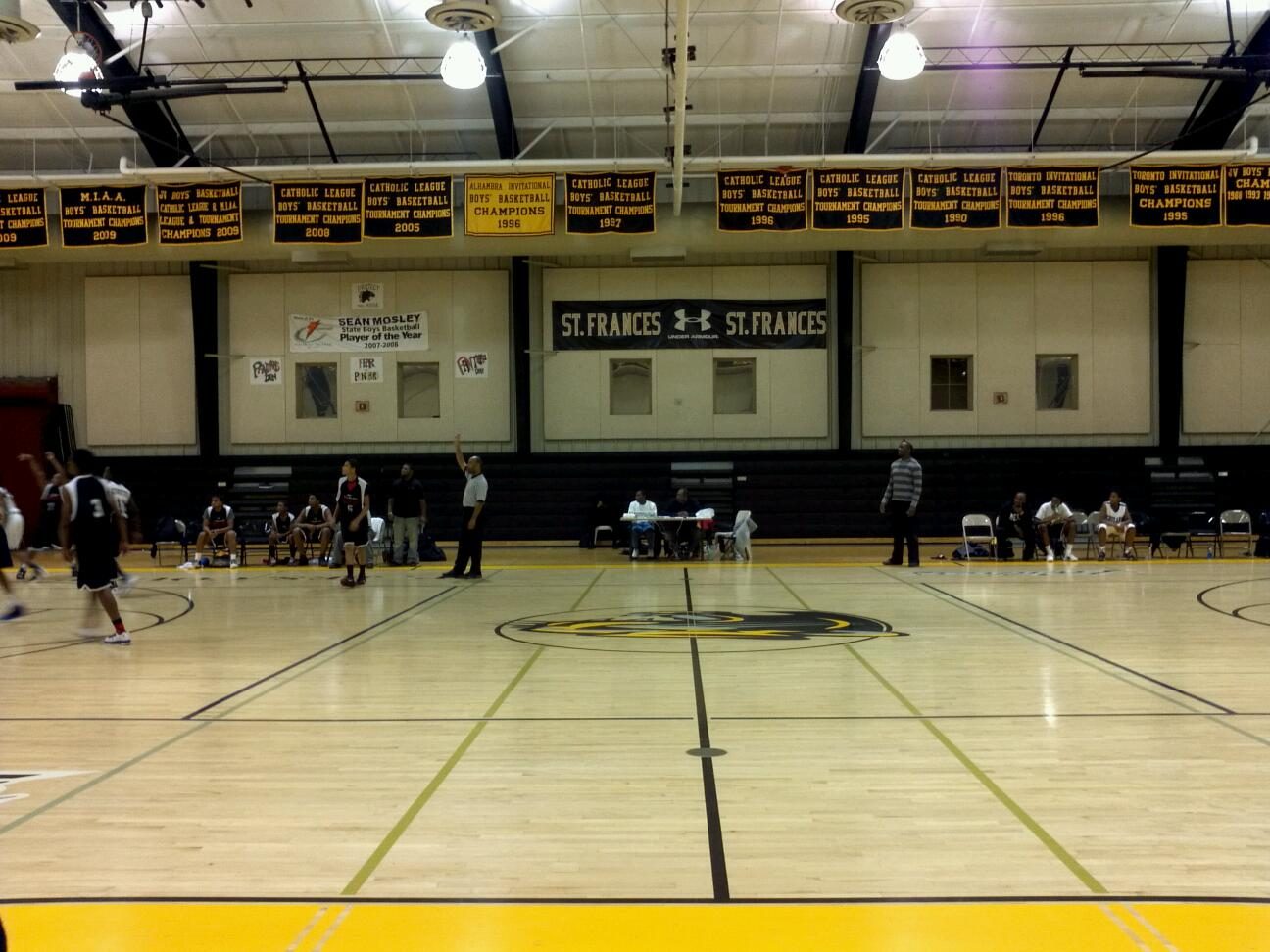
Founded in 1828 as the nation's first Black Catholic school, now fielding a No. 1-ranked football dynasty in East Baltimore.
Sage Hill School
Newport Coast, CA · United States
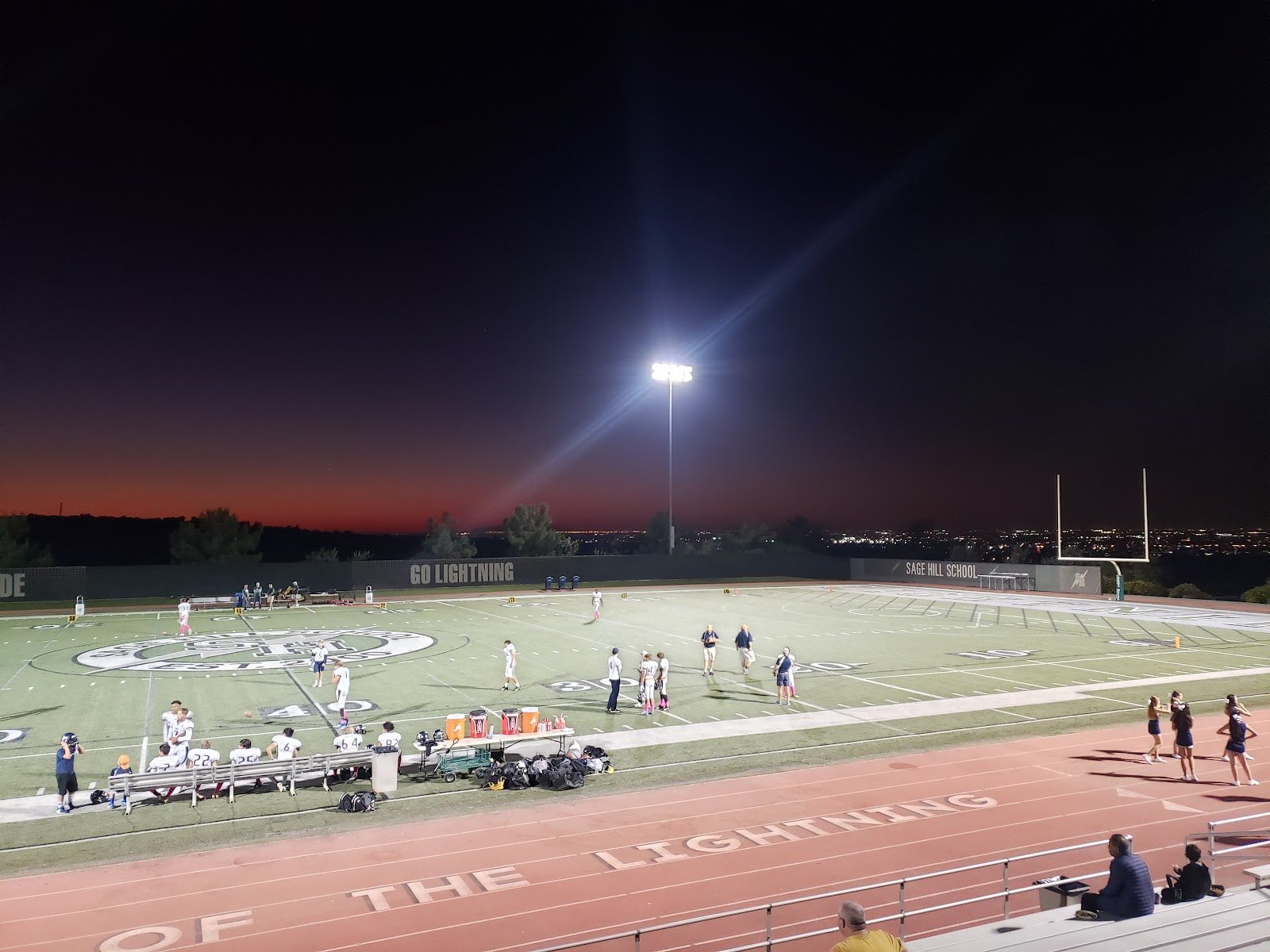
A no-bells, ocean-view campus in Newport Coast where a year-end 'Spring at Sage' term sends students chasing passions worldwide.
Pittsburgh CAPA – Visual Arts
United States
Same country and curriculum — closest matches within ±10 points either way