
Connecticut
Pomfret School
low confidence· 3/6 cats · 2.67 avg sourcesA 500-acre Connecticut hilltop campus, planned by Ernest Flagg in 1905, still runs on a 6:1 student-teacher ratio.

Type
Both
Ages
14–18
Curriculum
American
Qualifications
AP
Ratio
6:1
The Verdict
Editor's commitment
Right for
Teenagers who need close adult attention: Pomfret runs a 6:1 student-teacher ratio, 12-student classes, and boarding or day places.
Wrong for
Families wanting a large, anonymous sixth-form-style machine should look elsewhere; Pomfret serves about 350 students, ages 14–18, on one campus.
Watch out for
This is an American college-preparatory school, not an IB or British-curriculum option; the badge line is NEASC and NAIS, founded 1894.
Ranking breakdown
Pomfret School · #1152 of 1591
Composite score 59.7. 8 weighted criteria.
By criterion
Academic Outcomes
Weight 20%
#1157
of 1529 scored
University Placement
Weight 16%
#1144
of 1529 scored
Prestige & Heritage
Weight 12%
#1054
of 1571 scored
Alumni Network
Weight 12%
#646
of 1530 scored
Facilities
Weight 12%
#1004
of 1533 scored
Transparency & Communications
Weight 8%
#998
of 1532 scored
Peer & Industry Review
Weight 10%
#1407
of 1548 scored
Admissions Selectivity & Demand
Weight 8%
#1156
of 1529 scored
Peer & Industry Review
How Pomfret School is regarded in the sector
59
Credible · medium confidence
Among Connecticut and Massachusetts boarding schools, Pomfret is generally classed as a capable second-tier institution rather than a peer of Groton, St. Paul's or Andover, a distinction reflected in its Founders League/NEPSAC athletic grouping alongside similarly positioned schools such as Kent, Westminster and Loomis Chaffee. Admissions officers at more selective New England schools tend to describe it as a solid, community-oriented option for families who do not gain places at the very top tier, rather than a direct competitor for cross-admit students. University-side recognition is steady but unremarkable: Pomfret appears consistently in college counseling literature and matriculation lists sent to a broad range of liberal arts colleges and state flagships, without the concentrated Ivy pipeline associated with the most prestigious New England schools. Independent guides covering American boarding schools typically place it in the respectable-but-not-elite bracket, noting its equestrian and arts strengths as differentiators rather than academic rigor alone. It maintains visible presence at NEPSAC and independent-school conferences and is a regular exhibitor at boarding school fairs, but is rarely cited in national press rankings alongside the most decorated New England names.
Editors' overview
Pomfret School occupies a distinct niche in the New England boarding market: a small, old-established American college-prep school with real space, tight staffing ratios and none of the machinery of a giant institution. Founded in 1894, it serves boarding and day students aged 14–18 on a 500-acre Connecticut campus planned by Ernest Flagg in 1905. The headline numbers matter: a 6:1 student-teacher ratio and average class size of 12 put adult attention at the centre of the offer. For parents who want a school that feels contained rather than sprawling, serious without pomposity and built around daily contact with adults, Pomfret earns a place on the shortlist.
What marks it out is scale combined with structure. This is not a school trying to impress through size or institutional sprawl. At around 350 students, Pomfret stays small enough for students to be known across academic, residential and extracurricular life. The school’s own description of a support network of teachers, advisers, dorm parents, coaches and college counsellors aligns with that model. That matters in a boarding school, where supervision, judgement and follow-through count more than glossy rhetoric. More than 80% of faculty hold master’s degrees or doctorates, which strengthens the academic side of the proposition, but the stronger selling point is close adult oversight and a campus life with clear shape.
Pomfret suits students who want a full secondary-school experience rather than a narrow academic hothouse. It fits teenagers who benefit from being noticed, who will use teacher access, and who want boarding without the social anonymity of a much larger school. It also suits internationally minded families who still want a traditional American setting; Wikipedia cites 21% international students, enough to give the school range without turning it into a transient global brand campus. The school will appeal less to families chasing scale, spectacle or a long menu of hyper-specialised programmes. Its strength is human-scale ambition, steady pastoral architecture and *a disciplined, liveable version of US boarding school life*.
Academic Performance
Pomfret does not publish the hard outcome data that lets parents place a school cleanly against peers. We have not seen aggregate SAT or ACT averages, AP score distributions, matriculation tables by university, or any year-on-year summary of external exam performance in the public domain. That leaves a gap. In a competitive US independent-school market, serious schools put at least some results on the record. Pomfret instead asks families to trust the architecture around teaching: small classes, a dense adult support structure, and a faculty body in which more than 80% hold advanced degrees. That is a credible academic foundation, but it is not the same thing as published attainment. On academic performance, the school is more opaque than the strongest peers.
That does not place Pomfret in the weak tier; it places it in the harder-to-benchmark middle ground. A school of roughly 350 students can deliver strong individual outcomes without generating the industrial-scale results marketing of larger rivals, and Pomfret’s college-preparatory framing points to a serious mainstream academic track. Still, parents comparing New England boarding schools need to note the difference between a school with visible evidence and one with limited disclosure. The low staffing ratio and tight supervision support achievement; they do not prove it. Pomfret’s academic proposition rests on close teaching and follow-through, not on a public scoreboard. For families comfortable with that trade-off, the case holds. For data-driven buyers, it is a clear weakness.
Facilities
The key facility at Pomfret is not a single building but the campus itself: 500 acres on a hilltop, with the kind of space that changes daily school life. That matters in a boarding context. Movement between lessons, houses, sport and downtime happens across a landscape with room to breathe, not through a compressed urban footprint. The fact that the campus was planned by Ernest Flagg adds coherence as well as heritage; this is not a random accumulation of blocks. Against peer schools, that gives Pomfret a strong physical setting and a more composed sense of place than many smaller American independents, which run on tighter sites and thinner architectural identity.
What Pomfret does not publish is a detailed public inventory of specialist facilities. We have not seen the sort of granular showcase many rivals now provide: dedicated performance venues, research-grade science spaces, fabrication labs, elite-level athletic complexes or standout arts centres set out in full. That silence matters because facilities are one of the easiest areas for schools to evidence. Pomfret’s advantage rests on space, setting and liveability rather than on a publicly documented roster of flagship buildings. In market terms, that places it behind peers that make a hard-edged case through clearly itemised capital assets. Parents drawn to contained, beautiful campuses will find a real strength here; parents hunting for conspicuous specialist infrastructure will need sharper answers.
The key facility at Pomfret is not a single building but the campus itself: 500 acres on a hilltop, with the kind of space that changes daily school life
Prestige
Pomfret carries real but not top-tier prestige. In the US boarding-school hierarchy, it sits below the handful of names that function as social shorthand across continents, but above the crowded field of competent regional independents. The school’s standing rests on durability, selectivity of environment and the credibility of a traditional New England boarding model done at human scale. A student body of about 350 gives it enough substance to feel established without the institutional weight of the biggest competitors. The architecture of status here is not celebrity, global brand recognition or a flood of published outcomes; it is *old-school American independent-school legitimacy*, reinforced by a historic campus setting and a faculty profile in which more than 80% hold advanced degrees.
That is why the prestige rating lands in the middle-to-upper range rather than at the summit. Pomfret has the markers that matter to informed buyers: it is long-established, properly staffed, college-prep in focus and embedded in a recognised New England tradition. It also has limits. The school does not publish the level of hard academic outcome data that strengthens elite-market authority, and its name does not carry the instant signalling power of the most famous boarding schools. For families who value substance over theatre, that is not a defect; for those buying maximum badge value, it is. Pomfret’s prestige is credible, restrained and insider-facing rather than dominant.
Pomfret’s advantage rests on space, setting and liveability rather than on a publicly documented roster of flagship buildings
Communications
Pomfret communicates in the manner of a small, closely run school: direct, person-led and built around known relationships rather than a heavy corporate information machine. The public-facing site does the basics cleanly. It sets out who the school is, who teaches there and how student support is structured, and it gives parents a visible route into practical areas such as search, quicklinks and start-of-school information. More important than the website copy, though, is the operating model behind it. A school that organises student life through teachers, advisers, dorm parents, coaches and college counsellors creates multiple points of parental contact. That is a strong pastoral communications grid. It gives families several adults who know their child in different settings, which is far more useful than a single termly update from one office.
The limitation is transparency. Pomfret communicates its ethos with confidence and its support model with clarity, but it does not publish enough hard school-wide outcome data to make communications feel fully open-book. Parents can grasp the philosophy quickly; they get less help judging academic results at system level. That weakens credibility with families who want evidence, not just reassurance. The same pattern runs through the website: functional, orderly, human-scale, but not rich in the hard comparatives that sharpen trust. In effect, Pomfret’s parent communication works best when the question is “Who will know my child?” and less well when the question is “Show me the numbers.” For many families, that balance will feel reassuringly personal; for the most analytical, it remains incomplete.
Uniqueness
Pomfret’s distinctiveness lies in how deliberately it resists the modern boarding-school arms race. Many schools in this market sell themselves through scale, programme inflation or a public parade of outcomes. Pomfret’s case rests elsewhere: human-scale supervision, old New England order and a campus plan with real coherence rather than institutional sprawl. The school’s own language about teachers, advisers, dorm parents, coaches and college counsellors working across “all facets” of student life points to a model in which adults do not operate in silos. That matters for teenagers. It gives students less room to disappear, more consistent feedback, and a school day shaped by continuous adult presence rather than episodic intervention. The low staffing ratio already noted, alongside an average class size of 12, reinforces that structure.
The benefit is not glamour; it is *containment, steadiness and follow-through*. Students who thrive here get a school that can hold academic work, residential life, sport and university planning in one frame, instead of treating them as separate departments. The international share — 21% — also matters: enough to widen horizons and social perspectives, without turning the place into a rootless global outpost. Add the faculty depth, with over 80% holding advanced degrees, and Pomfret offers a version of American boarding education that is more personal than performative. For the right student, that brings confidence, accountability and a stronger chance of being known in full.
Pomfret’s distinctiveness lies in how deliberately it resists the modern boarding-school arms race
Student Profile
Pomfret suits teenagers who do better in schools where adults know them well and expect them to engage. This is not a place for students who want to drift anonymously through secondary school, picking and choosing when to show up. The social and academic structure is too tight for that. The right student is comfortable being accountable to teachers, advisers, coaches and residential staff, and gains from steady oversight rather than resisting it. Pupils who combine independence with a willingness to accept guidance will fit best. So will students who want a full residential-style school life instead of a narrow exam factory. With an average class size of 12, discussion, preparation and visible participation are part of the deal.
Socially, Pomfret fits families looking for a contained, orderly community rather than a sprawling or status-obsessed scene. The student body has national and international range, but the school still reads as a traditional American independent school rather than a transient global hub. That balance suits internationally minded families who want US boarding culture without the scale and theatre of the biggest names. It will also work for students who value space, routine and regular adult contact. It will work less well for teenagers chasing maximum independence, a vast peer ecosystem or a school built around high-gloss competition. Pomfret’s natural constituency is the student who is *bright, coachable and easier to know in depth than at speed*.
Founded in 1894, it serves boarding and day students aged 14–18 on a 500-acre Connecticut campus planned by Ernest Flagg in 1905
Co-curricular strengths
Arts & sport, on a separate axis
Overall 8.96/10
Scored 0-10 from the school's own published evidence. This axis is editorial-only — it does not feed the main WTS ranking.
Sports
9.2/10
Highly competitive New England boarding infrastructure; fields historically dominant rowing crews (utilizing its private boathouse) and soccer teams.
Drama
8.8/10
The spectacular performing arts centers anchor an ambitious dramatic tracking program, mounting complex classical and modern plays.
Dance
9/10
Active afternoon co-curricular activity offering structured contemporary and jazz choreography classes.
Music
8.8/10
Outstanding chamber orchestras, wind ensembles, and choral troupes that routinely headline major East Coast youth music festivals.
Visual Arts
9/10
Studio-intensive fine arts focus housed within custom studio environments, prioritizing landscape painting and portfolio layout.
Strengths
- +Boarding and day options add flexibility
- +American curriculum suits US university preparation
- +Founded 1894; long-established Connecticut school
- +NEASC and NAIS accreditation provide external validation
Considerations
- −Only American curriculum; no IB or A-level
- −English-only instruction may limit bilingual development
- −Rural Pomfret location may feel isolated
Availability
Primary entry gate & tests
ISEE/SSAT + Interview
Gallery
Photo © Justin Case via Google Maps
Photo © Justin Case via Google Maps
Parent reviews
Have you sent your child here?
Voice reviews carry the strongest trust badge — we transcribe them for you to tidy up before they go live. Prefer to type? A written review is fine too.
Add your voice
In 60 seconds, tell other parents: what's the best thing about Pomfret School, and what surprised you when your child joined?
We ask for a Google sign-in so every review has a real face behind it — no anonymous drive-by attacks on schools, and no faked positive reviews. Your email is never shown publicly.
Send this profile to a friend
International parents rely on word-of-mouth. Share this review with someone weighing the same decision.
Schools with places
Similar schools to Pomfret School with places available now.
Greenwich Academy
Greenwich · United States
- 2026-27
- CLOSEDRegular cycle closed
- 2027-28
- OPENS SOONOpens Sept '26
Brunswick School
Greenwich · United States
- 2026-27
- CLOSEDRegular cycle
- 2027-28
- OPENS SOONOpens Sept '26
Hopkins School
New Haven · United States
- 2026-27
- CLOSEDRegular cycle
- 2027-28
- OPENS SOONOpens Sept '26
Loomis Chaffee School
Windsor · United States
- 2026-27
- WAITPOOLLate/Rolling Space Available
- 2027-28
- OPENS SOONOpens 1 Sept '26
Availability first, then country, area, curriculum, price, co-curricular
Consider also
Also worth looking at alongside Pomfret School.

Germantown Friends School
Philadelphia · United States
Rooted in an 1845 Quaker meeting in historic Germantown, where juniors design a month-long independent study of their own.
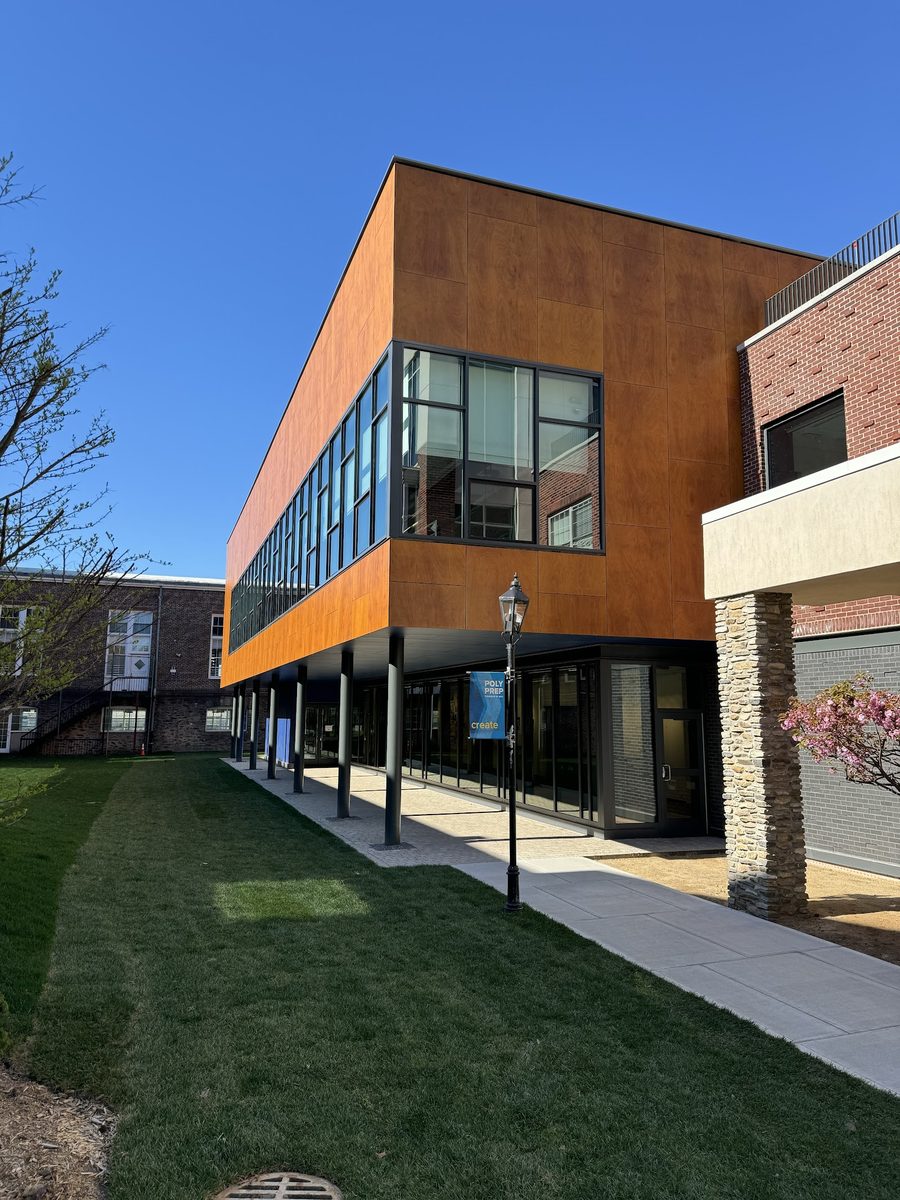
Poly Prep Country Day School
Brooklyn · United States
Founded in 1854 as Brooklyn's first boys' school, this day school pairs a Prospect Park mansion with a 25-acre Dyker Heights campus.

Marymount School of New York
New York City · United States
On Fifth Avenue, landmark mansions give way to Bloomberg terminals and classrooms inside the Met.

Boston University Academy
Boston · United States
Upperclassmen trade study halls for Boston University lecture halls, banking college credit before graduation.
Same country and curriculum — closest matches within ±10 points either way