
Shanghai
SJTU Affiliated High School
A Baoshan boarding school where SJTU co-runs an elite talent-training base and student robotics squads chase world titles.
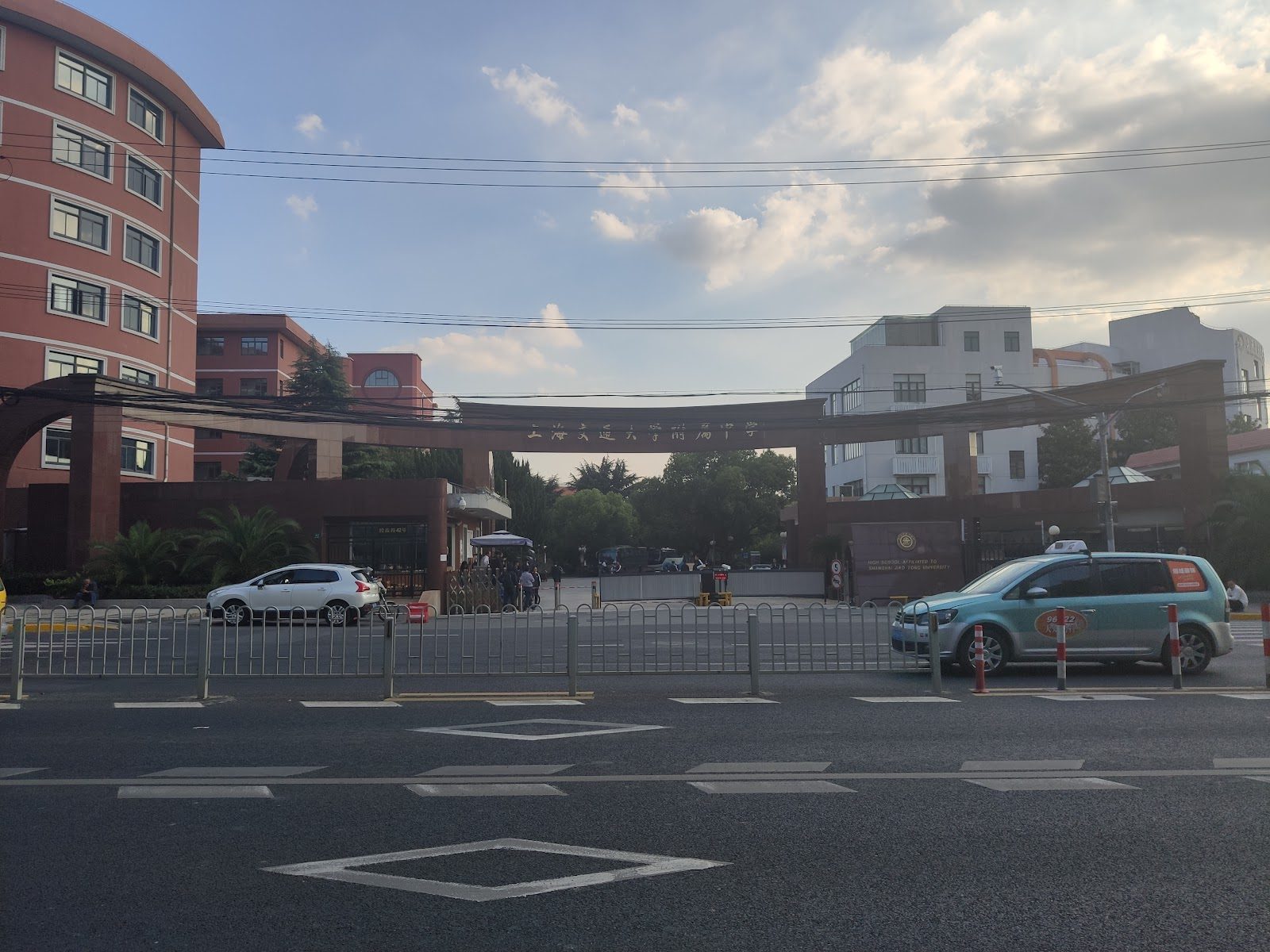
Photo © Liang Chen via Google Maps
Type
Day + Boarding
Ages
15–18
Curriculum
Chinese National
Qualifications
Gaokao
Ratio
—
The Verdict
Editor's commitment
Right for
Families who want a Shanghai day-and-boarding school, founded in 1954, with Chinese National curriculum and serious robotics ambition.
Wrong for
Parents seeking an IB or British pathway, a softer pace, or education mainly in English rather than Mandarin and English.
Watch out for
This is a Chinese Ministry of Education-accredited Baoshan school for ages 15–18; university-style prestige does not guarantee transparent outcomes.
Ranking breakdown
SJTU Affiliated High School · #667 of 1591
Composite score 67.0. 8 weighted criteria.
By criterion
Academic Outcomes
Weight 20%
#386
of 1529 scored
University Placement
Weight 16%
#649
of 1529 scored
Prestige & Heritage
Weight 12%
#377
of 1571 scored
Alumni Network
Weight 12%
#900
of 1530 scored
Facilities
Weight 12%
#1054
of 1533 scored
Transparency & Communications
Weight 8%
#1243
of 1532 scored
Peer & Industry Review
Weight 10%
#480
of 1548 scored
Admissions Selectivity & Demand
Weight 8%
#143
of 1529 scored
Peer & Industry Review
How SJTU Affiliated High School is regarded in the sector
71
Respected · medium confidence
SJTU Affiliated High School is routinely grouped with Shanghai High School, Fudan Affiliated High School and East China Normal University No.2 High School as one of Shanghai's 'Four Famous Schools,' a classification repeated in Shanghai Education Commission material and Chinese education press rather than the school's own marketing. Its gaokao and International Division tracks are cited by rival principals when discussing feeder patterns into Shanghai Jiao Tong University and Fudan, both of which draw a visible share of its graduates annually. Its mathematics and physics squads regularly appear on Chinese Mathematical Olympiad and national IPhO training-camp rosters, giving it recurring visibility alongside its Big Four peers at competition level. Domestic outlets such as The Paper and Shanghai Education News treat it as a STEM-track benchmark. However, Western independent-school reviewers like WhichSchoolAdvisor and Good Schools Guide do not currently profile it, reflecting a domestic rather than international-market orientation. Overall, peer regard is strong but geographically bounded: elite within Shanghai's public system and respected by mainland universities, yet largely absent from English-language independent-school review circuits.
Editors' overview
SJTU Affiliated High School is a selective Shanghai state-school proposition with a serious technical bent. Founded in 1954, it serves ages 15–18 on a day-and-boarding basis in Baoshan, with teaching in Mandarin and English under the Chinese National curriculum. The distinguishing feature is not polish or international branding; it is the school’s integration with Shanghai Jiao Tong University and its role as an elite talent-training base. For families who value hard academic edge, structured ambition and clear institutional backing, that matters more than glossy messaging. This is a school built for students who want depth, pace and competition, not a soft landing.
What sets it apart is its academic and co-curricular profile around science, engineering and high-level student research. The school’s robotics squads have chased national and world-level honours, and that is not a decorative extra: it signals a culture that rewards technical mastery, disciplined teamwork and long hours of iteration. In the Shanghai market, that gives the school a distinct place. It is not the obvious choice for families shopping for an internationalised sixth-form experience with broad subject choice and western university marketing. It is a stronger fit for parents who want serious maths-and-science momentum, exam-hardened teaching and access to a university-linked environment that raises expectations. The boarding element adds another layer of intensity; students live inside the rhythm of study, training and competition.
Why shortlist it? Because few schools offer this combination of public-sector credibility, university affiliation and specialist STEM culture in one package. The school has Ministry of Education accreditation and a long establishment in Shanghai, but its real selling point is concentration of purpose. Students with competitive academic instincts, engineering curiosity and the stamina for a demanding peer group will thrive here. Students who need a looser atmosphere, broad arts-first identity or extensive hand-holding will not. This is a school for teenagers who want to test themselves, who do not scare easily, and who gain energy from high-pressure collective effort and elite technical challenge.
Academic Performance
Public exam data are the weak point. The school does not publish aggregate gaokao results, top-score distributions, university admission breakdowns or subject-level outcomes, so any parent trying to benchmark it against Shanghai’s best-known academic heavyweights hits an opaque wall. That matters, because the local market includes schools with far more visible results culture and clearer public proof. What SJTU Affiliated High School does place in the foreground is competition performance in science and engineering. Its robotics teams have won at national level and reached world-championship platforms, with one published tally running to 14 major awards across domestic and international contests. That is real achievement, but it is not a substitute for full examination disclosure.
So where does that leave the school relative to peers? Not in the broad top tier for transparent, headline academic reporting; schools in that bracket publish hard numbers and trade on them. Instead, this school sits in a specialist, high-pressure lane where strength is inferred from selective intake, university linkage and sustained success in technical competitions. For a student targeting engineering, computing or applied science, that profile carries weight and signals serious intellectual pace. For families who want clean, comparable exam statistics before committing, the school’s silence is a material drawback.
Facilities
Facilities here make sense when read through the school’s purpose. The standout asset is the university-linked innovation infrastructure: the school describes a joint innovation laboratory built with Shanghai Jiao Tong University, alongside a student innovation and entrepreneurship base and a formal science-and-technology education platform recognised at district level. For a technically driven pupil, that is serious practical capital. It points to space and equipment organised around making, testing and competition work, not just routine classroom delivery. The school also publishes a campus footprint of more than 200 mu, which places it above many urban high schools on sheer room to operate. That matters for boarding life as much as study: bigger sites can absorb laboratories, sports areas and residential routines without feeling cramped or improvised.
Against direct peers, the picture is mixed in a useful way. This is not the polished amenities race of an international school selling black-box theatres, design studios and café-style social spaces. The facilities proposition is *more utilitarian, more focused and more credible* for STEM than for lifestyle. The robotics and engineering culture gives the specialised spaces real weight; they are used for winning things, not decorating brochures. What we have not seen is the level of granular public detail top schools publish when they want parents to judge facilities room by room. There is no rich disclosure on libraries, boarding houses, performing arts provision or sports specifications. That leaves the campus with a strong technical core and a blurrier generalist picture.
SJTU Affiliated High School is a selective Shanghai state-school proposition with a serious technical bent
Prestige
SJTU Affiliated High School carries real local prestige, but it is a specialised prestige, not the broad, socially magnetic status of Shanghai’s most publicly lionised academic brands. The source of that standing is clear: direct institutional attachment to a top Chinese university, selective admissions, and a student culture built around high-stakes technical performance. The school’s robotics record matters here. A published haul of 14 major awards, including world-level competition exposure, gives the name credibility beyond routine school publicity. In the Chinese context, that kind of sustained engineering success confers status with families who care about mathematics, computing and research pathways. It also marks the school out from generalist high schools whose reputations rest on exam mythology alone.
That said, the prestige has limits. This is not a school with the public glamour that comes from widely published university placement lists, top-score tables or a dominant brand in the international-schools market. Its reputation is hard-edged, narrower and more contingent on the student in question. For a teenager with strong quantitative instincts, the SJTU affiliation and competition culture carry serious cachet. For families chasing broad name recognition, polished global-facing communications or easy comparison with elite peer schools, the proposition is less convincing. We rate its prestige as strong within the STEM-selective lane and less powerful outside it.
What SJTU Affiliated High School does place in the foreground is competition performance in science and engineering
Communications
Parent communication is functional, centralised and thin on the details discerning families want. The school’s public-facing channels do the basics: news items, honours, activity reports and institutional announcements. They give a clear line on what the school values — competition success, organised student activity, university-linked projects, Party and civic education, and campus events. That makes the school easy to read culturally. It does not make it easy to interrogate. Parents get a steady stream of celebratory updates, but not much hard operational disclosure on the questions that matter when choosing a school: academic outcomes, teaching approach, pastoral systems, boarding routines, or how problems are handled when students struggle. The balance is institution-first, message-managed and short on scrutiny.
That pattern matters because communication is not just about frequency; it is about usefulness. Here, the school publishes enough to show momentum and discipline, and enough to reassure families already bought into the model. It publishes too little to satisfy a parent doing serious due diligence from outside that circle. The site is easier as a noticeboard than as an accountability tool. A family that values directness, granular evidence and candid explanation will find the communications frustratingly opaque. A family already aligned with the school’s high-pressure ethos will read the same channels as proof of order, ambition and institutional control.
Uniqueness
What makes this school unusual is the degree to which a mainstream high school is welded to a research university’s talent pipeline rather than merely borrowing its name. The partnership with Shanghai Jiao Tong University gives students access to a joint innovation laboratory, a formal innovation and entrepreneurship base, and a science-and-technology platform with public recognition beyond the campus itself. Add the robotics programme’s haul of 14 major awards, and the distinction sharpens: this is not STEM as timetable garnish, but STEM as institutional identity, selection mechanism and daily discipline. Students do not just study physics and mathematics; they work inside a culture that treats technical performance as serious business.
For the right teenager, that brings clear advantages. Ambitious pupils get earlier contact with advanced equipment, competition structures, and adults who value precision, endurance and problem-solving under pressure. The peer group matters just as much. In schools built around broad generalism, a mathematically intense student can feel eccentric; here, that student sits closer to the centre. That can be electrifying for confidence and pace. It also narrows the experience. A school this focused carries a hard competitive current and a more limited emotional palette than softer, more rounded sixth-form environments. Students who thrive on open-ended artistic exploration or a lighter social atmosphere will find the culture demanding, narrow and unsentimental.
Not in the broad top tier for transparent, headline academic reporting; schools in that bracket publish hard numbers and trade on them
Student Profile
The students who fit here are the ones who gain energy from pressure rather than protection. This is a school for teenagers with hard competitive instincts, strong quantitative habits and the patience to work at one problem until it yields. The robotics culture is the clearest tell: a programme that has accumulated 14 major titles does not run on charm, balance or broad participation. It runs on repetition, correction and stamina. Pupils who enjoy contests, rankings, technical clubs and being surrounded by other high-achievers will find a peer group that pushes them forward. Pupils who need frequent reassurance, relaxed pacing or a wide margin for academic drift will struggle.
There is also a distinct social profile. The school suits students who can live inside an institutionally directed environment without resisting every rule, and who accept that adult attention will flow first to performance, discipline and collective standards. Independent-minded thinkers can thrive here, but only if that independence expresses itself through work rather than defiance. A teenager set on engineering, computing or applied science has a clearer runway than a student whose identity rests on drama, visual arts or a more exploratory sixth-form life. In personality terms, the best fit is self-propelled, resilient and comfortable being measured against strong peers. This is not for the faint-hearted, and that is part of its appeal.
What we have not seen is the level of granular public detail top schools publish when they want parents to judge facilities room by room
Co-curricular strengths
Arts & sport, on a separate axis
Overall 7.24/10
Scored 0-10 from the school's own published evidence. This axis is editorial-only — it does not feed the main WTS ranking.
Sports
8.2/10
Drama
7.3/10
Dance
6.5/10
Music
7.2/10
Visual Arts
7/10
Strengths
- +Founded in 1954, the school is one of Shanghai's most renowned and competitive public high schools, directly administrated by both Shanghai Municipal Education Commission and Shanghai Jiao Tong University (SJTU), giving it unusually direct ties to a top C9 research university.
- +The school now has four campuses: the main campus is in Baoshan District, two national curriculum sub-campuses are in Minhang and Jiading District, and a separate IB Curriculum Center uses campuses in Yangpu and Baoshan, spreading day and boarding capacity across the city.
- +For national curriculum graduates, an independent education directory reports that 50% of graduates enrol in Tsinghua University, Peking University, Fudan University, and Shanghai Jiao Tong University, and 90% of graduates in Chinese Double First-Class Universities.
- +The school attracts a high proportion of well-qualified teachers and is a highly sought-after setting for Chinese educators, suggesting stable, competitively recruited staff.
- +It is a municipal key boarding high school under the dual leadership of Shanghai Education Commission and Shanghai Jiaotong University, a designation that carries weight in the local system of school tiers.
Considerations
- −The Chinese National curriculum stream is embedded in China's public system, so high school admissions are subject to the application process and placement system overseen by the Shanghai Municipal Education Commission, which in practice favors Chinese-citizen, Shanghai-registered applicants over incoming expatriate families.
- −The main campus sits in Baoshan District in Shanghai's north, some distance from the central and western districts (Jing'an, Xuhui, Hongqiao) where many relocating expat families cluster, adding a commuting or boarding consideration.
- −Entry to the national curriculum track is via Shanghai's citywide zhongkao and district/school quota allocation systems, which reported recent cut-off scores in the high-600s to mid-700s range (out of 750) -- a highly selective, exam-driven bar that leaves little room for late or non-standard entrants.
- −The school runs a largely separate IB Curriculum Center alongside its Chinese National curriculum track, so families must be careful which pathway, campus, and admissions process actually applies, as they are not interchangeable.
Availability
Primary entry gate & tests
Shanghai Zhongkao Exam
Parent reviews
Have you sent your child here?
Voice reviews carry the strongest trust badge — we transcribe them for you to tidy up before they go live. Prefer to type? A written review is fine too.
Add your voice
In 60 seconds, tell other parents: what's the best thing about SJTU Affiliated High School, and what surprised you when your child joined?
We ask for a Google sign-in so every review has a real face behind it — no anonymous drive-by attacks on schools, and no faked positive reviews. Your email is never shown publicly.
Send this profile to a friend
International parents rely on word-of-mouth. Share this review with someone weighing the same decision.
Schools with places
Similar schools to SJTU Affiliated High School with places available now.
Wellington College International Shanghai
Shanghai · China
- 2026-27
- WAITPOOLSpace-dependent
- 2027-28
- PLACES OPENRolling
Shanghai American School
Shanghai · China
- 2026-27
- WAITPOOLSpace-dependent
- 2027-28
- PLACES OPENRolling
Shanghai High School International Division
Shanghai · China
- 2026-27
- CLOSEDStandard route
- 2027-28
- OPENS SOONOpens Late '26 (Spring '27)
Availability first, then country, area, curriculum, price, co-curricular
Consider also
Also worth looking at alongside SJTU Affiliated High School.
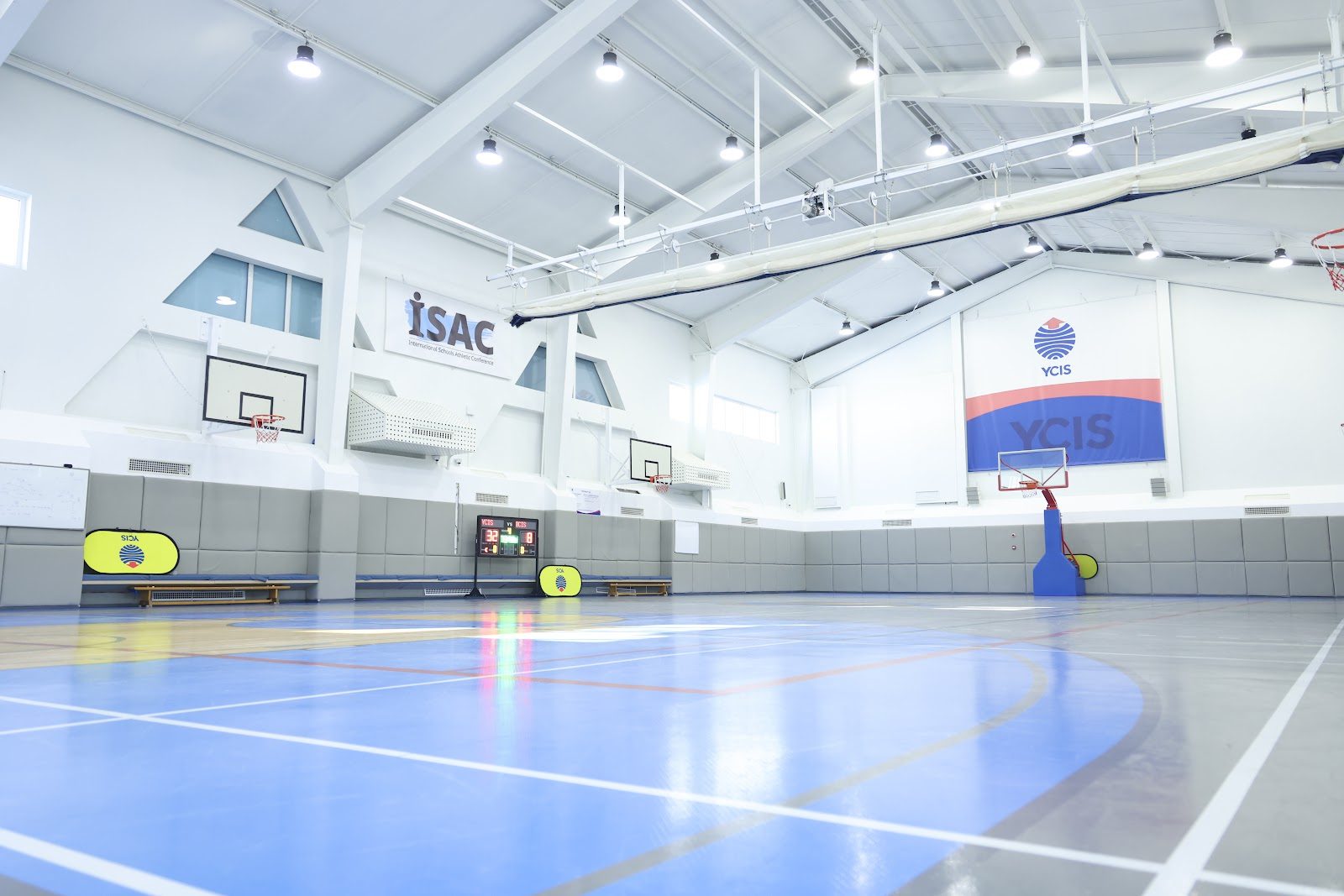
Yew Chung International School of Beijing
Beijing · China
Every classroom pairs a Western and a Chinese teacher, threading bilingual learning through a parkland Chaoyang campus.
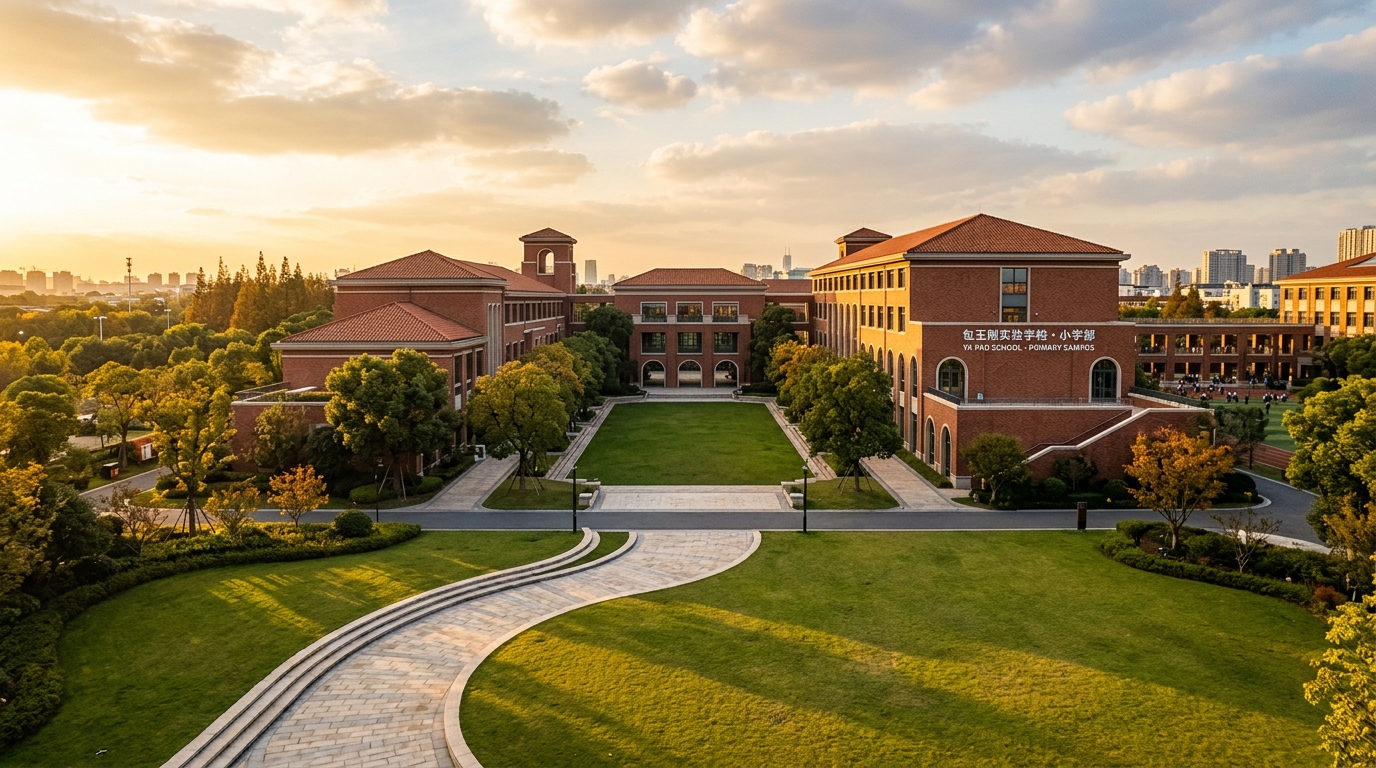
YK Pao School
Shanghai · China
Mandarin-English immersion anchors an IB and IGCSE track, with senior boarders housed in a Tudor-style village in Songjiang.
Wellington College International Shanghai
Shanghai · China
Rooted in an 1859 British foundation, this Pudong riverside campus channels house spirit into IB scores averaging 37 points.
UWC Changshu China
Changshu · China
On an island in Kuncheng Lake, mainland China's first UWC pairs the IB diploma with mandatory Mandarin study and a student-run Zhixing service programme.
Same country and curriculum — closest matches within ±10 points either way