
Tokyo
A Bunkyo girls' school built from 1924 earthquake ashes, sending more graduates to Tokyo University than any other girls' school in Japan.
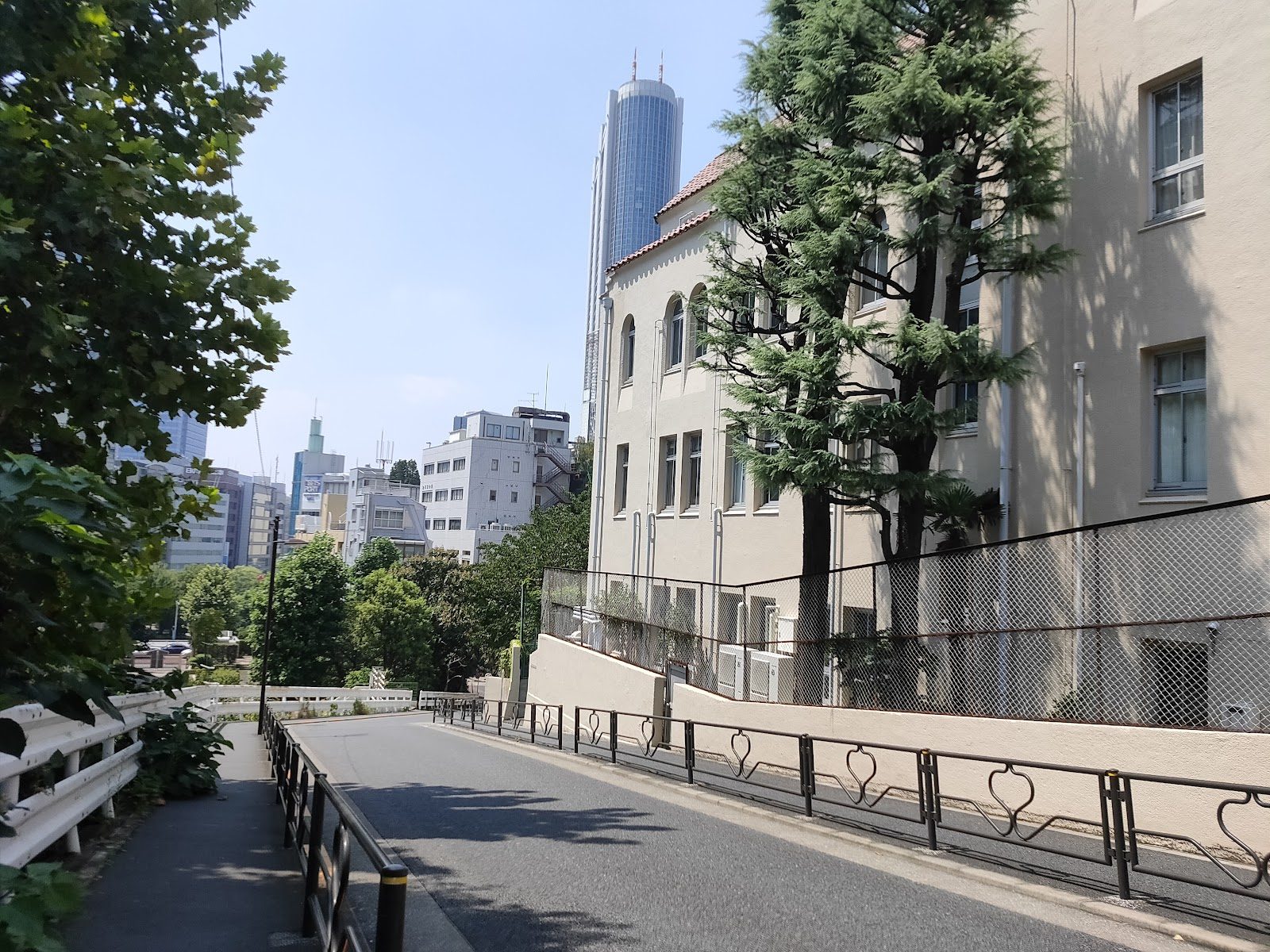
Photo © 牛島満 via Google Maps
Type
Day
Ages
15–18
Curriculum
Japanese National
Qualifications
Japanese Senior HS Diploma
Ratio
—
The Verdict
Editor's commitment
Right for
Girls aged 15–18 who want a Japanese National curriculum in Tokyo, backed by Japanese Ministry of Education accreditation and a founded date of 1888.
Wrong for
Families needing English-medium teaching, boarding, or a co-educational sixth form; Oin Gakuen is Japanese-language, day-only, non-religious and girls-only.
Watch out for
The public record here is thin: beyond Bunkyo, 1888 and Ministry accreditation, the school does not publish outcomes, facilities or admissions detail.
Ranking breakdown
Oin Gakuen · #1569 of 1591
Composite score 36.8. 8 weighted criteria.
By criterion
Academic Outcomes
Weight 20%
#1496
of 1529 scored
University Placement
Weight 16%
#1496
of 1529 scored
Prestige & Heritage
Weight 12%
#1544
of 1571 scored
Alumni Network
Weight 12%
#1283
of 1530 scored
Facilities
Weight 12%
#1528
of 1533 scored
Transparency & Communications
Weight 8%
#1512
of 1532 scored
Peer & Industry Review
Weight 10%
#1541
of 1548 scored
Admissions Selectivity & Demand
Weight 8%
#1506
of 1529 scored
Peer & Industry Review
How Oin Gakuen is regarded in the sector
35
Regional · medium confidence
Oin Gakuen is consistently placed among Tokyo's 'joshi gosanke' - the three most academically formidable girls' schools, alongside Joshigakuin and Futaba - a grouping repeatedly cited by rival heads and education journalists rather than by the school itself. Japanese business and education press (Weekly Diamond, Yomiuri, Asahi's annual university-entrance surveys) routinely rank it near the top of girls' schools by University of Tokyo and national medical-faculty admissions, a metric admissions officers at Todai and leading medical schools implicitly treat as a proxy for rigor when discussing feeder schools. Coverage tends to be data-driven league-table analysis rather than qualitative reviewer commentary, and there is little English-language independent press (no WhichSchoolAdvisor or Good Schools Guide entry found) evaluating it, reflecting its orientation toward the domestic Japanese exam system rather than international peer networks. Within Japan, its reputation rests almost entirely on hard entrance-exam outcomes and longstanding status among academic peers rather than on soft-skill or extracurricular acclaim.
Editors' overview
Oin Gakuen is one of Tokyo’s clearest academic propositions: a non-religious girls’ day school in Bunkyo, founded in 1888, teaching the Japanese National curriculum in Japanese, and carrying the weight of long-established prestige without dressing it up as lifestyle branding. Its editorial claim to distinction is blunt and consequential: it sends more graduates to the University of Tokyo than any other girls’ school in Japan. That matters because it places Oin in the top tier of academically exacting Japanese secondary education, with all that entails — pace, competition and a student body selected for intellectual horsepower. The school’s identity also carries serious academic force and institutional memory: rebuilt after the 1924 Great Kanto earthquake, it has turned adversity into a durable part of its story.
What is special here is not progressive rhetoric, imported programmes or expansive claims about “whole-child” education. It is the concentration of able girls, the expectation of disciplined scholarship and the proven pull towards Japan’s most selective universities. For parents who want a school with hard academic edges and a clear route to elite higher education, Oin belongs on the shortlist. The corollary is just as important: this is not a school for families seeking a soft landing, broad hand-holding or an international-style, English-medium environment. Instruction is in Japanese, the curriculum is Japanese National, and the school sits squarely inside the domestic high-achieving ecosystem.
The right student for Oin is bright, resilient, self-motivated and comfortable in a competitive girls’ school culture where results carry weight. She will value scholarship for its own sake, not just as a credential, and she will tolerate pressure in exchange for access to a rare concentration of academic ambition. A student who wants extensive curricular flexibility, a looser pastoral culture or an overseas-facing identity will find a poor fit. A student who wants intellectual seriousness, earned prestige and a peer group that pulls standards upwards will find one of Japan’s strongest options for girls aged 15–18.
Academic Performance
Oin’s academic standing rests on university destinations, not glossy score tables. In Japan’s domestic hierarchy, that matters more. The school’s defining performance marker is its flow of graduates into the country’s hardest public university, and the editorial claim already noted places it at the top among girls’ schools on that measure. That puts Oin in rarefied company: not just a strong girls’ school, but part of the hard-edged academic elite that competes with the best selective schools in the capital across the full university entrance grind. For parents comparing peers, the relevant frame is not international schools or bilingual hybrids; it is the small cluster of Japanese schools that convert exceptional entrants into top national university offers.
There is a catch. The school does not publish the kind of clean, standardised exam data international parents may expect: no aggregate external examination profile, no broad public dashboard of subject results, no AP, IB or A-level metrics because those are irrelevant here. Judgement therefore rests on outcomes that carry weight in the local system, above all selective university admissions. On that basis, Oin is forensically strong. It has serious conversion power at the sharp end of Japanese admissions and a reputation built on results that matter, not performative transparency. That opacity will irritate data-hungry families. In this market, it does not dent the school’s standing.
Facilities
Facilities are the hardest section to write because the school does not publish a clear campus case. The public website attached to this listing is not a school campus page at all; it is a page for 桜蔭塾, an Ochanomizu University alumnae-linked lecture and exchange programme. That page points instead to borrowed or shared venues — the International Exchange Student Plaza on the university side, restaurant meet-ups in Bunkyo, Zoom sessions, and hobby circles meeting twice monthly. Useful, yes. Evidence of school facilities, no. Parents looking for the standard selective-school disclosures — science labs, library scale, arts spaces, sports provision, specialist rooms — will find strikingly thin detail and an opaque public picture.
Against peer schools at this level, that lack of disclosure is a weakness, even if it tells us more about communications than bricks and mortar. Top academic girls’ schools in Japan do not need swimming-pool glamour or performing-arts palaces to fill places, but they do need functional specialist space that matches the intensity of the timetable. Oin’s standing indicates that those basics are in place; schools producing this level of academic outcome do not run on charm alone. Still, there is no published facilities story here that rises above inference. Compared with rivals that document libraries, laboratories and athletic provision with forensic clarity, Oin gives parents a bare minimum and asks them to trust the name.
Classroom pace rises, standards harden and intellectual effort becomes normal rather than exceptional
Prestige
Oin carries first-rank domestic prestige in the part of the Japanese system that counts most: selective academic schools feeding the country’s most demanding universities. Its status does not rest on polished international branding, celebrity partnerships or inflated claims about innovation. It rests on a long-settled reputation among Japanese families who know the hierarchy and treat admission itself as a mark of distinction. A girl who wins a place joins a cohort associated with serious intellectual discipline, high trust academic standards and a peer culture that prizes attainment over display. The school’s social capital is strong because its academic capital is stronger.
That prestige also has substance behind it. The editorial benchmark already attached to the school — more entrants to Tokyo University than any other girls’ school in Japan — is not a decorative fact; it is a status-defining outcome in a system obsessed with hard results. That single measure places Oin in elite territory and gives its name weight well beyond girls’ education alone. The public-facing website adds little to that case because it is not the school’s own secondary site at all, but a page for 桜蔭塾 linked to the Ochanomizu University alumnae association, advertising lectures, networking events and hobby groups in institutionally opaque fashion. Prestige survives that confusion because the school’s standing was earned long before the web became its shop window.
Its editorial claim to distinction is blunt and consequential: it sends more graduates to the University of Tokyo than any other girls’ school in Japan
Communications
Parent communication is harder to judge than it should be because the public-facing website linked to the school does not function as a proper school information channel. It is a 桜蔭塾 page tied to the Ochanomizu University alumnae association, promoting lectures, career events, hobby circles and hybrid participation rather than giving parents a clear route to term information, leadership messages, policies or day-to-day school notices. What it does show is a preference for event-based communication: talks, sign-ups, contact by email or enquiry form, and a mix of in-person and online access. There is evidence of activity and organisation, but not of a disciplined parent communications system. For a school of this stature, that public setup is needlessly opaque.
The detail that is visible has some strengths. Dates, formats and venues are stated plainly; one lecture runs for 90 minutes, clubs meet 2 times a month, and Zoom access is integrated rather than treated as an afterthought. That points to functional operational communication for those already inside the orbit. The weakness is external clarity. Parents assessing the school from abroad, or outside the domestic network, get an institutionally muddled picture that leans on inherited prestige instead of clean explanation. In practice, Oin may communicate perfectly well with enrolled families through closed channels. Publicly, its communications are thin, insular and below the standard an international parent has every right to expect.
Uniqueness
Oin’s uniqueness lies in concentration. It gathers an unusually intense cohort of able girls and channels that concentration towards one end: admission to Japan’s hardest universities, above all the national summit. Plenty of strong schools talk about aspiration; Oin has a settled place in the hierarchy that makes the point without theatre. For students, that brings a peer group with real academic voltage. Classroom pace rises, standards harden and intellectual effort becomes normal rather than exceptional. The gain is obvious: a girl who thrives on competition gets daily reinforcement from classmates who work at the same level. The cost is obvious too: this is not a forgiving environment for students who need constant reassurance or a broad buffer between ambition and results.
There is a second layer to that distinctiveness. Oin belongs to a small band of girls’ schools whose names carry weight far beyond their own sector. That matters because it gives students access not just to teaching and preparation, but to a *self-confident culture of female attainment* in a system still shaped by prestige, gatekeeping and examination pressure. The public web presence linked to this listing muddies the picture with alumnae lectures, career-sharing and hobby groups rather than a clean school narrative, yet even that confusion points to an ecosystem of educated women around the institution. For the right student, that brings serious intellectual company, high expectations and a powerful sense that scholarly ambition is ordinary.
What is special here is not progressive rhetoric, imported programmes or expansive claims about “whole-child” education
Student Profile
The girl who fits Oin is academically fast, internally driven and comfortable being measured against other high performers every day. She does not need constant praise to keep working. She copes with dense workloads, sharp competition and teachers who can move at pace because the room can keep up. She also needs a strong independent streak. The school’s public-facing information offers little by way of warm reassurance, pastoral theatre or carefully staged accessibility for newcomers. That matters. A student who thrives here will navigate systems, ask direct questions and get on with the work without expecting the institution to slow down around her. This is a place for serious operators, not for girls who need school to feel soft-edged or high-touch.
Temperament matters as much as raw ability. Oin suits girls who value scholarship, respect discipline and find energy in an atmosphere of unembarrassed ambition. It will also suit students who want to grow up around capable young women for whom intellectual effort is normal rather than performative. The public web presence linked to the school advertises adult lectures, networking events and clubs meeting 2 times a month, which hints at a wider female academic and professional orbit rather than a child-centred showcase. That reinforces the fit: a student with intellectual confidence, self-command and a taste for hard academic company will prosper. A girl seeking broad hand-holding, expansive emotional cushioning or a visibly nurturing public culture will not.
It is the concentration of able girls, the expectation of disciplined scholarship and the proven pull towards Japan’s most selective universities
Co-curricular strengths
Arts & sport, on a separate axis
Overall 8.88/10
Scored 0-10 from the school's own published evidence. This axis is editorial-only — it does not feed the main WTS ranking.
Sports
8.5/10
Drama
9/10
Dance
8.8/10
Music
9.3/10
Visual Arts
8.8/10
Strengths
- +Oin is one of the largest sources of successful applicants to the University of Tokyo, with 62 successful applicants recorded in a recent published ranking table.
- +The school was established in 1924, the year following the Great Kanto Earthquake, founded by the alumnae association of the Tokyo Women's Higher Normal School (now Ochanomizu University), giving it a century of institutional history.
- +It is a 7-minute walk from Suidobashi Station, an 8-minute walk from Hongo-sanchome Station, and a 10-minute walk from Korakuen Station, offering strong central-Tokyo transport access.
- +The school runs a fully integrated junior-senior high school that does not recruit students at the high school entry point, so admitted pupils proceed through to graduation without a second competitive exam at fifteen.
- +Its founding motto centres on nurturing independent women who value the spirit of courtesy and learning, encouraging cooperation, respect for others, and humility in acquiring wisdom, reflected in over a century of continuous operation.
Considerations
- −Oin is a private girls' school only; families wanting a coeducational environment for their daughter, or a place for a son, will need to look elsewhere.
- −The school is a completely integrated junior-senior high school that does not recruit students at the high school level, so there is effectively only one entry window, at age eleven or twelve.
- −Entry is by junior-high entrance examination, with a reported deviation score (hensachi) around 72, indicating a level of selectivity that generally requires years of dedicated Japanese-language exam-preparation tutoring (juku) rather than being accessible to a typical late-arriving expat child.
- −As a Japanese-medium secondary school following the national curriculum, all instruction, entrance testing and daily school life are conducted in Japanese, with no bilingual or international stream on offer.
Availability
Primary entry gate & tests
High-Stakes Winter Exam
Gallery
Photo © 牛島満 via Google Maps
Photo © 牛島満 via Google Maps
Photo © 牛島満 via Google Maps
Photo © Takahiro Yasui via Google Maps
Photo © Miyako JAPAN via Google Maps
Photo © Miyako JAPAN via Google Maps
Photo © 世人 via Google Maps
Parent reviews
Have you sent your child here?
Voice reviews carry the strongest trust badge — we transcribe them for you to tidy up before they go live. Prefer to type? A written review is fine too.
Add your voice
In 60 seconds, tell other parents: what's the best thing about Oin Gakuen, and what surprised you when your child joined?
We ask for a Google sign-in so every review has a real face behind it — no anonymous drive-by attacks on schools, and no faked positive reviews. Your email is never shown publicly.
Send this profile to a friend
International parents rely on word-of-mouth. Share this review with someone weighing the same decision.
Schools with places
Similar schools to Oin Gakuen with places available now.
Nishimachi International School
Tokyo · Japan
- 2026-27
- WAITPOOLSpace-dependent
- 2027-28
- PLACES OPENRolling
Christian Academy in Japan
Tokyo · Japan
- 2026-27
- WAITPOOLSpace-dependent
- 2027-28
- PLACES OPENRolling
Aoba-Japan International School
Tokyo · Japan
- 2026-27
- WAITPOOLSpace-dependent
- 2027-28
- PLACES OPENRolling
Seisen International School
Tokyo · Japan
- 2026-27
- WAITPOOLSpace-dependent
- 2027-28
- PLACES OPENRolling
Availability first, then country, area, curriculum, price, co-curricular
Consider also
Also worth looking at alongside Oin Gakuen.

Los Angeles County High School for the Arts
Los Angeles · United States
A tuition-free public conservatory embedded on a Cal State LA campus, where audition, not address, decides who studies art
Downe House Riyadh
Riyadh · Saudi Arabia
A century-old Berkshire girls' school transplanted to Riyadh, blending British rigor with Arabic and Islamic studies from Year 5.

United Lisbon International School
Lisbon · Portugal
Blending American rigor with the IB Diploma on Lisbon's Parque das Nacoes waterfront, backed by Microsoft Showcase School status.

Thelma Yellin High School of the Arts
Givatayim · Israel
A state-run audition academy in Givatayim where Bagrut studies sit alongside intensive film, music and drama training.
Same country and curriculum — closest matches within ±10 points either way