
Kent
A 1553 foundation tied to London's Skinners' livery company, where seven Kent boarding houses still dine together each night
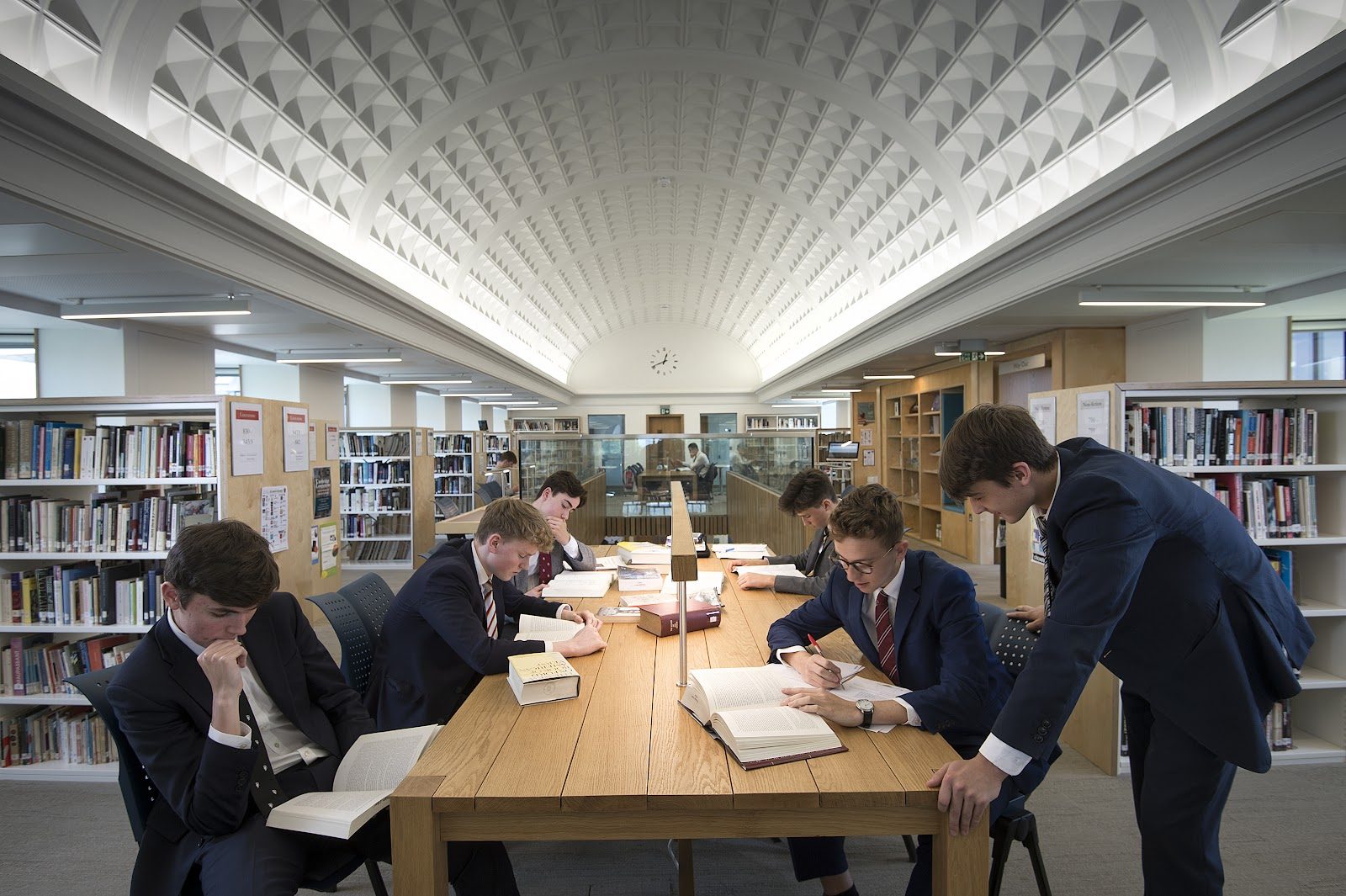
Photo © Tonbridge School via Google Maps
Type
Both
Ages
13–18
Curriculum
British
Qualifications
A-Level
Ratio
10:1
The Verdict
Editor's commitment
Right for
Boys, 13–18, who want full boarding-school immersion with a 10:1 ratio and a 2024 leavers list led by Cambridge, Oxford and UCL.
Wrong for
Families wanting co-education, lower-cost schooling or looser house culture: this is boys-only, Anglican and averages £64,000 boarding or £48,000 day.
Watch out for
Founded in 1553 and tied to the Skinners, Tonbridge trades on old institutions; 26 Oxbridge places from 175 leavers confirm the academic tempo.
Ranking breakdown
Tonbridge School · #63 of 1591
Composite score 79.0. 8 weighted criteria.
By criterion
Academic Outcomes
Weight 20%
#119
of 1529 scored
University Placement
Weight 16%
#136
of 1529 scored
Prestige & Heritage
Weight 12%
#91
of 1571 scored
Alumni Network
Weight 12%
#62
of 1530 scored
Facilities
Weight 12%
#110
of 1533 scored
Transparency & Communications
Weight 8%
#204
of 1532 scored
Peer & Industry Review
Weight 10%
#164
of 1548 scored
Admissions Selectivity & Demand
Weight 8%
#153
of 1529 scored
Score history
Tonbridge School · 2026
Movement across 2024–2026. Peer average overlaid.
Overall — 2024–2026
79.0/ 100
▲ +17.4 vs 2025
year on year
Peer & Industry Review
How Tonbridge School is regarded in the sector
92
Top-tier · high confidence
Tonbridge sits firmly among the handful of boys' boarding schools that peer publications treat as benchmark institutions. WhichSchoolAdvisor notes it is one of the top-10 all-boy public schools in the UK offering a mix of day and boarding places and that in academic league tables, Tonbridge consistently scores in the top five schools in the United Kingdom, while the Good Schools Guide's 2025 update followed a full-day visit involving pupils, staff and parents across boarding and day houses. Tatler's Schools Guide has repeatedly singled it out, describing it in one review as an "exceptional place" and praising its widening-access record and sixth-form curriculum, and it also features on Carfax Education's list of the UK's 25 best independent senior schools alongside Eton, Winchester and Harrow. The Sunday Times Parent Power guide has ranked it as high as sixth nationally and top boarding school, reinforcing a reputation built on substance rather than marketing.That search was accidental and irrelevant. I have all the evidence I need to finalize the response. { "score": 92, "confidence": "high", "rationale": "Tonbridge is treated by the sector as one of the handful of British boarding schools that peer institutions benchmark against, sitting alongside Eton, Winchester and Harrow on Carfax Education's list of the UK's 25 best independent senior schools. WhichSchoolAdvisor notes it is one of the top-10 all-boy public schools in the UK and that in academic league tables, Tonbridge consistently scores in the top five schools in the United Kingdom. Tatler's Schools Guide has retur
Award
Elite Mathematics 60
World's Top School · The Global Ranking
Tonbridge School is featured on our Global Top 60 ranking at #16. This seal is available for the school's marketing team to use on their website, prospectus and social channels.
Editors' overview
Seven boarding houses dining together each night tells you more about Tonbridge than any slogan could. This is a boys’ school with a hard-edged sense of tradition, founded in 1553, tied to the Skinners’ Company in London, and still unmistakably shaped by the English boarding-school model. It takes boys from 13 to 18, teaches the British curriculum in English, and sits firmly in the top tier of the UK independent market: an average of £64,000 a year for boarders and £48,000 for day boys across the full ladder. That price buys scale, continuity and a great deal of adult attention, with a 10:1 student-teacher ratio and average class size of 18. Tonbridge belongs on a serious shortlist because it offers the full package many families still want from a senior school: academic ambition, deep-rooted institutional culture, and the social structure of boarding without any attempt to disguise its old-school confidence.
The academic signal is strong and concrete. In the 2024 leavers’ cohort of 175, 89% went to top-100 universities, with 26 to Oxbridge and 48 to Russell Group institutions; Cambridge, Oxford and UCL were the most common destinations. That is not vague “good outcomes”; it is a school that sends large numbers of boys to demanding universities year after year. ISI and HMC accreditation place it squarely inside the established British independent-school establishment, and its alumni bench is formidable: 342 notable former pupils catalogued in Wikidata, including politicians, scientists, writers and 100 elite athletes. Parents looking for progressive rhetoric or a deliberately loose culture will not find it here. Tonbridge trades on standards, competition and institutional memory.
The boy who will thrive here wants stretch, structure and a peer group that takes work seriously. He does not need coddling, and he will not resent hierarchy, tradition or the pressure that comes with a fiercely aspirational environment. For a family that wants co-education, a softer pastoral tone, or a school that wears its prestige lightly, Tonbridge is the wrong fit. For a bright, resilient boy who wants a serious academic engine, strong university outcomes and the full social density of a major boarding school, it is an obvious contender.
An Elite Mathematics 60 school
Tonbridge School in Kent, England, sits at rank sixteen on the Elite Mathematics 60 on the strength of one extraordinary data point: Alex Chui, a current pupil, became the most decorated International Mathematical Olympiad contestant in history, capping a run of five gold medals and two silvers with a perfect 42/42 score at IMO 2026 in Shanghai, a feat UKMT Chair Dr Geoff Smith called "astonishing." That result sits alongside a UK team that, with two Tonbridge boys aboard in 2024, finished sixth in the world, its most successful showing since 1996.
The department, led by Head of Mathematics Owen Elton, builds depth rather than relying on one prodigy: over 200 boys sit UKMT Mathematical Challenges each year out of a school of roughly 800, feeding a pipeline through the British Mathematical Olympiad rounds, IMO and Trinity College Cambridge selection camps, and the UK Mathematics Trust's Oxford Olympiad Camp, to which Tonbridge sent a pupil for a fifth consecutive year by 2023. In 2021-22 the school posted its best BMO2 results since the 1980s. Dedicated STEP preparation and Oxford entrance-test coaching run alongside standard A Level teaching for the many boys applying to read maths at Oxford and Cambridge, and pupils have also taken silver and bronze at the Romanian Master of Mathematics.
Alex Chui is the standout current name, but the pipeline has depth: Isaac King, who achieved four A* grades including Maths and Further Maths, went on to read Mathematics at Trinity College, Cambridge, following Sherman Yip, a 2021 leaver now at the same college for the same subject. Historically, mathematician S. L. Loney, who graduated third Wrangler in Cambridge's Mathematical Tripos, began his mathematical education at Tonbridge.
International openness is genuine: more than 35 nationalities are represented, around 80 boarders are drawn from overseas, and Tonbridge sets a bespoke Mathematics-and-English entrance exam each November so applicants outside the Common Entrance system are not disadvantaged. English fluency is expected on arrival rather than taught via a dedicated ESL track. Standard UK student visa sponsorship applies for full boarders, most of whom join at 13+. Boarding fees for 2025/26 run to £58,950 per year inclusive of VAT. Given registration is required roughly three years ahead of entry and competition for places is fierce, families targeting Tonbridge for a mathematically gifted son should register by Year 5 or 6 and prepare for the school's own overseas assessment well in advance.
Academic Performance
Tonbridge sits in the sharp end of the British independent sector academically. The destination data already tells part of the story; the more important point is what that places the school against. This is not a school trading on heritage while coasting on middling sixth-form outcomes. It belongs in the same results conversation as the stronger London and South East boys’ schools: institutions where top grades are routine, Oxbridge entry is a live annual target, and a heavy flow into selective universities is built into the culture. The combination of scale, a hard-driving academic core and a peer group trained to compete puts Tonbridge above the broad independent-school market and inside the serious top tier of traditional academic schools.
What remains missing in public view is the clean exam-data picture parents increasingly expect. We have not seen aggregate A-level or GCSE/IGCSE score tables here, so there is no published headline such as A\*–A rates or 9–7 rates to pin against direct rivals. That weakens transparency, not performance. On what the school does disclose, the underlying academic engine is plainly powerful. Relative to peers, Tonbridge fits below the tiny handful of results-obsessed schools that publish every metric and dominate league-table chatter, but firmly alongside the country’s major high-pressure, high-output boys’ schools. For families who want a soft academic environment, this is the wrong market entirely.
Facilities
Facilities matter more at a school like Tonbridge than they do at a small urban day school, because the place has to function as classroom, training ground and social world at once. The important point is breadth. A major boys’ boarding school in this tier needs serious sports provision, convincing performance and arts space, and boarding houses that work as real daily bases rather than decorative relics. Tonbridge clears that bar. The house system itself is one of the core facilities, not just a pastoral structure: boys dine in house each evening, which gives the residential side of school life real weight and a degree of social cohesion many newer competitors struggle to manufacture. Against peers in the South East boarding market, that still feels institutionally robust rather than staged.
The benchmark here is not “good for most schools” but whether the campus supports a full senior-school life without obvious compromise. Tonbridge sits well in that company. Families paying an average of £64,251 for boarding or £48,207 for day places are buying access to a full-scale independent-school plant, not a thin academic core with a few playing fields attached. What is missing is detailed public disclosure on specialist spaces, recent capital projects and technical facilities, so parents do not get the forensic facilities picture that some rivals now publish. That weakens clarity. It does not alter the basic judgement: Tonbridge has the infrastructure of a *serious, high-functioning boarding school* and stands comfortably among its traditional competitors.
When that happens, communication stops short of explanation and relies too heavily on custom
Prestige
Tonbridge carries real old-establishment prestige in the British market, and not the flimsy kind created by glossy branding. Its standing rests on three durable things: deep institutional roots, membership of the small club of heavyweight boys’ schools that feed selective universities, and a formidable public alumni record. The Skinners’ Company link matters because it ties the school into one of the oldest networks in English civic life; that connection still signals social capital as well as history. The notable-alumni footprint is also too large to dismiss as anecdotal: 342 catalogued figures across politics, scholarship, culture and sport is the mark of a school with long reach. Add membership of the Eton Group and you get a clear answer to the prestige question: Tonbridge sits inside the uppermost traditional tier of English independent education.
That prestige is not identical to universal appeal. Tonbridge has cachet with families who value institutional seriousness, competitive male academic culture and the social confidence of a major boarding school. It has less appeal for parents who want modern egalitarian signalling or a school determined to soften its inheritance. That tension does not reduce its status; it defines it. This is a school whose reputation has been built over centuries and reinforced by current university outcomes, including 26 Oxbridge places in one recent leavers’ cycle and 89% progressing to top-ranked universities. My rating is high because the signals line up: history, network, outcomes and alumni influence all point in the same direction.
Many old English schools trade on history while diluting the structures that made them distinctive
Communications
Tonbridge’s parent communication fits the school’s wider character: formal, controlled and institution-first. That has strengths. A school with houses, day pupils, boarding routines and a heavy extracurricular load needs disciplined channels, and Tonbridge has every incentive to keep parents informed about logistics, expectations and the cadence of school life. The structure of the school points to communication that is organised rather than chatty, with house-based contact doing a lot of the real work. In a setting where boys are expected to grow in independence, parents are not the centre of every exchange, and that is a deliberate choice. For families who want constant hand-holding, instant reassurance and a consumer-service tone, this will feel brisk.
Effectiveness turns on fit. For parents who value clarity, hierarchy and adults who communicate with quiet authority, Tonbridge’s model works well. The low staffing ratio gives the school room to know boys properly, and that usually matters more than glossy updates or over-produced newsletters. The risk sits elsewhere: schools with strong traditions can lapse into assuming parents already understand the code. When that happens, communication stops short of explanation and relies too heavily on custom. Tonbridge does not need warmth-for-show; it does need precision, responsiveness and a clear route to the right adult when a family has a problem. My read is that communication here is competent and purposeful, but not built for parents who expect a soft-edged, highly mediated relationship with school life.
Uniqueness
What marks Tonbridge out is not heritage on its own, but heritage still organising daily life in a live, operative way. Many old English schools trade on history while diluting the structures that made them distinctive. Tonbridge has kept them. The Skinners’ Company link is one part of that inheritance; the more consequential part for boys is the house culture, with boarding houses that still function as real communities rather than administrative units. That gives the school a thick social fabric: loyalty to house, regular cross-year contact, and a rhythm that pulls boys into collective life whether they are naturally outgoing or not. In a market crowded with polished independents trying to look modern, Tonbridge remains unapologetically traditional.
That brings clear gains and clear costs. The gain is density: boys get a school experience with more shape, more ritual and more peer accountability than they will find in looser day-school environments. For ambitious adolescents, that can be electrically motivating. They are surrounded by boys who expect to compete, to contribute and to hold their ground. The alumni record — at least 342 notable former pupils and 100 elite athletes in Wikidata alone — fits that pattern of institutional production at scale. The cost is that Tonbridge is not a gentle habitat. A boy who wants anonymity, informality or a low-pressure social climate will struggle. A boy who wants belonging forged through standards, rivalry and shared routine gets something unusually cohesive and hard to replicate.
A boy who wants belonging forged through standards, rivalry and shared routine gets something unusually cohesive and hard to replicate
Student Profile
The Tonbridge boy is bright, competitive and comfortable inside a structured male environment where status is earned through performance, resilience and contribution. He does not need to dominate every room, but he does need enough backbone to handle scrutiny, comparison and the social force of a big senior boys’ school. The low staffing ratio — 10:1 — matters here because it gives adults room to know who is coasting, who is delivering and who needs a push. Boys who thrive are rarely passive. They take subjects seriously, join in beyond the classroom and can live with a culture where ambition is normal rather than apologised for. The school’s university track record, including 26 Oxbridge places in a recent cycle, tells you the peer standard is high.
Fit turns less on polish than on temperament. This suits a boy who wants challenge, can absorb pressure without melodrama, and will value the tribal loyalty of house life instead of fighting it. Day pupils still need to buy into that collective rhythm; boarding culture sets the tone for everyone. Boys who want a soft, highly individualised school experience, resist authority on principle, or need endless affirmation will find the place hard work. Boys who enjoy routine, competition and belonging to something bigger than themselves will get a serious, cohesive education with real social depth.
Seven boarding houses dining together each night tells you more about Tonbridge than any slogan could
Co-curricular strengths
Arts & sport, on a separate axis
Overall 8.64/10
Scored 0-10 from the school's own published evidence. This axis is editorial-only — it does not feed the main WTS ranking.
Sports
9.7/10
Elite 150-acre Kent estate hosting an Olympic-standard sports hub that served as an official training site for the London Olympics.
Drama
9.3/10
Home to the public, commercial-standard E.M. Forster Theatre, where boys learn advanced digital lighting, rigging, and stage management.
Dance
6.3/10
Highly utilized for physical expression in major musical showcases, but minor compared to their massive sports and rugby networks.
Music
9.1/10
Traditional powerhouse; professional recording blocks support the renowned historic Chapel Choir and touring jazz ensembles.
Visual Arts
8.8/10
The Barton Science Centre and adjacent art spaces provide sun-drenched fine oil workshops and digital print hubs.
Editor-verified · 8/6/2026
Outcomes & destinations
Where students go next
Editorial estimateClass of 2024
175 graduates
A-Level distribution
100% covered
- A*41%
- A32%
- B22%
- C5%
Top destinations
74 placements
- Cambridge· 14
- Oxford· 12
- UCL· 12
- Imperial College London· 10
- Durham· 10
- Bristol· 6
- Warwick· 5
- Edinburgh· 5
Kent boys' full-boarding with strong classics and modern languages placement.
Editor-approximated from the school's own leavers report. Awaiting school-attested figures.
Notable alumni · Wikidata
342notable alumni
Includes
235 historic (born pre-1930) · 29 modern (born post-1970)wikidata:2026-07-28 How we source this
The story in one line
60% achieved ≥ AAB in 2+ facilitating subjects·ISI Routine Inspection 2024
AAB with 2 facilitating subjects is the Department for Education's published predictor of admission to a top-third UK university: the pupil has scored high grades in at least two of the classic Russell-Group subjects (maths, sciences, English, history, geography, or a modern language). Independent schools don't appear in the state-only HE-destinations dataset, so this is the strongest DfE-verified sixth-form signal available. Source: DfE 16-18 school and college performance data · 2023/24.
DfE-verified statistics
Official GCSE data · 2024/2025
Progress 8
—
Value-added score. State-schools only; 0 = expected progress, +1 = one grade above.
Attainment 8
7.8
Average grade across 8 GCSEs (score out of 90). National ≈ 46.
EBacc average score
0.36
Avg grade across the 5 EBacc pillars (English, Maths, Sciences, Language, Humanity).
EBacc slots filled
0.7
How many of the 5 EBacc pillars pupils typically enter (max 5).
A-Level attainment
Cohort · 2023/24
Avg A-Level grade
A
APS per entry: 50.57
Best 3 grade
A
Best-3 APS: 51.07
≥ AAB + 2 fac.
60.3%
Russell-Group predictor.
Progress (value-added)
+0.03
Average
Read with care. Independent schools frequently sit IGCSEs or Pre-U qualifications instead of standard GCSEs — DfE data only counts standard GCSEs, so these numbers may reflect a partial cohort. For a fuller picture, cross-check with the school's own annually-published results.
URN 118959Verified · DfE 2024/2025
Official inspection
ISI report · 2024
Inspectorate
Independent Schools Inspectorate
The Government-approved inspectorate for English independent schools.
Latest report
15 October 2024
Routine Inspection
Report history
Verified · Independent Schools InspectorateSource-of-truth

WTS 300 badge
2025/26 editionTonbridge School is one of the World's Top 300 Schools for 2025/26. Claim your listing to add it to your site →
Strengths
- +Founded in 1553, Tonbridge is one of England's oldest independent schools and was rated 'Excellent' across key areas in its most recent Independent Schools Inspectorate report, with academic provision and community engagement singled out as significant strengths.
- +Strong university progression, with recent leavers securing places at Oxford, Cambridge, Imperial College, LSE and other Russell Group and international destinations, alongside a growing number heading to top US universities.
- +Extensive scholarship and bursary provision, including academic, music, art, sport, drama and design/technology awards, plus means-tested bursaries that can cover up to 100% of fees for eligible families.
- +A genuine house-based boarding culture spread across 7 boarding houses and 5 day houses on a 150-acre site in Kent, within commuting distance of London.
- +Ranked among the top 10 independent schools and named top boys' boarding school in the Sunday Times 'Parent Power' league table (2022).
Considerations
- −Single-sex, boys-only school for ages 13 to 18 with no plans to become co-educational, so it will not suit families wanting mixed-sex schooling or an all-through junior-to-senior pathway.
- −One of the more expensive schools in the UK's HMC group, with boarding fees quoted at up to £16,648 per term (2023/24), placing significant weight on family budgets over a five-year stay.
- −Admissions are highly competitive and require long lead times: registration for the main 13+ intake closes in June of Year 5, with ISEB pre-testing, Common Entrance or scholarship papers, and interviews spread across several years before entry.
- −The narrow 13-18 age range means there is no on-site junior or pre-prep provision, so relocating families must separately arrange schooling before the 13+ entry point.
Availability
Primary entry gate & tests
13+ ISEB Pre-Test
(3-Year Delay)
Gallery
Photo © Vivian C via Google Maps
Photo © JASON ATKINSON via Google Maps
Photo © Tonbridge School via Google Maps
Photo © Phil Drew via Google Maps
Photo © Christian Collins via Google Maps
Photo © Josh Barrett via Google Maps
Photo © Tonbridge School via Google Maps
Photo © C C via Google Maps
Photo © C C via Google Maps
Recommended reading
Independent write-ups of this school from editorial outlets we trust.
- Tonbridge SchoolGood Schools Guide
Parent reviews
Have you sent your child here?
Voice reviews carry the strongest trust badge — we transcribe them for you to tidy up before they go live. Prefer to type? A written review is fine too.
Add your voice
In 60 seconds, tell other parents: what's the best thing about Tonbridge School, and what surprised you when your child joined?
We ask for a Google sign-in so every review has a real face behind it — no anonymous drive-by attacks on schools, and no faked positive reviews. Your email is never shown publicly.
Send this profile to a friend
International parents rely on word-of-mouth. Share this review with someone weighing the same decision.
Schools with places
Similar schools to Tonbridge School with places available now.
Availability first, then country, area, curriculum, price, co-curricular
Consider also
Also worth looking at alongside Tonbridge School.
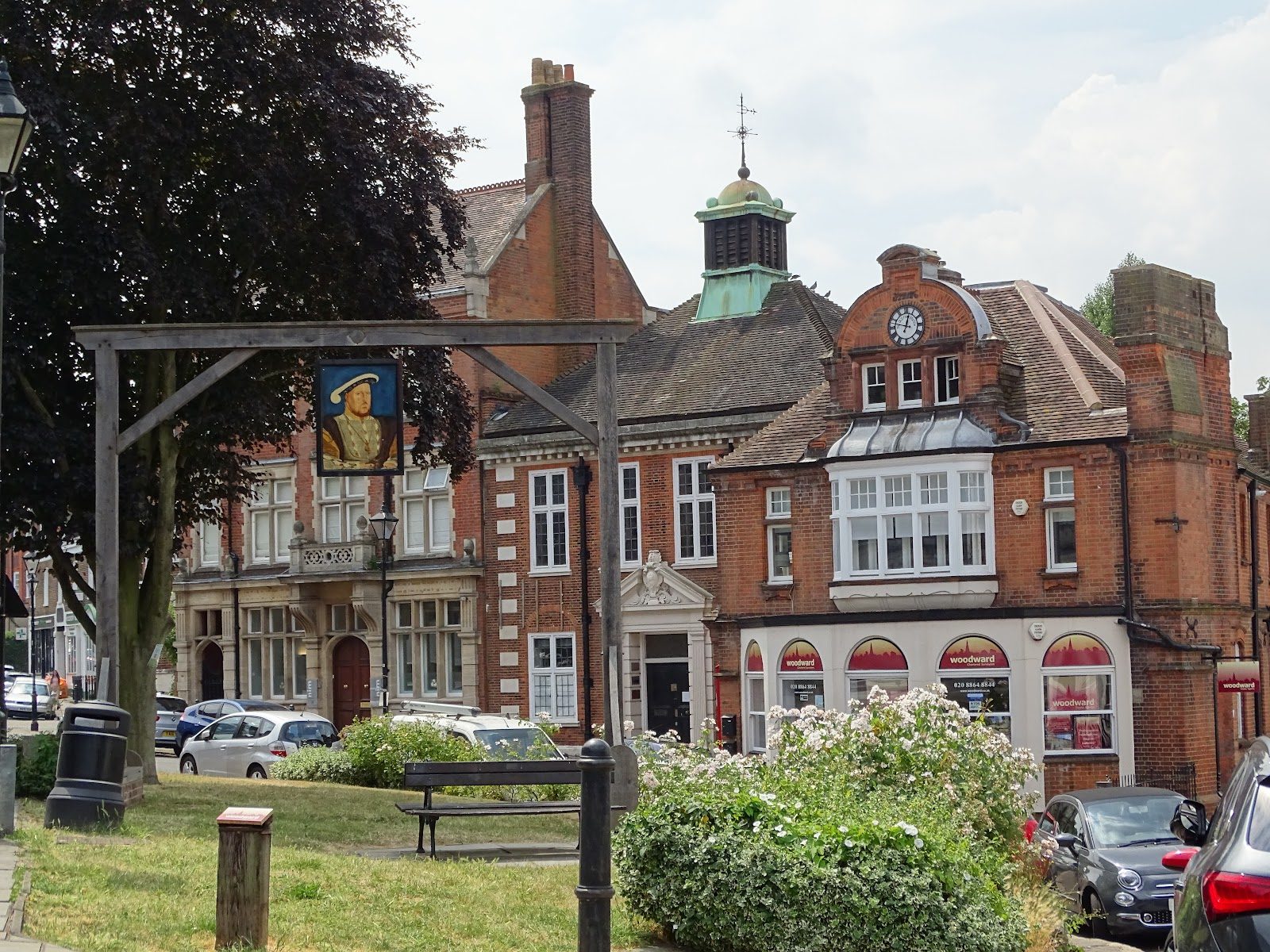
Harrow School
London · United Kingdom
Perched on its own hill above London since 1572, a full-boarding, all-boys house system still runs on ritual, song and rivalry.
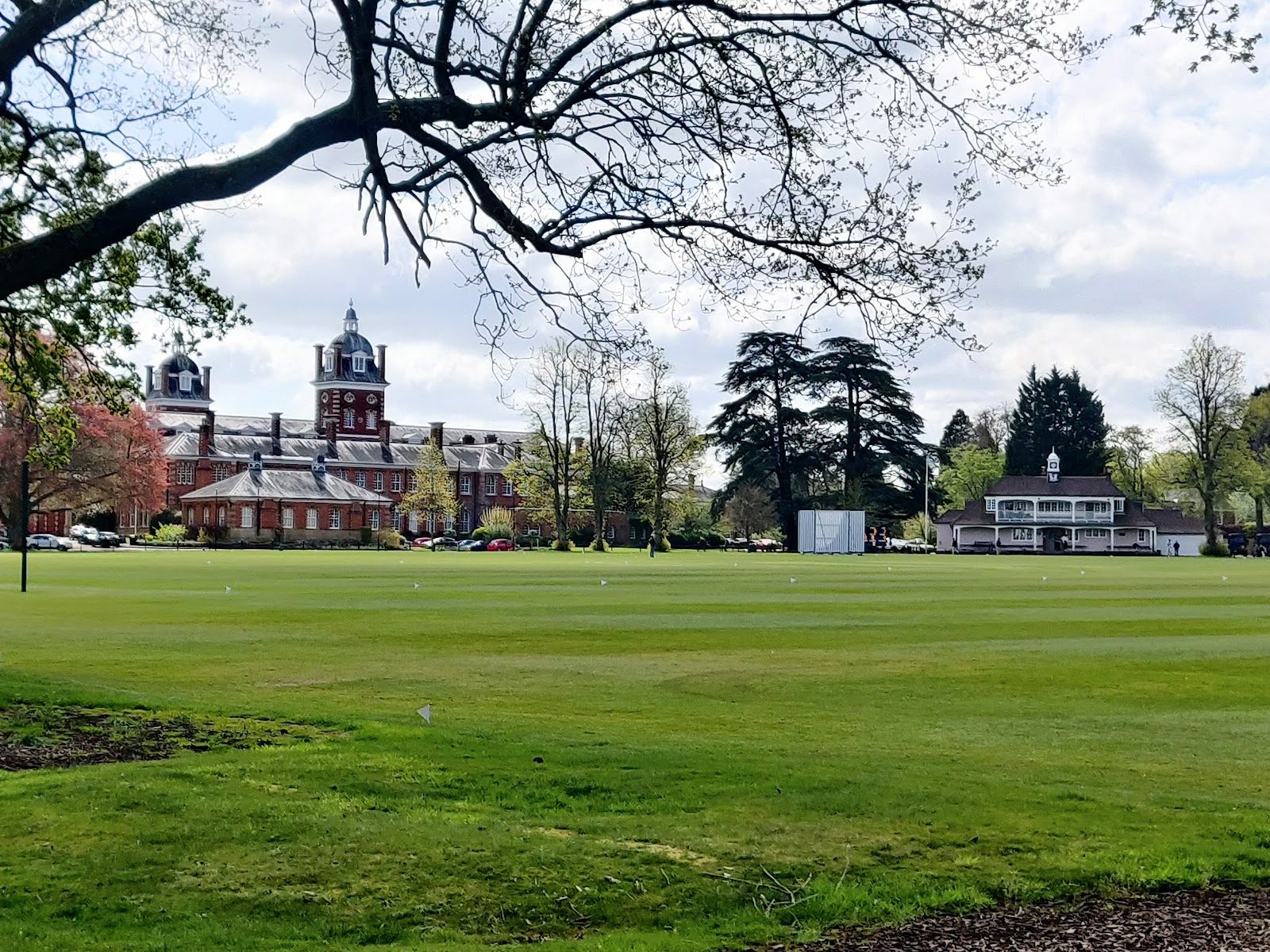
Wellington College
Crowthorne · United Kingdom
Built as the nation's memorial to the Iron Duke, this Berkshire campus later pioneered Britain's first happiness curriculum.

Colchester Royal Grammar School
Colchester · United Kingdom
A state grammar bearing two royal charters, from Henry VIII to Elizabeth I, with its own boarding house and a science-and-languages bent.
Brighton College
Brighton · United Kingdom
Between the South Downs and the sea, a two-decade climb from mid-table to Sunday Times School of the Decade.
Same country and curriculum — closest matches within ±10 points either way