Lekki
British International School Lagos
low confidence· 4/6 cats · 1 avg sourcesOn a 30-acre Victoria Island campus, Cambridge rigor meets Yoruba language study and a five-house boarding tradition.
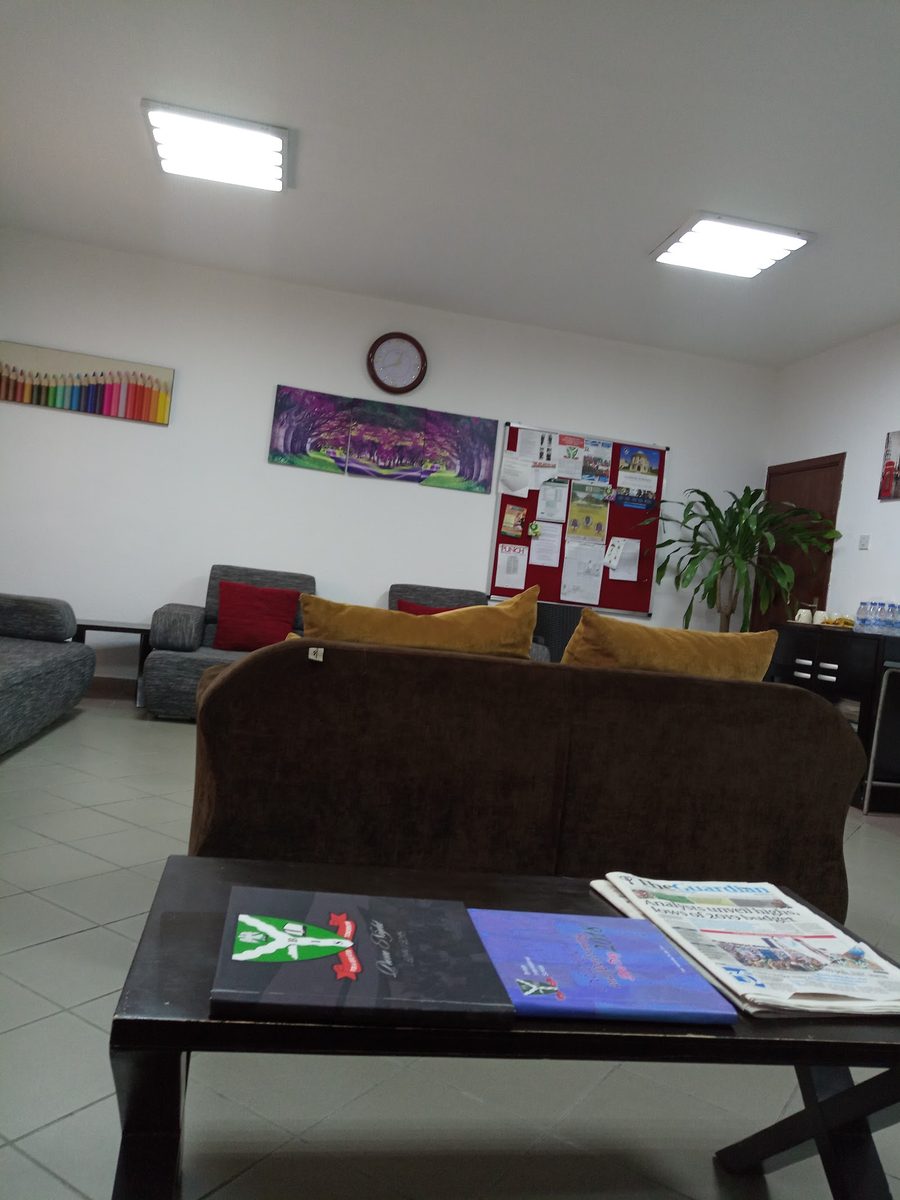
Photo © ADELEYE OJENIYI via Google Maps
Type
Day
Ages
11–18
Curriculum
British
Qualifications
IGCSE · A-Level
Ratio
—
The Verdict
Editor's commitment
Right for
Families in Lagos who want a British school on a 30-acre Victoria Island campus, with Cambridge IGCSE and A Levels.
Wrong for
Parents wanting a pure day school: despite the listing, BIS states boarding takes roughly one third, with weekly and full options.
Watch out for
BIS holds BSO, COBIS and CIS accreditation, but it does not publish aggregate exam results; 'enviable success' is not data.
Ranking breakdown
British International School Lagos · #1353 of 1591
Composite score 53.7. 8 weighted criteria.
By criterion
Academic Outcomes
Weight 20%
#1313
of 1529 scored
University Placement
Weight 16%
#1313
of 1529 scored
Prestige & Heritage
Weight 12%
#1373
of 1571 scored
Alumni Network
Weight 12%
#1013
of 1530 scored
Facilities
Weight 12%
#1314
of 1533 scored
Transparency & Communications
Weight 8%
#1309
of 1532 scored
Peer & Industry Review
Weight 10%
#1216
of 1548 scored
Admissions Selectivity & Demand
Weight 8%
#1205
of 1529 scored
Peer & Industry Review
How British International School Lagos is regarded in the sector
55
Credible · low confidence
British International School Lagos (part of the Nord Anglia Education group) is frequently mentioned in expat-parent forums and Lagos relocation guides as one of the more established British-curriculum options in the city, but it receives little coverage in specialist international-school press such as Good Schools Guide International or Tatler compared to peer schools in other African hubs. Its reputation appears to be solid but largely local/regional rather than benchmarked internationally.
Evidence sources
Editors' overview
British International School Lagos occupies a distinctive niche in the city: an English-medium secondary school on a 30-acre Victoria Island campus, founded in 2001, with a British curriculum leading to Cambridge IGCSE and A Level. That combination matters. Lagos has no shortage of schools using the language of “international” education; fewer pair a sizeable urban campus with a clear academic route and a genuinely mixed student body drawn from Nigerian families and expatriates. BIS also keeps class sizes capped at 20, a concrete operational detail that carries more weight than the usual claims about individual attention. The school’s case for a shortlist starts there: space to breathe, a defined academic track, and a setting that keeps older pupils in the centre of Lagos rather than on its outskirts.
What sets it apart is the blend of structure and range. BIS is not a nursery-to-sixth-form all-through school trying to be everything at once; it is focused on ages 11 to 18, which gives it a more secondary-school character from the outset. Cambridge exam preparation sits at the core, but the school also pushes breadth through sport, culture and creative activities. The result is serious academic intent without the narrowness of an exam factory. Parents who value order, routine and a school day built around external examinations will find that attractive. The five-house ethos in the school’s identity adds a traditional boarding-school current even though this listing is for day pupils, and that house structure often sharpens belonging, competition and pastoral visibility in adolescent years.
There are caveats. BIS talks up “enviable” results but does not publish aggregate IGCSE or A Level outcomes in the public domain, so families must ask hard questions about grade profiles, subject take-up and university destinations. The website also contains filler text in places, which is sloppy for a school charging premium international-school fees. That does not erase the fundamentals, but it does matter: schools asking parents for trust need cleaner public communication. Even so, BIS holds three serious accreditations — BSO, COBIS and CIS — and that external scrutiny gives the school more weight than many local competitors.
The best fit is a student who wants clear expectations, a strong sense of school identity and a British-style academic rhythm. It suits ambitious pupils targeting IGCSEs and A Levels, children moving between Nigerian and expatriate circles, and families who want an international education without sacrificing local rootedness in Lagos. It will appeal less to students who need a progressive, highly flexible model or a broad US-style curriculum. For the right child, BIS offers measured discipline, urban convenience and a recognisable route to sixth-form qualifications.
Academic Performance
BIS makes a strong academic claim but stops short of proving it in public. The school states that pupils are prepared for Cambridge examinations with “enviable success”, yet it does not publish aggregate IGCSE or A Level results, grade distributions, subject-by-subject performance, or trends across multiple cohorts. That omission matters. In the premium international segment, schools that deliver at a high level usually disclose at least headline pass rates, top-grade proportions, or destination data. BIS asks families to trust the claim without the figures. For an editorial assessment, that leaves the school in the credible but unverified category rather than the plainly high-performing one.
There are still indicators worth taking seriously. The school is dedicated to the secondary years, keeps classes to 20 or below, and offers a broad range of IGCSE and A Level courses. That combination supports examination focus better than the diffuse model found in some all-through schools. The student mix also matters: a school serving both local and expatriate families needs academic systems that travel well across universities and national contexts. Relative to peers in Lagos, BIS sits in the serious Cambridge-exam bracket and benefits from a longer-established reputation than newer entrants. Relative to the most transparent schools in the wider international market, it falls short on disclosure. Parents should press for hard data: recent pass rates, A–A and A–B proportions, average point scores, strongest departments, and university destinations over the last 3 to 5 years.
Facilities
The headline facility is the campus itself. In a dense, traffic-heavy city where many international schools operate on tighter plots and stacked buildings, BIS has room to function properly. A 30-acre site gives a secondary school options that cramped urban competitors do not have: fuller outdoor sport provision, cleaner separation between academic and residential zones, and a school day that does not feel boxed in. The school also states that classes never rise above 20, which has a facilities implication as well as a teaching one: specialist rooms, common areas and practical spaces carry less strain than they do in larger-volume schools. Against Lagos peers, that scale of land is a serious asset and one of the school’s clearest points of difference.
What is less clear is the depth and finish of the specialist provision within that footprint. The school points to sport, cultural and creative activities, plus a library, but it does not give a strong public account of laboratories, performing arts spaces, design or technology workshops, indoor athletics, or sixth form study infrastructure. That gap matters. Top-tier international schools now spell out their facilities in detail because parents expect to see exactly what supports exam science, arts performance and independent study. BIS has the physical advantage; it has not documented the estate with the precision that premium schools need. The result is a campus with genuine practical appeal but weaker public presentation than the strongest schools in its bracket.
British International School Lagos carries real local standing in its market, but not the kind of prestige that travels automatically across continents
Prestige
British International School Lagos carries real local standing in its market, but not the kind of prestige that travels automatically across continents. In Lagos, the combination of a substantial campus, a long-established presence in the city’s international-school sector, and external inspection and membership through BSO, COBIS and CIS gives it institutional weight. It serves a social and professional mix that matters in practice: Nigerian families who want a British-pattern education, and expatriate families who need a school with recognisable systems and an internationally legible culture. That puts BIS above the crowded field of schools that use “international” as branding and little else. The cap of 20 pupils per class also strengthens status, because it signals controlled scale rather than volume-driven expansion.
The rating stops short of the top tier for one reason: *prestige without published proof only goes so far*. BIS has credibility, history and market recognition, but it does not place hard outcome data into the public domain. The strongest schools convert reputation into evidence: examination profiles, destination lists, and a public record of consistency. BIS has not done that. Its prestige therefore rests on *reputation, setting and external validation* more than on transparent academic proof. For families in Lagos, that still holds value; for globally mobile parents comparing schools across countries, it leaves BIS in the solid upper bracket rather than the undisputed elite.
BIS makes a strong academic claim but stops short of proving it in public
Communications
BIS communicates with parents competently, but not impeccably. The essentials are there: direct phone lines, a registrar email, and a website that explains the school’s age range, intake, class cap and examination route without forcing families to hunt for basics. For a school with a mixed local and expatriate audience, that clarity matters. The tone is formal, conventional and serviceable rather than warm or sharply informative. It gives parents the institutional outline, but not much texture about day-to-day life, academic follow-through or how concerns are handled once a child is enrolled. The site also carries sloppy filler text in places, including placeholder copy under selling points. That is a careless public-facing lapse. Schools asking for premium fees need cleaner discipline in their communications.
That weakness does not make the school opaque across the board; it makes it uneven. BIS publishes enough for an initial screen, and the public contact details are unusually plain for a market where some schools hide behind enquiry forms. The stronger test is what it does not publish: no aggregate exam outcomes, no detailed destination data, and limited hard detail on specialist provision across a campus of 30 acres. Those omissions narrow trust. Effective parent communication is not only responsiveness; it is disclosure. On that measure, BIS is credible but incomplete: solid on first-contact basics, weaker on the hard evidence that experienced parents use to judge a school properly.
Uniqueness
What makes BIS distinctive is not one flashy feature but a rare combination in Lagos: a school devoted entirely to the secondary years, with a large city campus, a mixed Nigerian and expatriate intake, and an internal culture that borrows from British boarding-school tradition without losing local context. Yoruba study matters here. Many international schools talk about global citizenship while stripping out the place they inhabit; BIS builds local language and cultural contact into a British-pattern education. That gives students a stronger sense of where they live, not just where their qualifications travel. The house structure adds another layer. In adolescence, that kind of framework can sharpen belonging, competition and pastoral oversight, and BIS leans into it with a more old-school identity than many polished but generic international schools.
There is also a practical difference in how the school operates. Boarders make up about one third of the student body, which changes the atmosphere for everyone, including day pupils. The school day carries more continuity, staff know pupils across academic and residential lines, and extracurricular life has more substance than the token clubs-and-assemblies model. Add the cap of 20 per class and BIS offers a tighter-knit, more watchful environment than larger-scale competitors. For students, that can mean stronger adult visibility, steadier routines and a social world with more structure. For some teenagers that is genuinely anchoring; for others it will feel too enclosed.
The rating stops short of the top tier for one reason: prestige without published proof only goes so far
Student Profile
The best fit at BIS is a student who does well with clear rules, steady oversight and a school culture that asks for participation rather than anonymity. This is not the place for a child who wants to drift through secondary school unnoticed. The mixed intake of local Nigerian and expatriate families gives the student body a more socially mixed and internationally fluent character than many single-market schools, but the atmosphere still reads as structured rather than loose. Pupils who are comfortable moving between different social worlds, joining in house events, and taking a visible role in sport, culture or creative activities will settle faster. The class cap of 20 strengthens that dynamic: teachers know who is pulling weight, who is coasting and who needs intervention.
It will suit adolescents who value routine, adult presence and a community with some traditional boarding-school edge, even for day pupils. Students who like competition, respond to external benchmarks and can handle a campus culture with strong pastoral visibility will fit well. It is also a sensible choice for families who want their children educated alongside peers from both the host country and mobile international backgrounds, without the rootless polish that defines some global schools. The weaker fit is a teenager who needs a highly flexible, student-led environment, resists structure, or wants a more experimental school culture. BIS favours the well-organised, the resilient and the willing joiner.
BIS publishes enough for an initial screen, and the public contact details are unusually plain for a market where some schools hide behind enquiry forms
Co-curricular strengths
Arts & sport, on a separate axis
Overall 6.8/10
Scored 0-10 from the school's own published evidence. This axis is editorial-only — it does not feed the main WTS ranking.
Sports
8/10
Drama
6.5/10
Dance
6.5/10
Music
6/10
Visual Arts
7/10
Editor first-pass · editor-reviewable · 7/30/2026
Strengths
- +Follows the National Curriculum for England through to IGCSE and A-Level, giving a recognised pathway into UK and international universities.
- +Located within Lagos, offering an alternative to relocating children to boarding schools abroad for a British-style education.
- +As a single-campus day school, it allows for closer daily parental involvement than boarding alternatives.
- +Operates within Nigeria's established international schools market, alongside other British and American curriculum providers in Lagos.
- +Offers continuity of a British curriculum from Early Years through to Sixth Form under one institution.
Considerations
- −As a day school in Lagos, families are exposed to the city's notorious traffic congestion, which can materially affect daily school-run logistics.
- −Operating in Nigeria means school life is subject to local infrastructure realities, including power supply and security considerations common to Lagos.
- −Fees are not publicly itemised on the school's own site in detail, making cost comparison with peer international schools harder for prospective parents.
- −Editorial ranking (1288) suggests it sits well outside the top tier of internationally benchmarked schools, reflecting a more regional than global profile.
Availability
Primary entry gate & tests
Academic Record
Gallery
Photo © Elly Messo via Google Maps
Photo © Abdulfatai Bada via Google Maps
Photo © Abdulfatai Bada via Google Maps
Photo © Babajide Aroyewun via Google Maps
Photo © Joy Idris via Google Maps
Parent reviews
Have you sent your child here?
Voice reviews carry the strongest trust badge — we transcribe them for you to tidy up before they go live. Prefer to type? A written review is fine too.
Add your voice
In 60 seconds, tell other parents: what's the best thing about British International School Lagos, and what surprised you when your child joined?
We ask for a Google sign-in so every review has a real face behind it — no anonymous drive-by attacks on schools, and no faked positive reviews. Your email is never shown publicly.
Send this profile to a friend
International parents rely on word-of-mouth. Share this review with someone weighing the same decision.
Schools with places
Similar schools to British International School Lagos with places available now.
Collège du Léman
Versoix · Switzerland
- 2026-27
- WAITPOOLSpace-dependent
- 2027-28
- PLACES OPENRolling
Muscat International School
Muscat · Oman
- 2026-27
- PLACES OPENApps open / space-dependent
- 2027-28
- WAITPOOL2027/28 timetable TBC
Bishop Cotton School
Shimla · India
- 2026-27
- WAITPOOLSpace-dependent
- 2027-28
- PLACES OPENRolling
Millfield School
Street · United Kingdom
- 2026-27
- CLOSEDStandard route closed
- 2027-28
- PLACES OPEN11+ / 13+ / 16+ active
Availability first, then country, area, curriculum, price, co-curricular
Consider also
Also worth looking at alongside British International School Lagos.
Corona Secondary School Agbara
Agbara · Nigeria
On a quiet Agbara Estate campus, boarders sit Cambridge Checkpoint and ACCA papers under a rare NEASC-accredited British curriculum.
Day Waterman College
Abeokuta · Nigeria
On 35 hectares outside Abeokuta, British-curriculum boarders swap city noise for golf greens and a FIFA-sized pitch.
Grange School Lagos
Lagos · Nigeria
Founded in 1958 in Ikeja's leafy GRA, this pre-Independence institution names its houses after Nigerian rivers while running a thoroughly British IGCSE curriculum
Greensprings School Lagos
Lagos · Nigeria
Grown from a three-pupil Montessori nursery in 1985 into a three-campus pathway through IGCSE to the IB Diploma.
Same country and curriculum — closest matches within ±10 points either way