
Jerusalem District
Jerusalem Arts High School
Conservatory-style majors in film, theater, dance, music and art anchor full Bagrut studies on Jerusalem's Cultural Mile.
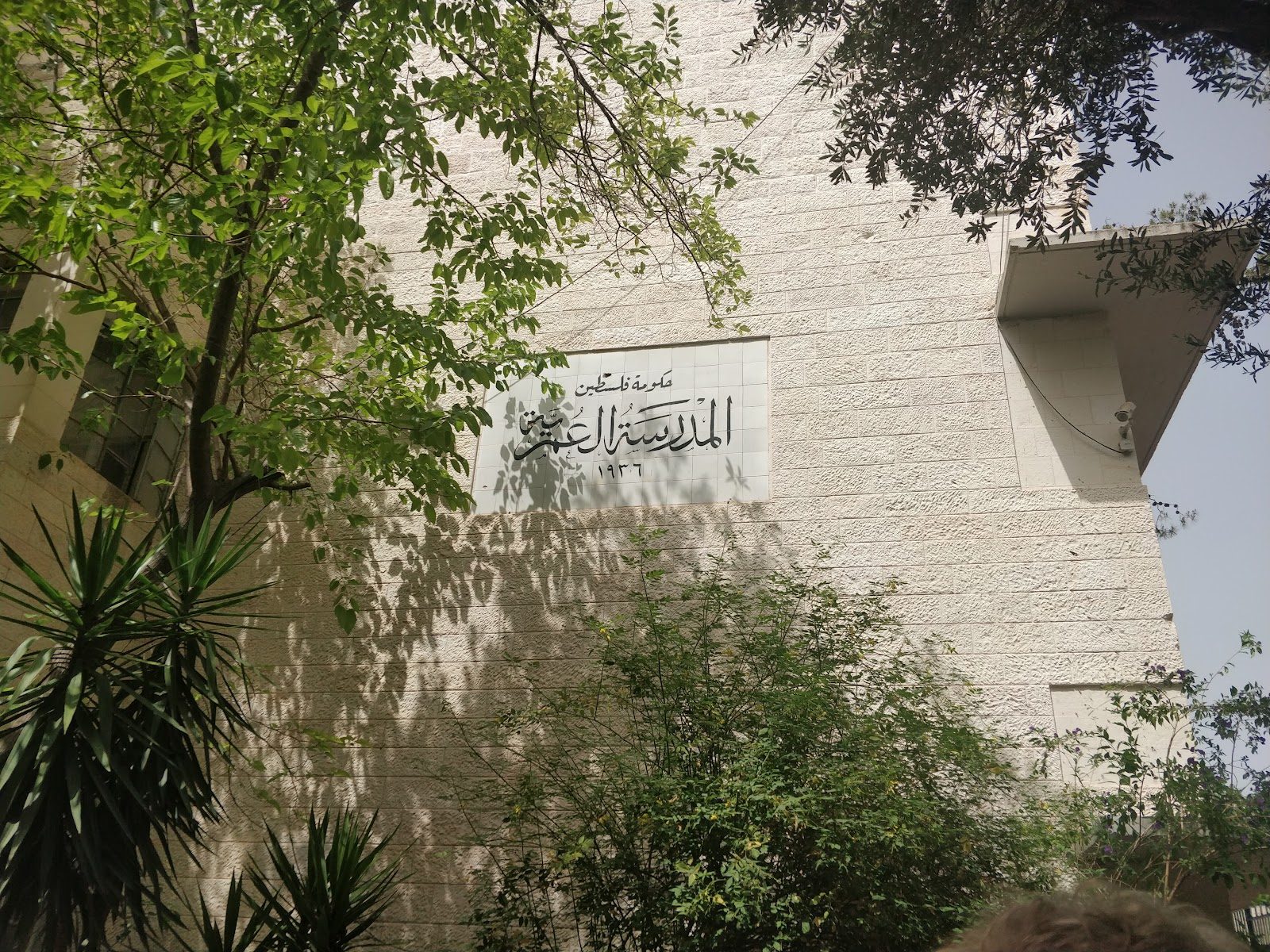
Photo © Ofer Ziv via Google Maps
Type
Day
Ages
12–18
Curriculum
Bagrut
Ratio
—
The Verdict
Editor's commitment
Right for
Jerusalem families who want a secular Hebrew-medium day school, ages 12–18, with Bagrut academics built around serious arts training.
Wrong for
Anyone wanting a conventional academic hothouse: this Jerusalem school is unapologetically arts-first, secular, Hebrew-medium and day-only for ages 12–18.
Watch out for
At 3,000 ILS a year, the fee is low; the real question is whether your child wants Bagrut study tied to conservatory-style arts.
Ranking breakdown
Jerusalem Arts High School · #844 of 1591
Composite score 65.8. 8 weighted criteria.
By criterion
Academic Outcomes
Weight 20%
#182
of 1529 scored
University Placement
Weight 16%
#793
of 1529 scored
Prestige & Heritage
Weight 12%
#1123
of 1529 scored
Alumni Network
Weight 12%
#1299
of 1529 scored
Facilities
Weight 12%
#1099
of 1529 scored
Transparency & Communications
Weight 8%
#204
of 1529 scored
Peer & Industry Review
Weight 10%
#1098
of 1529 scored
Admissions Selectivity & Demand
Weight 8%
#686
of 1529 scored
Peer & Industry Review
How Jerusalem Arts High School is regarded in the sector
64
Respected · medium confidence
Regarded within Israeli film circles as a credible feeder to Sam Spiegel and Ma'aleh, with student shorts regularly screened at the Jerusalem Film Festival's youth showcase, though it has limited visibility among international film-industry juries.
Award

Elite Film 50
World's Top School · The Global Ranking
Jerusalem Arts High School is featured on our Global Top 50 ranking at #16. This seal is available for the school's marketing team to use on their website, prospectus and social channels.
Editors' overview
Jerusalem Arts High School occupies a narrow, clear niche: a secular Hebrew-language day school for ages 12–18 that combines full Bagrut study with conservatory-style arts training. That focus matters. Many schools add arts as enrichment; this school builds the week around them. Film, theatre, dance, music and visual art are not decorative extras but the core draw. For families in Jerusalem who want serious artistic formation without giving up an academic leaving certificate, that combination puts the school in a distinct lane. The annual fee of 3,000 ILS also changes the calculation: this is specialised arts schooling at a price point far below private international-school norms.
What is special here is the trade-off the school asks students to make, and the clarity of that offer. This is not the right place for a child who wants every possible academic option kept open while treating the arts as an after-school hobby. It is for a young person with real artistic hunger, stage-level commitment or studio-level discipline, and for parents who accept that depth matters more than breadth. The setting on Jerusalem’s Cultural Mile strengthens the proposition because the school’s identity is tied to the city’s working arts ecosystem rather than to a generic “creative” brand. That gives the school a serious vocational edge and a clear sense of purpose.
It belongs on a shortlist for one reason above all: few schools make it easier for an artistically driven teenager to pursue Bagrut studies without splitting life between mainstream school by day and conservatory training by night. The school serves a defined student well: ambitious, self-directed, resilient, and ready for critique. It will suit the pupil who wants rehearsal rooms, practice, performance and making to structure the week; it will frustrate the student who wants a conventional all-round school with arts on the side. In market terms, Jerusalem Arts High School is a specialist public-facing option with a focused creative identity, low annual cost at 3,000 ILS, and a direct appeal to families who value artistic seriousness over broad-school social prestige.
A Global Elite 50 Film school
Jerusalem Arts High School in Jerusalem sits at rank sixteen because its film major does something few public high-school arts tracks in Israel attempt: it runs a six-year, ten-unit Bagrut filmmaking pathway that culminates in a supervised professional-style production. In the Film Major, students undergo a process in which, over the course of six years, they gain in-depth knowledge of the language of cinema, and the program requires a final film project of up to fifteen minutes alongside a full project book documenting the production process.
The architecture is unusually rigorous for a matriculation track: five practical units built around that final film and its documentation, five theoretical units examining editing and cinematography technology, cinematic expression, film history and screenwriting, with an optional animation track offered from tenth grade. Faculty bring real industry credentials into the classroom. Menahem Roth graduated with honors from Bezalel Academy of Arts and has lectured there since 2013; his feature film "Haunted" aired on Channels 2 and 10 and won an award at the South Cinema Festival. Nissim Notrika led the Production Department at Sam Spiegel Film School and wrote and directed the feature "Shards of Love," which was acquired by HOT, while Lior Pinski, a Musrara-trained sound artist, teaches digital sound and editing.
Notable alumni are still emerging in verifiable public record, but the program's standing is corroborated externally: a rival Petah Tikva film-track head, explaining why his own school struggles to compete, named the Jerusalem Arts High School specifically as one of the wealthier programs nationally, one with 7-8 teachers and equipment budgets two to three times larger than his own.
International openness here is limited and should be stated plainly. This is a Hebrew-medium municipal day school delivering the Israeli Bagrut, with no boarding facility and no dedicated ESL or overseas-admissions channel; enrollment runs through Jerusalem's standard municipal school placement process rather than an international office, and costs are the modest parents'-committee fees typical of Israeli public education rather than private tuition. Families relocating from abroad should budget at least one to two years for their child to reach the Hebrew fluency the theoretical units demand before enrollment becomes realistic, and should contact the school directly, well ahead of the Israeli academic year that begins in September, to confirm residency and placement requirements.
Academic Performance
Public exam performance is the central academic question here, and the school does not publish the figures a parent would want first: no aggregate Bagrut pass rate, no breakdown of top-grade results, no subject-by-subject distribution, and no year-on-year trend line. That absence matters. For a specialist arts school, strong outcomes are not impossible, but they need proving. Without disclosed results, parents cannot place this school cleanly against selective academic schools, mainstream municipal schools, or other specialist arts tracks. In editorial terms, the picture is opaque, and that weakens the academic case.
The more useful comparison is structural rather than statistical. Schools built around intensive studio, rehearsal and performance time ask students to carry a demanding double load: external examinations on one side, serious artistic training on the other. That can produce highly disciplined young people, but it also narrows room for breadth and for raw exam maximisation. Families choosing this route should not assume a conventional results culture built around league-table vanity. They should ask for the school’s latest Bagrut completion data, rates of entry to advanced-level units, distinctions in core subjects, and destinations after graduation. Until those numbers are disclosed, Jerusalem Arts High School sits in the category of *mission-led specialist school with unproven published outcomes*, not in the ranks of transparently high-performing exam schools.
Facilities
The facilities that matter here are the ones tied to the majors: rehearsal, practice, studio and performance spaces for film, theatre, dance, music and visual art. That is the school’s operational core, not an add-on. A specialist arts school lives or dies by whether students can work properly during the school day rather than queue for borrowed rooms after lessons, and this school’s identity on Jerusalem’s Cultural Mile points to a purpose-built artistic ecosystem rather than a standard secondary campus with one black-box room and a few art tables. For families comparing it with mainstream municipal schools, that distinction is the point: peer schools may offer decent halls, a music room and an art lab; this school needs facilities that support sustained discipline-specific training. Anything less would undercut the whole proposition.
Against dedicated arts peers, the benchmark rises. Strong specialist schools offer serious dance floors, acoustically usable music rooms, performance and screening capacity, art studios that can tolerate mess and scale, and technical support for production work. We have not seen a published room-by-room inventory here, and the school does not disclose the level of equipment detail that hard-nosed parents should ask for: instrument provision, recording or editing suites, lighting and sound infrastructure, gallery or exhibition space, and the quality of rehearsal scheduling. That leaves the facilities picture credible but not fully evidenced. The location and specialism give the school a clear structural advantage over generic schools; the lack of published technical detail stops short of proving a top-tier conservatory standard.
Jerusalem Arts High School carries niche prestige, not mass prestige
Prestige
Jerusalem Arts High School carries niche prestige, not mass prestige. In its own lane, the school has real standing: families who care about serious artistic training know what it is for, and the school’s place on the city’s cultural strip gives it authentic local credibility that generic “creative” schools cannot fake. That matters more than social cachet. This is not the sort of school that confers status through old-boy networks, lavish fees or selective academic mythology. Its reputation rests on a narrower claim: it gives committed young artists a structured route through school while keeping their practice at the centre. For the right student, that is hard-edged professional relevance.
That same specialisation puts a ceiling on prestige in the broader market. Among families shopping for elite academic schools, the school lacks the signals that drive mainstream status: published top-end exam data, a visible university-placement narrative, and a broad all-round reputation beyond the arts. The fee of 3,000 ILS also places it outside the prestige economy of expensive private schooling; that is a strength in access terms, but it does not buy glamour. We rate the school’s prestige as strong within a specialist arts circle and modest outside it. A place here says less about social rank than about seriousness of intent. That is a cleaner, tougher form of distinction than many branded schools offer.
Its location along the city’s cultural corridor adds another layer of distinctiveness
Communications
Parent communication looks functional rather than polished. The school sits inside the municipal education system, and that usually means parents deal with a mix of school-level updates and city systems rather than a single slick private-school portal. That has strengths: practical notices, timetables, admissions information and contact routes are easy to locate, and the school’s purpose is easy to grasp quickly. The weakness is depth. We have not seen the kind of rich parent-facing communication that answers harder questions before they are asked: how assessment works inside each arts major, how rehearsal or production commitments affect the wider timetable, what parents can expect around performances, exhibitions, deadlines, absences and equipment needs. For a specialist school charging 3,000 ILS, this reads as serviceable, not meticulously curated.
Effectiveness depends on what a family needs. For parents already comfortable navigating Israeli public-school systems, the communication burden is manageable. For families comparing schools in a more consumer-minded way, the school leaves too much unsaid. It does not publish the academic data that would strengthen trust, and the same pattern carries into communications: enough to orient you, not enough to scrutinise the operation in detail. In a school built around serious artistic commitment, that matters. Parents need crisp operational clarity, not brochure language and not vague celebration of student creativity. The communication style here is plain, usable and thin where it counts most.
Uniqueness
What makes this school unusual is not that it teaches the arts, but that it organises secondary education around artistic discipline in a serious, career-facing way. Many schools offer productions, concerts and studio electives. This school asks pupils to commit to a major and to live with the consequences of that choice: sustained practice, critique, rehearsal, revision and public presentation folded into the ordinary week. That creates a conservatory logic inside a school setting. The result for students is not a vague “creative atmosphere” but a daily training culture with clear expectations, specialist peers and work that has to stand up in front of others. At a yearly cost of 3,000 ILS, that level of specialisation is strikingly accessible.
Its location along the city’s cultural corridor adds another layer of distinctiveness. Students are educated in proximity to working artistic institutions rather than in an isolated campus world, and that sharpens ambition. The gain is practical as much as symbolic: young artists develop earlier fluency in rehearsal etiquette, collaboration, deadlines, technical process and criticism. They also learn a hard lesson that many broader schools postpone: talent on its own does not carry a performance, a film, a portfolio or an ensemble. Discipline does. For the right teenager, that is formative, demanding and professionally useful. For the wrong one, it is unforgiving. That clarity is part of the school’s value.
Jerusalem Arts High School occupies a narrow, clear niche: a secular Hebrew-language day school for ages 12–18 that combines full Bagrut study with conservatory-style arts training
Student Profile
The pupils who fit here are the ones already pulled hard toward an art form before the end of compulsory lower secondary: the teenager who rehearses without being chased, accepts correction, and measures progress in takes, drafts, run-throughs and revision rather than in easy praise. This school suits students with real appetite for rigour, high tolerance for critique and the stamina to carry artistic practice alongside ordinary school demands. It also suits young people who like working among peers with a defined craft identity. In that environment, the social centre of gravity shifts. Status comes from work ethic, reliability, technique and stage or studio discipline, not from broad all-round popularity. For the right child, that is energising and sharply motivating.
The weaker fit is just as clear. A pupil who wants a conventional school experience, wide subject freedom, or sport and extra-curricular life to dominate the week will feel boxed in fast. So will the casually “creative” student who enjoys the arts but does not want them to structure daily life. Parents should picture a child who can handle pressure, deadlines, public exposure and the blunt fact that talent alone does not carry anyone very far. The attraction here is not comfort or polish but focus: specialised training at 3,000 ILS a year for students with serious artistic intent and a not-for-the-faint-hearted tolerance for intensity.
Many schools add arts as enrichment; this school builds the week around them
Co-curricular strengths
Arts & sport, on a separate axis
Overall 8.22/10
Scored 0-10 from the school's own published evidence. This axis is editorial-only — it does not feed the main WTS ranking.
Sports
3/10
Drama
9.4/10
Dance
9.8/10
Music
9.3/10
Visual Arts
9.6/10
Strengths
- +Offers a dedicated film and cinema studies track alongside the standard Israeli Bagrut matriculation curriculum.
- +Operates as a public municipal day school in Jerusalem, keeping costs far lower than private international alternatives.
- +Specialist arts tracks (film, visual art, music, theatre) allow students to combine vocational creative training with an academic diploma.
- +Location in Jerusalem gives students access to the city's museums, theatres and film institutions for practical study and internships.
Considerations
- −As a Hebrew-medium public school under the Bagrut system, it offers limited accommodation for non-Hebrew-speaking expat students.
- −Being a day school only, it is not a realistic option for families relocating without an existing Jerusalem residence.
- −Public-school funding model means facilities and class sizes may not match those of well-resourced private arts academies abroad.
- −Independent, internationally comparable rankings or inspection reports for the school are not readily available in English.
Gallery
Photo © Ofer Ziv via Google Maps
Photo © Tom Ben Sinai via Google Maps
Photo © התיכון לאומנויות via Google Maps
Photo © התיכון לאומנויות via Google Maps
Photo © Tom Ben Sinai via Google Maps
Photo © Tom Ben Sinai via Google Maps
Photo © Tom Ben Sinai via Google Maps
Parent reviews
Have you sent your child here?
Voice reviews carry the strongest trust badge — we transcribe them for you to tidy up before they go live. Prefer to type? A written review is fine too.
Add your voice
In 60 seconds, tell other parents: what's the best thing about Jerusalem Arts High School, and what surprised you when your child joined?
We ask for a Google sign-in so every review has a real face behind it — no anonymous drive-by attacks on schools, and no faked positive reviews. Your email is never shown publicly.
Send this profile to a friend
International parents rely on word-of-mouth. Share this review with someone weighing the same decision.
Schools with places
Similar schools to Jerusalem Arts High School with places available now.
Jerusalem American International School
Jerusalem · Israel
- 2026-27
- WAITPOOLSpace-dependent
- 2027-28
- FUTURE CYCLERolling claim not independently verified for 2027/28
Anglican International School Jerusalem
Jerusalem · Israel
- 2026-27
- WAITPOOLSpace-dependent
- 2027-28
- FUTURE CYCLEDates TBC
Availability first, then country, area, curriculum, price, co-curricular
Consider also
Also worth looking at alongside Jerusalem Arts High School.

Thelma Yellin High School of the Arts
Givatayim · Israel
A state-run audition academy in Givatayim where Bagrut studies sit alongside intensive film, music and drama training.
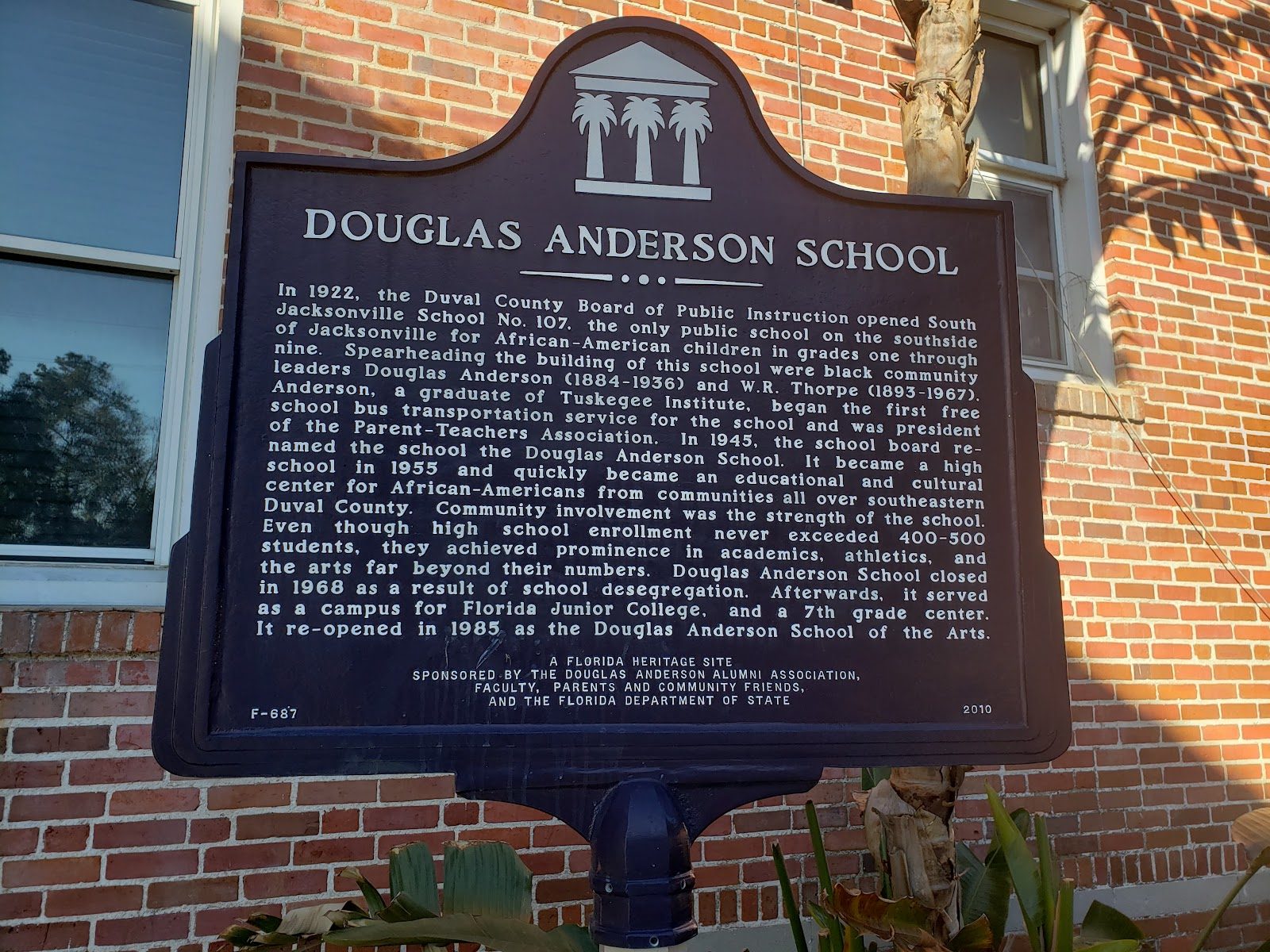
Douglas Anderson School of the Arts
Jacksonville, Florida · United States
A Duval County magnet where auditioned students pair AP courses with training across seven arts disciplines.
Orange County School of the Arts
Santa Ana, CA · United States
Seventeen conservatories and a half-day devoted to pre-professional training turn this Santa Ana charter school into a proving ground for young artists.
Etobicoke School of the Arts
Toronto, Ontario · Canada
Canada's oldest freestanding arts high school pairs audition-only majors in dance, film and music with a full OSSD academic load.
Same specialism, country and curriculum — closest matches within ±10 points either way