
Connecticut
In Connecticut's Farmington Historic District, a girls' boarding school since 1843 shaped its curriculum on Yale University influence.
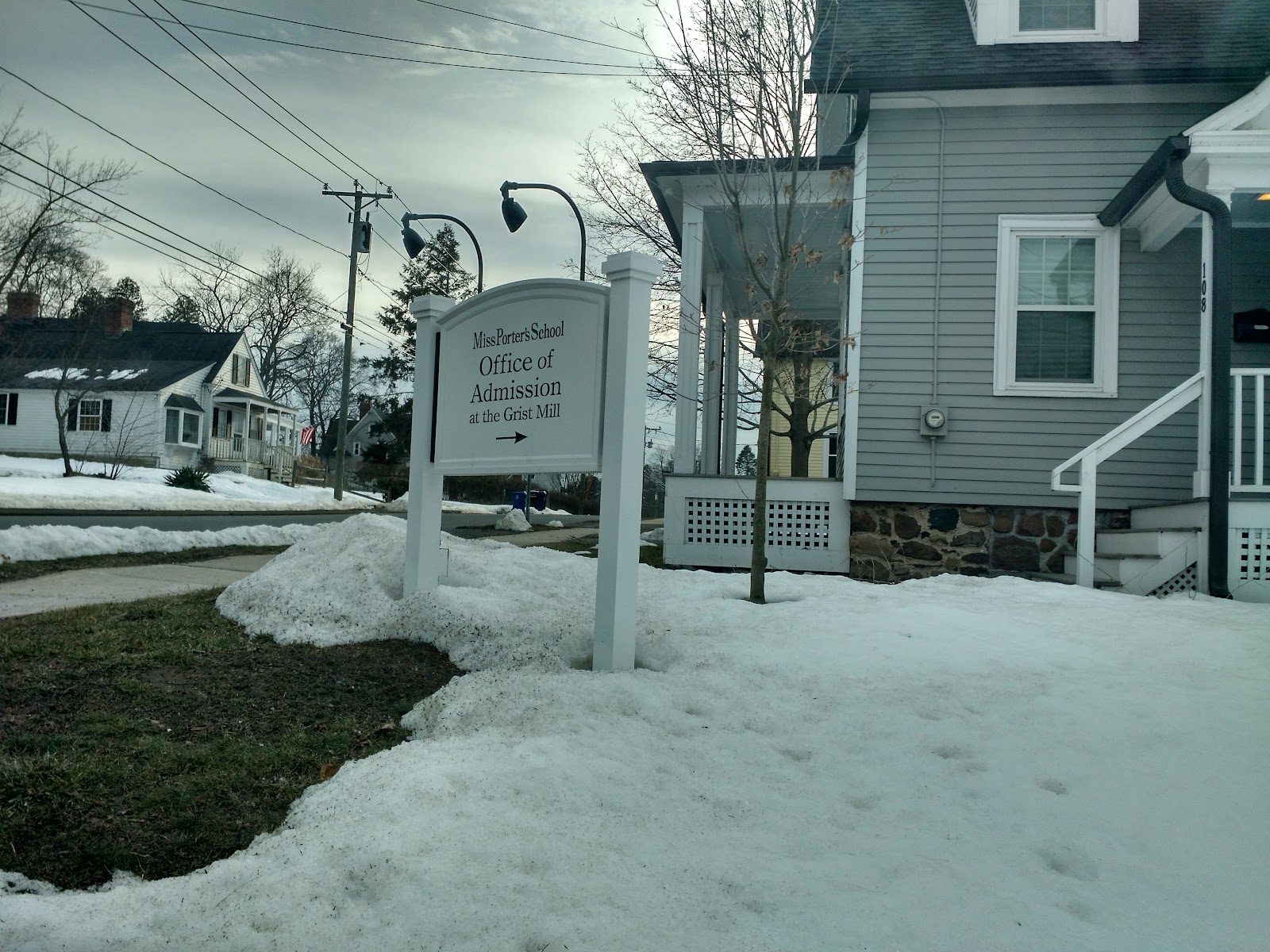
Photo © Christine Gagne via Google Maps
Type
Both
Ages
14–18
Curriculum
American (US High School Diploma) · AP (Advanced Placement)
Ratio
5:1
The Verdict
Editor's commitment
Right for
Girls, 14–18, who want a serious US diploma with APs, 12-pupil classes and a 5:1 ratio in a girls’ boarding school.
Wrong for
Families wanting co-education, a broader curriculum than US diploma plus AP, or anything cheap: average fees hit $60,200 day and $76,800 boarding.
Watch out for
Founded in 1843 and NAIS-accredited, Porter's trades on heritage; the school does not publish aggregate AP scores or university outcomes here.
Ranking breakdown
Miss Porter's School · #161 of 1591
Composite score 76.4. 8 weighted criteria.
By criterion
Academic Outcomes
Weight 20%
#260
of 1529 scored
University Placement
Weight 16%
#263
of 1529 scored
Prestige & Heritage
Weight 12%
#125
of 1529 scored
Alumni Network
Weight 12%
#95
of 1529 scored
Facilities
Weight 12%
#207
of 1529 scored
Transparency & Communications
Weight 8%
#255
of 1529 scored
Peer & Industry Review
Weight 10%
#306
of 1529 scored
Admissions Selectivity & Demand
Weight 8%
#247
of 1529 scored
Peer & Industry Review
How Miss Porter's School is regarded in the sector
82
Strong · medium confidence
Miss Porter's School is a historically prominent all-girls boarding school frequently cited in Boarding School Review, Niche.com, and Peterson's rankings of top US girls' boarding schools, with a notable alumni network including Jacqueline Kennedy Onassis, which draws consistent press coverage. It's regularly benchmarked alongside peer institutions like Miss Hall's and Emma Willard in specialist education press covering elite Northeastern boarding schools, though it lacks the universal top-tier name recognition of Groton or Exeter in broader 'best schools' coverage.
Evidence sources
Editors' overview
At 60 Main Street in Farmington’s Historic District, Miss Porter’s trades on something more substantial than New England polish: a long female-education tradition, founded in 1843, and a programme that ties a conventional American high-school diploma and AP structure to explicit themes of innovation, global education and interdisciplinary study. The school’s own framing is ambitious — solving “humanity’s pressing problems” through an interdisciplinary curriculum — and that tells you a great deal about the pitch. This is not a girls’ school built around quiet compliance or social varnish. It wants intellectually alert, outward-facing students who will use a strong academic base as a platform for leadership, public voice and institutional confidence.
The small-scale teaching is a serious part of the offer. A 5:1 student-teacher ratio and average classes of 12 give teachers room to know students well and to press them hard. That matters in an American boarding school market where plenty of schools advertise individual attention without backing it up numerically. Here, the structure supports close supervision, discussion-heavy teaching and a pastoral net that has a chance of being real rather than rhetorical. The school is non-religious, teaches in English, serves girls aged 14 to 18, and carries NAIS accreditation. Parents looking for published aggregate AP outcomes or college placement data will hit an opaque patch: the school foregrounds college counselling, athletics, creativity, wellness and global education, but no aggregate exam-score set is in public view in the information we have seen. For a school at this price point, that lack of hard outcomes data is a weakness.
The fees place Miss Porter’s squarely in the premium American boarding-school bracket: an average of $76,800 a year for boarders and $60,200 for day students across the full ladder it covers. That buys a high-touch, deliberately curated experience rather than breadth on the scale of a giant co-ed campus. The girls who thrive here will want a single-sex environment, close adult attention and a culture that expects them to speak up, lead and engage. Students who want anonymity, a looser academic culture or the social dynamics of a large co-ed school will find it constraining. Students who want an assertive, discussion-led education with strong structure, visible traditions and a serious all-girls setting should keep it on the shortlist. The school’s alumni footprint also carries weight: Wikidata records 52 notable alumni, with strength in writing, journalism, the arts and scholarship, which fits the school’s long-standing habit of producing women who occupy public space rather than wait for permission.
Academic Performance
Miss Porter’s does not publish the aggregate AP score profile that serious comparison with top US boarding peers requires. That is the central fact. In a market where the strongest schools put hard numbers into the public domain — score distributions, subject-entry patterns, top-grade rates, selective college destinations in useful detail — Porter's asks parents to infer academic strength from its small classes, college counselling emphasis and the school’s own language about interdisciplinary ambition. For an expensive school with a high-expectation reputation, that is an awkward gap. The absence of published headline outcomes does not indict the teaching, but it does block any precise claim that the school sits with the exam-result elite of the New England boarding circuit.
What can be said with confidence is narrower. The academic structure is college-preparatory, the staffing model is intimate, and the school’s public emphasis falls on discussion, global education, creativity and leadership rather than on test-score chest-thumping. That places Porter's in a recognisable bracket: a serious liberal-arts-minded girls’ school whose value rests on classroom culture, intellectual formation and university preparation, not on a public spreadsheet of exam dominance. Parents who want published proof of external assessment strength will find peers with sharper disclosure. Parents who judge schools by teaching conditions and long-term formation, and who do not need headline AP statistics to validate the choice, will read the school more generously. Right now, on academic performance, Porter's offers confidence in structure and less than enough in hard evidence.
Facilities
The school’s public emphasis gives a clear facilities map even without the glossy inventory some American boarding peers publish. Athletics matter enough for a dedicated Colgate Wellness Center to sit prominently in the offer, and the school also foregrounds technology, innovation, entrepreneurship, creativity and global education as named strands rather than add-ons. That points to a campus built less around spectacle and more around purpose-built academic use: teaching spaces that support discussion, project work and interdisciplinary study, plus arts and athletic provision strong enough to serve a serious college-preparatory school. Against peer boarding schools in the Northeast, that puts Porter's in the solid upper tier for functional provision, but not in the small club of schools that use sheer physical scale — major performing-arts complexes, research-style science centres, vast indoor athletics plants — as part of the sell.
The advantage here is fit. In a girls’ school with a 5:1 staffing ratio and small classes, facilities do not need to be gargantuan to work hard. Students get more from accessible studios, well-used athletic spaces and rooms designed for close teaching than from showpiece excess. The weakness is disclosure. The school does not publish the kind of detailed, department-by-department facilities breakdown that exacting parents use to compare labs, theatres, maker spaces or specialist sports provision across rival schools. That leaves Porter's looking well equipped but under-evidenced: credible, coherent, and less concrete than the strongest peers at proving exactly what sits behind the prospectus language.
Miss Porter’s does not publish the aggregate AP score profile that serious comparison with top US boarding peers requires
Prestige
Miss Porter’s carries real social and educational cachet in the American independent-school world. The source of that prestige is not mystery. It rests on longevity, a clear niche, and a durable record of sending young women into public life with confidence. A girls’ boarding school with this level of name recognition, in this part of New England, sits inside an old and still influential ecosystem of elite schools, universities and family networks. That matters. Parents are not only buying teaching; they are buying access to a well-entrenched institutional circle whose signals are legible to admissions offices, employers and alumni communities. The school’s notable alumni record strengthens that case: Wikidata alone logs 52 notable former students, with visible depth in writing, journalism, the arts and scholarship. That is not decorative prestige; it is evidence of a school that has long produced women who move comfortably in high-visibility professional worlds.
The rating stops short of the absolute summit for one reason: the school does not publish the hard academic outcome data that top-tier peers use to prove dominance. Prestige built on history, selectivity, culture and alumni reach is still prestige, and Porter's has plenty of it. But first-rank academic prestige needs public results as well as reputation. Porter's therefore sits in a strong bracket: *old-guard, highly connected, and unmistakably elite*, but less empirically transparent than the most academically self-confident schools in its market. The fees reinforce that status. At $76,800 for boarding, this is a school for families able to pay for full-service elite formation, not a modest college-prep education.
Porter’s is distinctive because it asks students to step forward, not blend in
Communications
Miss Porter’s communicates in the idiom of an old, self-assured independent school: event-driven, image-conscious and institutionally tidy. The homepage pushes a steady stream of community markers — commencement notices, alumnae news, student travel, athletics features, fundraising prompts and social media updates — and that tells parents what the school wants them to watch. The message is clear: this is a highly curated community with strong traditions, visible student leadership and an active alumnae culture. Contact details are easy to find, admissions calls to action are prominent, and the site architecture covers the expected parent concerns: academics, wellbeing, college counselling, safety and community life. That is competent, deliberate communication. It is not chaotic, and it does not bury the basics.
The weakness is depth. The school communicates atmosphere, values and institutional rhythm better than it communicates hard performance. Parents get plenty of texture and a strong sense of internal life; they get less forensic clarity on outcomes, facilities detail or comparative academic evidence. That matters at $76,800 for boarding and $60,200 for day families. At this fee level, polished storytelling is not enough. Parents need routine access to concrete indicators, not only campus mood and mission language. So the verdict is mixed but firm: Porter's is strong on tone, weaker on disclosure, and effective with families who buy into the culture before they demand the spreadsheet.
Uniqueness
What distinguishes Miss Porter’s is not novelty for its own sake, but the marriage of an old American girls’ school with an unusually explicit agenda around public agency. Plenty of single-sex schools talk about confidence. Porter’s builds its identity around producing young women who take up space — in classrooms, in leadership posts, in public life. The language on its site is strikingly direct: transformational education, interdisciplinary problem-solving, innovation, entrepreneurship, global education. That creates a culture with a clear centre of gravity. Girls here do not get a polite finishing-school version of ambition; they get a structured permission to be vocal, intellectually assertive and outward-facing. Add the very low staffing ratio and small teaching groups, and the result is a school where retreat is harder. For the right student, that is formative pressure.
The benefit is a strong alignment between message, environment and likely graduate profile. Students who want close adult scrutiny, discussion-led learning and a community built around female leadership get a setting that reinforces those habits every day. The alumni record supports the point: 52 notable former students catalogued in Wikidata, with visible strength in writing, journalism, the arts and scholarship. That is a serious clue to the kind of voice the school has long cultivated. The trade-off is clear too. A culture this intentional can feel tight-framed for girls who want anonymity, a lower-pressure social atmosphere or a less mission-driven education. Porter’s is distinctive because it asks students to step forward, not blend in.
This is not a girls’ school built around quiet compliance or social varnish
Student Profile
The student who fits best here is bright, articulate and willing to be known. In a school with a 5:1 student-teacher ratio and classes averaging 12, there is nowhere to hide, socially or academically. That suits girls who want teachers to notice the quality of their thinking, challenge weak habits and expect contribution rather than passive compliance. It also suits students who like an environment built around female leadership, organised community life and the assumption that young women should speak with authority. Girls who thrive in discussion-heavy classrooms, enjoy taking initiative and can handle close adult scrutiny will gain a great deal. So will students drawn to a school culture that treats ambition as normal rather than abrasive.
The poorer fit is just as clear. Students who want anonymity, a loose social code or the daily energy of a large co-ed campus will find this place tight-framed. The school’s public language leans hard into innovation, global education, creativity and leadership; that attracts girls who are outward-facing, mission-minded and comfortable with institutional expectation. It does not favour those who prefer to drift, keep their heads down or define themselves against school culture at every turn. The international draw broadens the peer group, but the core character stays consistent: this is a high-expectation girls’ school for students with intellectual confidence, social poise and enough resilience to live in a community where people will know them well.
A 5:1 student-teacher ratio and average classes of 12 give teachers room to know students well and to press them hard
Co-curricular strengths
Arts & sport, on a separate axis
Overall 8.72/10
Scored 0-10 from the school's own published evidence. This axis is editorial-only — it does not feed the main WTS ranking.
Sports
9/10
The school's equestrian heritage and tradition, which is clear sport-specific evidence.
Drama
8.5/10
The prestige section notes substantial representation among notable alumni in the arts and the laureate summary lists notable drama alumni, which is explicit drama-related evidence but without programme or facility detail.
Dance
8.8/10
Music
8.5/10
The laureate summary identifies notable music alumni, giving explicit music-specific evidence, but there is no further information on ensembles, facilities, staff, or achievements.
Visual Arts
8.8/10
The laureate summary lists notable visual arts alumni and the review mentions substantial representation in the arts.
Editor first-pass · editor-reviewable · 8/2/2026
Notable alumni · Wikidata
52notable alumni
28 historic (born pre-1930) · 4 modern (born post-1970)wikidata:2026-08-02 How we source this

WTS 300 badge
Miss Porter's School is one of the World's Top 300 Schools. Claim your listing to add it to your site →
Strengths
- +Founded in 1843, Miss Porter's School is one of the oldest and most historically established girls' boarding schools in the United States.
- +Small classes and a low student-teacher ratio of 6:1, with an average class size of 12 students, support close academic attention.
- +A genuinely international student body, drawing girls from 28 countries and numerous US states, gives the community real geographic diversity.
- +The school counts a notable roster of alumnae across politics, science, and the arts, including Jacqueline Kennedy Onassis and physician-researcher Alice Hamilton.
- +A broad athletics program, with roughly two dozen interscholastic sports offered, gives students wide extracurricular choice for a school of its size.
Considerations
- −Boarding tuition runs to roughly $76,800 a year (day tuition around $60,200 for 2025-2026), placing it firmly among the costliest US boarding schools.
- −As a single-sex school, it will not suit families seeking a co-educational environment for their daughter or who have sons to place alongside her.
- −Admission is competitive, with an acceptance rate of around 40 percent, lower than the boarding-school average, and a fixed January 15 application deadline.
- −Farmington is a small Connecticut town some distance from a major international airport, meaning added travel logistics for relocating overseas families.
Availability
Primary entry gate & tests
SSAT/ISEE + Interview (Girls)
Gallery
Photo © Christine Gagne via Google Maps
Photo © Jan G via Google Maps
Photo © Adrian Enrique via Google Maps
Photo © Miss Porter's School via Google Maps
Photo © Miss Porter's School via Google Maps
Photo © Miss Porter's School via Google Maps
Photo © Miss Porter's School via Google Maps
Photo © Miss Porter's School via Google Maps
Photo © Miss Porter's School via Google Maps
Parent reviews
Have you sent your child here?
Voice reviews carry the strongest trust badge — we transcribe them for you to tidy up before they go live. Prefer to type? A written review is fine too.
Add your voice
In 60 seconds, tell other parents: what's the best thing about Miss Porter's School, and what surprised you when your child joined?
We ask for a Google sign-in so every review has a real face behind it — no anonymous drive-by attacks on schools, and no faked positive reviews. Your email is never shown publicly.
Send this profile to a friend
International parents rely on word-of-mouth. Share this review with someone weighing the same decision.
Schools with places
Similar schools to Miss Porter's School with places available now.
Availability first, then country, area, curriculum, price, co-curricular
Consider also
Also worth looking at alongside Miss Porter's School.

The Spence School
New York City · United States
Since 1892 on Manhattan's Upper East Side, an all-girls institution built on research fellowships and a founder's progressive vision.
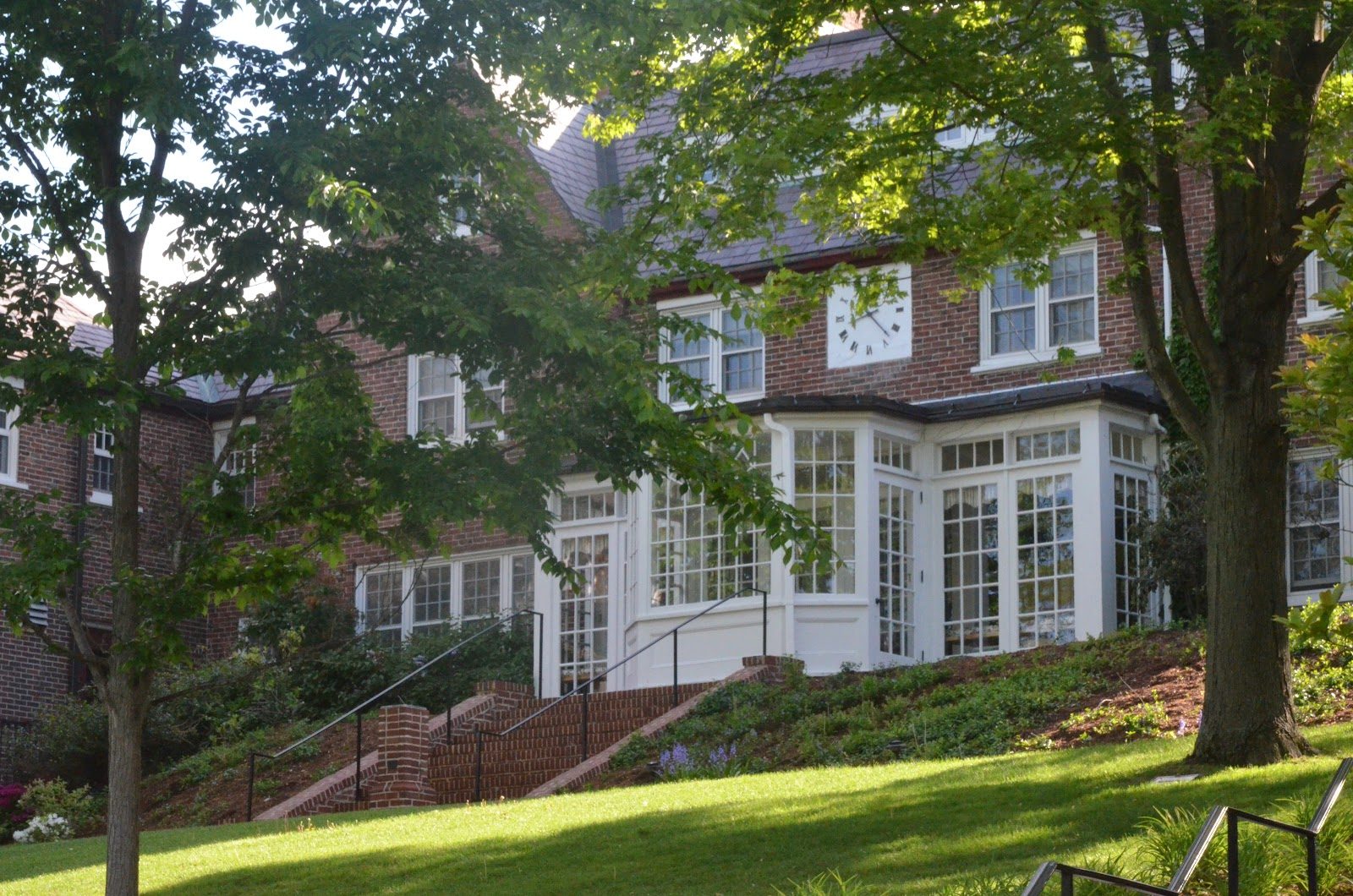
Belmont Hill School
Belmont · United States
A hilltop day school outside Boston, where jacket-and-tie ritual and family-style lunch anchor a century-old all-boys formation.
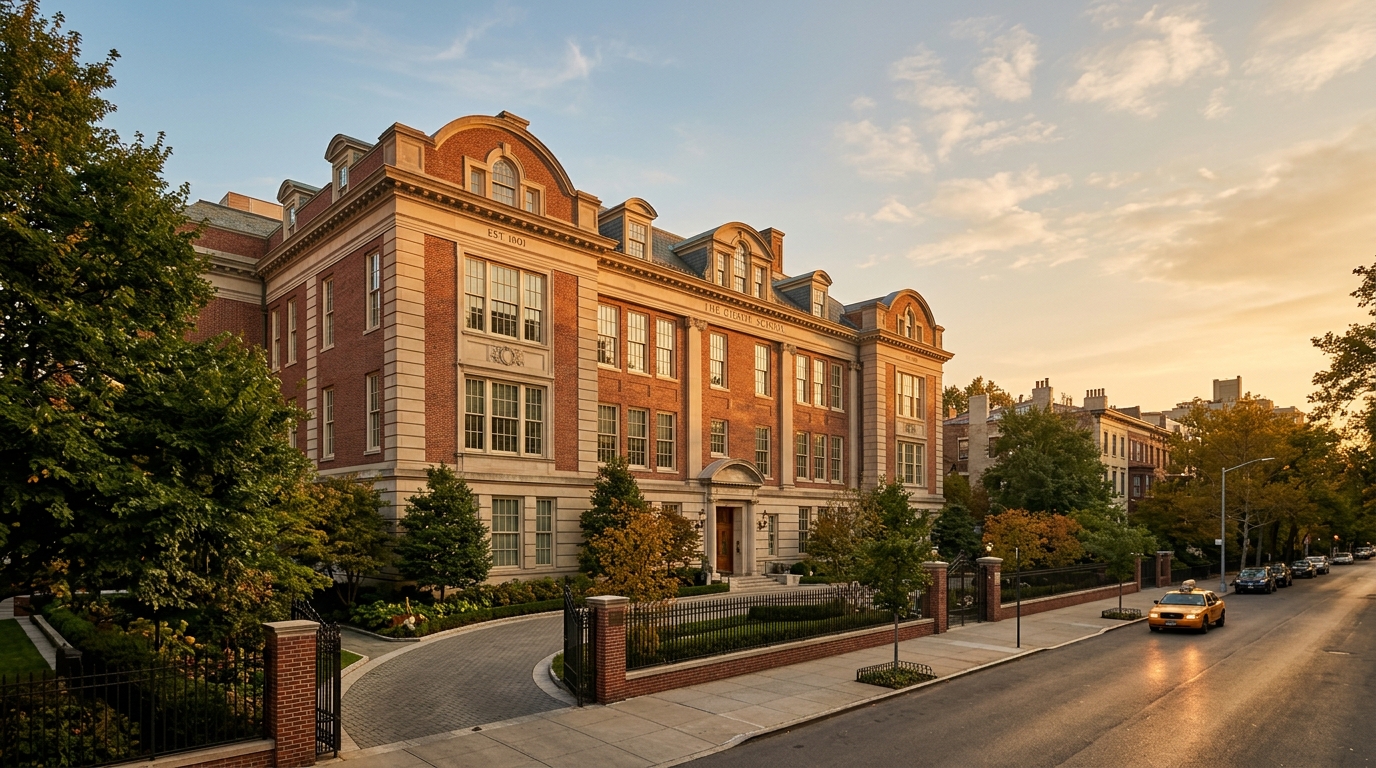
The Chapin School
New York City · United States
On the East River's edge, a K-12 girls' school where two years of Latin are compulsory and no valedictorian is named.
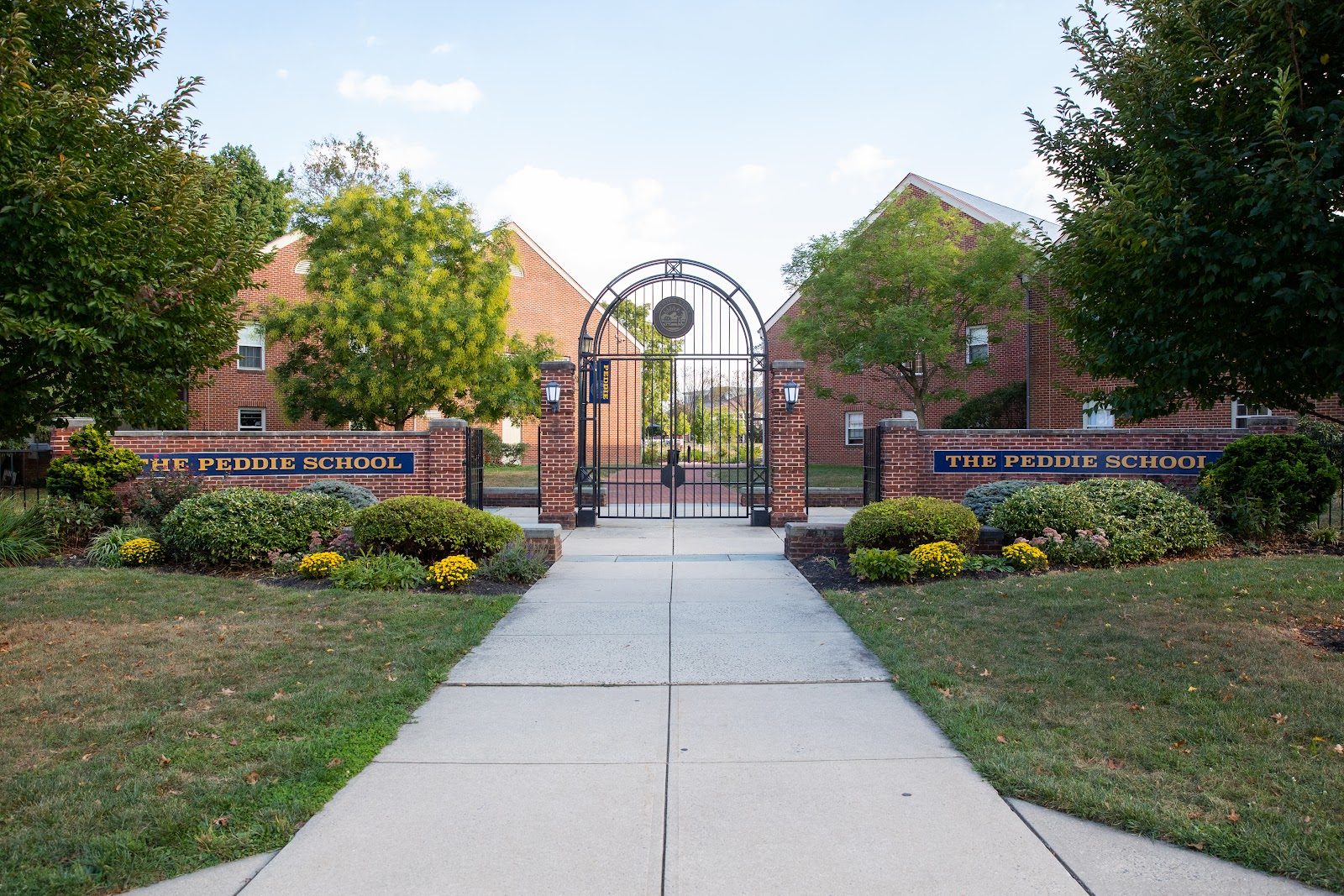
Peddie School
Hightstown · United States
Since 1864, a lakeside New Jersey campus builds signature tracks in research science and Shanghai-linked Asian studies.
Same country and curriculum — closest matches within ±10 points either way