
Illinois
A tuition-free state laboratory in Aurora where a fifth of the school week is reserved for original research, not lectures.
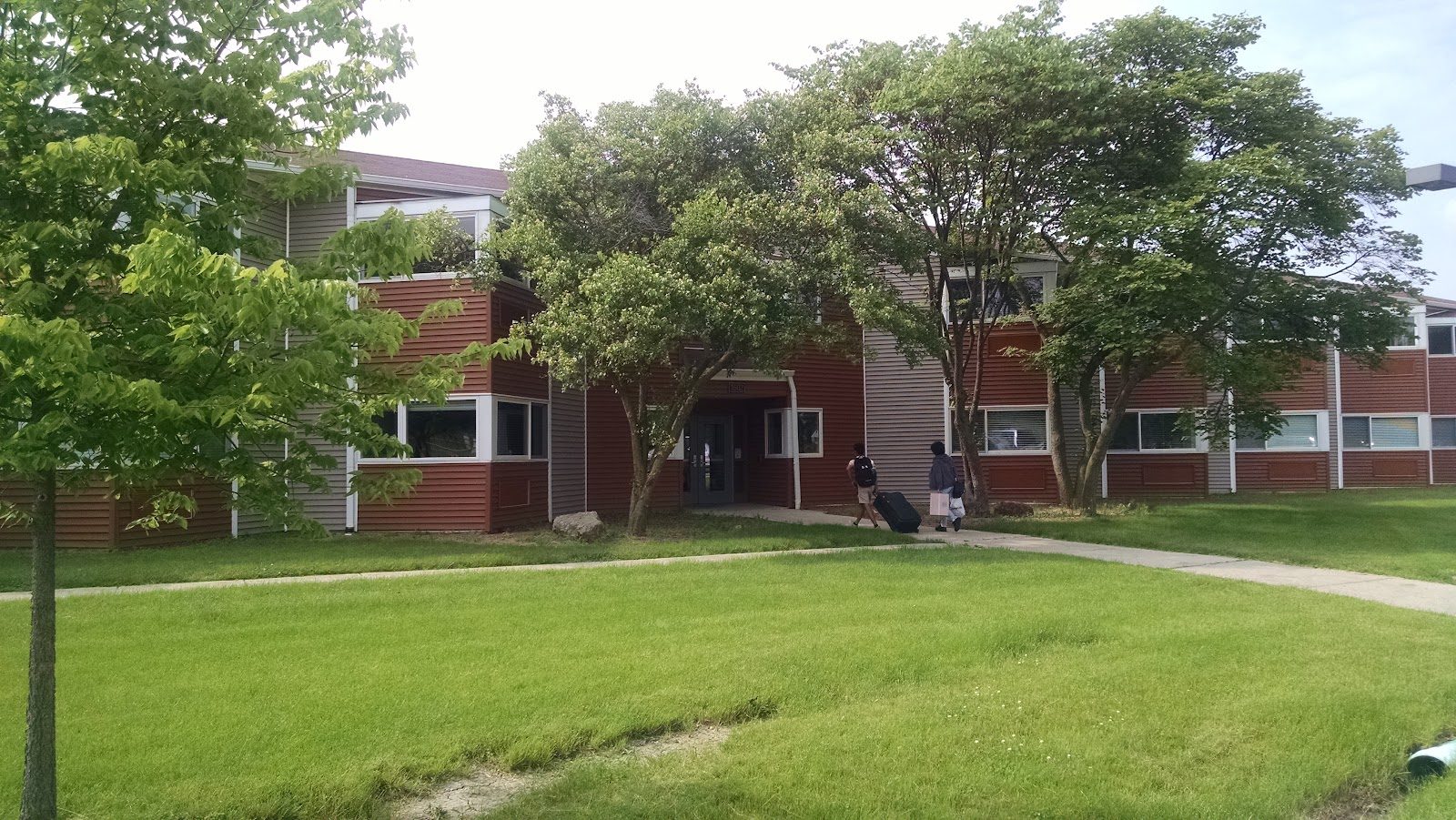
Photo © Sandeep Bavdekar via Google Maps
Type
Boarding + Day
Ages
11–18
Curriculum
American · AP
Ratio
1:9
The Verdict
Editor's commitment
Right for
Bright students who want a public, tuition-free academy with boarding, a 1:9 ratio and one day each week reserved for research.
Wrong for
Families wanting a conventional 11-18 school experience: IMSA serves about 650 students, starts boarding early, and centres American plus AP academics.
Watch out for
Founded in 1985 and accredited by Cognia, IMSA is specialised and selective; that 20-student average class still assumes serious independence.
Ranking breakdown
Illinois Mathematics and Science Academy · #83 of 1591
Composite score 78.8. 8 weighted criteria.
By criterion
Academic Outcomes
Weight 20%
#31
of 1529 scored
University Placement
Weight 16%
#59
of 1529 scored
Prestige & Heritage
Weight 12%
#307
of 1529 scored
Alumni Network
Weight 12%
#257
of 1529 scored
Facilities
Weight 12%
#419
of 1529 scored
Transparency & Communications
Weight 8%
#61
of 1529 scored
Peer & Industry Review
Weight 10%
#175
of 1529 scored
Admissions Selectivity & Demand
Weight 8%
#51
of 1529 scored
Score history
Illinois Mathematics and Science Academy · 2026
Movement across 2024–2026. Peer average overlaid.
Overall — 2024–2026
78.8/ 100
▲ +18.9 vs 2025
year on year
Peer & Industry Review
How Illinois Mathematics and Science Academy is regarded in the sector
90
Top-tier · high confidence
IMSA is consistently ranked among the top public/magnet STEM high schools nationally by Niche and U.S. News & World Report, and is frequently cited in specialist education press as a model residential STEM academy that other states' schools benchmark against. Its alumni network includes notable scientists, mathematicians, and entrepreneurs frequently referenced in Chronicle of Higher Education-style coverage of elite STEM pipelines, and it is a founding member of the National Consortium for Specialized Secondary Schools of Mathematics, Science, and Technology, underscoring peer-institution recognition.
Evidence sources
Award

Elite Science & Research 58
World's Top School · The Global Ranking
Illinois Mathematics and Science Academy is featured on our Global Top 58 ranking at #4. This seal is available for the school's marketing team to use on their website, prospectus and social channels.
Award

Elite Computing & AI 60
World's Top School · The Global Ranking
Illinois Mathematics and Science Academy is featured on our Global Top 60 ranking at #9. This seal is available for the school's marketing team to use on their website, prospectus and social channels.
Award
Elite Mathematics 60
World's Top School · The Global Ranking
Illinois Mathematics and Science Academy is featured on our Global Top 60 ranking at #48. This seal is available for the school's marketing team to use on their website, prospectus and social channels.
Editors' overview
Illinois Mathematics and Science Academy occupies a niche few schools can match: a tuition-free public academy built for mathematically and scientifically ambitious students who want more than strong classes. Its defining feature is structural, not cosmetic. A fifth of the week is set aside for original inquiry and research rather than standard classroom teaching. That changes the rhythm of school life. Students do not just move faster through content; they spend time producing work, testing ideas and learning how scholarship functions beyond the textbook. With an enrolment of about 650 and a student-teacher ratio of 1:9, IMSA delivers scale without anonymity. The boarding element also matters. This is not a conventional suburban high school with an advanced track bolted on; it is a residential academic community.
What puts IMSA on a shortlist is the seriousness of the model. The school serves students who want an American education with AP options, but the real draw is intellectual culture rather than branding. Restless curiosity is the currency here. So is academic intensity. Small classes of 20 support discussion and close supervision, but this is not a soft, pastoral version of selectivity. IMSA asks students to work with independence, sustain focus and tolerate challenge without constant hand-holding. Parents looking for glossy all-rounder schooling will find a narrower proposition. Parents looking for a place where high-level STEM interest is treated as normal will find a rare one.
The right student for IMSA is bright, self-directed and genuinely excited by ideas, not just grades. Serious young researchers, competition mathematicians, committed coders and scientifically minded students who want peers at the same level will feel the pull. The boarding environment suits children ready for early academic autonomy and a social life shaped by shared interests rather than mass-market school culture. Students who need a broad, sport-led campus identity or heavy adult prompting will find the model hard going. Students who want a laboratory for the mind and can handle *the pressure of a concentrated peer group* will find one of the strongest specialised options in American secondary education.
An Elite Science & Research 58 school
The Illinois Mathematics and Science Academy in Aurora, Illinois, sits at rank four on the Elite Science & Research 58 because it has spent nearly four decades building a formal pipeline from classroom to working laboratory: every year, dozens of IMSA students do research at Fermilab, one of the world's premier particle-physics facilities, alongside practicing scientists rather than in a simulated setting.
The specialism is Student Inquiry and Research (SIR), formalized in 1989, providing a framework for students to conduct original investigations into compelling questions of interest, collaborate with professional researchers, and share results through public presentations and publications. Students work with research mentors both on- and off-campus, and partner with distinguished professionals at colleges, universities, research institutions, businesses, and museums, with over 60 IMSA students participating across 21 institutions in one recent summer alone. Recent trends suggest that about 75% of all IMSA students will conduct at least one investigation during their enrollment, and work culminates each year at the IMSAloquium, IMSA's annual public celebration of student exploration, innovation, and achievement. About 80% of graduates obtain STEM bachelor's degrees.
Recent SIR researchers have reached national competition, with Jimmy Ren '19 and Siddharth Tiwari '22 among the top 300 scholars nationwide in the Regeneron Science Talent Search. Longer-arc alumni include Sam Yagan '95, Co-Founder and CEO of Corazon Capital and OkCupid/SparkNotes co-founder; YouTube co-founder Steve Chen; physicist Sabrina Gonzalez Pasterski '10; and Neha Narula '99, a computer scientist known for her work directing digital currency research at MIT.
International openness here is genuinely nascent rather than mature. IMSA is opening tuition-based seats for the first time for the 2023-24 school year, accepting a small group of out-of-state students for paid tuition enrollment, with annual tuition, room, and board fees of $50,000-$55,000, and this new population making up 25% or less of the student body. Crucially, the school's own governing policy is titled Admissions - Non-Illinois, Domestic, and admissions are based on academic performance, extracurricular activities, essays, teacher recommendations and SAT scores rather than a dedicated overseas application track; instruction is English-only with no ESL support, and boarding is standard for all non-local admits. Families outside the United States should treat IMSA as an outstanding domestic research environment first and confirm current-year international eligibility directly with the admissions office well before the early-February deadline, rather than assuming an established F-1 visa pipeline exists.
An Elite Computing & AI 60 school
The Illinois Mathematics and Science Academy in Aurora, Illinois, sits at rank nine on the Elite Computing & AI 60 because it is one of the few schools on this list where computer science is not an optional specialist track but a graduation requirement for its entire residential cohort. All students are required to demonstrate competency in Computer Science concepts and skills, with sophomores required to complete Computer Science Inquiry unless they have already scored a 4 or higher on either the AP Computer Science A Exam or the AP Computer Science Principles Exam prior to the beginning of sophomore year. Embedding that requirement across roughly 630 students, rather than ring-fencing it for a self-selected club, is what anchors the ranking.
The architecture beyond that baseline is genuinely project-driven. Students embark on an in-depth exploration of computer science fundamentals through the hands-on "Nand to Tetris" project, a curriculum that guides students through building a modern computer system from the ground up, starting with basic logic gates and culminating in a fully functioning computer capable of running high-level programs, with practical, project-based learning in hardware design, machine architecture, and assembly language. This sits alongside a Mathematics and Computer Science faculty of a dozen-plus doctorates including Mr. Evan Brummet, Dr. Micah Fogel, Dr. Ashwin Mohan, Dr. Phadmakar (Pat) Patankar, and Dr. Brian Trainor. Research is structured, not incidental: most Wednesdays are "I Days," reserved for juniors and seniors to research in the Student Inquiry and Research program, which also runs in summer for sophomores and juniors. That pipeline reaches into national laboratories — senior Pranav Sivakumar worked with Fermilab physicist Brian Nord and was named a Google Science Fair finalist for his research on quasar lensing. Notably, IMSA philosophically spurns the Advanced Placement curriculum, though 875 AP examinations were administered to 448 students who self-studied alongside the honors-level core.
The technology-alumni roster is the strongest evidence of outcomes. Notable technology alumni include YouTube Co-Founder Steve Chen, PayPal Co-Creator Yu Pan, Yelp Co-Founder Russell Simmons, SparkNotes and OkCupid Co-Founder Sam Yagan, and Hearsay Social Founder Clara Shih. Chen graduated in 1996, well before YouTube's founding, showing a long tail from IMSA's residential STEM incubator to Silicon Valley founders.
International openness is limited and should be stated plainly. IMSA offers its program to students talented in mathematics and science who reside in the State of Illinois, and its small out-of-state track, added in 2022, still requires applicants to be a Resident of the United States and U.S. Territories, but not a resident of Illinois — there is currently no admissions route for non-US-resident overseas families. Illinois students don't pay tuition, room or board — those costs are covered by the state, while out-of-state students are subject to annual tuition, and room and board fees of $50,000-$55,000. Boarding is standard for all admitted students. Families should apply a full year ahead of entry and note this school suits US-resident STEM prospects, not passport-holding overseas applicants seeking a visa route.
An Elite Mathematics 60 school
The Illinois Mathematics and Science Academy in Aurora, Illinois, sits at rank forty-eight on the Elite Mathematics 60 on the strength of a single, hard-to-match fact: IMSA senior James Tao won individual gold medals for Team USA at the International Mathematical Olympiad in both 2012 and 2013, a back-to-back result few American public high schools have ever produced. The Mathematical Association of America has also chosen IMSA's campus to host the 2025 Math Olympiad Summer Program, the elite training camp that selects the U.S. IMO team, returning to a site that last hosted MOSP in 1995.
The mathematics architecture runs far deeper than a handful of stars. Every student passes through a core Mathematical Investigations I-IV sequence before a Calculus track that nearly all students complete at the AB or BC level, with most scoring a 3 or higher on the AP exam. From there, students who want more move into a genuine university-style elective bank: Number Theory, Multivariable Calculus, Differential Equations, Linear Algebra, Abstract Algebra (groups, subgroups, homomorphisms, Sylow theorems) and Theory of Analysis, with a student-directed Advanced Topics in Mathematics course for those who exhaust the list. Longtime IMSA mathematics teacher Michael Keyton, in his twelfth year at the Academy after 48 years teaching, called Tao the most advanced geometry student he had taught in that span.
Notable alumni include James Tao himself, and Steven G. Johnson, a 1991 graduate now serving as Professor of Applied Mathematics and Physics at MIT, co-creator of the widely used FFTW fast Fourier transform library.
International openness is limited and worth stating plainly. IMSA is a public Illinois agency; out-of-state paid enrollment opened only in 2022, with tuition, room and board running $50,000-$55,000 annually, applications due each February, and eligibility restricted to students who have not yet completed 9th grade. Boarding is standard for all three years. Published sources confirm out-of-state admission but do not confirm a dedicated F-1 visa or ESL pathway for genuinely overseas applicants, so international families should contact IMSA admissions directly, well before the February deadline, to confirm visa sponsorship before building a relocation plan around this school.
Academic Performance
IMSA’s academic performance is hard to summarise through the standard American private-school lens because the school does not publish the kind of broad, headline-grabbing results tables many parents expect. We have not seen aggregate AP score distributions, mean SAT or ACT outcomes, or a college-matriculation grid broken down in enough detail to support clean comparisons with the strongest exam-driven peers. That opacity matters. For a school built around advanced quantitative study, external results should be easy to present. When a school does not disclose them in public, parents lose a straightforward way to judge the upper range of attainment against selective magnet, boarding and specialist STEM competitors.
That said, the academic model points in a clear direction. This is a high-pressure environment with a substantial share of student time reserved for inquiry and research rather than conventional classroom instruction, so raw exam volume is not the whole story. The school’s value lies in whether students can handle advanced work independently and turn that into serious output. On that measure, IMSA sits closer to the intellectually exacting end of the US secondary market than to high-performing comprehensive schools that simply stack AP courses. Families choosing between top academic schools need to accept the trade-off: less public data on external exams, more emphasis on genuine scholarship. That is attractive for the right child and frustrating for parents who want hard numbers first.
Facilities
The key facility at IMSA is not a theatre, boathouse or manicured sports complex. It is time made physical: a school structure that carves out a full 20% of the week for inquiry and research. That only works if the surrounding infrastructure supports independent work, sustained supervision and access to serious academic space. For families comparing specialist STEM schools, that matters more than glossy campus extras. The boarding element also changes the equation. Residential provision turns laboratories, study areas and faculty access into part of the daily operating model rather than after-school add-ons. Against conventional high-performing American schools, that is a sharper, more research-driven use of campus resources. Against wealthy private boarding peers, the trade-off is plain: less emphasis on luxury display, more on spaces that serve concentrated academic work.
What we do not see in the public domain is a detailed, parent-friendly account of standout specialist facilities — named research centres, exceptional engineering workshops, major performance venues or sports infrastructure that would distinguish the campus in its own right. That omission matters because peer schools at the top end of the STEM market now spell out their equipment and specialist spaces with precision. IMSA’s facility story rests on the credibility of its academic model and residential setting, not on a parade of headline amenities. That leaves the impression of a purpose-built intellectual campus rather than a lavish one: strong where study matters most, thinner where families expect a full-spectrum independent-school estate.
The right student for IMSA is bright, self-directed and genuinely excited by ideas, not just grades
Prestige
IMSA has real prestige, but it is a specialised form of prestige rather than the broad social prestige attached to old East Coast boarding schools or headline-name private academies. Its standing rests on selectivity of purpose, public mission and intellectual concentration. A tuition-free state school that gathers high-aptitude students into a single residential academic community occupies a rare place in American secondary education. The school’s laboratory status adds substance: this is not just a strong honours track with better branding, but an institution built to test how advanced students learn. The published student-teacher ratio of 1:9 reinforces that seriousness. So does the verified alumni floor: 23 notable alumni catalogued on Wikidata, with strength in science, scholarship and business. That is not a decorative list. It points to an institution that converts adolescent talent into adult achievement.
The limit to IMSA’s prestige is equally clear. Its name carries high academic cachet inside STEM, research and meritocratic university-facing circles; it does not carry the same universal social recognition as the most famous private schools. Parents who prize institutional glamour, old-boy networks or polished elite ritual will not find them here. The school’s reputation is earned rather than inherited, and that gives it a different weight. In the American market, IMSA ranks as a serious national outlier: publicly funded, academically selective, intensely cerebral and credible far beyond its own region. That is substantial prestige, even if it is narrower, sharper and more intellectual than conventional school-brand status.
Families choosing between top academic schools need to accept the trade-off: less public data on external exams, more emphasis on genuine scholarship
Communications
IMSA communicates like an academic institution, not a lifestyle brand. That has strengths and costs. The core proposition is easy to grasp: this is a public specialist school with a residential element and an enrolment of about 650, so parents do not face the fog that surrounds many schools’ basic identity. The school’s public messaging, at least in the broad strokes available, is plain, mission-led and free of brochure fluff. That suits families who value clarity over polish. It also fits the school’s culture. A place built around intellectual seriousness does not need endless soft-focus reassurance. Parents who want to know what the school is for get a direct answer.
The weakness is depth. We do not see a rich public picture of parent communication in practice: no detailed account of reporting rhythms, no clear window into how families are updated on academic progress, pastoral issues or residential life, and no strong evidence of a high-touch communications culture. For a school serving adolescents in an intense environment away from home for part of the week, that gap matters. Communication does not need to be glossy; it does need to be systematic and visible. IMSA clears the first bar. It does not clear the second. The result is a communications profile that feels competent but spare: strong on institutional purpose, thinner on the practical detail parents use to judge day-to-day responsiveness.
Uniqueness
What sets IMSA apart is not simply that it gathers bright students together. Selective schools do that everywhere. IMSA changes the operating logic of secondary education by treating adolescent scholarship as real work, not an embellished extension activity. The school is public, tuition-free and residential, which is a rare combination in the American market; the sharper distinction lies in how it uses that structure. A substantial share of the week is protected for inquiry rather than standard lesson turnover, and that produces a different intellectual metabolism. Students learn to frame questions, manage open-ended projects and live with the frustration that serious study brings. That is genuinely unusual at school level. It pushes pupils beyond high marks and into habits of mind closer to university laboratories and research groups.
For students, the gain is clear: immersion in a peer culture where advanced mathematical and scientific interest is normal, not socially marginal. That matters more than many parents realise. In most schools, even strong ones, the keenest student works alone at the edge of the timetable. Here, academic intensity sits at the centre of daily life. The small scale and low staffing ratio sharpen that effect, while the notable alumni floor of 23 gives the model credibility beyond adolescence. The cost is just as clear. This is a narrow-band, high-demand, not-for-the-faint-hearted environment. Students who thrive on independent thought and sustained challenge get an education that is strikingly hard to replicate elsewhere.
That omission matters because peer schools at the top end of the STEM market now spell out their equipment and specialist spaces with precision
Student Profile
The students who fit IMSA best are the ones who do not need to be persuaded that ideas matter. This is a school for adolescents who read beyond the assignment, enjoy solving problems for their own sake and can cope when the answer does not arrive quickly. The peer group is intensely academic, with a strong gravitational pull towards mathematics, science, computing and research-minded work. Children who like being the cleverest person in a standard classroom often find that identity tested here; they move from being exceptional in a local setting to being one bright student among many. For the right child, that is electrifying. For the wrong one, it is bruising. The notable alumni floor of 23 adds weight to that picture: this is a place that attracts students with real intellectual runway.
Fit depends as much on temperament as on raw ability. Students need stamina, self-management and a willingness to ask for help without constant adult prompting. They also need social ease with peers whose conversations skew towards projects, ideas and specialised interests rather than mainstream school hierarchies. A child who wants broad popularity, light-touch challenge or a conventional teenage rhythm will find the culture narrow-gauge and demanding. A child who wants serious peers, real scholarly expectations and room to pursue difficult questions will find a community built for exactly that. IMSA suits the self-propelled, the deeply curious and the academically ambitious; it does not suit passengers.
A fifth of the week is set aside for original inquiry and research rather than standard classroom teaching
Co-curricular strengths
Arts & sport, on a separate axis
Overall 6.56/10
Scored 0-10 from the school's own published evidence. This axis is editorial-only — it does not feed the main WTS ranking.
Sports
7/10
Drama
6.5/10
Dance
6/10
Music
6.5/10
Visual Arts
6.8/10
Editor first-pass · editor-reviewable · 7/28/2026
Notable alumni · Wikidata
23notable alumni
0 historic (born pre-1930) · 14 modern (born post-1970)wikidata:2026-07-28 How we source this

WTS 300 badge
2025/26 editionIllinois Mathematics and Science Academy is one of the World's Top 300 Schools for 2025/26. Claim your listing to add it to your site →
Strengths
- +Illinois resident students pay no tuition, room, or board; only an income-based sliding-scale student fee (reported at roughly $1,800 to $19,000 over three years, with waivers for qualifying families).
- +Founded in 1985 by Nobel laureate physicist Leon Lederman as a state-funded laboratory school dedicated to advanced STEM instruction.
- +Notable alumni include YouTube co-founder Steve Chen and SparkNotes/OkCupid co-founder Sam Yagan, illustrating strong outcomes in technology and entrepreneurship fields.
- +Ranked the top STEM high school in Illinois by Niche.com, reflecting a strong reputation for mathematics and science preparation.
- +Coeducational residential community of roughly 630 students across seven dormitories, offering an immersive three-year boarding experience.
Considerations
- −Enrollment begins only in grade 10 (no freshman year), so families must be ready for a mid-adolescence transition into a new residential setting.
- −Seats are reserved primarily for Illinois residents; the small out-of-state and international cohort is capped at 25 percent of the student body and has been quoted fees near $50,000-$54,000 a year.
- −Admission is highly selective and requires standardized test scores (SAT/ACT), transcripts, essays, and recommendations, making it unsuitable as a fallback option for average students.
- −The curriculum is built around mathematics and science; families prioritizing a broad liberal-arts, arts-intensive, or vocational program may find offerings comparatively narrow.
Availability
Primary entry gate & tests
IMSA Assessment + State Res (10th)
Gallery
Photo © Vladimir Strizheus via Google Maps
Photo © Douglas Martin via Google Maps
Photo © Douglas Martin via Google Maps
Photo © Douglas Martin via Google Maps
Photo © Douglas Martin via Google Maps
Photo © Douglas Martin via Google Maps
Photo © Douglas Martin via Google Maps
Photo © Tim Fusco via Google Maps
Photo © Tim Fusco via Google Maps
Parent reviews
Have you sent your child here?
Voice reviews carry the strongest trust badge — we transcribe them for you to tidy up before they go live. Prefer to type? A written review is fine too.
Add your voice
In 60 seconds, tell other parents: what's the best thing about Illinois Mathematics and Science Academy, and what surprised you when your child joined?
We ask for a Google sign-in so every review has a real face behind it — no anonymous drive-by attacks on schools, and no faked positive reviews. Your email is never shown publicly.
Send this profile to a friend
International parents rely on word-of-mouth. Share this review with someone weighing the same decision.
Schools with places
Similar schools to Illinois Mathematics and Science Academy with places available now.
Availability first, then country, area, curriculum, price, co-curricular
Consider also
Also worth looking at alongside Illinois Mathematics and Science Academy.
Taft School
Watertown · United States
On 226 acres in Connecticut's Litchfield Hills, a 19-percent-acceptance boarding school still lives by one motto: to serve, not be served.
Milton Academy
Milton · United States
Eight miles from Boston, a 1798 charter still runs on Harkness-table debate rather than lecture halls.
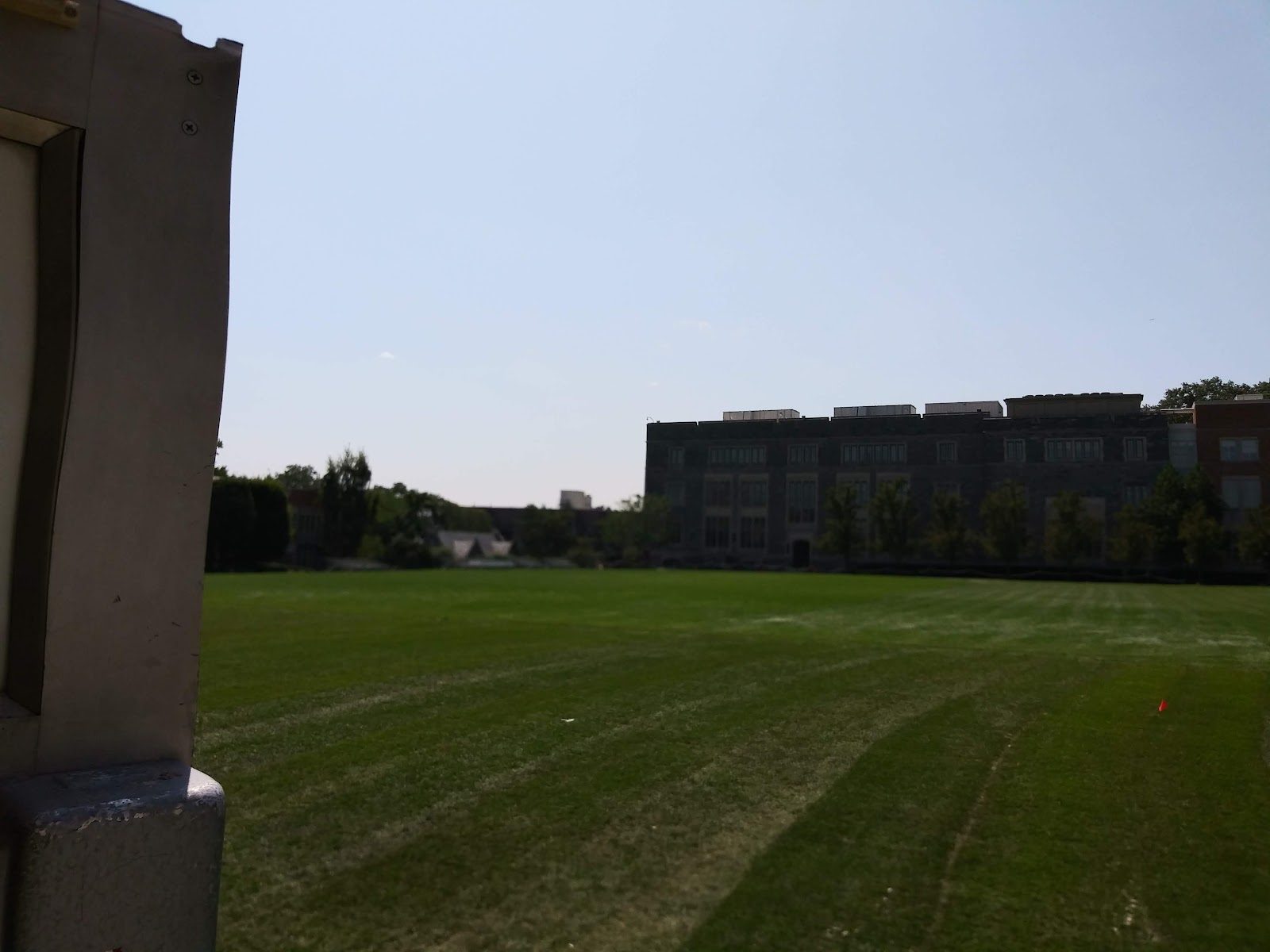
Horace Mann School
New York City · United States
Born as Columbia Teachers College's 1887 experiment, now a Riverdale hilltop campus that swaps AP exams for homegrown advanced courses
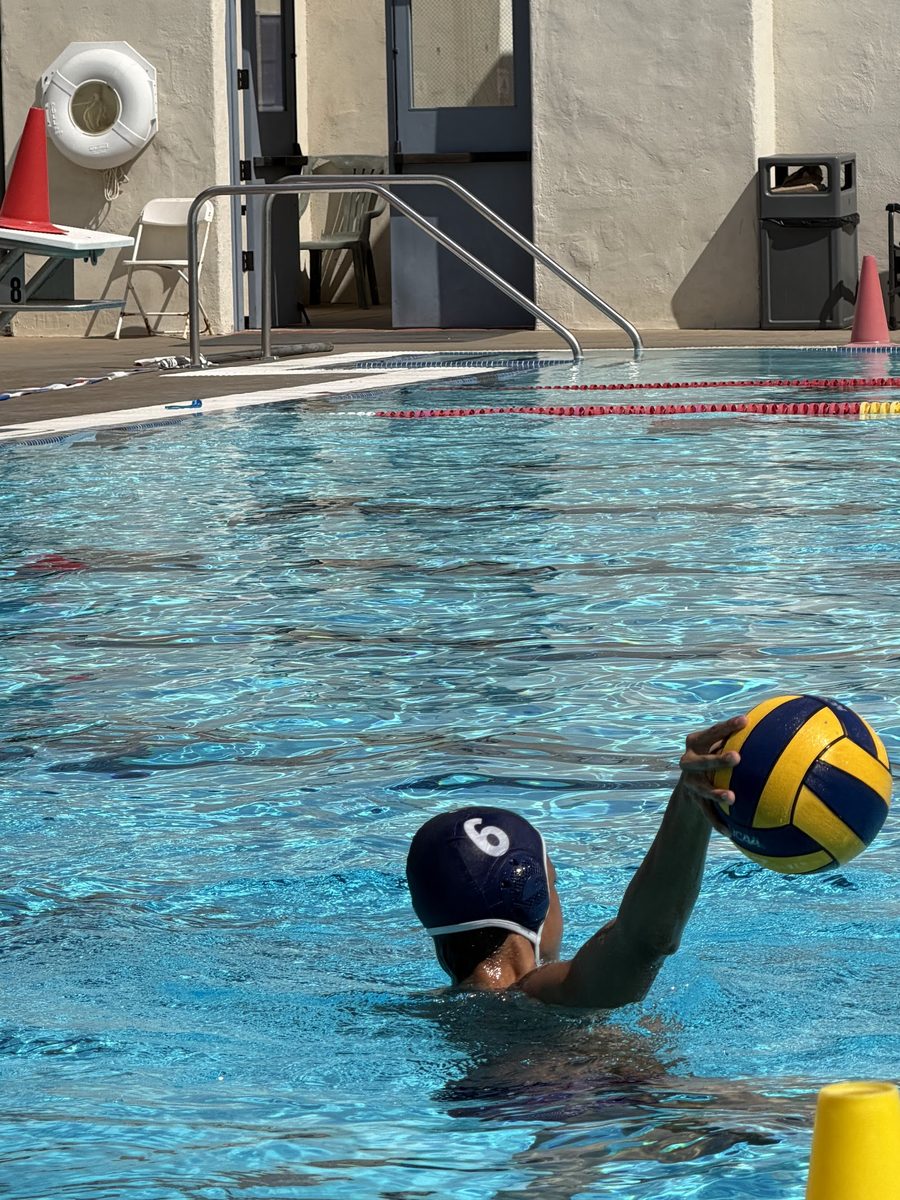
Polytechnic School
Pasadena · United States
Descended from Caltech's own Throop roots, this 1907 Pasadena day school still marries rigorous academics with hands-on inquiry.
Same country and curriculum — closest matches within ±10 points either way