
Daegu
Daegu Science High School for the Gifted
A nationwide boarding magnet for young scientists, running a research-centered curriculum since its 2011 shift to gifted-academy status.
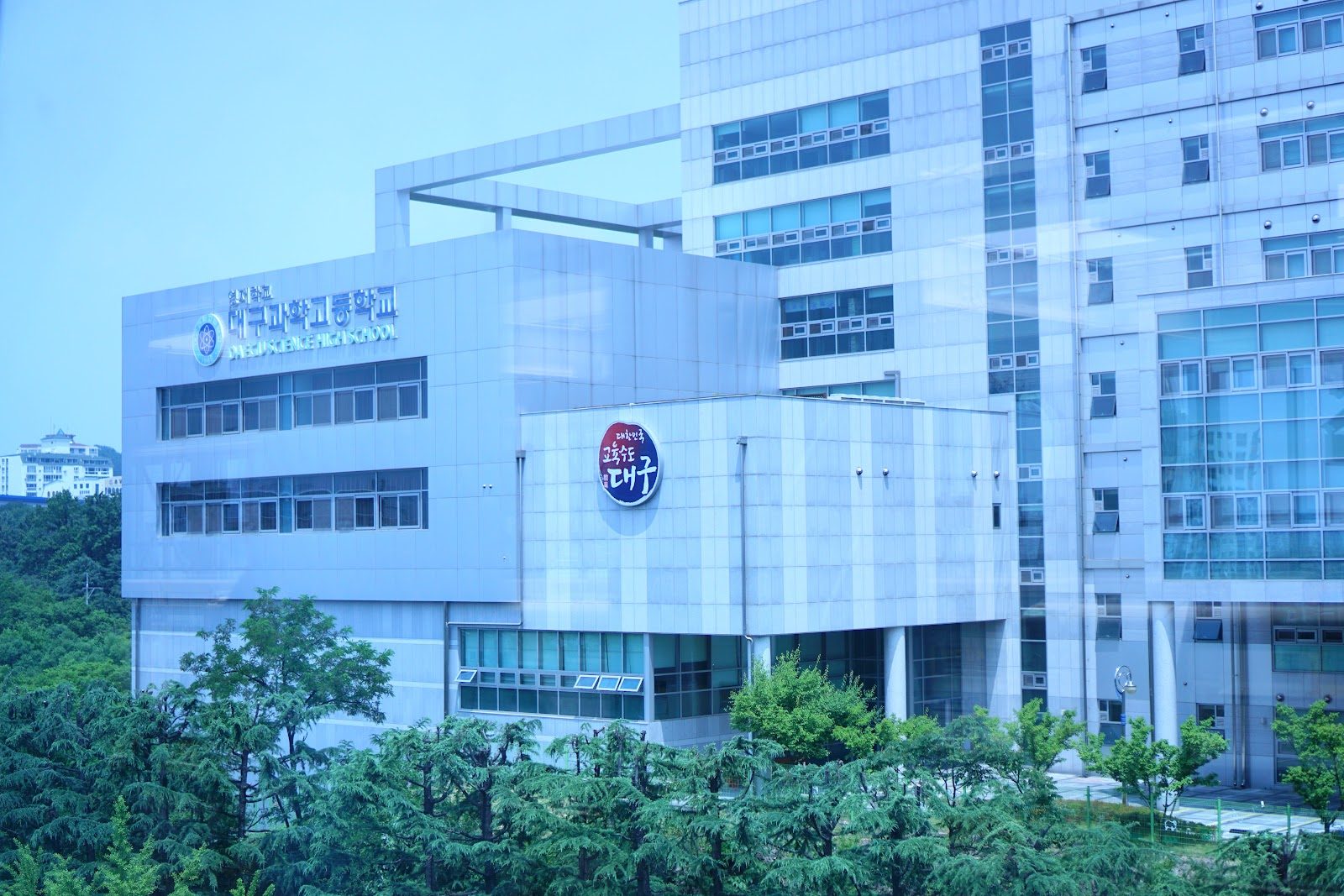
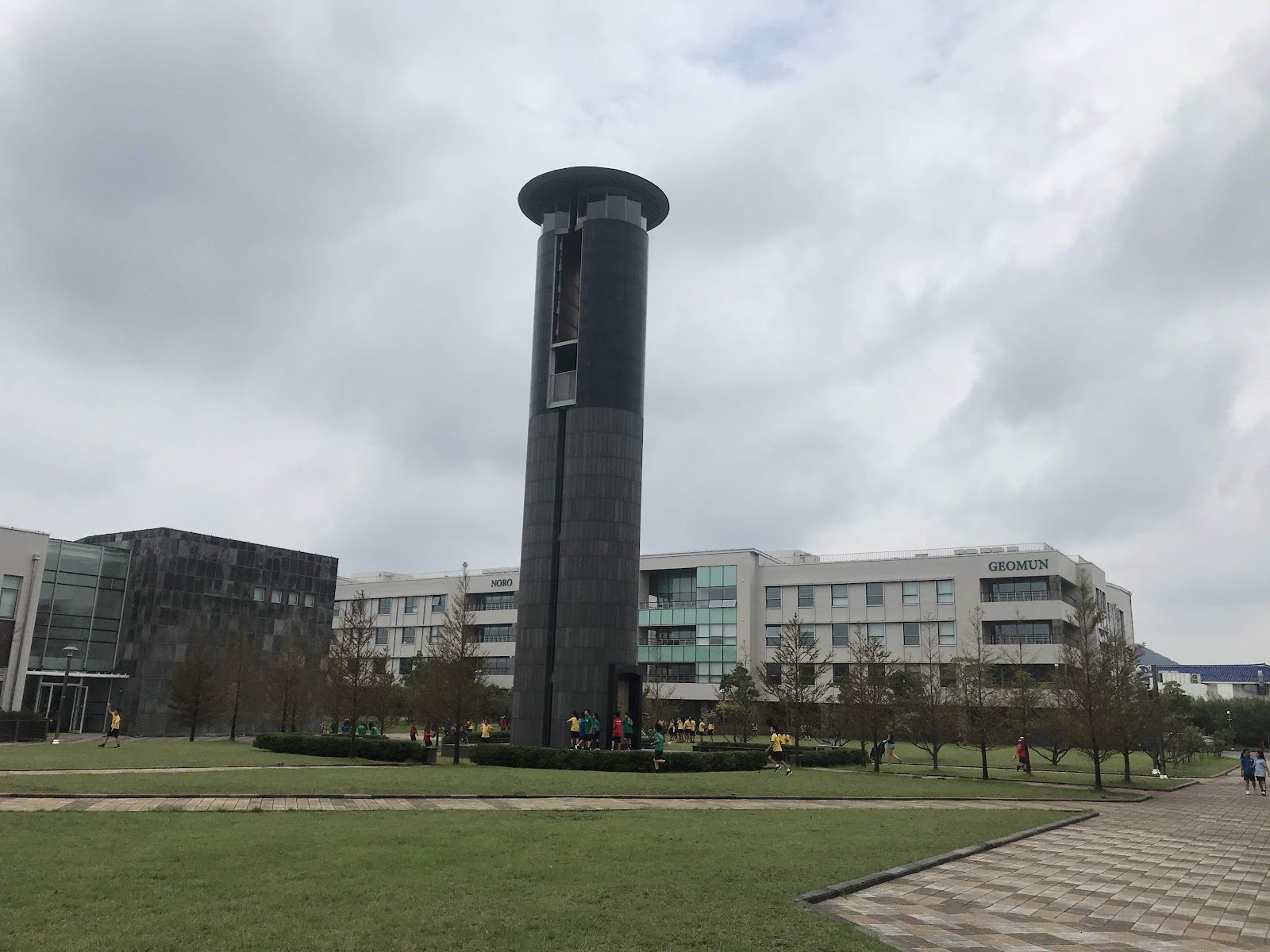
Photo © JC PARK via Google Maps
Type
Boarding
Ages
15–18
Curriculum
Korean
Qualifications
Korean national gifted-track curriculum
Ratio
—
The Verdict
Editor's commitment
Right for
15–18-year-olds set on science, and willing to board in Daegu for a Korean curriculum reshaped in 2011 around gifted education.
Wrong for
Families wanting a broad liberal-arts sixth form, day schooling, or English-medium teaching; this is a secular boarding school in Korean.
Watch out for
Founded in 1988, it now teaches in Korean and English, but the school does not publish public outcome data in this brief.
Ranking breakdown
Daegu Science High School for the Gifted · #794 of 1591
Composite score 66.5. 8 weighted criteria.
By criterion
Academic Outcomes
Weight 20%
#385
of 1529 scored
University Placement
Weight 16%
#354
of 1529 scored
Prestige & Heritage
Weight 12%
#752
of 1571 scored
Alumni Network
Weight 12%
#1126
of 1530 scored
Facilities
Weight 12%
#1100
of 1533 scored
Transparency & Communications
Weight 8%
#1097
of 1532 scored
Peer & Industry Review
Weight 10%
#1373
of 1548 scored
Admissions Selectivity & Demand
Weight 8%
#51
of 1529 scored
Peer & Industry Review
How Daegu Science High School for the Gifted is regarded in the sector
60
Respected · medium confidence
Within Korea's tightly clustered network of science academies for the gifted (Seoul, Gyeonggi, Gwangju, Daegu, Incheon, Daejeon, Sejong), Daegu Science High School is treated as a solid, established member rather than a national outlier: it sits alongside the older Gyeonggi and Seoul academies in domestic rankings but rarely tops them in Korea Herald/Chosun Ilbo science-olympiad medal counts or KAIST/POSTECH early-admission tallies, which the more internationally visible Seoul and Gyeonggi schools tend to lead. University-side regard is structural rather than anecdotal: KAIST, POSTECH and Seoul National University admissions offices treat its diploma as equivalent to other gifted-academy credentials under Korea's early-transfer and recommendation tracks, so graduates are absorbed smoothly but without singled-out commentary. International education press (WhichSchoolAdvisor, Good Schools Guide, IB/UK broadsheet league tables) gives it essentially no coverage, since it operates entirely within Korea's domestic gifted-education system rather than the international-school circuit these outlets track. Its visibility is confined to Korean-language ministry and Olympiad reporting, giving it a respected but regionally bounded profile: solid peer standing among Korea's science academies, unremarkable university-admissions distinction beyond the guaranteed pipeline, and negligible independent international press footprint.
Editors' overview
Daegu Science High School for the Gifted occupies a narrow, serious niche: a state science high school for academically exceptional pupils who want depth before breadth. Founded in 1988 and restructured in 2011 as a gifted academy, it operates as a boarding school for ages 15–18 with Korean as the declared curriculum and Korean and English as languages of instruction. That combination matters. This is not a broad international school with science strengths on the side; it is a specialist institution built around advanced maths, science and research habits. For the right student, that focus is intellectually exacting, single-minded and hard to replicate elsewhere.
What puts it on a shortlist is the clarity of purpose. Families looking for a conventional all-round secondary experience, expansive arts provision or a socially relaxed campus culture should look elsewhere. Daegu Science High School is for pupils who want to live among academic peers, work at pace and treat science not as a favourite subject but as the organising principle of school life. Boarding strengthens that culture: students are not dipping into enrichment after lessons, they are living inside an environment designed to sustain inquiry, competition and sustained study. The attraction is obvious for a teenager who finds standard schooling too slow, wants research exposure early and thrives on serious academic pressure.
The school’s market position is strongest within South Korea’s selective science-school landscape rather than the mainstream international-school market. For international families, the key limitation is equally clear: the curriculum is Korean, and the school’s academic life sits inside that national framework. English is a language of instruction, but this is not an English-medium international programme built for easy transfer across borders. That narrows the pool sharply. It also preserves what the school does best: a research-driven education for students who are already strong in STEM, resilient in a boarding setting and motivated by intense intellectual company. Parents should shortlist it if they want a specialist launchpad, not a polished all-purpose school.
Academic Performance
Daegu Science High School sits in South Korea’s science-high-school elite, but public exam reporting is strikingly opaque. The school does not publish the kind of aggregate external-results data international parents expect: no full university-destination table, no consolidated national exam profile, no campus-wide score distribution, and no benchmarked outcomes against peer science schools. That absence matters. In a selective STEM school, parents need hard evidence of academic yield, not just admissions selectivity or institutional prestige. What can be said with confidence is narrower: this is a school designed for students already operating at a high academic pitch, and its reputation rests on progression into top-tier science and engineering pathways rather than on broad, consumer-friendly disclosure.
Relative to peers, the school belongs in the same conversation as Korea’s other specialist science high schools, where the real measure of success is not polished marketing statistics but sustained placement into the country’s most competitive universities and research tracks. That makes it formidably ambitious and poorly translated for families who need transparent international-style reporting. For Korean families who know the domestic landscape, that opacity carries less weight; the category itself signals rigour. For overseas families, it leaves a gap. The school’s academic standing is serious, but the public proof is thinner than it should be.
Facilities
For a specialist science school, the essentials are clear: laboratories, research spaces and the infrastructure to support long hours of independent work. That matters more here than grand architecture or lifestyle extras. Against peer science high schools, the key question is not whether the campus has glossy amenities, but whether students can move from theory to experiment without friction. On that test, Daegu Science High School’s facilities need to serve a research-first academic culture, a demanding timetable and the daily practicalities of residential study. Boarding itself changes the benchmark: this is not a day school that shuts down after lessons, so study areas, dormitory routines and supervision matter as much as specialist rooms.
What the school does not publish is just as important. We have not seen a clear public inventory of laboratories, maker spaces, observatories, engineering workshops, arts provision, athletic facilities or residence standards. That leaves parents with an incomplete picture of the campus at the very point where specialist schools need precision. Top peers in this category spell out the quality and range of their science infrastructure in detail; this school does not. The result is a facilities profile that reads as functional rather than showpiece, with strength assumed in STEM spaces but not demonstrated campus-wide. For families comparing selective science schools, that opacity is a weakness. In this market, serious schools need hard detail, not institutional mystique.
Daegu Science High School for the Gifted occupies a narrow, serious niche: a state science high school for academically exceptional pupils who want depth before breadth
Prestige
Daegu Science High School for the Gifted carries high domestic prestige in the part of the market that matters most for it: Korea’s selective science-school tier. Entry is restricted, the academic peer group is strong, and the school’s identity is tied to producing students for advanced science and engineering study rather than broad social cachet. That gives it earned academic status, not the softer prestige of polished campuses or international branding. Among families who track specialist STEM pathways, a place at a science high school of this type signals serious ability and strong tolerance for pressure. The age range itself reinforces that point: this is a school for students who commit early, not a late-stage finishing school for university applications.
The prestige is narrower than the label first implies. It is formidable inside Korea’s high-performing maths-and-science ecosystem; it is less legible outside it. Global name recognition is limited, and the school does not publish the kind of outcomes data that would convert domestic standing into international credibility. That weakens its profile with overseas parents who want transparent proof, cross-border transferability and a brand universities everywhere recognise on sight. Still, for the right family, prestige here rests on substance: selection, specialist intensity and membership of a hard-edged academic tribe for ages 15–18. We rate it as elite in its lane, but not universally prestigious.
Top peers in this category spell out the quality and range of their science infrastructure in detail; this school does not
Communications
Communication is functional, centralised and geared to a domestic audience rather than polished for international parents. The public-facing website carries the core institutional traffic: notices, admissions information, school news and administrative updates. That gives current families a single channel to monitor, which suits a tightly run specialist school. It does not make for elegant parent communication. Navigation, translation and message hierarchy are weaker than top international schools now treat as standard, and the result is a system that feels *administrative rather than parent-friendly*. For Korean-speaking families already familiar with this sector, that is manageable. For overseas parents, it is a real barrier: key information demands effort to find, and the school does not package its case with the clarity expected in cross-border education.
That matters even more in a high-pressure residential setting, where parents need confidence in routines, welfare communication and academic oversight, not just admissions notices. Here the school’s public communication leaves gaps. We have not seen a strong, detailed explanation of parent-school communication rhythms, pastoral reporting, residence-life updates or escalation routes when problems arise. Nor does the school publish the kind of hard-edged transparency that builds trust quickly: rich FAQs, clear parent handbooks, or a persuasive overview of how families stay informed once a child is on campus. The verdict is plain: communications do the job at a basic level, but they are opaque, institution-first and weaker than the school’s academic seriousness warrants.
Uniqueness
What distinguishes Daegu Science High School is not science branding but scientific social structure. Students are selected into a narrow peer group, then immersed in a school where advanced maths, laboratory work and research habits set the rhythm of daily life. That creates something rarer than a strong STEM department: a closed academic ecosystem in which intellectual effort is normal, competition is ambient and curiosity has institutional backing. For the right teenager, that brings real acceleration. A pupil who has outgrown mixed-ability classrooms gains faster peers, tougher problems and a culture that rewards depth over display. The school’s age range — 15–18 — sharpens that effect: students enter at the point when serious subject commitment starts to matter.
The gain is not only academic. Specialist schools of this kind train students to live with pressure, defend ideas, manage long projects and treat independent study as a default rather than a virtue. That is a demanding apprenticeship for university-level science. It also narrows the experience. Families do not choose this school for breadth, social ease or a leisurely adolescence; they choose it for intense concentration, hard-edged peer comparison and early entry into a research-minded world. Students who thrive here leave with more than strong subject knowledge. They leave with habits of mind shaped by sustained rigour and by daily life among classmates who treat academic ambition as standard, not exceptional.
They leave with habits of mind shaped by sustained rigour and by daily life among classmates who treat academic ambition as standard, not exceptional
Student Profile
The right student for Daegu Science High School is not just good at science. They are the teenager who has already outgrown ordinary pace, wants harder company and does not need coaxing into long hours of study. They enjoy abstraction, tolerate correction and recover quickly from setbacks. They do not need constant praise. In a selective environment for ages 15–18, that matters more than polished extracurricular charm or broad all-rounder appeal. Pupils who flourish here are single-track in the best sense, restless with easy work and comfortable having their academic standing tested every day by equally able classmates.
Fit also depends on temperament. This school suits students who can live inside structure, handle comparison without melodrama and treat pressure as part of the bargain. A teenager who wants a wide social scene, expressive arts at the centre of school life or a gentler emotional climate will find the culture narrow, intense and not for the faint-hearted. The strongest fit is the self-directed young scientist: disciplined, competitive, resilient and genuinely interested in research rather than just high grades. For that child, the peer group is the point. For anyone else, the same environment can feel claustrophobic very quickly.
The strongest fit is the self-directed young scientist: disciplined, competitive, resilient and genuinely interested in research rather than just high grades
Co-curricular strengths
Arts & sport, on a separate axis
Overall 5.64/10
Scored 0-10 from the school's own published evidence. This axis is editorial-only — it does not feed the main WTS ranking.
Sports
6.8/10
Drama
4.8/10
Dance
4/10
Music
6.3/10
Visual Arts
6.3/10
Strengths
- +Officially designated a national science gifted academy (과학영재학교) by the education ministry, converting from science-high-school status in 2008-2011, giving it a distinct legal and funding footing above ordinary science high schools.
- +Admits on a nationwide basis with a fully boarding structure, so the intake is drawn from across South Korea rather than only the local Daegu catchment.
- +Graduates typically progress to KAIST, POSTECH and Seoul National University, reflecting a long-standing STEM-focused pipeline into Korea's top technical universities.
- +One of Korea's original science high schools, founded in 1987, giving it decades of institutional history in gifted science education.
- +Small, tightly managed cohort size (roughly 90-99 new students a year) keeps class sizes low relative to mainstream Korean high schools.
Considerations
- −Instruction and all official communication is conducted entirely in Korean, with no meaningful English-language pages or support identified for international families.
- −Entry is highly competitive: the 2026 intake drew 586 applicants for 90 places nationwide, a ratio of about 6.5 to 1, filtered from an already elite pool of middle-schoolers.
- −The curriculum is narrowly focused on mathematics and science; there is little evidence of breadth in humanities, arts or non-STEM electives.
- −Students who later pivot toward medicine, dentistry or pharmacy face structural disadvantages, including recalculated GPA methods and removal of third-year activity records, making the school a poor fit for families keeping medical school open as an option.
Availability
Primary entry gate & tests
Document Review + Camp Exam
Gallery
Photo © JC PARK via Google Maps
Photo © 박병호 via Google Maps
Photo © 박병호 via Google Maps
Photo © 박병호 via Google Maps
Photo © 박병호 via Google Maps
Photo © 박병호 via Google Maps
Photo © 박병호 via Google Maps
Parent reviews
Have you sent your child here?
Voice reviews carry the strongest trust badge — we transcribe them for you to tidy up before they go live. Prefer to type? A written review is fine too.
Add your voice
In 60 seconds, tell other parents: what's the best thing about Daegu Science High School for the Gifted, and what surprised you when your child joined?
We ask for a Google sign-in so every review has a real face behind it — no anonymous drive-by attacks on schools, and no faked positive reviews. Your email is never shown publicly.
Send this profile to a friend
International parents rely on word-of-mouth. Share this review with someone weighing the same decision.
Schools with places
Similar schools to Daegu Science High School for the Gifted with places available now.
Chadwick International
Incheon · South Korea
- 2026-27
- CLOSEDStandard route closed
- 2027-28
- OPENS SOONInfo mid-Oct '26 / dates TBC
Korea International School
Seongnam · South Korea
- 2026-27
- WAITPOOLSpace-dependent
- 2027-28
- PLACES OPENRolling
North London Collegiate School Jeju
Jeju · South Korea
- 2026-27
- WAITPOOLVacancy-dependent
- 2027-28
- PLACES OPEN
Seoul Foreign School
Seoul · South Korea
- 2026-27
- WAITPOOLSpace-dependent
- 2027-28
- PLACES OPENRolling
Availability first, then country, area, curriculum, price, co-curricular
Consider also
Also worth looking at alongside Daegu Science High School for the Gifted.
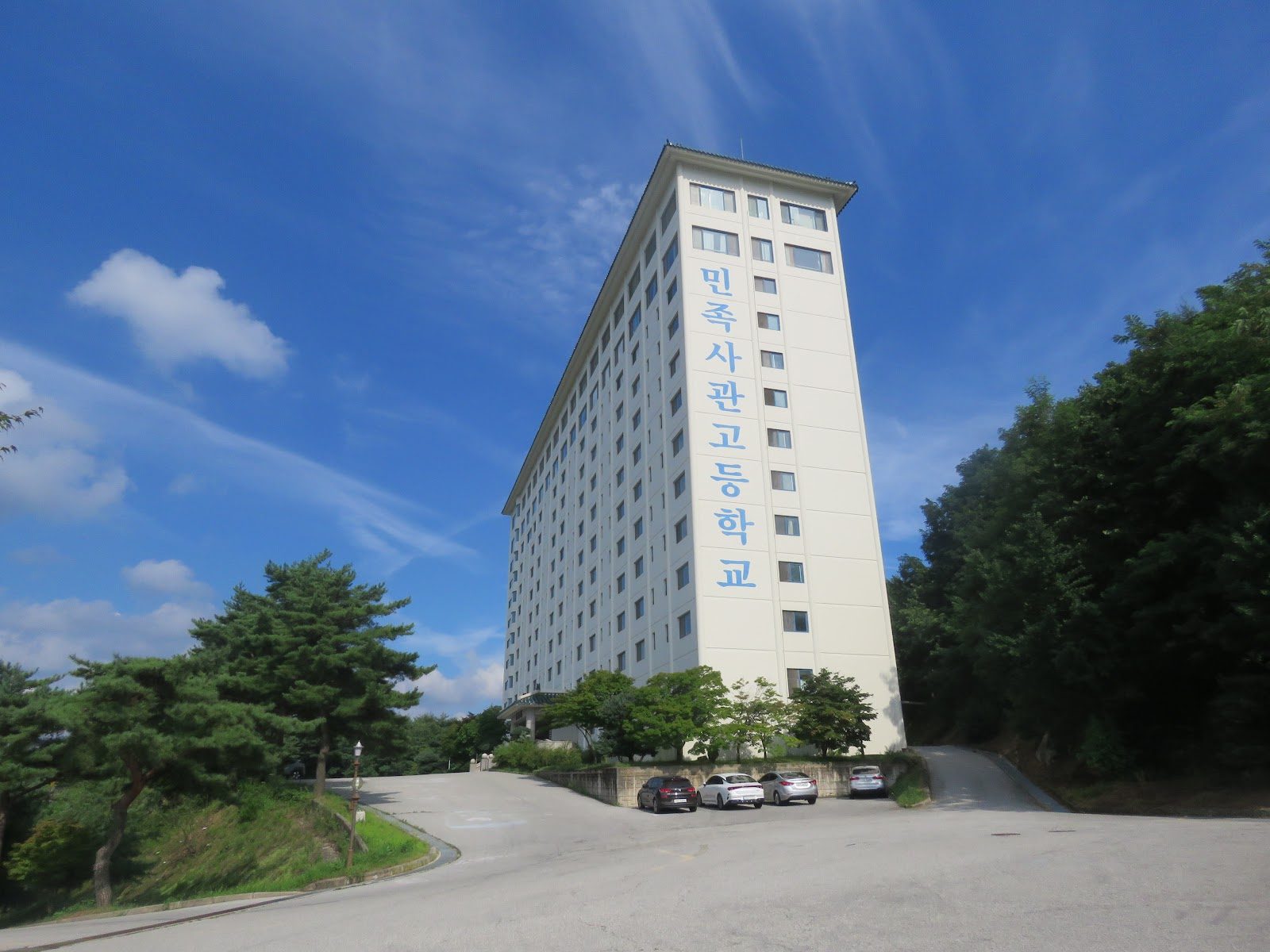
Korean Minjok Leadership Academy
Hoengseong · South Korea
On a Gangwon mountainside, hanbok-uniformed students hold English-only seminars, chasing an IB curriculum built to rival Eton.
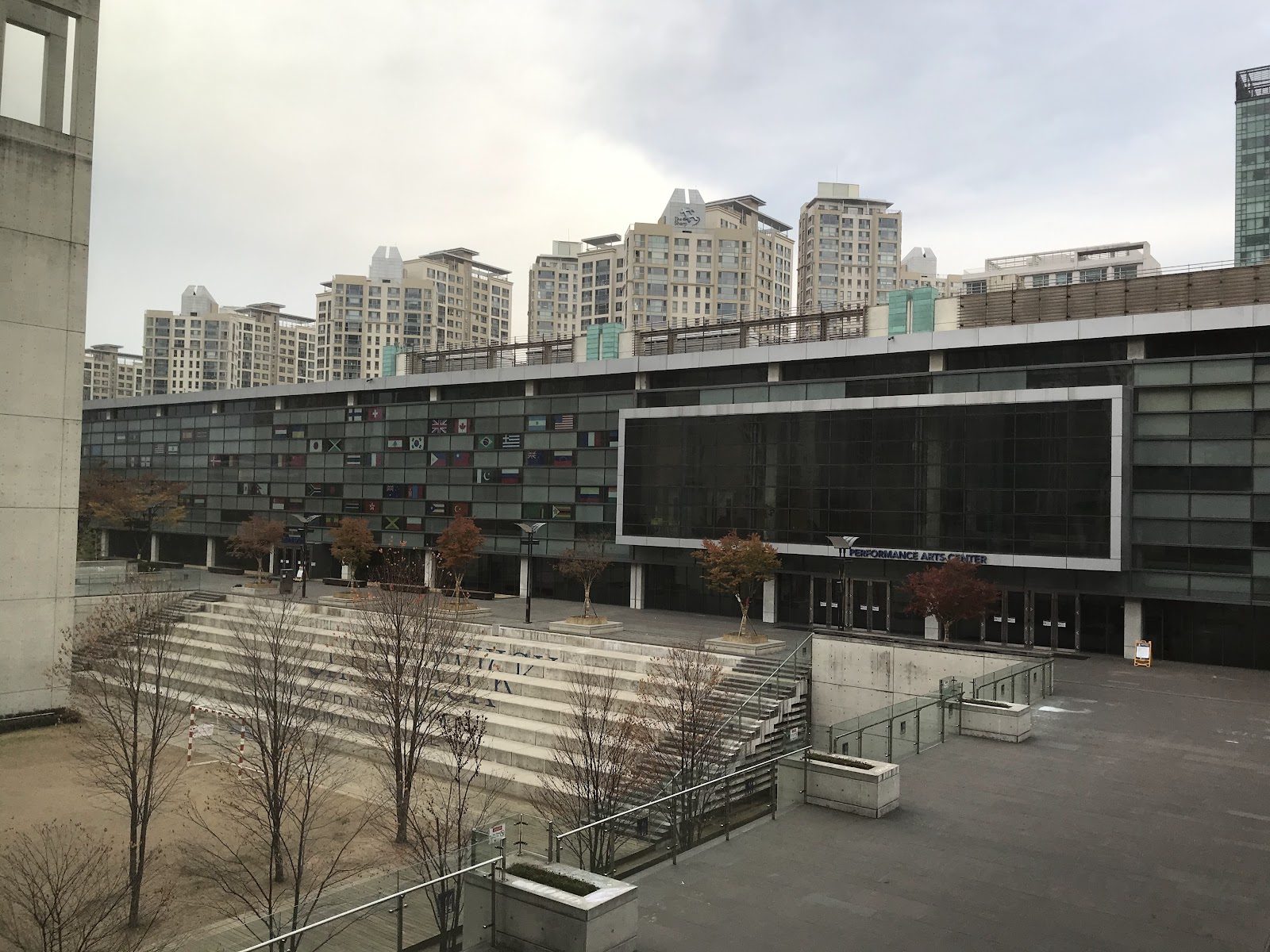
Chadwick International
Incheon · South Korea
One school, two continents: this Songdo campus mirrors a 1935 California founder, pairing IB rigor with mandatory outdoor-education expeditions.
Korea International School
Seongnam · South Korea
In Seongnam's Pangyo tech corridor, a dual IB-American track anchors a curriculum built around 24 Advanced Placement courses.
North London Collegiate School Jeju
Jeju · South Korea
Founding school of Jeju's Global Education City, blending a 170-year London pedigree with strong IB results and seven boarding houses.
Same country and curriculum — closest matches within ±10 points either way